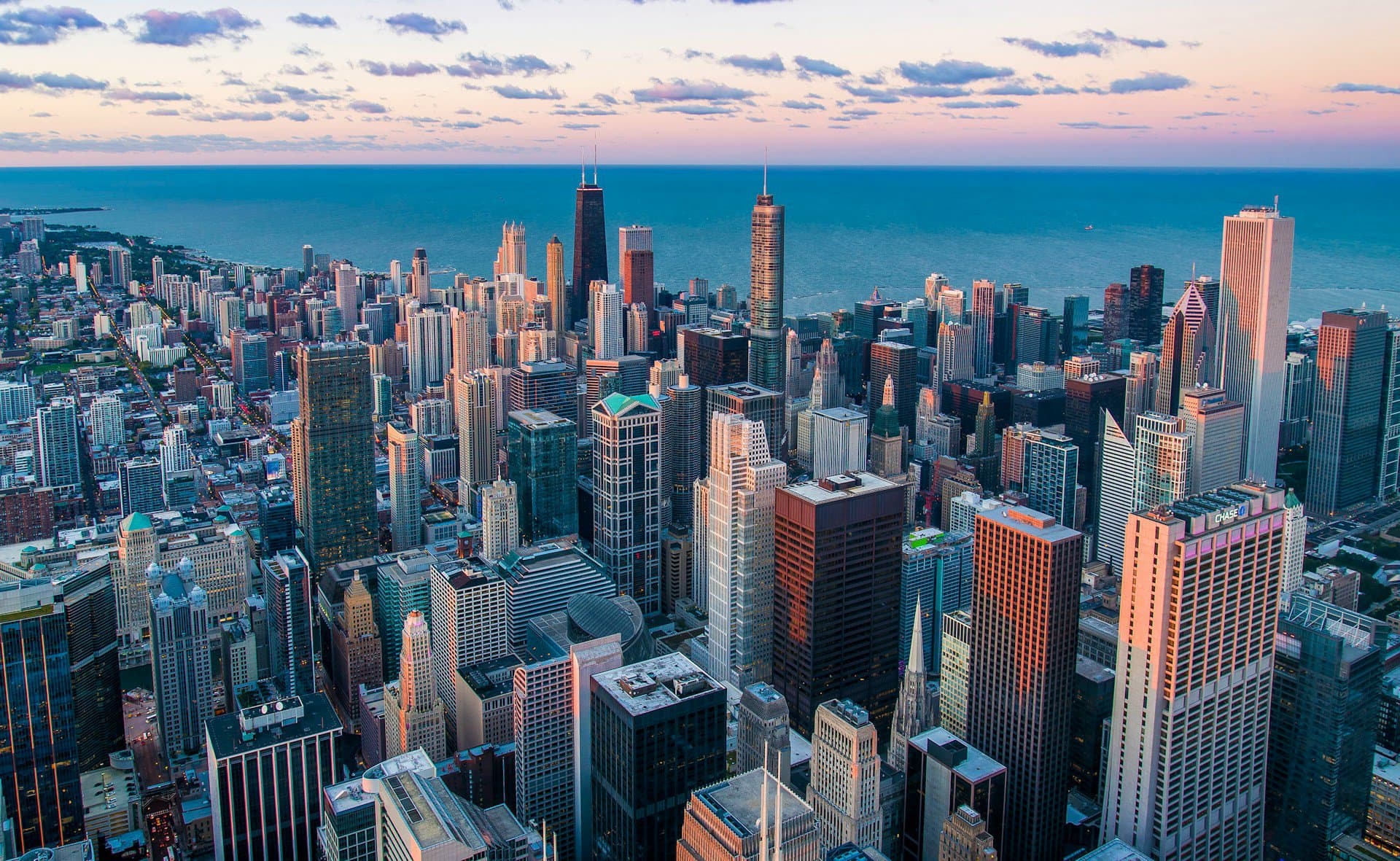
Downtown Chicago – The birthplace of skyscrapers
Downtown Chicago is the historic high-rise heart of the giant city. Within the area formed by the Loop, the modern urban building concept was born at the end of the 19th century. Downtown Chicago was where the first skyscrapers were built, shaping the urban construction techniques that characterize all Western cities. The early tall office buildings were part of the city's center revitalization after the Great Fire of 1871. The giant Sears Tower (now Willis Tower) dominates downtown Chicago from south of the Chicago River. Nearby, streets bustling with restaurants, hotels, and shops are shadowed by some of the most stunning skyscrapers in the world.

How much time do you need to tour downtown Chicago?
For a tour of downtown Chicago, including a climb up Willis Tower (the Sears Tower), you need at least half a day. You should dedicate another half day to Millennium Park and Michigan Avenue.
10 must-see and must-do things in downtown Chicago
- Stunning view from the 103rd floor of Willis Tower (formerly Sears Tower)
- A walk among the iconic modern buildings of Millennium Park
- The highest level of art at the Art Institute of Chicago on Michigan Avenue
- The birthplace of skyscrapers at The Rookery Building
- The breathtaking mosaic in the interior of the Marquette Building
- The dark and imposing view of the Federal Center
- Construction based on a supporting wall at the Monadnock Building
- Classic shopping at Macy's Chicago
- The iconic neon sign of The Chicago Theatre
- The magnificent appearance of the skyscraper at Thirty Five E Wacker
Click here for the complete guide to visiting and touring Chicago…
Click here to check availability and prices in Chicago hotels…
Click here for the Chicago CityPASS, offering discounts on five top attractions in Chicago…
What is Downtown Chicago?
- Downtown Chicago is nestled within a block bordered by Lake Michigan to the east, the Chicago River to the north, the south branch of the Chicago River Canal to the west, and Roosevelt Road to the south
- This is the legendary area of the Loop, Chicago's elevated rail line
- Downtown Chicago is also the city's historic core, the one that burned in 1871 and the birthplace of the skyscraper concept (rising from the ashes)
- It is the city's financial center, boasting some of the tallest and most famous skyscrapers in the world
- The main avenue of the downtown is Michigan Avenue, which cuts through the city center from north to south. The avenue borders the green parks of the waterfront to the west, along the shore of Lake Michigan. The section of Michigan Avenue in downtown is a continuation of the Magnificent Mile north of the riverbank, where grand institutions are concentrated, such as the city's important museums, notable urban hotels, headquarters of huge corporations, and numerous cultural functions.
- A walk in the Loop or downtown Chicago is along bustling streets filled with restaurants, businesses, office buildings, and hotels, all under the shadow of Chicago's legendary skyscrapers.
Click here for a cruise on the Chicago River and Lake Michigan beneath the skyscrapers of downtown…
Map of Downtown Chicago
Everything to See and Do in Downtown Chicago
In downtown Chicago, there's a great lineup of important buildings that are part of the city's history and the development of modern cities. The key buildings in the Loop area are close to each other.
These are the must-see buildings and skyscrapers in Chicago's Loop:
- Willis Tower (Sears Tower)
- The Rookery Building
- Marquette Building
- The Federal Center
- Monadnock Building
- Macys Chicago
- Reliance Building
- The Chicago Theatre
- Thirty Five E Wacker Drive
- The museums and institutions on Michigan Avenue
1. Willis Tower (Sears Tower)
Willis Tower, famously known as the Sears Tower, is one of the most renowned skyscrapers in the world. The building was Chicago's triumphant response to New York's painful loss in the competitive skyscraper race between the cities at the beginning of the 20th century. It was completed in 1973, about two years after the construction of the Twin Towers in Manhattan. Upon its completion, it took the title of the tallest building in the world away from the stunning pair in Lower Manhattan and held the title until 1998.
Click here to purchase online tickets for Skydeck Chicago, the observation deck at the Sears Tower…
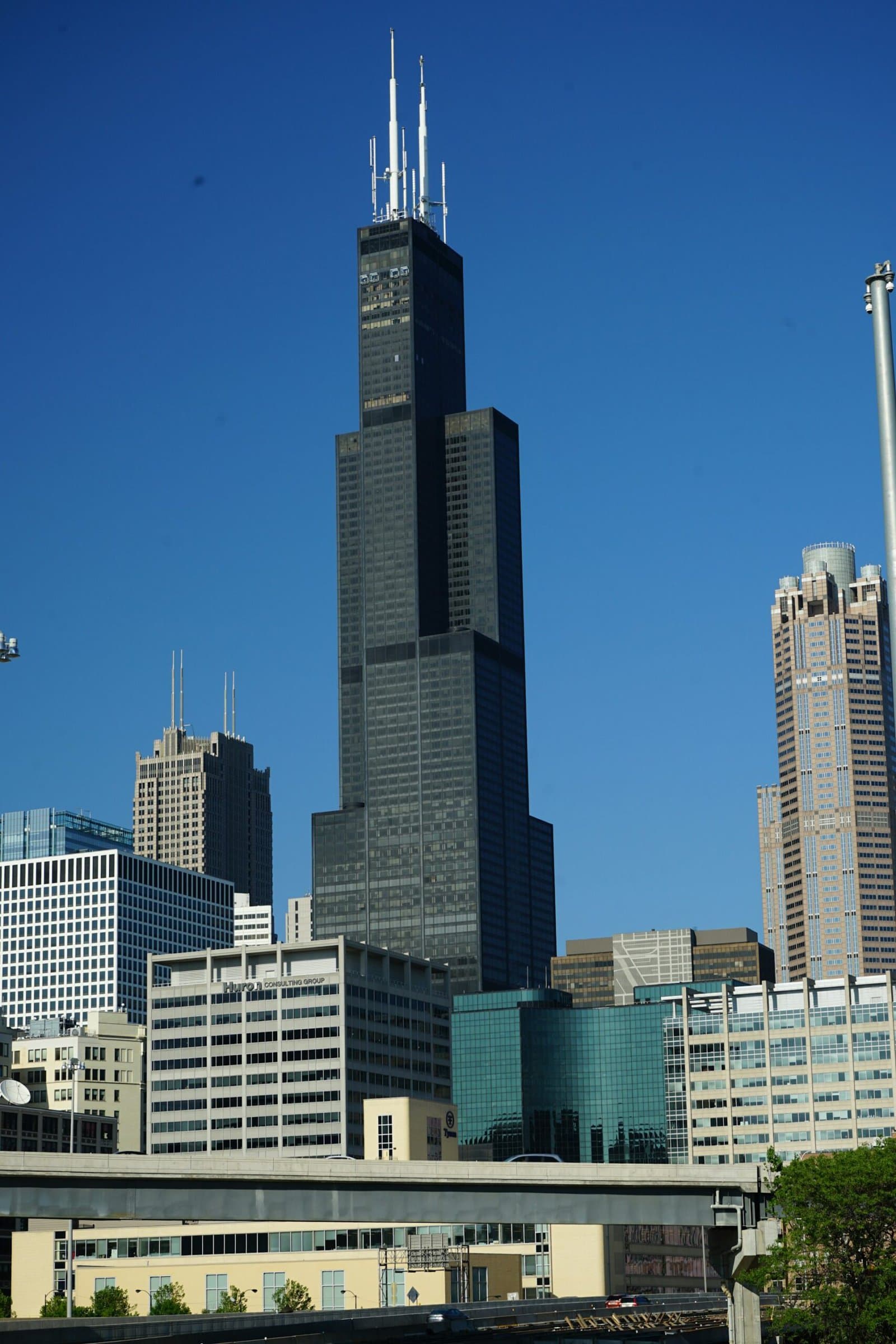
The building stands at 443 meters tall and has 110 floors. To this day, it is considered the third tallest building in the USA, after the One World Trade Center (built on the ruins of the Twins) and the Central Park Tower on 57th Street in Midtown Manhattan.
The Sears was originally built as the headquarters for the local retail giant and was named after it. In 2009, it was acquired by the UK-based Willis Group and its name was changed. The tower is one of the leading attractions in Chicago.
The tower's observation deck, the Skydeck, opened to the public in 1974 and since then has become a major attraction. It is located on the 103rd floor of the building, offering a breathtaking panoramic view of the entire Chicagoland and Lake Michigan.
Address: S Wacker Dr. 223, Chicago
2. The Rookery Building
The Rookery is located two blocks east of the Sears Tower, on West Adams Street. It is one of the most important historical skyscrapers in the USA and an important prototype for the construction of American city downtowns. The building was designed by John Wellborn Root and Daniel Burnham, notable architects of the Chicago School. It was Burnham's first structure designed as a skyscraper, about 13 years before he completed his masterpiece, the Flatiron Building in Manhattan.
The building was erected in 1888, rising approximately 55 meters divided into 12 floors. It still stands today and is considered the oldest skyscraper in the entire world. The building's design, using steel frames and supporting walls, served as a model for the golden age of skyscrapers in Chicago and New York, peaking in the 1930s with the construction of the Chrysler and Empire State Buildings in Manhattan.
Address: S La Salle St. 209, Chicago
3. The Marquette Building
One block east from the Rookery on West Adams Street, across the street, stands another important historic skyscraper. The Marquette Building is the model for skyscrapers built with a steel frame technique. It is named after the French Jesuit priest, Jacques Marquette, who founded the European colony in the Great Lakes (Sault Ste. Marie at the eastern tip of Lake Superior over today's Canadian border). Built in 1895, it is still considered a masterpiece of the Chicago School. The building's interior is also impressive, known for its mosaic decorations in the lobby's frieze.
Address: 140 S Dearborn St., Chicago
Click here for a tour of Chicago's unique culinary secrets….
4. The Federal Center
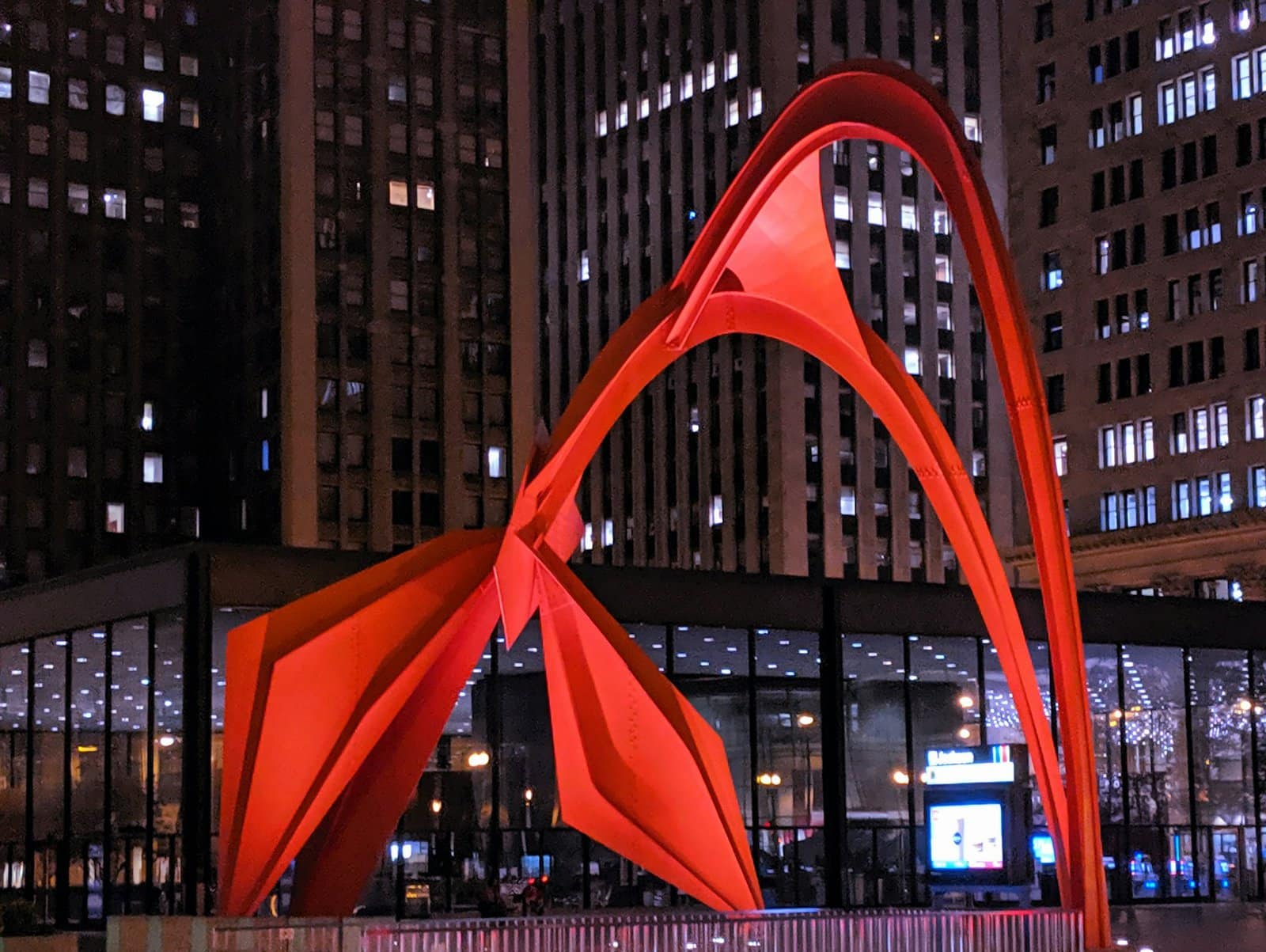
The Federal Center is a cluster of three modern skyscrapers located one block east of the Rookery. The sleek black buildings are a prime example of 1970s skyscraper design, and as their name suggests, they house federal offices in Chicago.
The trio of towers is a fascinating blend of black-painted steel and dark windows. The tallest among them is the Kluczynski Federal Building, rising 45 stories high. The expansive plaza of the federal buildings at the intersection of South Adams Street and South Dearborn Street is one of downtown's most recognizable landmarks.
Address: 230 S Dearborn St, Chicago
5. Monadnock Building
Directly across from the Kluczynski Federal Building stands another of downtown Chicago's historic towers. The Monadnock is an old skyscraper, rising 16 stories tall, that was completed in 1891. It remains the tallest building in the world with a load-bearing brick wall structure. This technique, borrowed from the construction of Gothic cathedrals, was brilliantly adapted as the foundation for towering skyscrapers.
From the beginning of its construction, the building faced issues, and its southern part was completed about two years later by a different construction company. In 1938, the entire building underwent a significant facelift to preserve it and avoid demolition. The building's interior is decorated with stunning Art Deco ornaments.
Address: W Jackson Blvd. 53, Chicago
Click here for Chicago's organized attraction bus…
6. Macy's Chicago
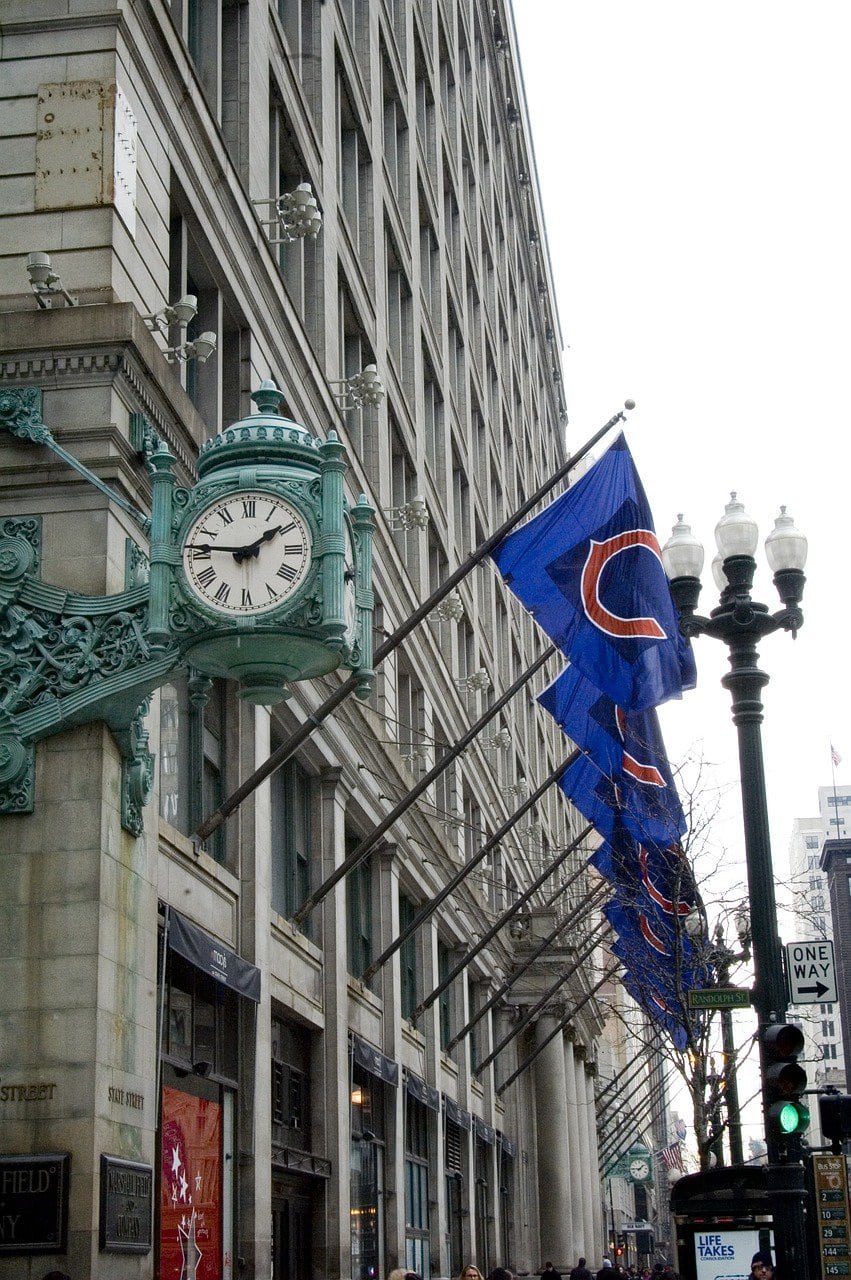
Chicago's largest department store is located on the more northern part of the Loop, two blocks west of Michigan Avenue and Millennium Park. Originally, the department building was the flagship branch of the prestigious local department store and the offices of Marshall Field's, Marshall Field and Company Building.
Before Macy's purchased the local chain, Marshall Field's department store was the go-to place for quality shopping in Chicago. The department store's interior design is one of the most spectacular in all of Chicago, a look that has been preserved even after the transition to Macy's. The department store ceiling is entirely covered with mosaics produced by Tiffany.
Address: N State St. 111, Chicago
7. Reliance Building
The Reliance Building is yet another vintage skyscraper from the last decade of the 19th century in Chicago. It stands across the street at the southwest corner of Macy's department store in the most attractive shopping area of downtown Chicago. The building was completed in 1895 and is still considered one of the most beautiful old skyscrapers. It underwent extensive renovations in the early 2000s after the city decided to preserve it.
Address: W Washington St. 1, Chicago

8. The Chicago Theatre
The unique structure of the Chicago Theatre is located two blocks north of Macy's on North State Street. The building is currently known as the Balaban and Katz Chicago Theatre, named after the theater's owners and founders. It was built in 1921 in the French Neo-Baroque style and is one of the oldest and most beautiful examples of this style in Chicago. The entrance to the building is through a grand gate inspired by the Arc de Triomphe on the Champs-Élysées in Paris. The theater's signature, besides the Arc de Triomphe, is the vintage neon sign at the entrance that reads Chicago.
Address: N State St. 175, Chicago
Click here for a guided bus tour following Chicago's mafia and criminals…
9. Thirty Five E Wacker Building
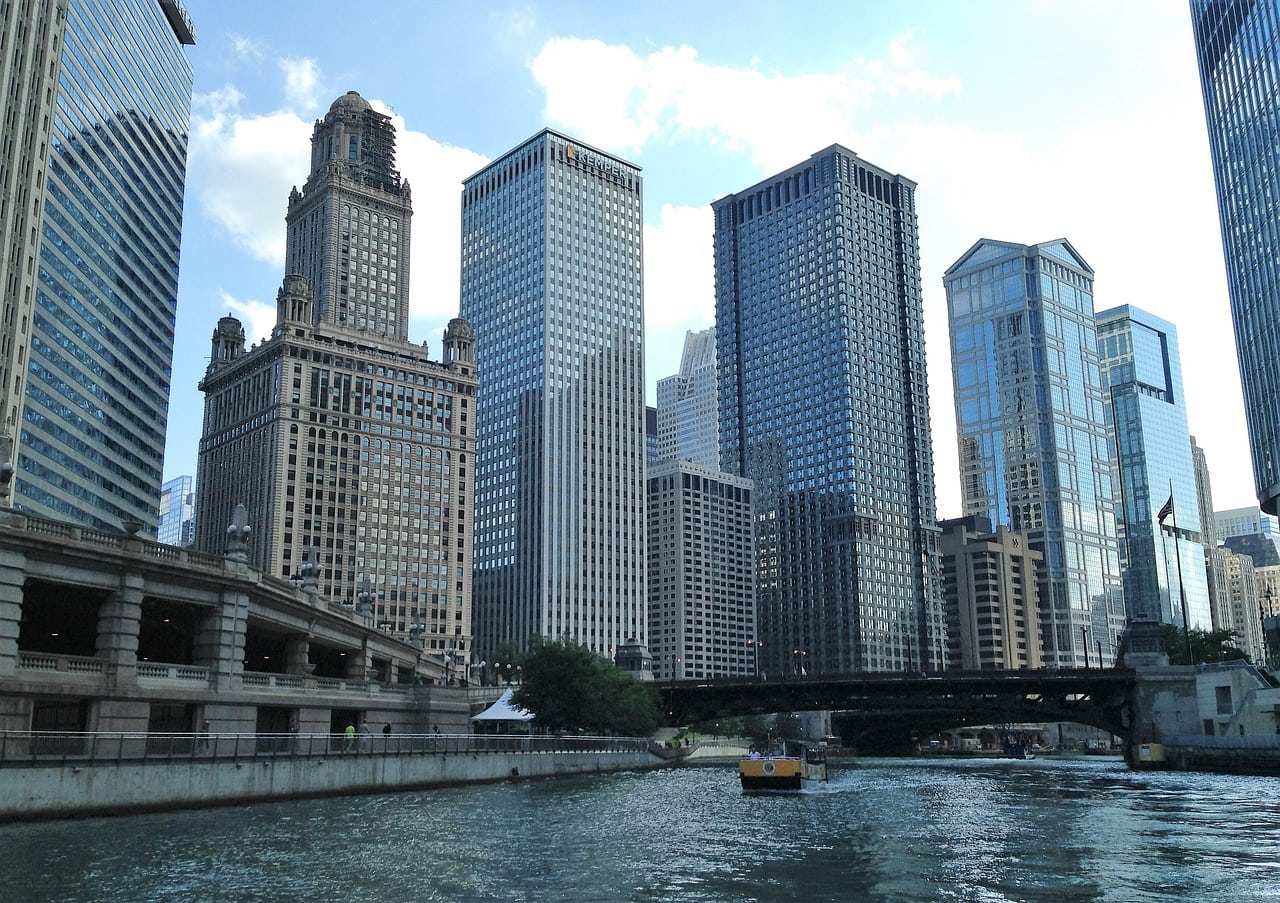
A block north of the Chicago Theater, past the elevated train line of the Loop and near the southern bank of the river, is one of the most beautiful buildings downtown. The 35 East Wacker, traditionally known as the Jewelers' Building, is a unique vintage skyscraper standing at 160 meters tall. Built in 1927 in a style reminiscent of Manhattan's towers, it has a smaller, taller tower topped with a Renaissance dome. The building has starred in several Hollywood films, such as the 2005 movie “Batman Begins” and the 2011 Transformers film.
Address: E Wacker 35, Chicago
Click here for a guided tour of all of Chicago's architectural gems…
Millennium Park and the Museums of Michigan Avenue
Grant Park has always been the green lung of Chicago. This urban park, which separates the downtown skyscrapers from the Lake Michigan shoreline, is now entirely dedicated to the city's tourism movement. In its past, the park was home to two high-profile attractions: the giant Buckingham Fountain and The Art Institute of Chicago, which boasts an astonishing collection of some of the most important paintings in the history of art.
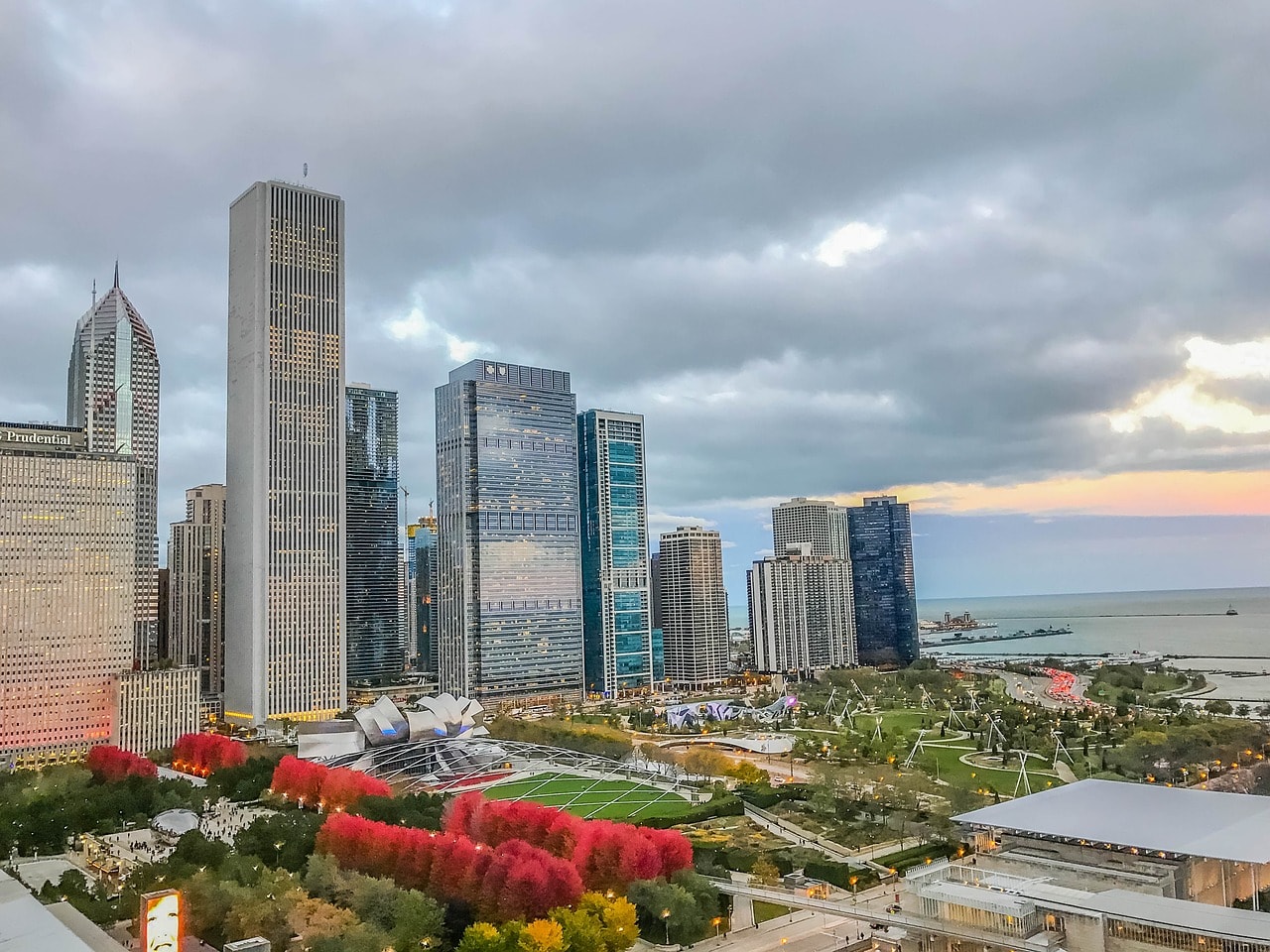
Towards the end of the millennium, the city decided to spice up its tourist space, and in the northern part of the park, the unique postmodern attractions of Millennium Park were opened. In the park, there are several incredible structures that quickly became symbols of the city, such as the Cloud Gate sculpture and the chaotic theater stage designed by Frank Gehry.

What are Millennium Park and the museums of Michigan Avenue?
Millennium Park is now one of the most popular attractions in Chicago. This park is part of the city's historic Grant Park, located in the eastern part of the Loop near the shores of Lake Michigan.
Click here to purchase online tickets for the Art Institute of Chicago…
- Grant Park is the green lung of Downtown Chicago. At the start of the 20th century, the city decided to transform it into a cultural hub for the public's benefit
- The Art Institute of Chicago, one of the most important museums in the USA, opened in the park
- At the heart of the park stands the monumental Buckingham Fountain, which has become one of the city's iconic symbols
- Towards the end of the second millennium, the city wanted to bring some life back to the park, so the entire northern section was rebranded as Millennium Park. Several attractions were built and installed throughout the area, quickly becoming a popular spot for outings and selfies
- The shiny Cloud Gate, shaped like a bean, has gained momentum and become one of the city's favorite attractions
- Nearby, the Jay Pritzker Pavilion, an open urban amphitheater, catches the eye with its spectacular acoustic shell designed by the renowned architect Frank Gehry
- Today, Grant Park, Millennium Park, and the museums along Michigan Avenue, with the prestigious Art Institute at the forefront, are considered the public and tourist heart of the city, along with Navy Pier located a bit to the north by the lake
- South of Grant Park is a lineup of excellent museums such as the Field Museum of Natural History, Shedd Aquarium, and Adler Planetarium. Close to Chicago's Chinatown, a row of fascinating historic homes that today serve as period museums
Click here for a spicy food tour of the culinary gems of Chicago's Chinatown…