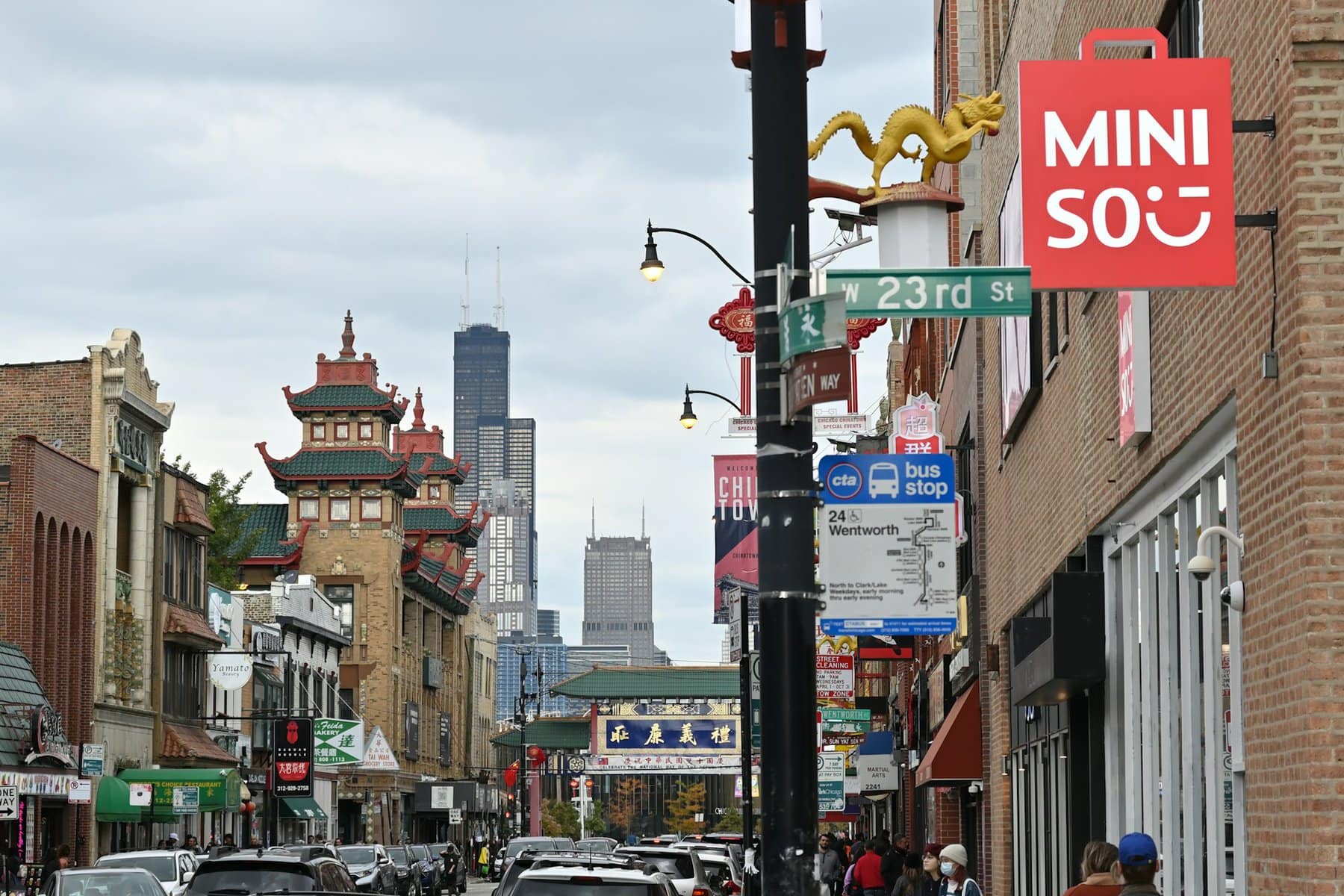
Millennium Park and the South Loop of Chicago
Grant Park has always been the green lung of Chicago. This urban park, separating downtown skyscrapers from the shores of Lake Michigan, is now dedicated entirely to the city's tourism movement.
In its past, the park was home to two high-profile attractions – the giant Buckingham Fountain and The Art Institute of Chicago, which boasts an incredible collection of some of the most important paintings in art history. Towards the end of the millennium, the city decided to spice up the tourist space, and in the northern part of the park, the special post-modern attractions of Millennium Park were opened. The park features some amazing structures that quickly became city icons, such as the Cloud Gate structure and the chaotic theater pavilion designed by Frank Gehry.

How much time is needed for a trip to Millennium Park and the museums of Michigan Avenue?
For a trip to Grant Park, Millennium Park, and Michigan Avenue, allocate half a day, including a (relatively long for art enthusiasts) visit to the Art Institute of Chicago.
8 Must-See Sights and Activities at Millennium Park and the Museums on Michigan Avenue
- The rare art collection at The Art Institute of Chicago
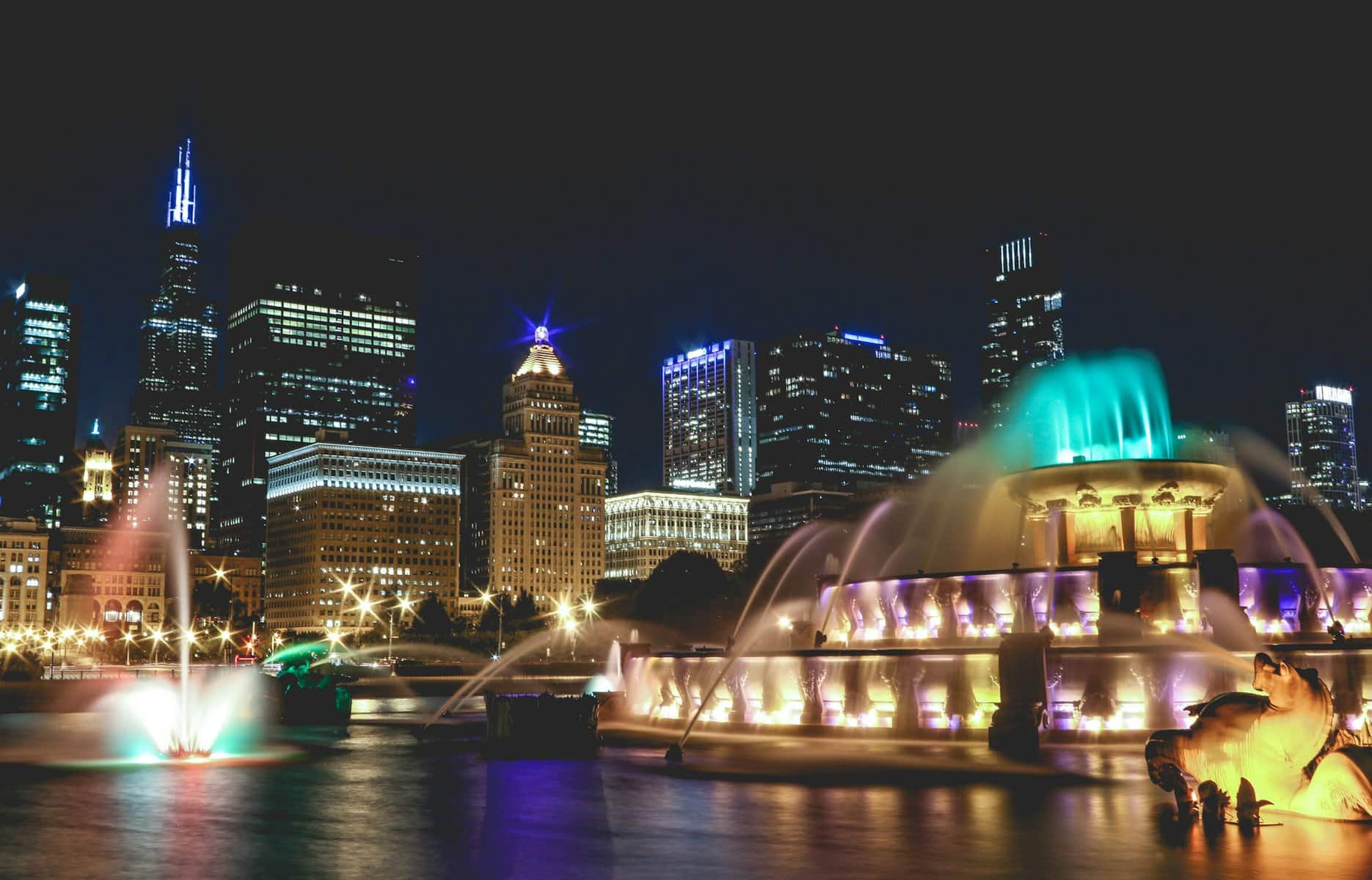
- The evening light show at Buckingham Fountain in the heart of Grant Park
- A selfie with The Bean, the Cloud Gate structure in Millennium Park
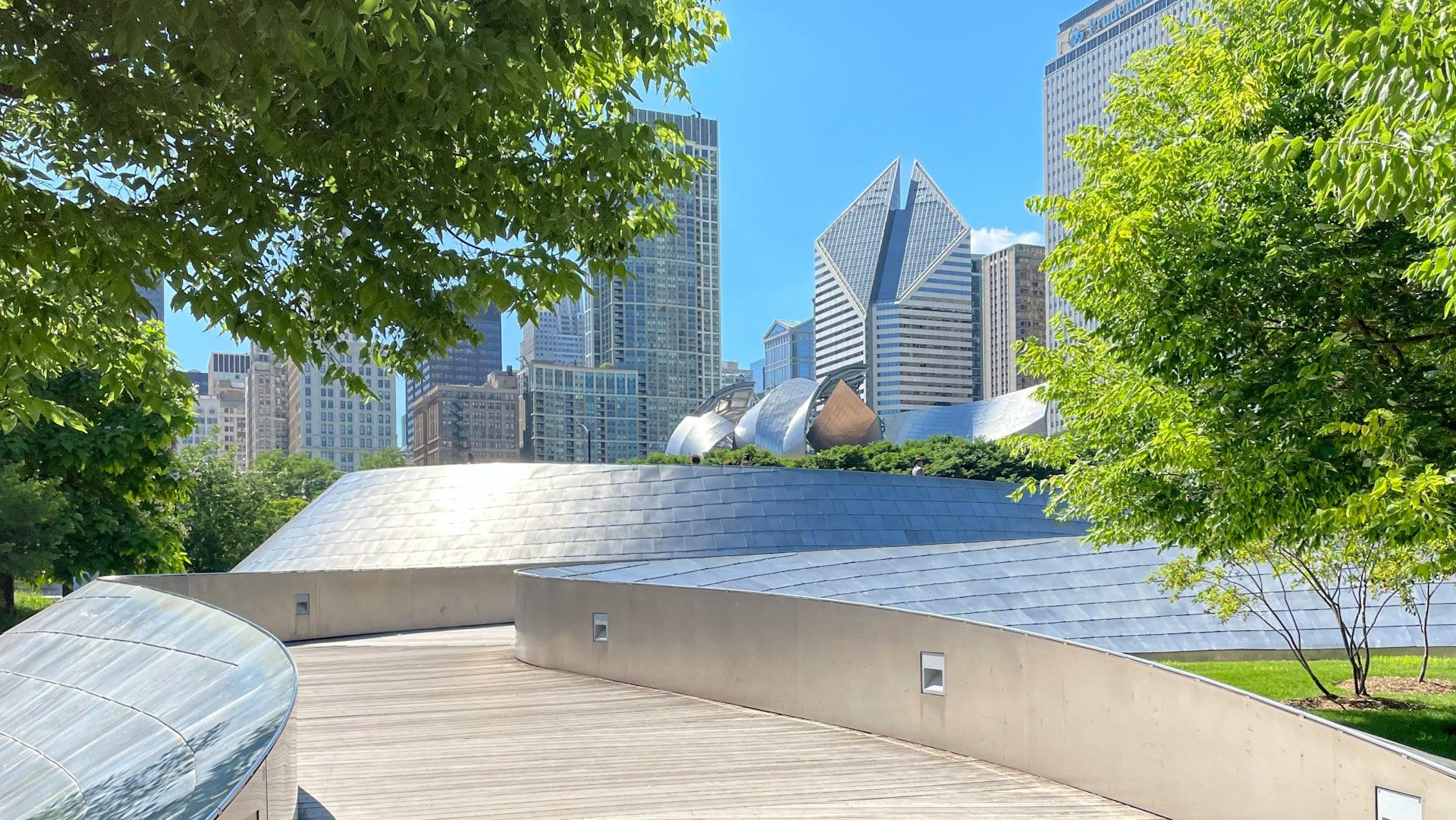
- The unique design of the Jay Pritzker Pavilion
- Vintage skyscrapers on Michigan Avenue
- Witness the Tiffany Dome at the Chicago Cultural Center
- The stunning interior of the Auditorium Theatre
- The spectacular facade of the Fine Arts Building
Click here for the complete guide to visiting and touring Chicago…
Click here to check availability and prices for hotels in Chicago…
For the Chicago CityPASS, five top attractions in Chicago at a discount, click here…
What Are Millennium Park and the Michigan Avenue Museums?
Millennium Park is currently one of the most popular attractions in Chicago. The park is part of the city's historic Grant Park, located on the eastern side of the Loop, close to the shore of Lake Michigan.
- Grant Park is the green lung of downtown Chicago. At the beginning of the 20th century, the city decided to establish cultural centers in the park for the general public's benefit.
- The Art Institute of Chicago, one of the most important museums in the USA, was opened in the park.
- At the heart of the park stands the monumental Buckingham Fountain, which has become one of the city's symbols.
- Towards the end of the second millennium, the city wanted to revitalize the park, and its entire northern section was rebranded as Millennium Park. Throughout the area, several attractions were built and placed, quickly becoming iconic features of the city.
- The shiny cloud gate, shaped like a bean, has gained momentum and has become one of the city's favorite attractions.
- Nearby, the Jay Pritzker Pavilion, an urban open amphitheater, catches the eye with its spectacular acoustic shell designed by superstar architect Frank Gehry.
- Today, Grant Park, Millennium Park, and the museums on Michigan Avenue, most notably the magnificent Art Institute, are considered the public and tourist heart of the city, along with the Navy Pier located slightly north by the lake. South of Grant Park lies a row of excellent museums such as the Field Museum of Science, Shedd Aquarium, and Adler Planetarium. Near Chicago's Chinatown, there's a collection of fascinating historical houses that today serve as period museums.
For a cruise on the Chicago River, click here…
Map of Millennium Park and Michigan Avenue Museums
Everything to See and Do in Millennium Park and the Museums of Michigan Avenue
Michigan Avenue
Michigan Avenue is the main boulevard of Chicago and a particularly popular tourist destination. The avenue stretches south from E Oak Street on the Near North Side, in a section called the Magnificent Mile (Click here for all the information on the Magnificent Mile north of the Chicago River…). The Magnificent Mile is Chicago's version of Fifth Avenue in Midtown Manhattan, filled with large hotels, luxury shops, and international chains. South of the river, Michigan Avenue is the cultural hub of Chicago.
Click here for the organized attractions bus of Chicago…
South of the DuSable Bridge and the elevated train line of the Loop, the avenue runs west of Millennium Park and is lined with the city's most important museums, headed by the Art Institute of Chicago. This section of the avenue is bustling throughout the day, with people heading towards the park and the waterfront in the direction of Navy Pier just a bit north.
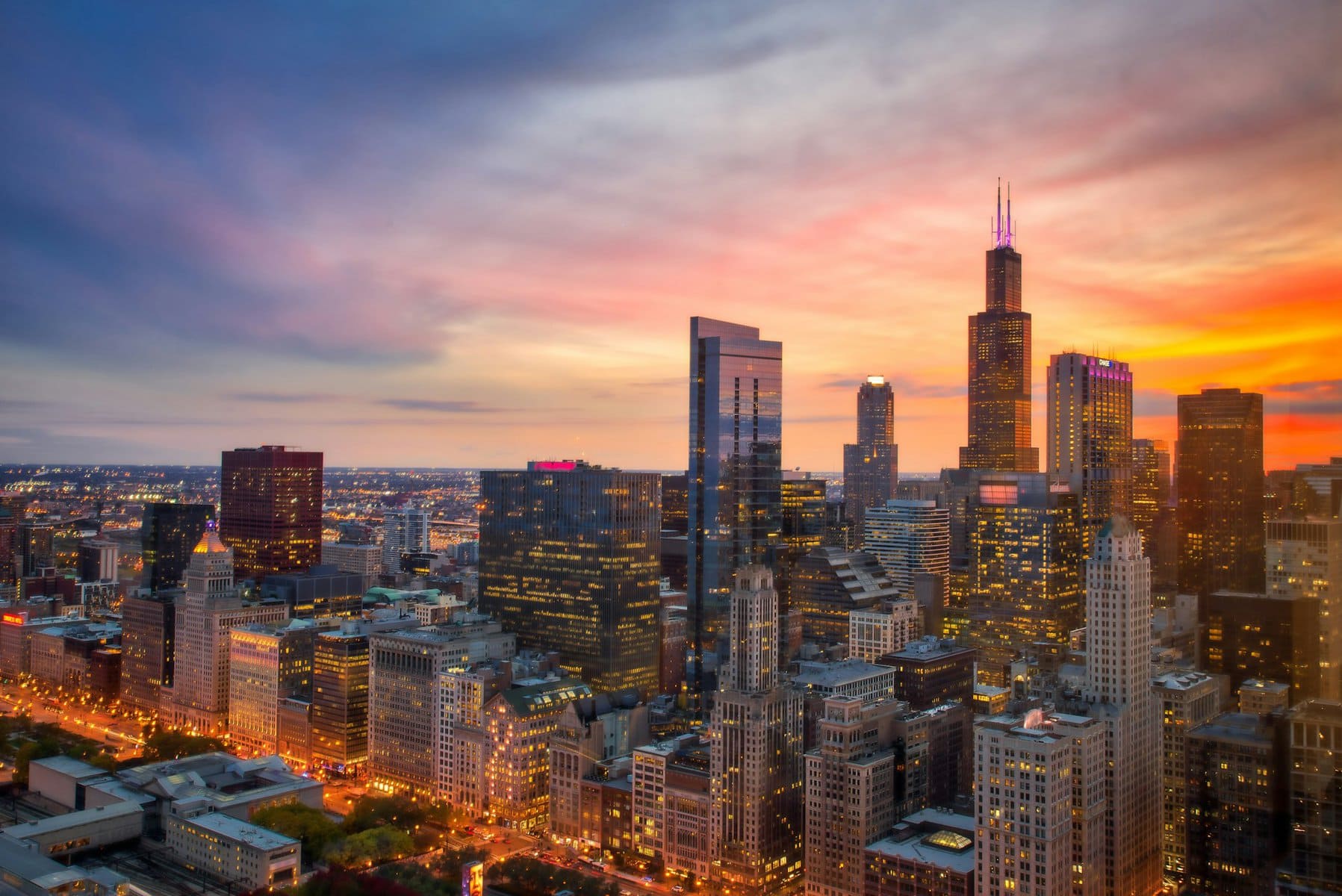
The Art Institute of Chicago
The Art Institute of Chicago is one of the most important museums in the entire USA. It hosts a vast collection of important American and European masterpieces. The museum is located south of Millennium Park on Michigan Avenue, in the most toured part of Chicago. It opened to the public at its current location in 1893, based on the collection of the Chicago Academy of Design. This institution was founded by an association of 35 artists who wanted to apply the model of the Royal Academy in London to the city.

In the museum's vast collection, there are many items beyond European art, including a large oriental art collection, rare Byzantine items, African art, and more. However, the museum's highlight is undoubtedly the rich collection of European and American artists, including some of the most renowned masterpieces in the world.
Click here to purchase online tickets for The Art Institute of Chicago…
The Art Institute Collection
The must-see American masterpiece paintings during your visit to the Art Institute of Chicago are:
- The most famous and important painting by the great American artist Edward Hopper “Nighthawks” or the night cafe as it's known, from 1942. This is one of the largest and most recognized paintings by American artists.
- A strong contender with Hopper's painting is Grant Wood's masterpiece “American Gothic” from 1930. This painting depicts two stern and devout farmers and is considered an American classic.
- The magnificent painting by Mary Cassatt “The Child's Bath” from 1892
In addition to the stars of American culture, the institute's collection also includes some of the most important European masterpieces in art history:
- The most recognized pointillist masterpiece “La Grande Jatte” by Georges Seurat
- The magnificent landscape painting by Paul Cezanne “The Bay of Marseille, Seen from L'Estaque”
- The Impressionist masterpiece “Paris Street; Rainy Day” by Gustave Caillebotte
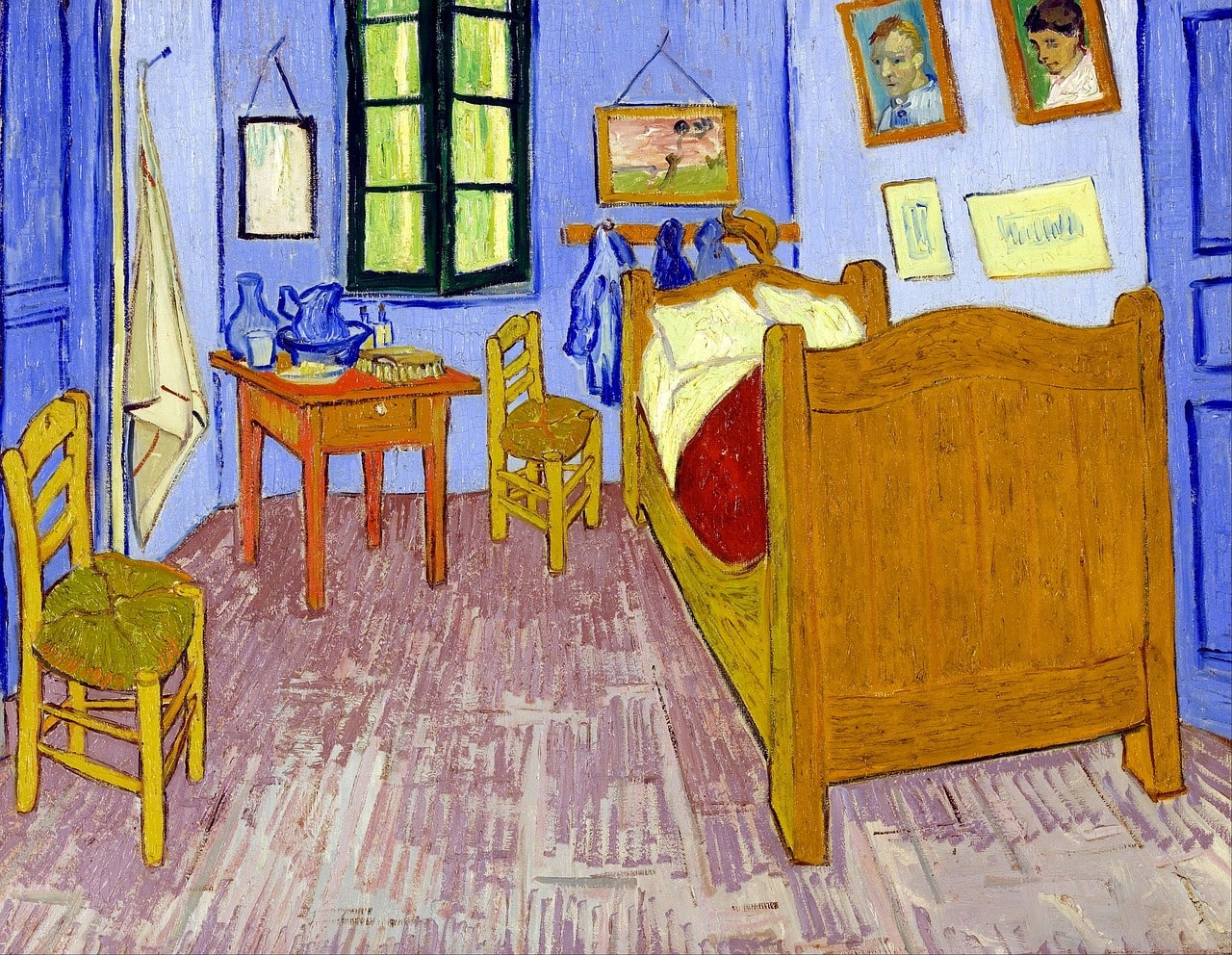
- The iconic painting by Vincent van Gogh “The Bedroom in Arles” from 1888
- Another significant painting by Van Gogh is the “Self-Portrait” from 1887 characterized by dark green tones
- The famous painting by Paul Gauguin “No te aha oe Riri” or Why Are You Angry?
- Claude Monet's blurry painting “Arrival of the Normandy Train in Saint-Lazare Station”
- The famous Cubist portrait by Juan Gris where he depicts his friend Pablo Picasso
- The rare painting by Henri de Toulouse-Lautrec “At the Moulin Rouge” from 1892
- The masterpiece of the Spanish Greek giant El Greco “Saint Martin and the Beggar”
- The collection also includes important paintings by Pierre-Auguste Renoir, Amedeo Modigliani, Édouard Manet, Rembrandt, and other great masters
Address: 111 S Michigan Ave, Chicago
Millennium Park
Millennium Park is one of the newest places for sightseeing and leisure in Chicago, but it quickly became a must-see site in the city. The park is a block on the waterfront north of the Chicago Art Institute, in the northern part of Grant Park. It was named and built in honor of the second millennium. The park serves as a post-modern sculptural extension of the important art institute.
The park features several remarkable sculptures and attractions that have become city symbols, most notably the Cloud Gate and the Jay Pritzker Pavilion. There are also several small and interesting spaces in the park, such as the Millennium Monument in Wrigley Square, a small fountain with a semicircle portici (Italian arcade structure) behind it, the delightful Lurie Garden, and the interactive Crown Fountain.
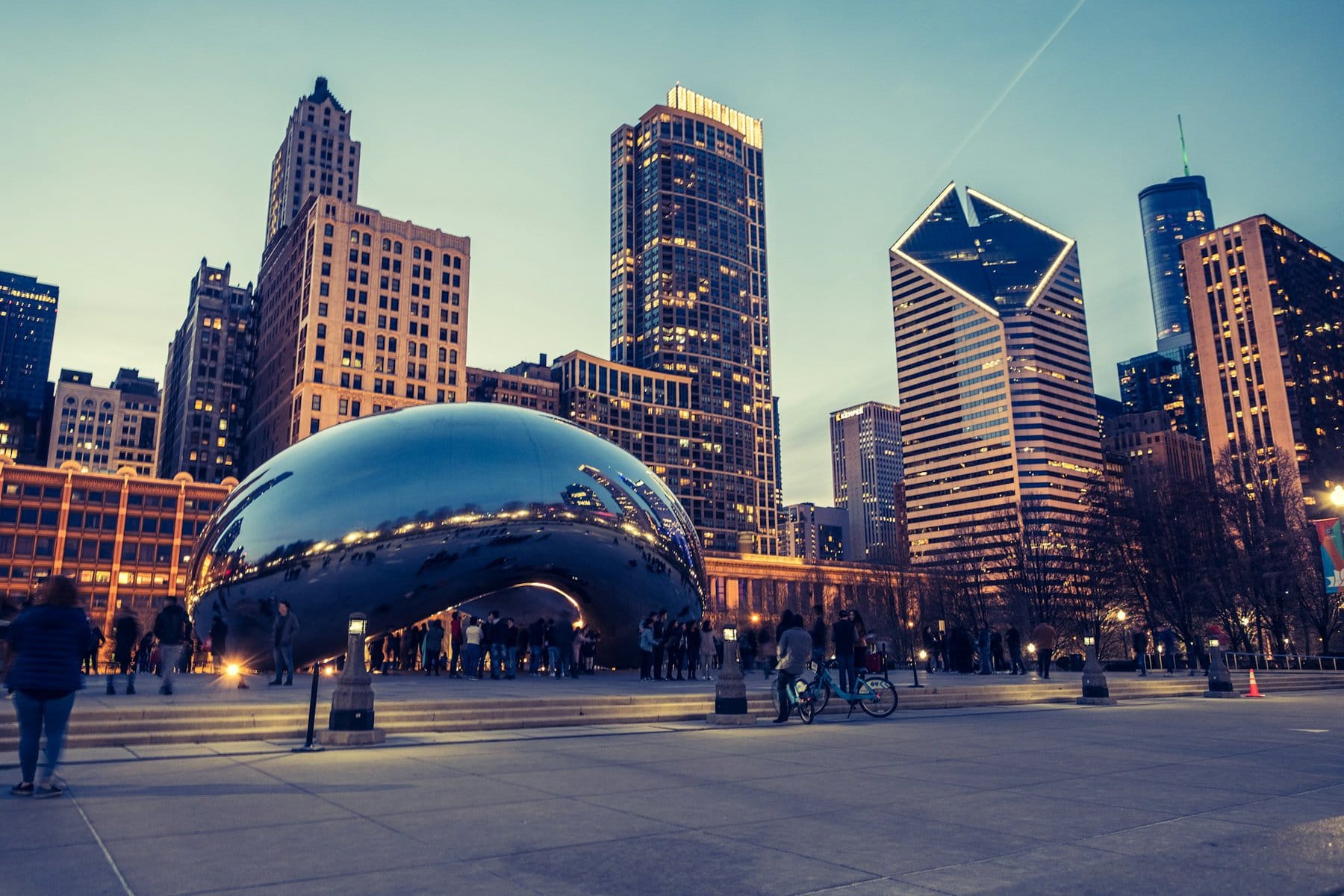
Cloud Gate
This masterpiece by the sculptor Anish Kapoor, a British artist of Jewish and Indian descent, is crafted from 168 plates of gleaming stainless steel. Owing to its frozen cloud shape, it earned the nickname ‘The Bean' and became one of Chicago's coolest selfie spots (with reflections from the sculpture). The Cloud Gate stands 11 meters tall and is precisely double that in length. The sculpture was completed in 1999 and, with its installation in the park in 2004, became one of the city's symbols.
Jay Pritzker Pavilion
The Jay Pritzker Pavilion is a unique acoustic shell structure situated above a performance stage in the heart of Millennium Park. This stunning shell structure is the creation of the Jewish-Canadian architect Frank Gehry, or originally Frank Goldberg. It is named after one of the family owners of the Hyatt Hotels chain, who donated the funds for its construction. The pavilion's amphitheater can accommodate up to 11,000 spectators and is now an important part of the city's urban landscape and public cultural life.
Grant Park
Chicago's historic city park is one of the most loved and toured spots in this bustling city. The park is the green lung of the Loop, stretching like a rectangle along the shores of Lake Michigan to the east and the shadows of downtown Chicago's skyscrapers to the west. Back in the city master plan of 1844, it was decided to leave the area open and not build on it.
In 1893, the grand Art Institute of Chicago was built, and the entire park underwent a transformation for public use. Over the years, attractions were added to the manicured park, such as the Buckingham Fountain in the 1920s and Millennium Park at the start of the 2000s. Today, the park is filled with green pathways, trees, and benches for sitting. Its southern part is anchored by the Field Museum, the city's natural history museum, and the giant Soldier Field stadium of the Chicago Bears football team.
Buckingham Fountain
This beautiful fountain in the heart of Grant Park was built in 1927 as a contribution from local philanthropist Kate Sturges Buckingham. The fountain dominates the very center of Grant Park, in the most manicured area of the large park. It is considered one of the largest fountains in the world and one of the city's most shining and beloved symbols. The design of the fountain is based on the structure of the mythical Latona Fountain in the Gardens of Versailles near Paris, featuring an especially stunning Rococo style.
The fountain operates from mid-April to mid-October, with special choreography and a light show during the evenings.
Chicago Cultural Center
The Chicago Cultural Center building stands on Michigan Avenue across from Millennium Park. Completed in 1897, it originally served as Chicago's central public library. The entrance to the building is on Randolph Street at its northern edge, featuring an impressive neo-classical style gate. In 1991, the library building was converted into a cultural center, hosting city cultural events, rotating exhibits, and more.
Click here for a guided tour of all Chicago's architectural gems…
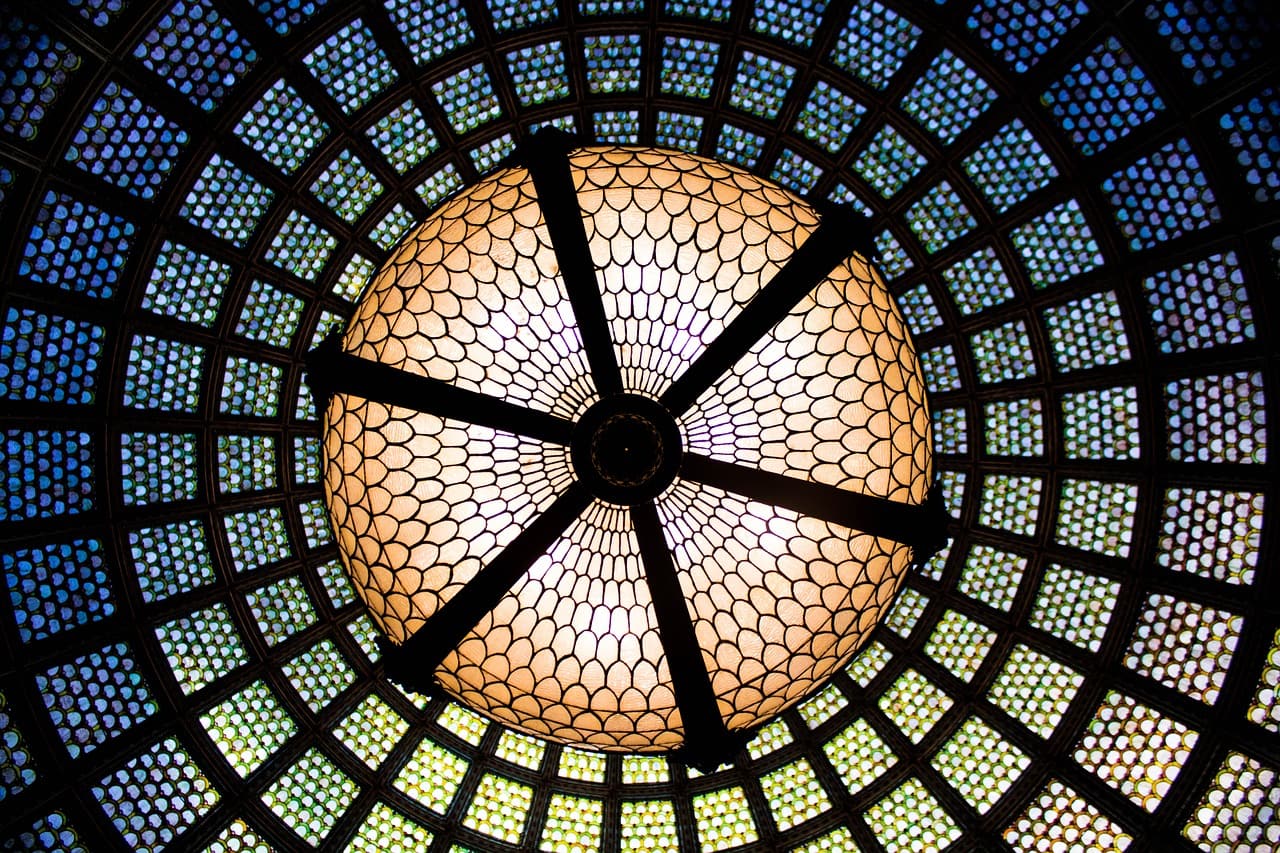
It's worth stepping inside the building mainly to see the Tiffany Dome, a breathtaking dome covered in blue glass tiles within cast iron frames, inspired by the construction of the Pantheon in Rome. The dome was built by the Tiffany company, and it's named after it.
Address: 78 E Washington St., Chicago
For up-to-date opening hours of the center, click here…
Fine Arts Building
The Fine Arts Building, also known as the Studebaker Building, is located just south of the Art Institute of Chicago on Michigan Avenue. The building was completed in 1885. It started as offices and a factory for the Studebaker wagon company, which soon left and transformed the building into a cultural center. A remarkable group of local artists operated in the building at the beginning of the 20th century.
Address: 410 S Michigan Ave., Chicago
For the full food tour of all Chicago's culinary gems, click here…
Auditorium Theatre
The Auditorium Theatre is one of the most impressive vintage theaters in Chicago. It's located within the Fine Arts Building block and its entrance is from East Ida B. Wells Drive on the southern part of the block. The theater is one of the favorite masterpieces of Louis Sullivan, one of the most important architects of the Chicago School and considered by many as the father of skyscrapers. Sullivan designed the theater with his partner Dankmar Adler, and it opened to the public in 1889. The theater can seat nearly 4,000 spectators and is known for its flowing and grandiose interior.
Address: East Ida B. Wells Drive, 50, Chicago

Museum of Contemporary Photography
The Museum of Contemporary Photography is a modern institution in Chicago, loved mainly by professionals. It is located on the southern part of Michigan Avenue, opposite the Spirit of Music Garden in Grant Park. The museum opened in 1976 and houses a vast collection of photographs for preservation. The museum features rotating exhibitions of the greatest modern photographers.
Address: 600 S Michigan Ave. Chicago
Click here for the museum's up-to-date opening hours…
Everything to See and Do in Chicago's South Loop
Field Museum
Chicago's Field Museum of Natural History stands right on the northern edge of the South Loop, in the southern part of Grant Park. Just south of it is the legendary Soldier Field football stadium, home of the Chicago Bears. To the east, you'll find the Shedd Aquarium, and a bit further, the Adler Planetarium. The museum opened in 1894 and has developed over the years. Today, it is considered one of the largest natural history museums in the world.
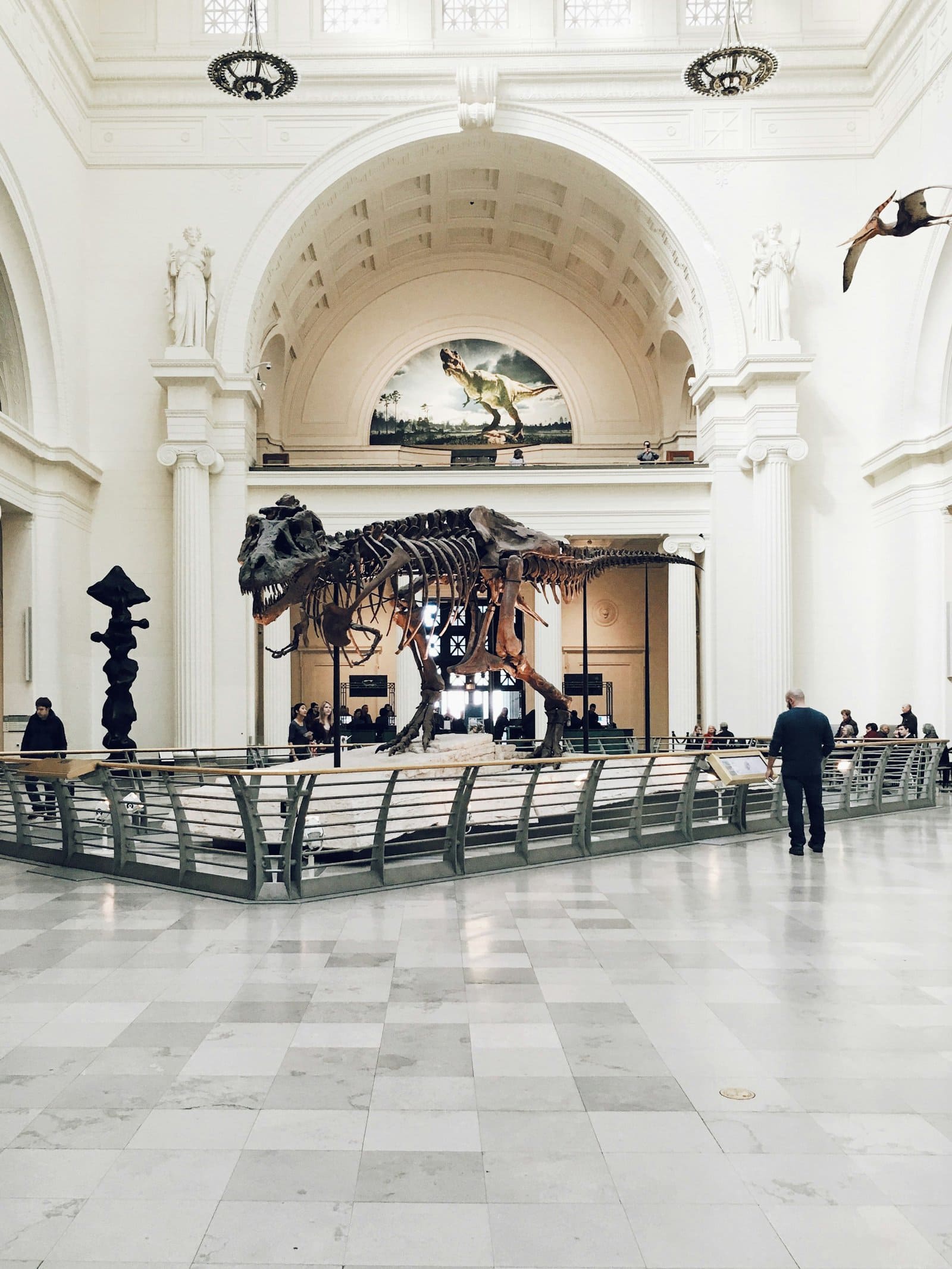
The most famous wing of the museum is the Stanley Field Hall, featuring giant replicas of mammoths and full-sized dinosaurs.
The star of the museum is Sue, a Tyrannosaurus rex dinosaur, comprised of 90% original fossils found.
Address: S Lake Shore Dr. 1400, Chicago
Click here to purchase online entrance tickets to the Field Museum…
Click here for the current opening hours of the Field Museum…
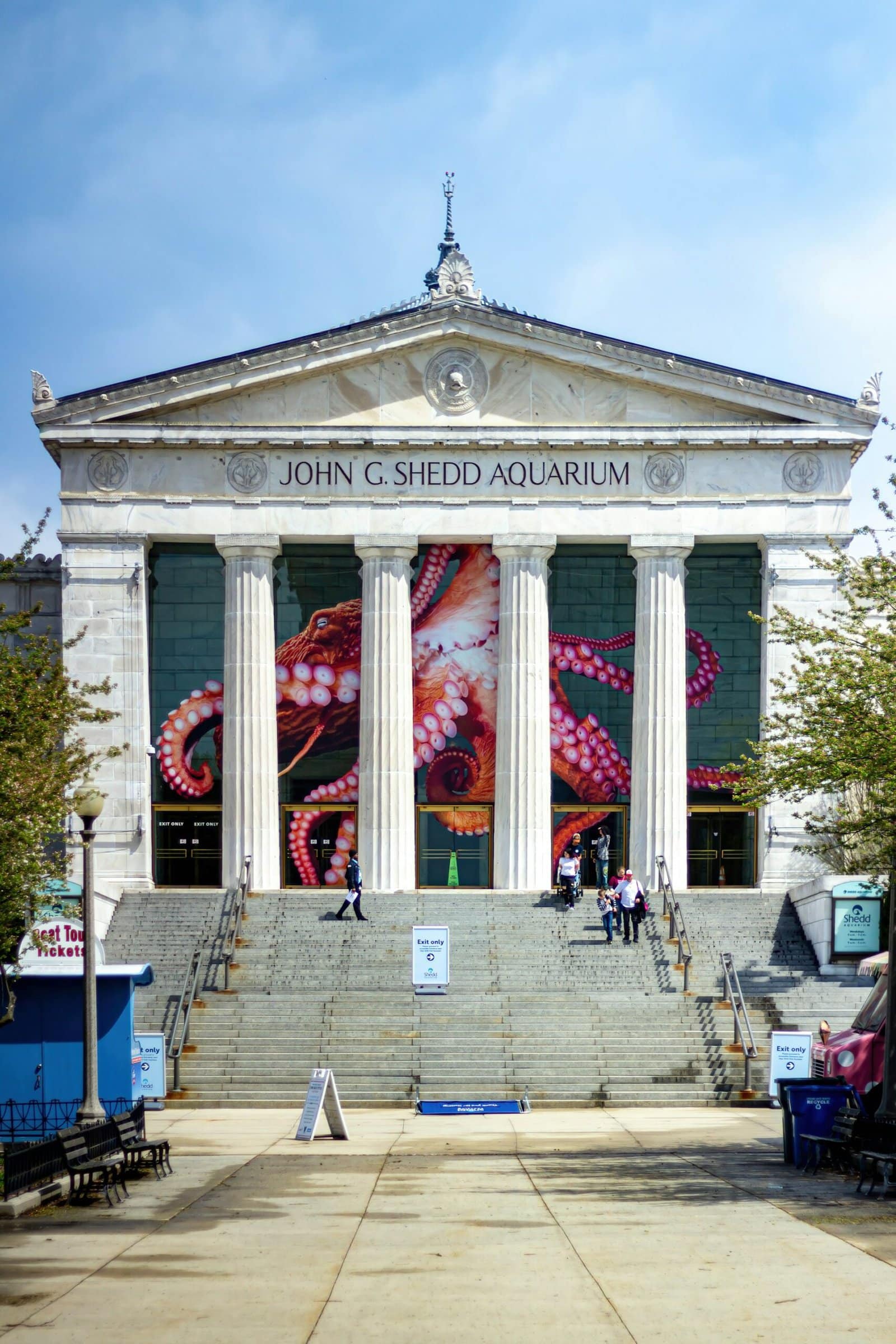
Shedd Aquarium
The large aquarium in Chicago is situated between the Field Museum of Natural History and Adler Planetarium. The aquarium opened in 1930 and has since been considered one of the beloved attractions in Chicago. It is considered one of the largest aquariums in the world, with more than 32,000 amphibious creatures and fish species.
The aquarium wings also include the Abbott Oceanarium, the cool Wild Reef, and the somewhat intimidating Stingray Touch.
Address: S Lake Shore Dr. 1200, Chicago
Click here for the latest aquarium hours…
Adler Planetarium
Another wonderful and beloved institution nestled in the rare museum campus on the northern border of the South Loop is the Adler Planetarium. Similar to its two nearby institutions, the Shedd Aquarium and the Field Museum, the planetarium is a long-standing institution founded in 1930.
The museum is an excellent place to learn about the universe, with impressive displays of interstellar journeys, along with a museum display of astrophysics instruments.
Address: S DuSable Lk Shr Dr. 1300, Chicago
Click here for the latest museum hours…
Glessner House in the Prairie District
The Glessner House is part of a cluster of the old and beautiful homes on South Prairie Avenue, known as the Prairie District. The house was designed by architect Henry Hobson Richardson, for whom the Richardsonian Romanesque style is named, of course. The house serves as an outstanding example of Richardson's talents, who is considered, along with Frank Lloyd Wright and Louis Sullivan, as one of the spiritual fathers of American architecture.
The house was completed in 1885 as the Chicago home of industrialist John Glessner, who was based in Springfield, the capital of Illinois. In 1971, the house was opened to the public as an important city preservation site. It features a display from Glessner's collection, including elegant furniture, decorative items, and more. The main significance of the house lies in its stunning architectural design.
Address: 1800 S Prairie Ave, Chicago
Click here for all the updated information about visiting the house…
Clarke-Ford House
The Clark House is situated next to the Glessner House and is considered one of the important houses in the Prairie District. The house was built in 1836 in the Greek Revival style that was common for that period. This construction was deeply influenced by the architectural elements of ancient Greece, combined with Northern European manor houses in appearance. To this day, the house is considered the oldest in all of Chicago that survived the test of time and the great fire. The house was open as a period museum and is currently closed to the public, with plans to reopen in the future.
Address: 1827 S Indiana Ave., Chicago
Chicago's Chinatown
Chicago's largest ethnic neighborhood is home to more than ten thousand immigrants and descendants of immigrants from China. The neighborhood is located across several blocks north of Highway 55 and is a beloved hangout for city residents, mainly due to the cluster of excellent Chinese restaurants in the area.
Click here for a spicy food tour through the culinary gems of Chicago's Chinatown…
The neighborhood essentially resembles San Francisco's Chinatown and Manhattan, with large signs in Chinese, grocery stores with peculiar items, small department stores packed with low-quality goods, and more. Despite the rather busy street and the junk merchandise, the restaurants in the district are considered excellent, including some more upscale ones which are regarded as the city's top.