South Midtown Manhattan and Chelsea
The southern part of Midtown Manhattan is more moody and less glamorous than the streets and avenues north of it, between Times Square and Central Park. But in this part of the city, sites and vibes strongly express the gritty and intense character of New York. This area is the bustling and most active part of New York during the day. With key shopping areas (stores and department stores), iconic skyscrapers led by the Empire State Building, a central train station, and Manhattan's most important sports venue.
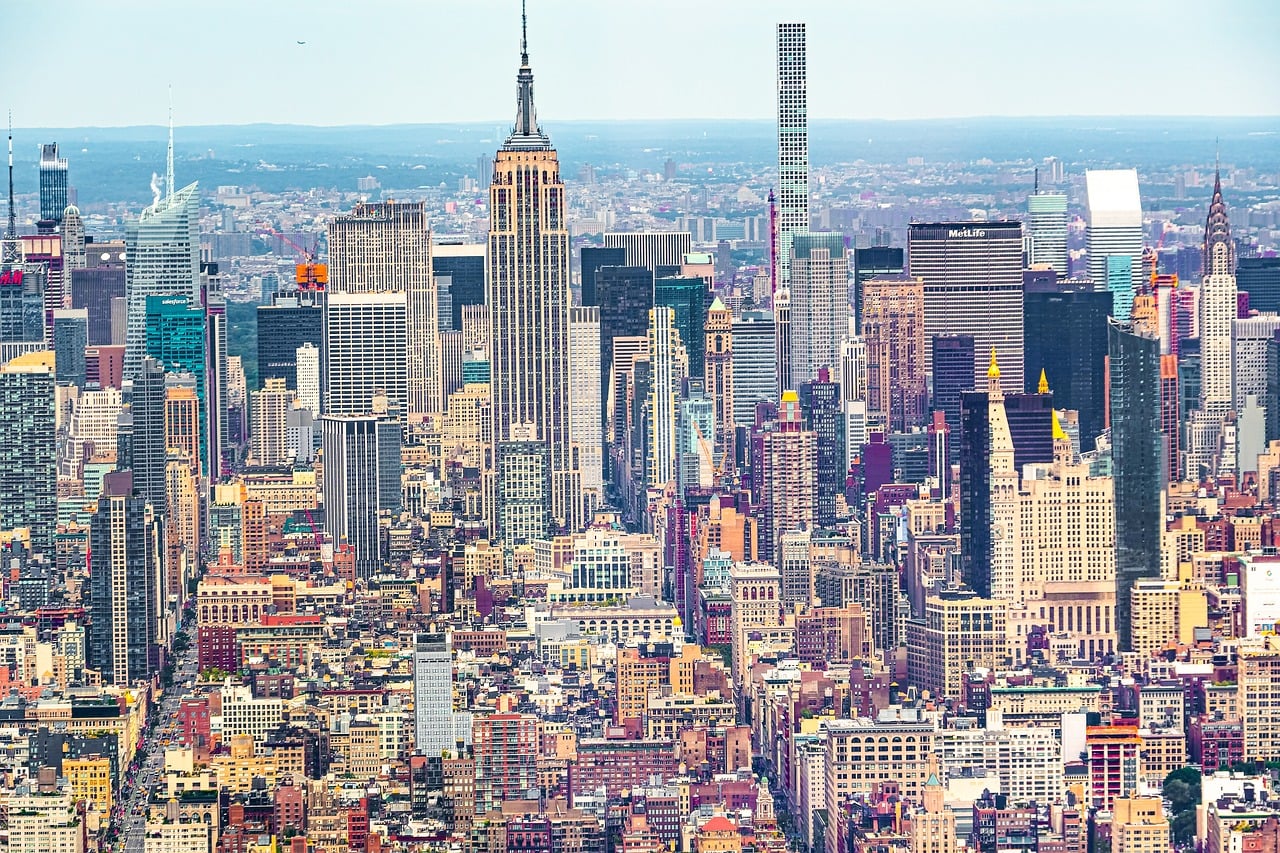
- The historic Empire State Building is not like modern skyscrapers but is a vintage development of the city from the early 20th century. Beneath it, the bustling streets of the Garment District with plenty of restaurants and shops, and the city's legendary stadium – Madison Square Garden
- A bit south of the skyscraper-lined streets of the Garment District, in the Flatiron District, you step back into the New York of past centuries. The area is filled with old, magnificent skyscrapers, at the forefront the unique Flatiron Building
- Around the Flatiron are beautiful streets with small parks and a vintage atmosphere
- To the east lies the trendy Chelsea neighborhood, which underwent a rapid gentrification process and today offers plenty of entertainment while beautifully preserving its glamorous and wild past
Click here for all the information about traveling in New York City…
How do you get to the southern part of Midtown?
You can reach the southern part of Midtown via almost all subway lines crossing Manhattan: to the Empire State Building and Herald Square at the stations on 34th Street along the yellow, orange, and red lines. For Madison Square Park, get off these lines at 23rd Street. For Union Square, hop off on the yellow and green lines at 14th Street.
8 Must-See and Do Things in the Garment District, Chelsea, and Flatiron
- Get a panoramic view from the 102nd floor of the Empire State Building
- Catch a Knicks (or Rangers) game at Madison Square Garden
- Dine all day at Chelsea Market
- The impossible triangle of the Flatiron Building
- Catch some air at Madison Square Park
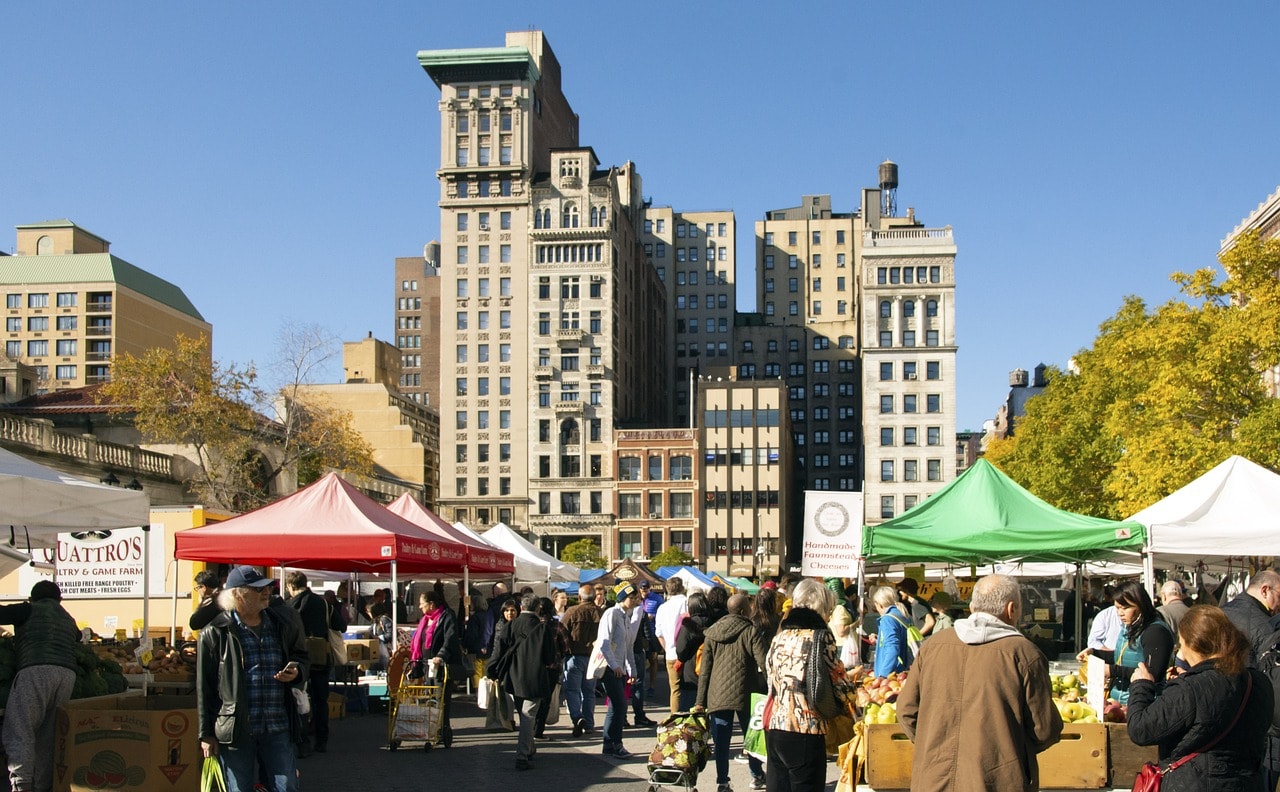
- Organic food market at Union Square
- Shopping at Macy's
- Pop culture and rock mythology at the Chelsea Hotel
Click here for a list of 12 excellent hotels in Manhattan…
Click here to check availability and prices in Midtown Manhattan hotels…
Map of South Midtown and Chelsea District in Manhattan
The Garment District
The Empire State Building
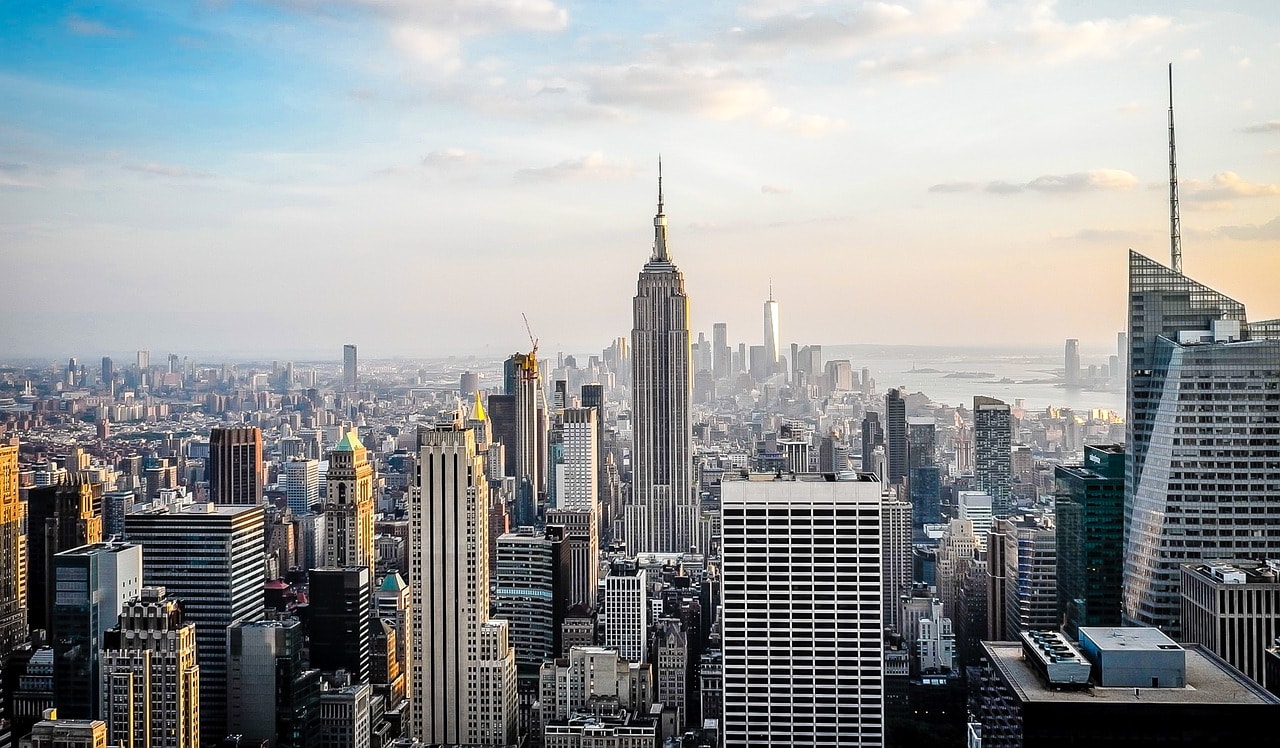
- The symbol of Manhattan, the ultimate New York skyscraper with a hint of vintage flair and stunning character. Today, the Empire State is the seventh tallest tower in the city (and its ranking will drop further in the future) but remains the first among the city's historic skyscrapers.
- The Empire, along with the Chrysler, symbolizes America's power from when the country became an empire. It was built in the 1930s, providing employment during the Great Depression, and since then has become a symbol of the American empire and an example of skyscraper construction in the city.
- The building is one of the most famous New York icons, including King Kong's spectacular climb on the structure in the classic 1933 horror film.
- In July 1945, a B-25 bomber hit the 79th floor of the tower, causing damage and several casualties (a chilling preview of the fate of the Twins in downtown).
Click here to purchase online tickets for the iconic Empire State Building observation deck…
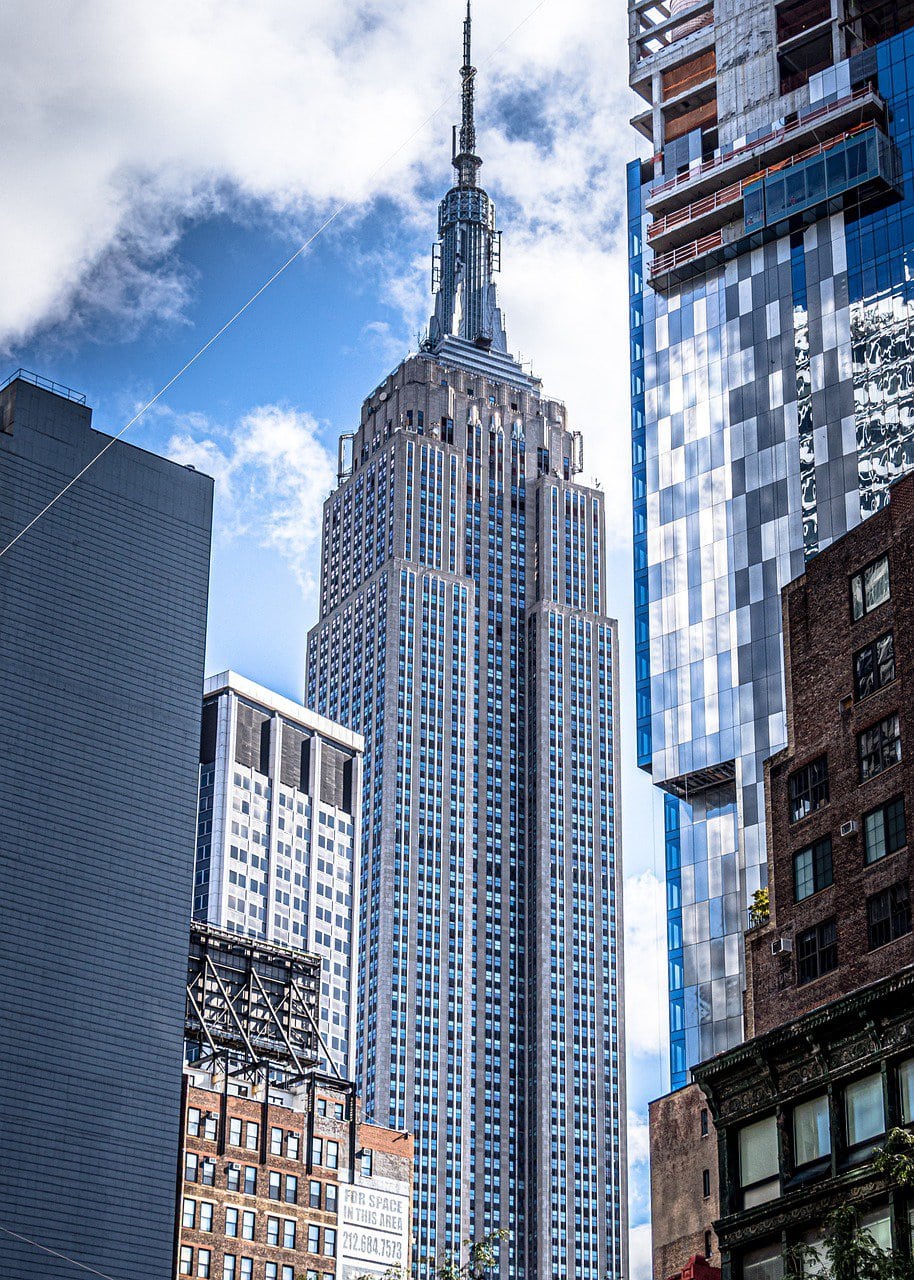
The place to be at the Empire State Building is, of course, the building's famous observation deck, standing 382 meters above the bay. On the way, stop at the first observation deck on the 86th floor, then take another set of fast elevators to the 102nd floor. From the observation deck, you'll see an almost ultimate view of Manhattan (excluding, of course, the tower itself).
Herald Square
The main square of the Garment District is Herald Square. In Midtown, the main squares are where the major avenues intersect with Broadway, and Herald is the meeting point of Broadway and Sixth Avenue (Times Square is where Broadway meets Seventh Avenue) and 34th Street.
Click here for a self-guided app tour around Midtown…
The southern triangle of Herald Square is Greeley Square Park, and the northern triangle is named after the rival newspaper building (to the Times). The bustling square is full of shops and chain stores. Its landmark is the Empire State Building, just one block east of the square on 34th Street. To the west is the east facade of the iconic Macy's department store.
Click here for the full history tour following the hottest designers in the Garment District…
Macy's
The famous New York department store is located on an entire block between Sixth Avenue to the east and Seventh Avenue to the west, and 34th Street to the south and 35th to the north. The giant department store is the flagship store of the chain founded by Roland Macy, a Quaker from Nantucket, Massachusetts, in the mid-19th century.
The New York department store (or Macy's Herald Square, as it is officially called) opened in the early 20th century and quickly became a well-known and very popular institution in Midtown. Macy's is the largest store in the US in terms of area, with tens of thousands of shoppers visiting every day. The store features some escalators from the early and mid-20th century that have been preserved, offering a return to the grandeur of the 1920s.
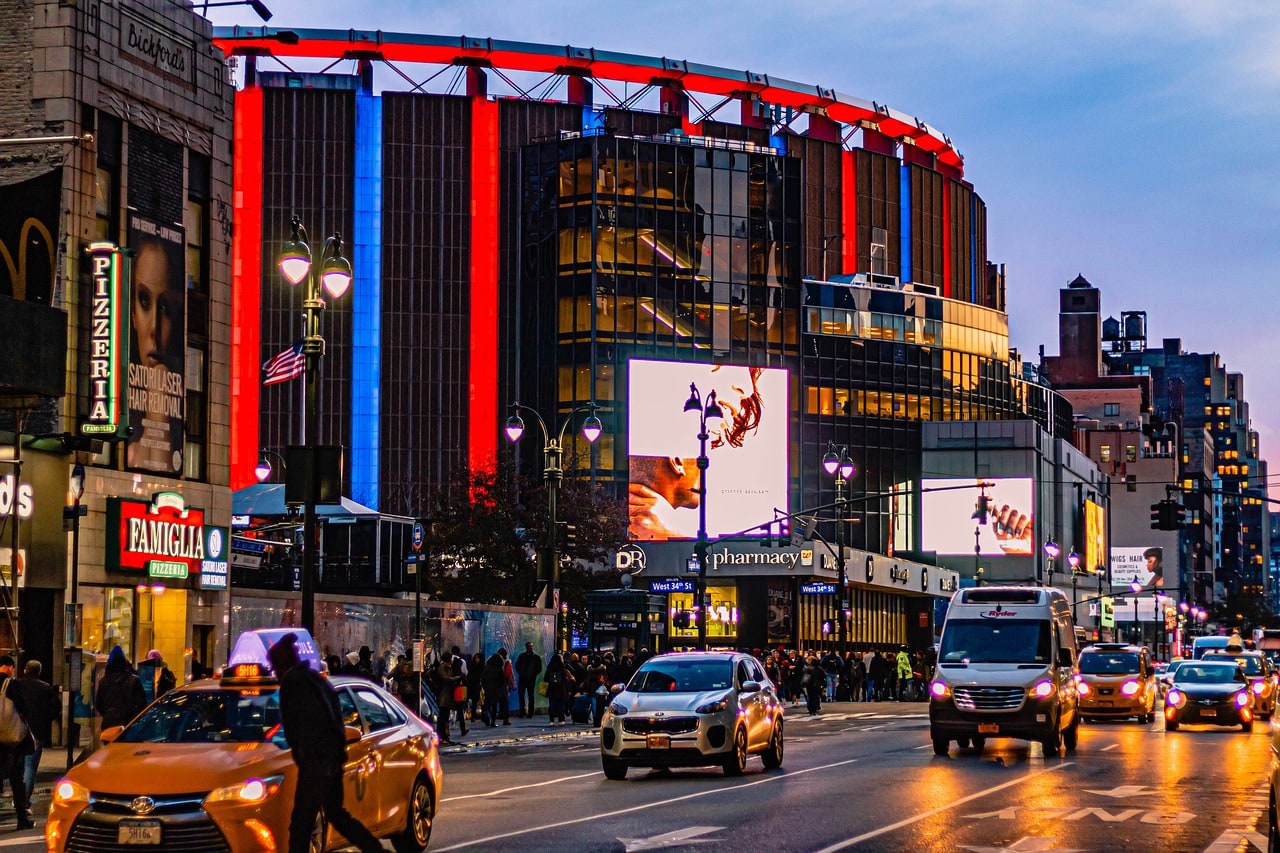
Madison Square Garden
The iconic New York stadium is situated above the vast area of Penn Station, in the block between Seventh and Eighth Avenues and 31st and 33rd Streets. Madison Square Garden is the home stadium of Manhattan’s two famous teams – the New York Knicks (basketball) and the New York Rangers (hockey). Besides hosting league and playoff games of the home teams, the stadium also holds mass events and entertainment events such as concerts, large shows, wrestling, conferences, and major political events.
Click here to purchase tickets for Knicks games at Madison Square Garden…
Click here to purchase tickets for Rangers games at Madison Square Garden…
The current stadium is the fourth one built bearing the name Madison Square Garden. The first two were built at the end of the 19th century in Madison Square, slightly south of the current location. Today's stadium was built in the 1960s and is a very important part of the life of the New Yorkers themselves. The stadium has a capacity of about 20,000 people (depending on the event held there) and it's usually packed to capacity.
Pennsylvania Station – Penn Station
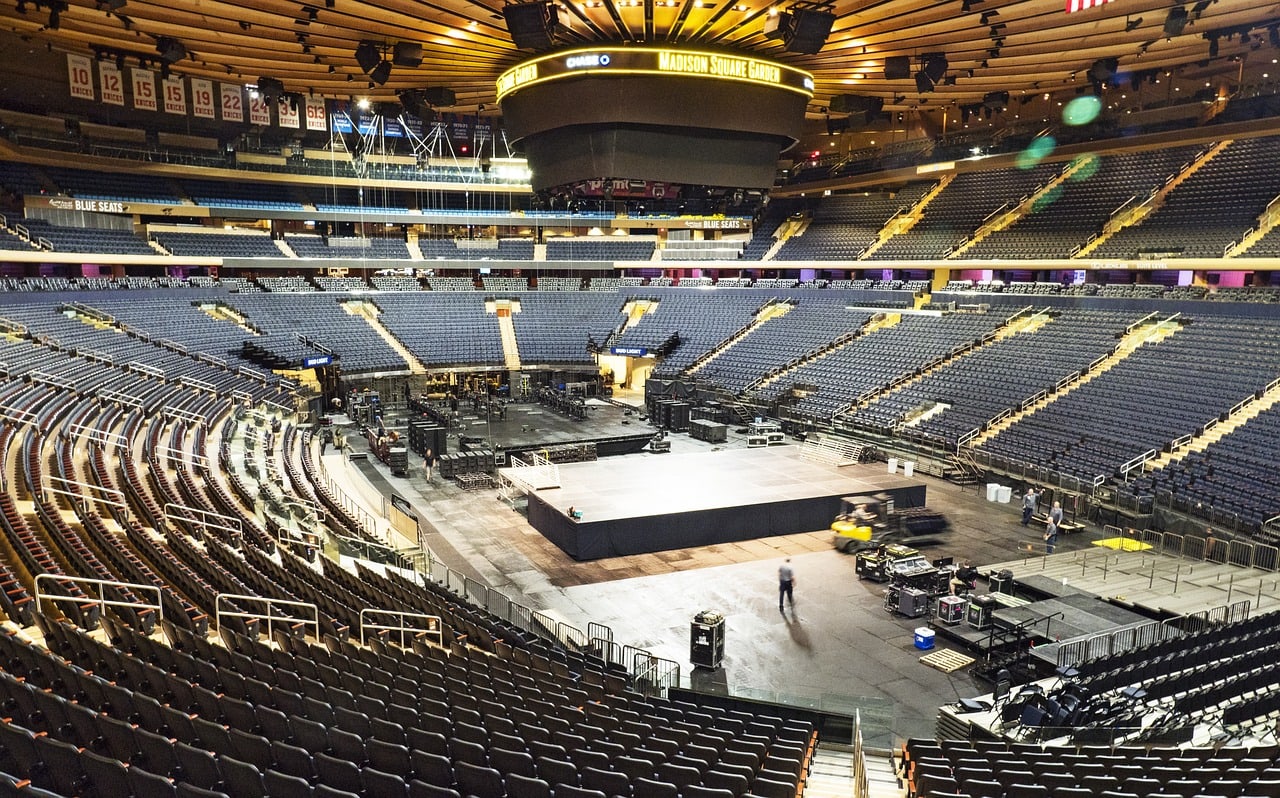
New York City's main train station is located beneath Madison Square Garden, between Seventh and Eighth Avenues and 31st and 33rd Streets.
The station was built at the beginning of the 20th century to channel train traffic into the city after Grand Central Station was too small to accommodate the passenger and train traffic.
It was expanded and renovated in the 1950s and today, around thirty million passengers pass through it annually. The station hosts Amtrak trains to major cities in the eastern U.S., the Midwest, and Canada. It's a giant and central hub for the subway, regional trains from Long Island and New Jersey, and a bus terminal.
Click here for the complete Midtown food tour…
St. John the Baptist Catholic Church
The beautiful Catholic church dedicated to John the Baptist is located on the northern part of 30th Street, between the seventh and eighth avenues. If the church were in a European city, it would dominate the skyline, but in New York, its handsome bell tower barely scratches the neighboring skyscrapers. Yet, it remains a very impressive church with a magnificent interior, as befits important Catholic churches. The construction of the church began in 1840 but was only completed about fifty years later.
Address: W 30th St. 213 New York
Koreatown
The unique space of Koreans in New York is located on the block of 32nd Street between Fifth and Sixth Avenues. Koreatown brushes against Greeley Square Park to the east (the southern part of Herald Square). The street itself between the avenues is called Korea Way and it hosts a concentration of shops and businesses owned by New York's Korean community.
The street boasts an impressive collection of ethnic restaurants and manicure and pedicure salons that are very popular among city residents. The area only developed in the 1980s with the opening of a bookstore owned by Koreans. Soon, more business owners originally from Korea came and took over the street.
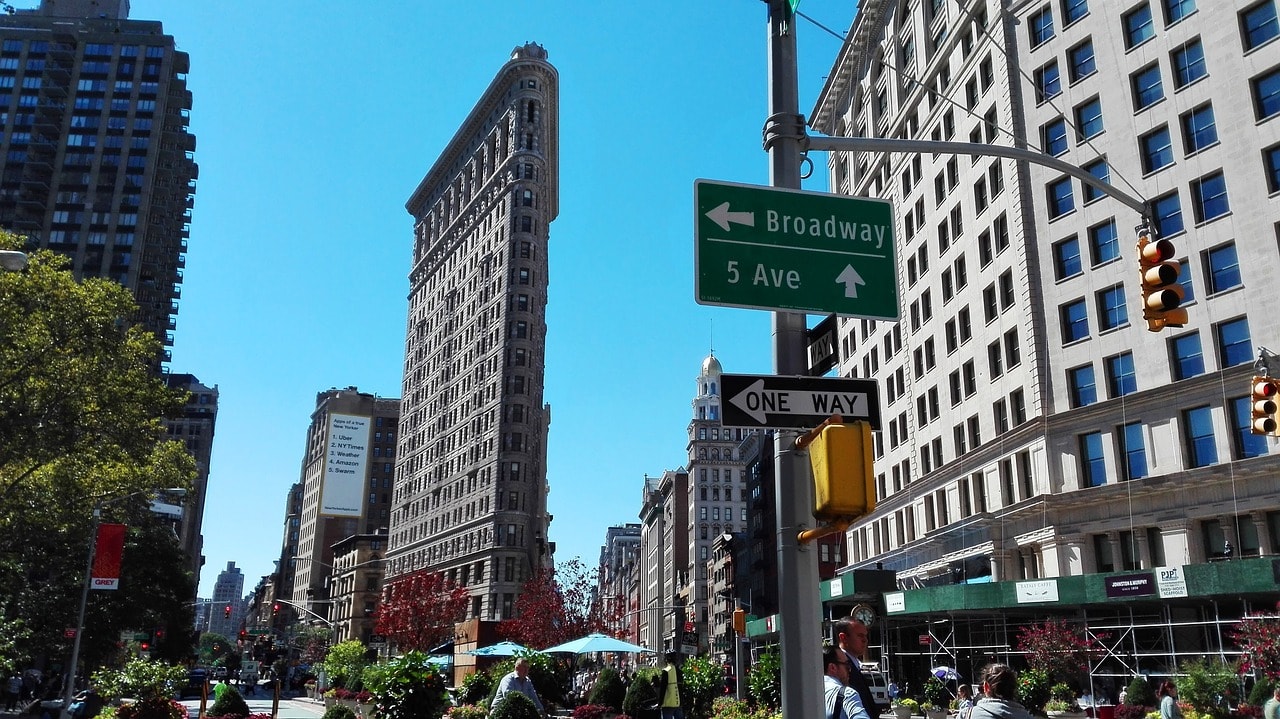
The Flatiron
Madison Square Park
Madison Square's great square is a cornerstone of New York City's development. The square was the fashionable residence area for the city's affluent during the 19th century and has since maintained a very green and pleasant character in the calmer areas south of Midtown. The square is where Broadway meets Fifth Avenue, and the park stretches eastward to Park Avenue, between 26th and 23rd streets.
In the past, Madison Square housed luxury hotels, the Madison Square Theatre, and the original indoor stadium of Madison Square Garden. The stadium still carries the square's name at its location a bit north near Herald Square. The square features beautiful statues, a fountain, and memorials such as the Eternal Light Flagstaff and the President Arthur Statue. To the south of the square is one of Manhattan's landmarks, the unique Flatiron Building. To its north is the New York Life Building with its golden pyramid roof.
Worth Monument
The northeast corner of Madison Square Park is called Worth Square. The square is dedicated to General William Jenkins Worth, a hero of the mid-19th century American-Mexican War. In the square, there's a tall obelisk built over Worth's grave, one of the few graves in Manhattan.
The Flatiron Building
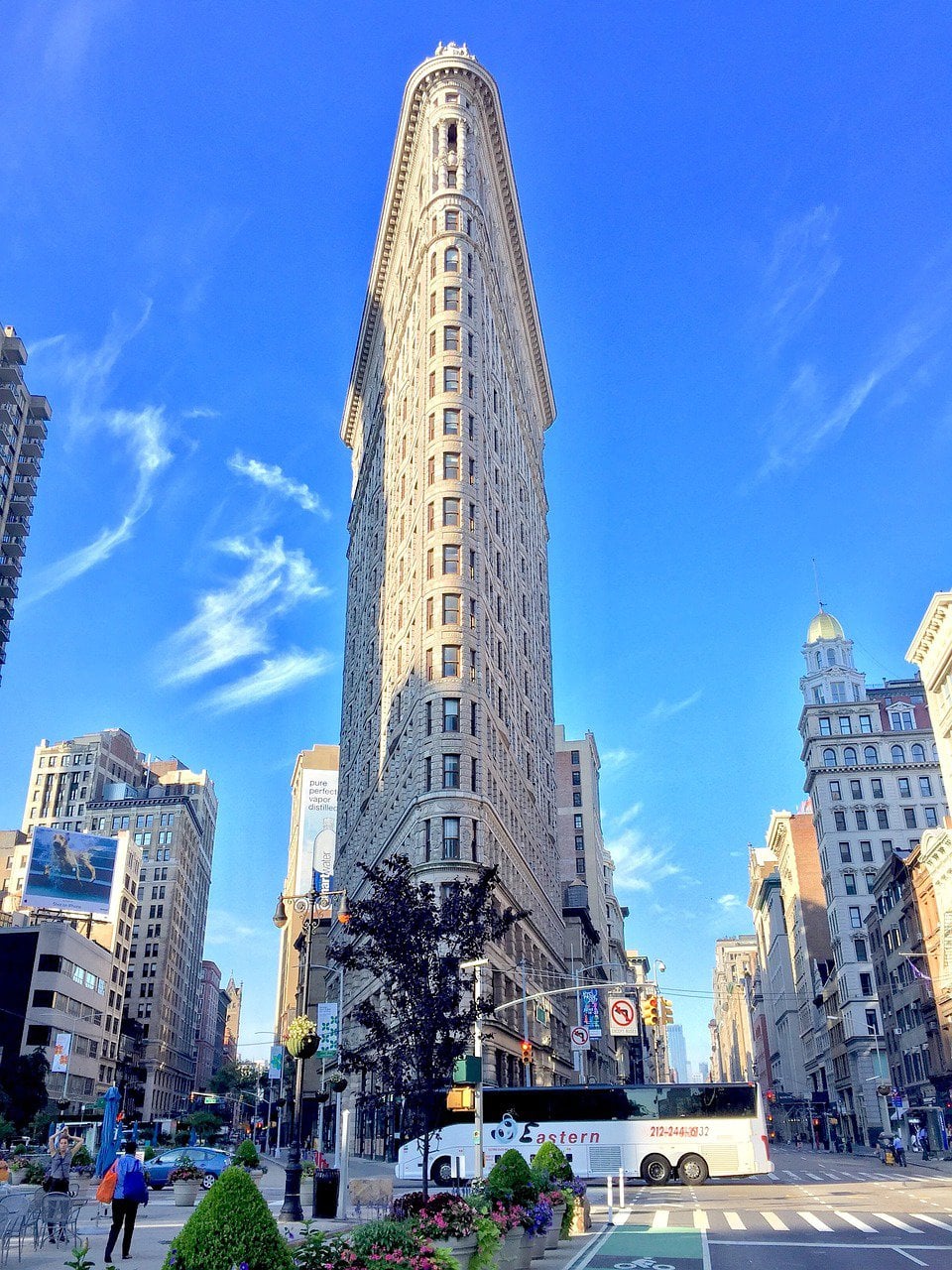
When the Flatiron was completed in 1902, it briefly held the title of the tallest building in the world. The Flatiron is one of the buildings that symbolize the perfect urban planning of Manhattan.
It is located at the intersection of Fifth Avenue and Broadway, and its architecture perfectly mimics the unique diagonal path of Broadway and its role in breaking the symmetric grid plan of Manhattan's streets. The building's structure is a sharp-angled triangle with its very narrow front facing Madison Square Park.
Click here for a guided tour of the Flatiron District's architectural marvels…
Theodore Roosevelt Birthplace National Historic Site
The birthplace of the 26th President, Theodore Roosevelt, is located just south of Madison Square Park and slightly west of Gramercy Park. In the restored house, you can learn about Roosevelt's work, after whom teddy bears are named. The site features displays of his childhood items, political campaign posters, and more.
Address: E 20th St. 28, New York
Gramercy Park
Gramercy Park was built in the 1840s as part of the area's construction boom, aiming to attract the city's wealthy to a pleasant environment near New York's historic downtown. Among the parks developed in the district, such as Madison Square and Stuyvesant, Gramercy is the only one still considered private, with access restricted to residents living around it. It's still worth visiting and wandering about the park's surroundings. You can admire the beautiful houses around it, such as The National Arts Club.
Union Square
Union Square is where Broadway meets Park Avenue (the Fourth Avenue). Over the years, this large and green square has become a hotspot for speakers, giving it a prominent political flair. In the 1930s, the square turned into a symbol for the working class, serving as a meeting place and demonstration site. Today, the square is known for its natural food and organic culinary spots, including a famous organic food market held there. Around the square, you'll find plenty of shops, bookstores, and a huge Whole Foods Market on its southern end.
Click here for the full food tour of all the culinary gems of Union Square and Flatiron…
Chelsea
Chelsea Hotel
The Chelsea Hotel is one of New York's legendary hotels, right up there with the Plaza. But unlike the luxurious Plaza, the Chelsea Hotel has become a part of the popular culture scene of postmodernism, attracting artists, rock stars, writers, and more. The hotel is known as a meeting place for the bohemian crowd and a significant part of the city's evolving drug scenes.
Andy Warhol shot the movie Chelsea Girls at the hotel, further cementing its cultural status. In 1978, Sid Vicious killed his girlfriend in the hotel. This act by Vicious, the most notorious star of the Sex Pistols (not that Johnny Rotten was particularly calm), is considered the pinnacle of the punk scene, after which only the mannerism with a drift to the eighties remained.
Chelsea Piers
Chelsea Piers are four huge, formerly neglected docks on the Hudson that have undergone a facelift. Today, the complex includes numerous sports facilities built on the piers, including a large ice-skating rink, many gyms, climbing walls, sports halls, and more. Of course, there are also sports equipment stores and places to relax and eat. The piers are now very popular among health-conscious city residents and have transformed from neglected docks into a beloved meeting and leisure spot.
Chelsea Market
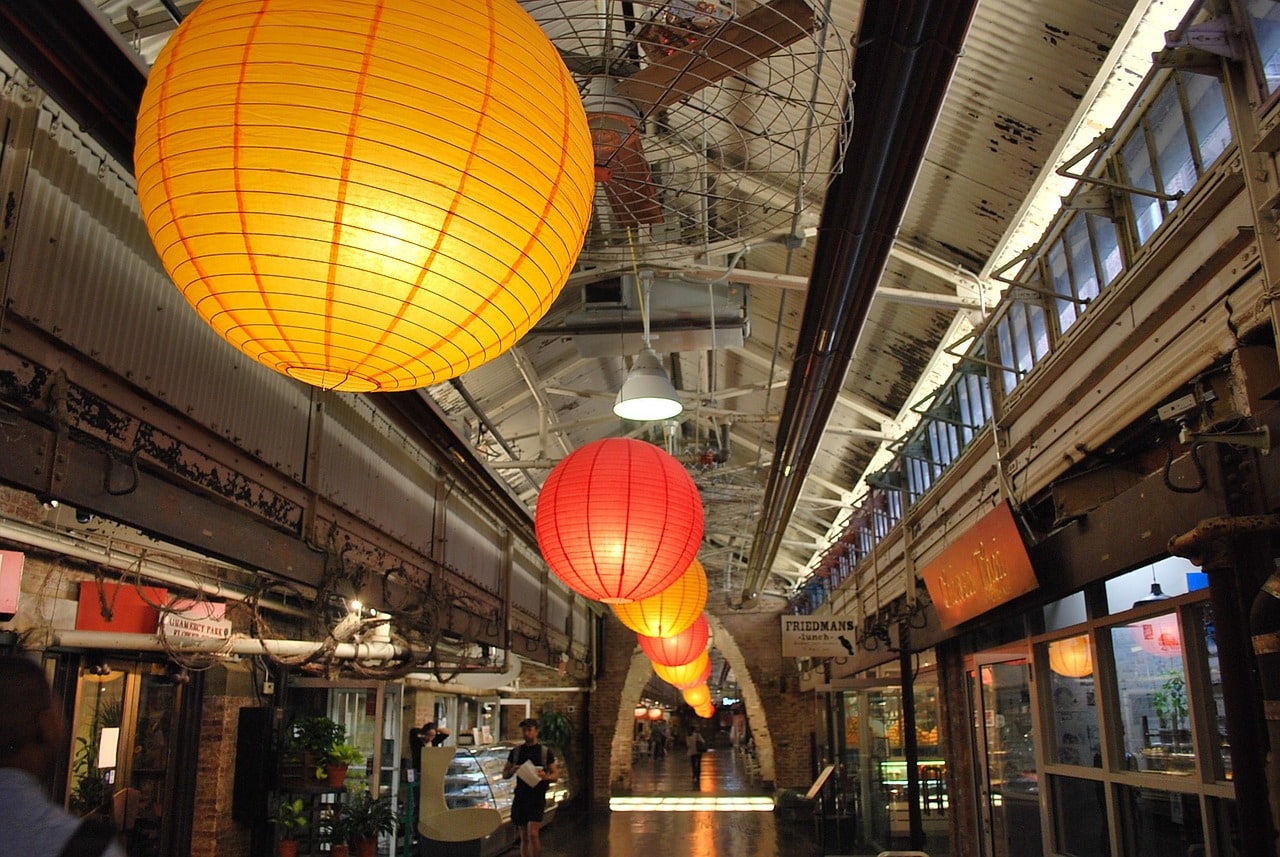
Chelsea Market is a massive market complex of restaurants and food sale places that has become a very popular entertainment spot in the neighborhood. The market consists of an internal covered street within the block between 14th and 15th Streets. Along the internal street, crowds gather from morning till evening at more than a hundred restaurants and food outlets throughout the market.
Click here for a particularly tasty food tour of the special places in Chelsea Market…
Address: 9th Ave 75, New York