St. Augustine – The oldest city in the USA
St. Augustine is the first city established by Europeans on the territory of the USA and has remained inhabited. The Spanish founded the city in the mid-16th century, and large parts of it still date back to that period. Unlike other cities in Florida, St. Augustine is packed with ancient history which blends seamlessly with Florida's most vibrant modern current – tourism. The city is filled with tourists eager to explore ancient forts and houses built 300 years ago. The city center is bursting with entertainment spots, hotels, and restaurants, making it one of Florida's top tourist destinations.

How many days are needed for a trip to St. Augustine?
To fully explore the historic district of St. Augustine, you should dedicate at least a full day, or even better, a day and a half. For exploring the surrounding areas, like St. Augustine Beach and the attractions to the south of the city, consider setting aside another half a day.
The city is a sought-after tourist gem with plenty of experiential accommodations. It's highly recommended to find lodging in St. Augustine or its surroundings during your visit.
Click here to check availability and prices at hotels in St. Augustine…
12 Must-See and Do Things in St. Augustine
- Walk on the walls of the historic monument of Castillo de San Marcos
- Historic homes, restaurants, and boutique shops on St. George Street
- Caribbean pirates in reality at the St. Augustine Pirate & Treasure Museum
- The exceptional preservation of the Oldest Wooden Schoolhouse
- The stunning luxurious finish of Flagler College, formerly the Ponce de Leon Hotel
- The mini Alhambra Palace at Villa Zorayda Museum
- American memorabilia at the Lightner Museum in the magnificent Alcazar Hotel building
- Archaeology and fun at the Fountain of Youth Archaeological Park
- Stunning view from the top of the St. Augustine Lighthouse
- See all kinds of alligators at the St. Augustine Alligator Farm Zoological Park
- Climb the preserved walls of Fort Matanzas
- The stunning gardens of Washington Oaks Gardens State Park
What is St. Augustine?
With all due respect to Plymouth, Massachusetts, where the Mayflower anchored, and Jamestown, Virginia, the city founded by John Smith, St. Augustine remains the first European settlement established in the USA that still exists.
- The historic center of the city is still considered a town and has about 15,000 residents. The city's metropolitan area has about 60,000 people.
- St. Augustine was established on August 28, 1565, almost 60 years before the start of permanent British settlement in New England and twenty years before the failed British settlement in Virginia.
- The city was founded by the Spanish admiral Pedro Menéndez de Avilés.
- The city was not the first settlement in Florida, which was discovered in 1513 by the explorer Ponce de León, but it is the earliest city in the USA that has remained inhabited since the early Spanish settlement period.
- To this day, the city is filled with important historical sites, some from as far back as the 16th century, all belonging to the unique Spanish settlement.
Map of St. Augustine
How to get to St. Augustine?
How to fly to St. Augustine?
Jacksonville International Airport – Jacksonville's international airport is located north of the downtown area of the big city in northern Florida. The airport is accessible from almost every corner of the USA, well-connected with all the major ports on the Atlantic coast, the Midwest, as well as Los Angeles and Las Vegas on the Pacific coast.
There are also very convenient routes from Miami and Fort Lauderdale for those who don't want to drive that far from southern Florida. The airport is just an hour's drive from St. Augustine.
Click here to search for flight tickets at attractive prices to Orlando or Jacksonville…
The airport is well-connected with all major ports in the USA and quite a few destinations in Europe. You can reach Orlando via direct transfer from several European destinations such as London or Frankfurt. The airport is located almost a two-hour drive from St. Augustine.
How to get to St. Augustine by car?
St. Augustine is located about an hour's drive south from Jacksonville and around a two-hour drive from Orlando. The connection to Orlando is via the I-4 freeway, which crosses Florida coast to coast and connects Daytona with Tampa Bay. From Daytona, it's a one-hour northbound drive on the I-95. Highway 1, the interstate parallel to 95 (from Florida to Maine), runs through the eastern part of the historic center, known as Ponce de Leon Boulevard.
How to Plan a Travel Itinerary in St. Augustine?
- St. Augustine is located in the northeastern part of Florida and can be accessed from Orlando and Daytona Beach, as well as from Jacksonville.
- You can combine a city tour with routes in northern Florida, or as a two-day getaway from Orlando.
Click here to purchase tickets for Potter's Wax Museum…
Despite its small size, St. Augustine is a city filled with sites and attractions. Most of the must-visit sites are in its historic center, within a very short walking distance from each other.
Click here to purchase a combined entry ticket for the Lightner Museum + Villa Zorayda…
- The heart of the city's visit is the historic St. George Street, lined with the city houses originally built by the Spanish.
- The street stretches from the magnificent Castillo de San Marcos to Constitution Plaza, home to the governor's house and the city's cathedral.
- The area also hosts the historic hotels of Henry Flagler and other historic homes that have turned into museums.
- The Bridge of Lions connects the historic center with attractions in the Anastasia district, such as the Alligator Farm and the lighthouse.
- From the historic center, it's worth driving north to the Ponce de Leon Archaeological Park and the Fountain of Youth, as well as south towards the beautiful parks of Marineland.
Click here for online tickets to the St. Augustine Aquarium…
Everything you need to know about staying in St. Augustine
St. Augustine, besides being a historic city filled with important sites, is also a popular tourist destination. The city is bustling with tourists all year round, who enjoy both the city's unique history and the pleasant, almost Disney-like atmosphere of the ancient Spanish settlement.
Click here to swim with dolphins in St. Augustine…
The city has been a tourist destination since the late 19th century when Henry Flagler and others built breathtaking luxury hotels in its center. While these hotels have since been repurposed, the historic center of the city still boasts a plethora of accommodations that retain the glamour of the golden age, the end of the 19th century.
- In the old part of the city, there are a number of urban-style hotels rated three and four stars
- You can also stay at the beachfront hotels of St. Augustine Beach, a short drive from the historic city center. These hotels are located on the Atlantic Ocean coast and also offer great access to the fabulous sandy beach
- Another lodging option near the city is the large cluster of motels located near the I-95 interchange. Here you will find all the well-known motel brands like Days Inn, Holiday Inn Express, Best Western, and more
To find accommodation in the hotels of St. Augustine, click here…
All attractions in the ancient center of St. Augustine
The Historic District
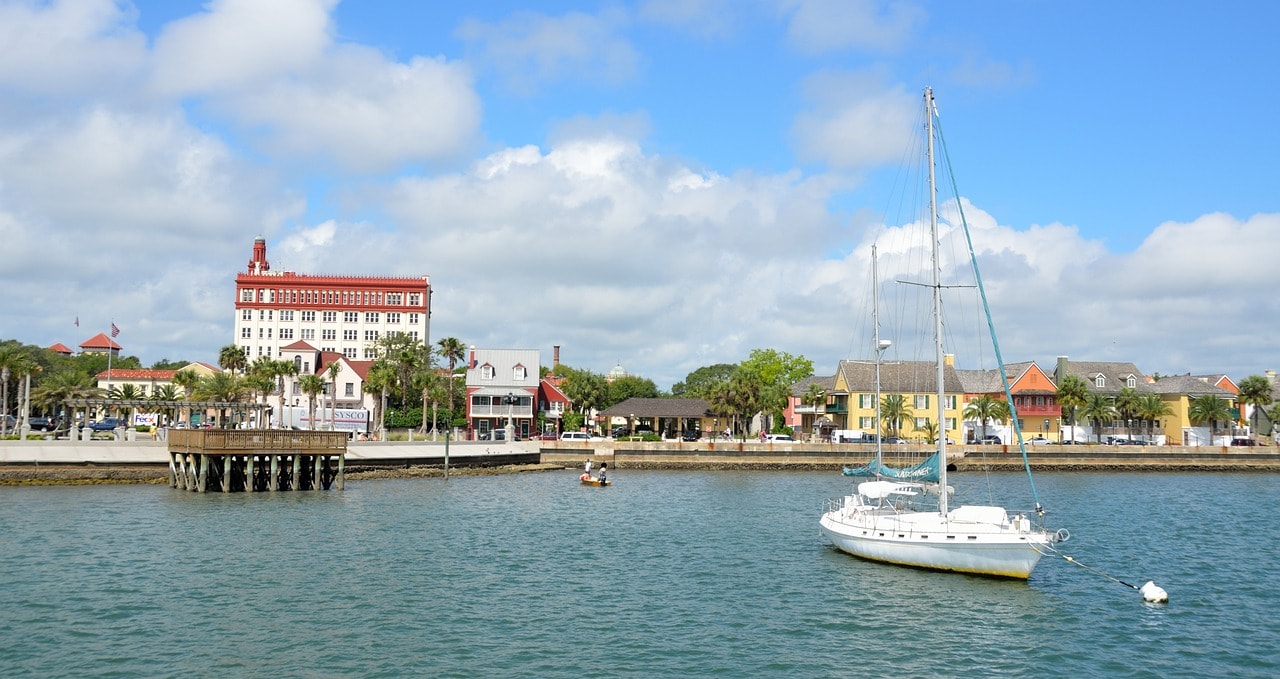
The historic district of St. Augustine, or the Colonial Quarter, is one of the most unique spots in Florida and the entire USA. Considering it's Florida, and with the taste of Disney World still lingering, the district somewhat resembles the pavilions of the countries at Epcot Park.
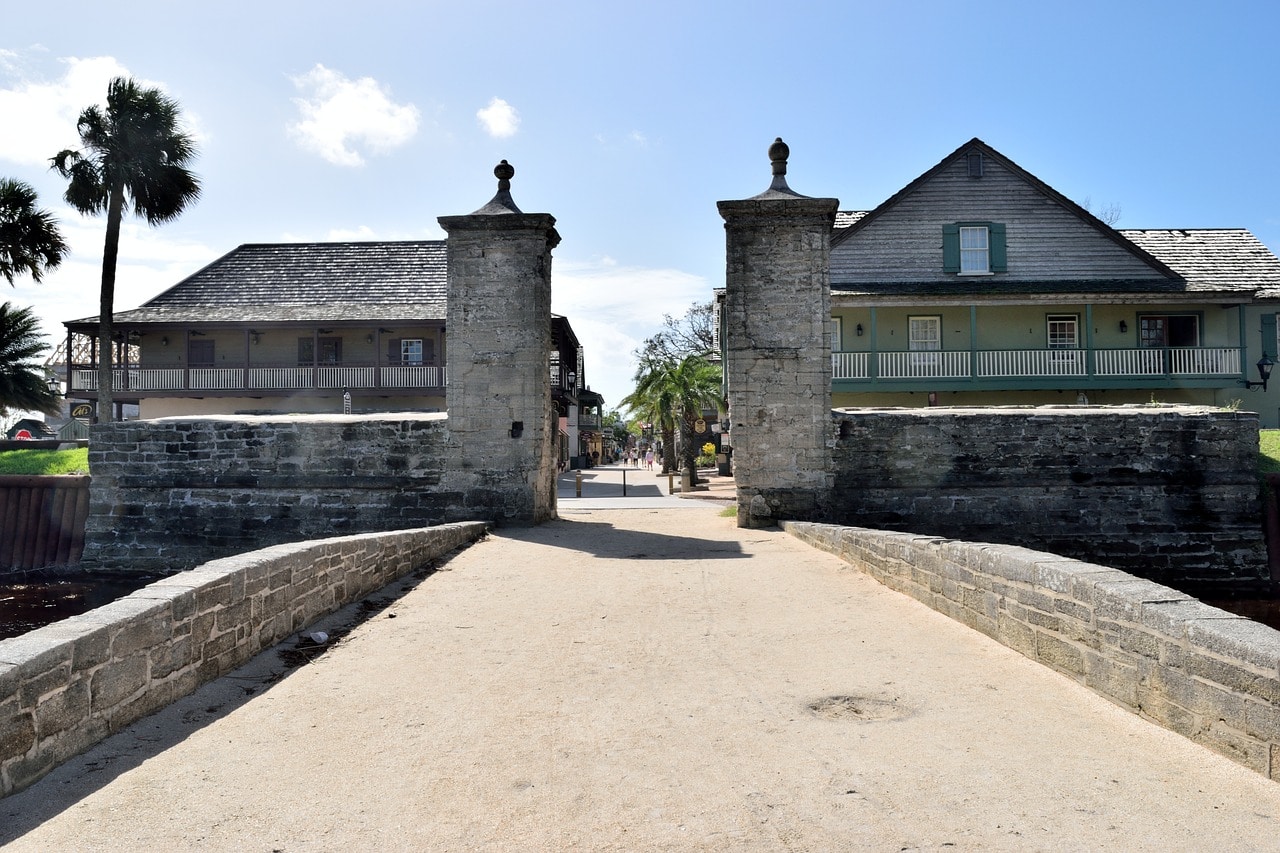
This is a place that combines the truly old, almost European in terms (the 16th century is a rare commodity in the USA), with today's Florida. The district is teeming with thousands of tourists wandering among the old houses and memorabilia shops, numerous organized groups with guides, all under the shade of palm tree boulevards. The district stretches along the pedestrian street of St. George from what's left of the Old City Gates in the north to the Governor's House in the south.
Click here to enter the Colonial Experience attraction…
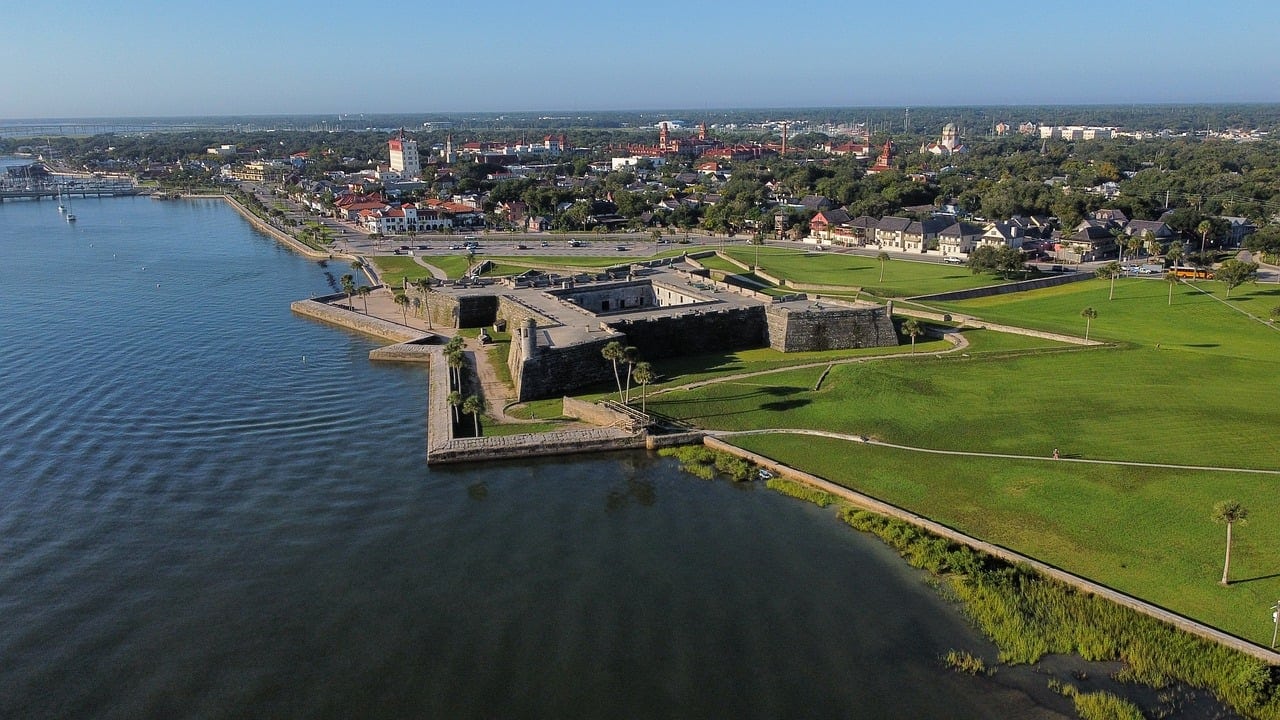
Castillo de San Marcos National Monument Historical Monument
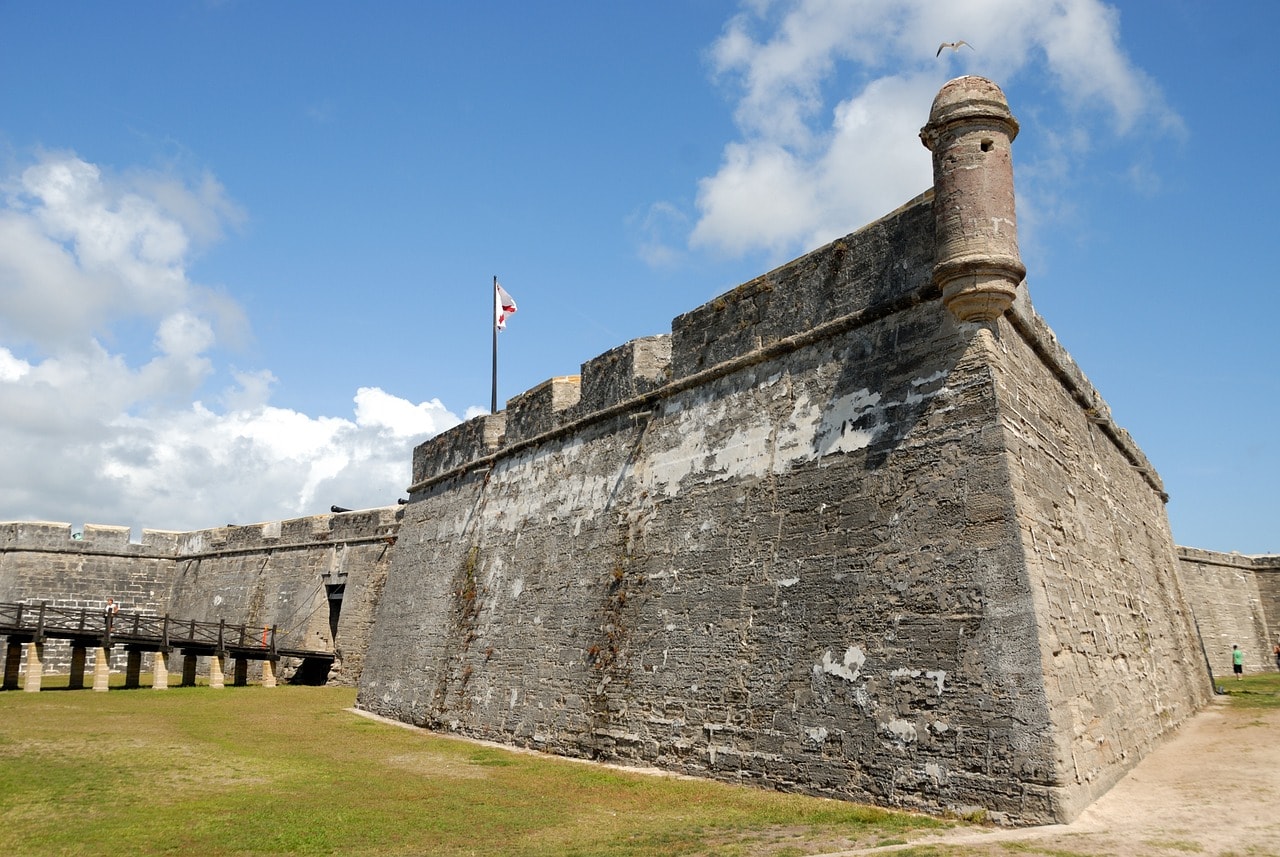
The massive fortress named after Saint Marcos is located at the northern end of the historic center. It is connected by a wall with the ancient city gates to the north. The Spanish fortress was built in 1672 and has remained intact since then. After Florida joined the United States in 1821, the Americans renamed it Fort Marion.
Click here for a guided golf cart tour in the Old Town of St. Augustine…
Today, the fortress is a popular tourist destination, a very special place where you can see the Spanish colonial presence in Florida. You can walk on the fortress walls where old cannons stand and visit the inner courtyard. From the fortress walls, there is a breathtaking view of the river mouth to the Atlantic Ocean and the old city landscape.
Address: S Castillo Dr. 11, St. Augustine
Click here for the fortress opening hours…
St. Augustine Pirate & Treasure Museum
The cool, modern museum of pirates and treasures is located across the large lawn of Castillo de San Marcos. It opened in 2005 in Key West but moved to St. Augustine in 2010. The museum interactively presents the tumultuous era that Florida experienced during Spanish rule, which included pirate raids and treasure hunts. The museum enjoys the fame of the Pirates of the Caribbean film series, which is based on the Magic Kingdom ride at Disney. The museum boasts an impressive collection of items related to the pirates who operated in the area.
Address: S Castillo Dr. 12, St. Augustine
Click here to purchase online tickets for the Pirate & Treasure Museum…
For the museum's current hours, click here…
Saint George Street Pedestrian Mall
The long pedestrian street named after Saint George is the heart of old Saint Augustine. It stretches from the city wall and the northern gate by Castillo de San Marcos down to the Governor's house in the south. The street itself continues southward as a road and blends into modern-day Saint Augustine. The pedestrian section is reminiscent of colonial Spanish Saint Augustine built in the 16th century.
Along the street, you'll find old and ancient houses, a few newer ones, and plenty of businesses that cater to the thousands of tourists strolling through. The street has a lively and pleasant vibe with lots of restaurants and shops. It feels like all the fun of Epcot Park but with real history, not just scenery.
For a tour of Saint Augustine's Old Town on a vintage trolley, click here…
The Oldest Wooden Schoolhouse
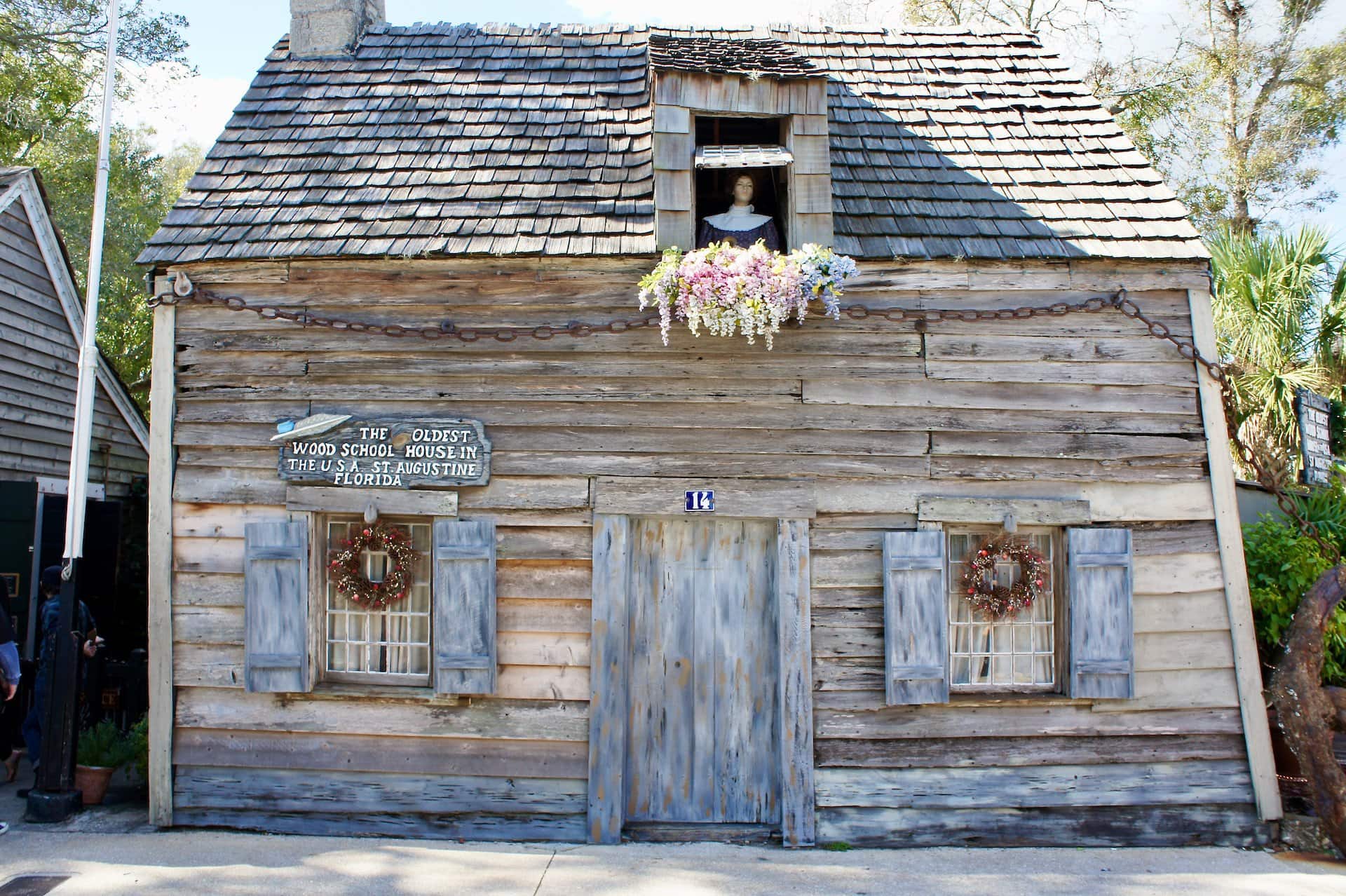
The Oldest Wooden Schoolhouse is a relic of unique Spanish architecture. This historic house is located at the northern end of St. George Street, not far from the city gates and Castillo de San Marcos. Built in 1788, it's considered the oldest wooden house in the USA.
Address: St George St. 14, Augustine
Medieval Torture Museum
A new museum, not far from the Old Wooden Schoolhouse on St. George Street. Opened in 2017, the museum offers an interactive display of torture devices from the Middle Ages in a dark and foreboding setting.
The museum is a fun stop for those who want to delve a bit more into the historical guts of St. Augustine, to see the Inquisition's torture devices with an American theme park vibe. It resembles wax museums and is part of a chain with branches in other large cities in the USA.
Address: St George St. 100, St. Augustine
Click here for the museum's current opening hours…
Peña-Peck House
This historic mansion is located at the southern end of St. George's pedestrian street, adjacent to the cathedral and the governor's house. The house was built in 1745 as the Spanish treasury house and, after their departure, became the private home of the Peck family. The family donated the house to the city in 1931, and it has since operated as a period museum showcasing mid-19th-century city life, managed by the Woman's Exchange Association.
Address: St George St. 143, St. Augustine
Click here for visiting hours at the house…
Catedral basílica de San Agustín
True to its historical Spanish roots, St. Augustine boasts a very impressive cathedral right in the heart of the city. The cathedral is situated at the southern end of the pedestrian-only St. George Street, historically the city's governmental hub. It was built in 1797 and still serves as the seat of the Catholic bishop of the city. The cathedral features an impressive neo-Renaissance facade with a tall bell tower that dominates the city's flat skyline. Its interior is also impressive, as is fitting for Catholic churches, adorned with decorations, paintings, and religious sculptures.
Address: Cathedral Pl. 38, St. Augustine
Governor's House Cultural Center and Museum
The historical Governor's House in St. Augustine overlooks the Constitution Plaza, the heart of the city's governmental center. This grand mansion was built in the early 18th century as Casa del Gobierno, and when Florida joined the United States in 1821, the interior was rebuilt while preserving the facade. Today, the house operates as a historical museum that tells the story of the city and the period of Spanish rule.
Click here for the current operating hours of the Governor's House…
Spanish Military Hospital Museum
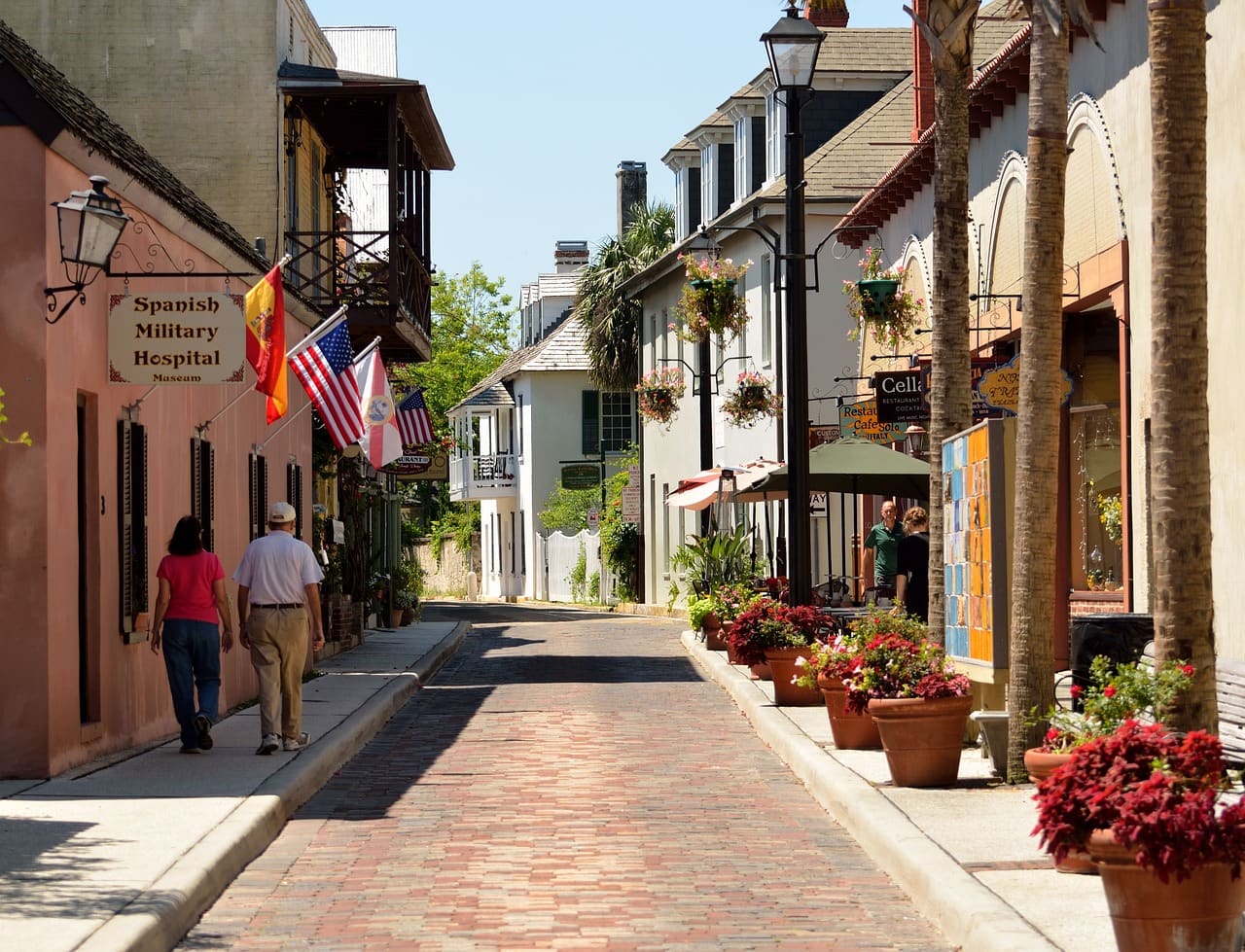
The historic Spanish Military Hospital is located in the southern part of Constitution Square, opposite the Governor's House. The building was constructed in the mid-17th century and served the Spanish army. In 1968, a museum was opened to preserve the building. In the former hospital rooms, you can see the nature of medicine from previous centuries and the treatment and recovery methods of the past technologies.
Address: Aviles St. 3, St. Augustine
Click here for all information regarding visiting the museum…
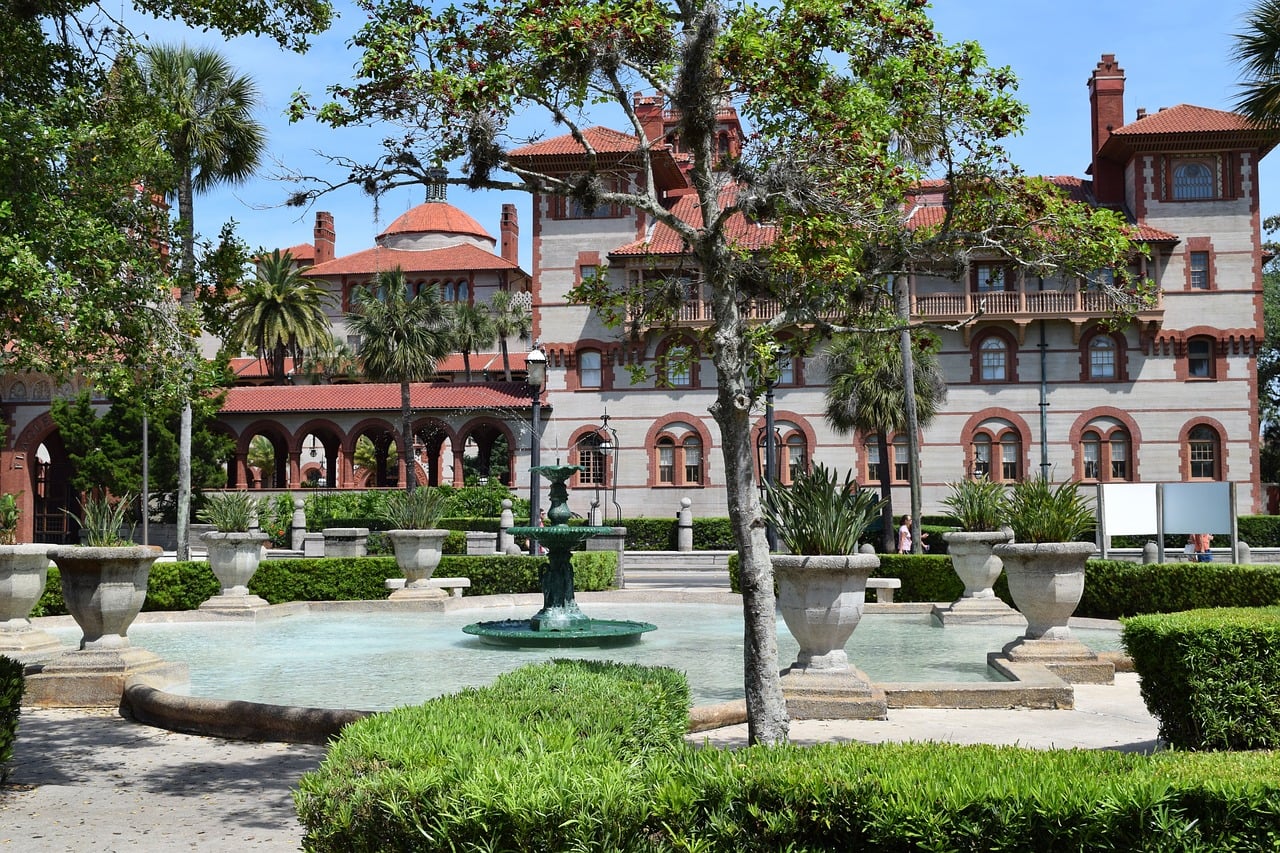
Flagler College at the Ponce de Leon Hotel
The private college named after Henry Flagler, the industrialist from Upstate New York considered the father of Florida's development, opened in 1968 on the grounds of the historic Ponce de Leon Hotel. The hotel itself was built in 1887 with Flagler's investment and became one of the most luxurious places in Florida, along with other Flagler projects like the stunning Breakers Hotel in Palm Beach.
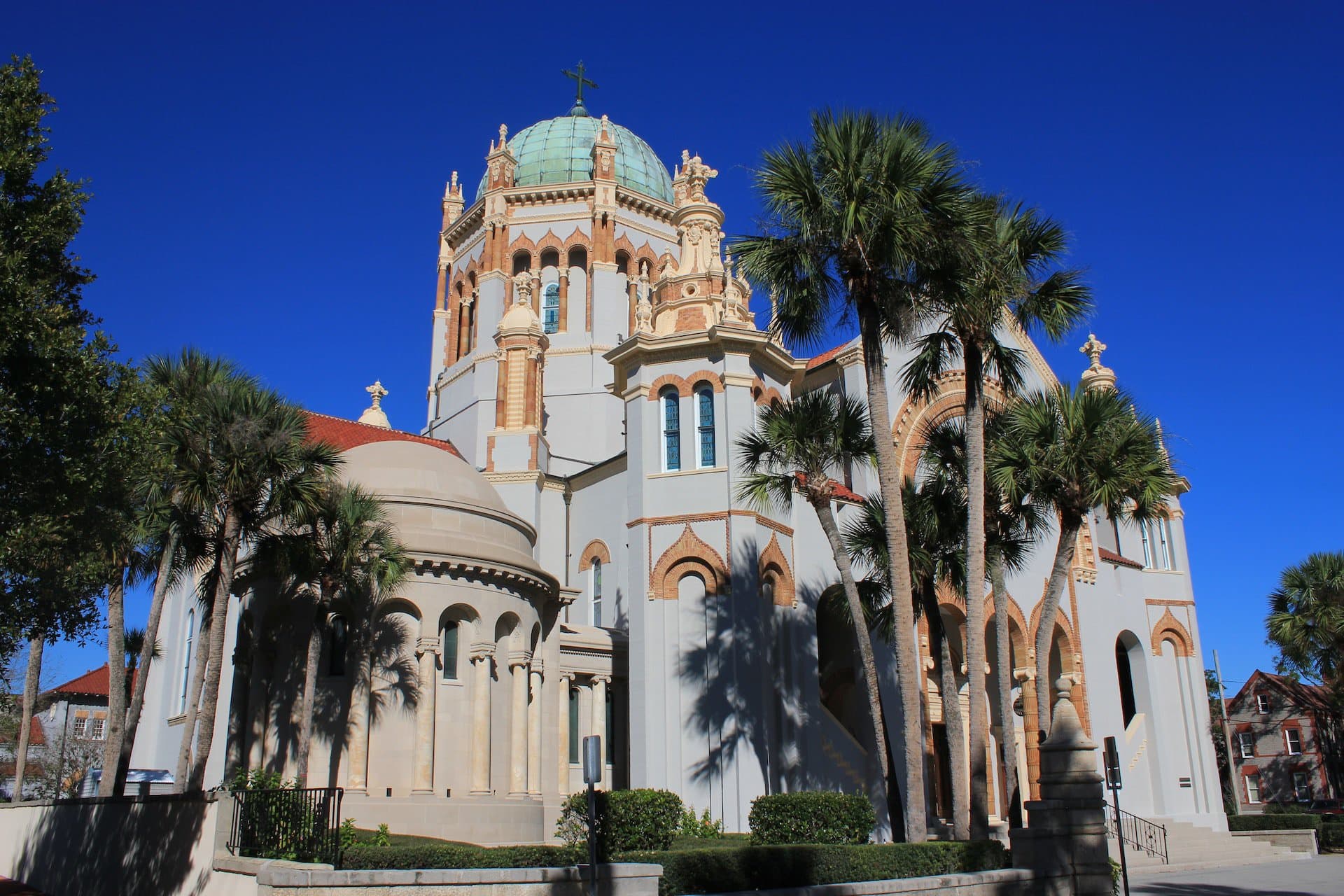
You can wander around today's college building and still see the grandeur of the hotel that once operated there. Although the rooms have now been combined into clusters as classrooms, the public areas of the hotel still stand out with their incredible finishing qualities. As part of converting the place into a college, the preservation of the high-quality construction from the late 19th century was ensured, and the place shines as it did over a hundred years ago. Alongside the building are charming gardens, including the college's swimming pool. Adjacent is the magnificent view of the Memorial Presbyterian Church.
Address: King St. 74, St. Augustine
Villa Zorayda Museum
Villa Zorayda is one of the most striking examples of an amazing blend of a real historic site and a Disney World atmosphere in St. Augustine. The villa is located opposite Flagler College and was built in 1883, long before EPCOT's pavilions.
The villa is a 1 to 10 scale replica of the Alhambra Palace in Granada, Andalusia (southern Spain), one of the most impressive Moorish palaces remaining. The museum within the villa is also inspired by Moorish and Oriental designs, featuring the Sacred Cat Rug, a rug made entirely of cat fur, dating back to the 4th century BC.
Address: King St. 83, St. Augustine
Click here to purchase online entry tickets to Villa Zorayda…
Click here for the museum's current operating hours…
Lightner Museum
The Lightner Museum is housed in one of the most impressive buildings in Saint Augustine, just south of Flagler College. Originally, the building was the Alcazar Hotel, also initiated by Henry Flagler as an imitation of an oriental palace, similar to the neighboring Villa Zorayda. The hotel opened in 1889 and was an important part of Florida's luxury tourism map. Like the Ponce de Leon Hotel, Flagler tried to recreate the splendor and glory of the Spanish period.
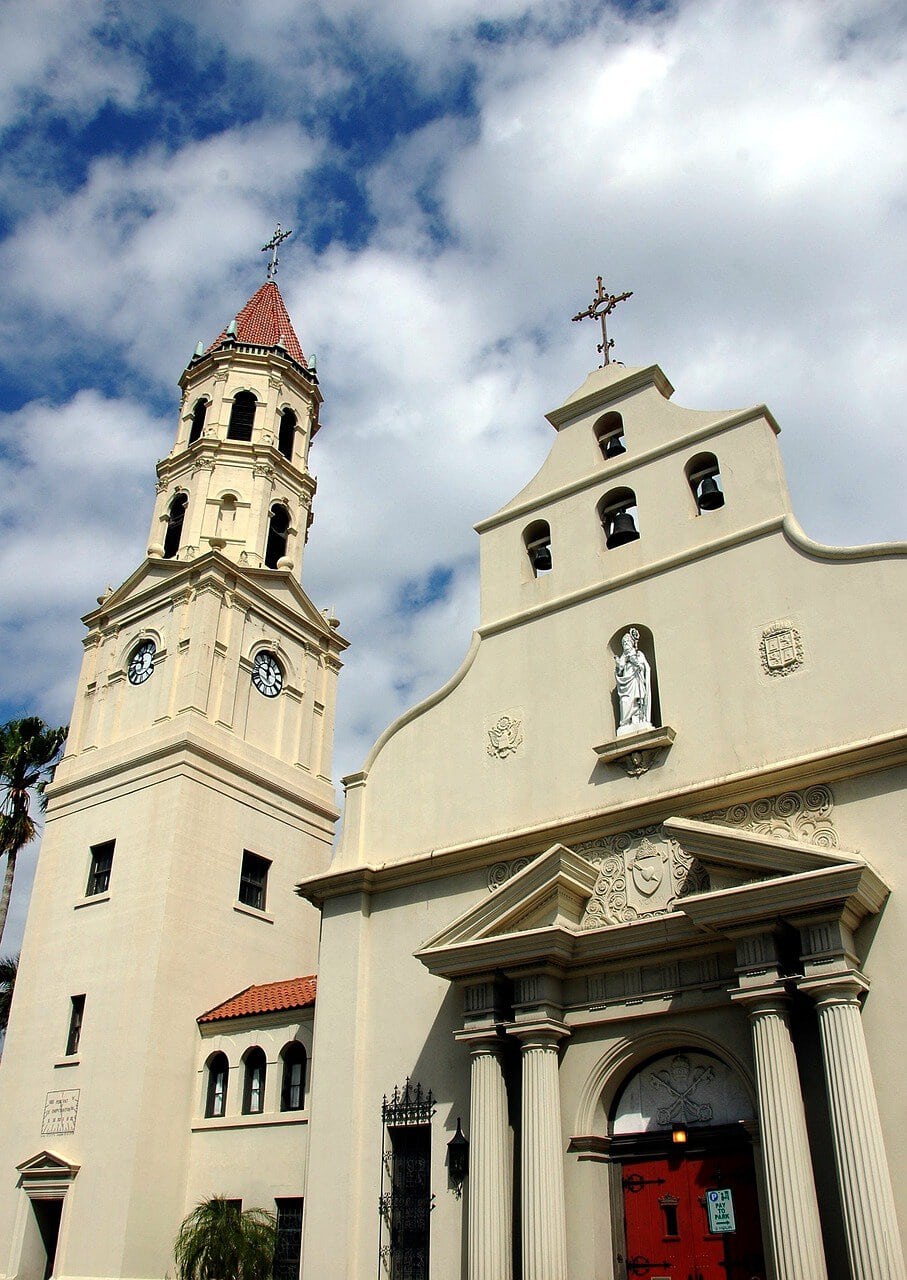
The period museum showcases exhibits from the Gilded Age, the era at the end of the 19th century when America experienced rapid development. The museum has a large collection of designed objects, artworks, and crafts from that period and more.
Address: King St. 75, St. Augustine
Click here to purchase online tickets for the Lightner Museum…
Click here for the museum’s updated opening hours…
Ximenez-Fatio House Museum
Himenes House is an impressive mansion located south of the historical center of St. Augustine, not far from the Spanish Military Hospital. The house was built in 1797 as the home of a wealthy Spanish merchant and is now managed by the city's historical society, acting as a period museum. The house features antique furnishings and fascinating period objects, recreating the lifestyle of northern wealthy individuals who used to retreat to their winter homes in Florida.
Address: Aviles St. 20, St. Augustine
Bridge of Lions
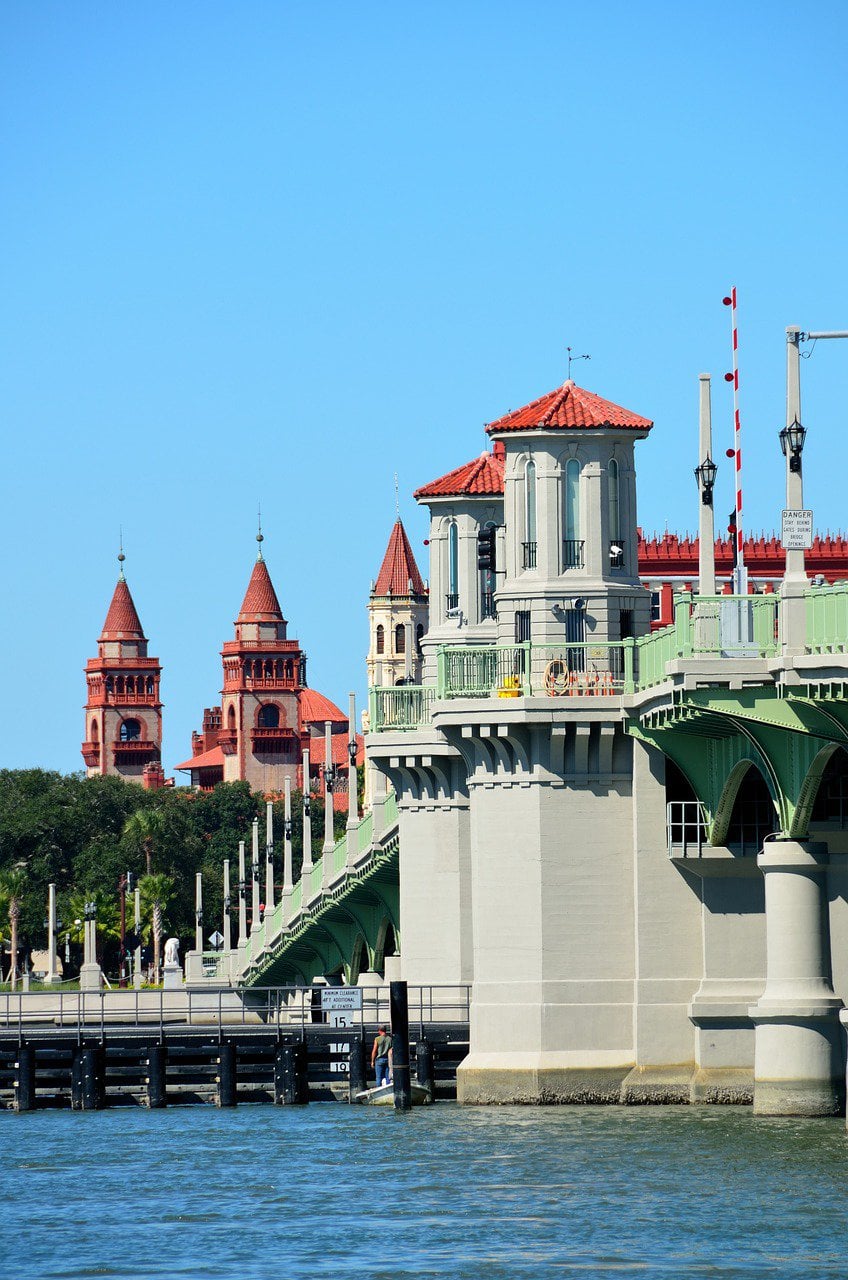
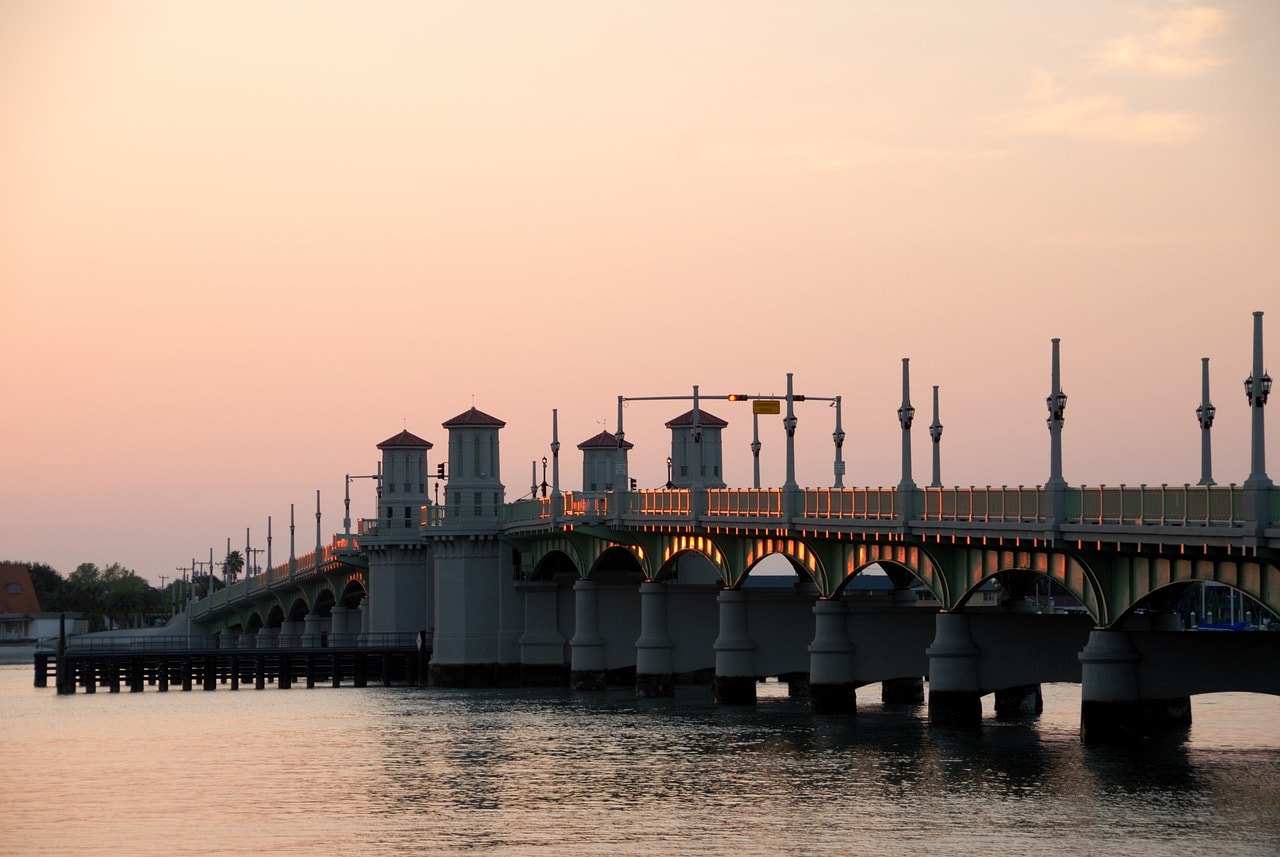
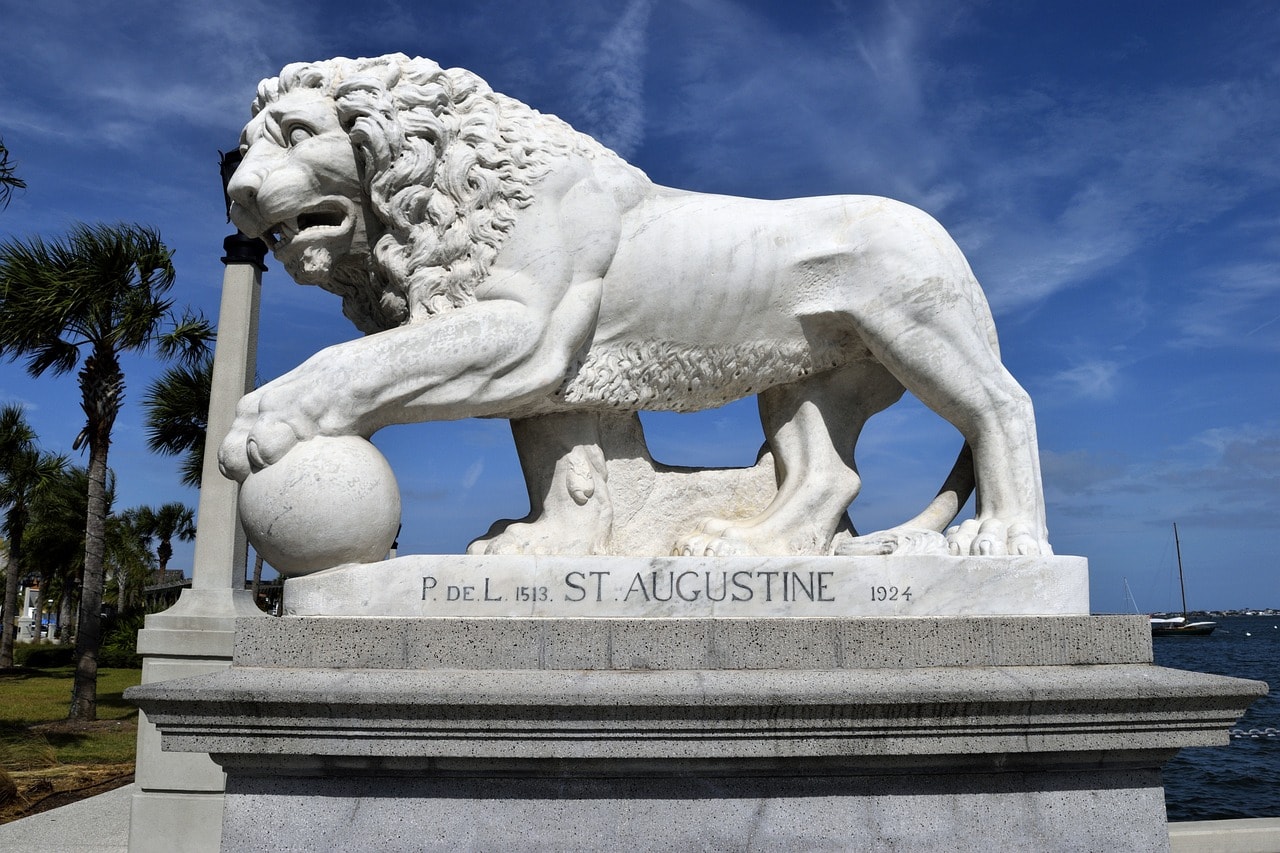
The magnificent bridge of St. Augustine that connects the city's historical center with the eastern neighborhood of Anastasia on the barrier island was built in 1927. The bridge stretches nearly half a kilometer long and at its center are four elegant Neo-Renaissance towers. At the entrance to the bridge stands the Medici Lion Marble Statue.
Ponce de Leon's Fountain of Youth Archaeological Park
The archaeological park is located a five-minute drive north of Castillo de San Marcos, in the northern part of the city. Some believe it to be the landing site of Florida explorer Juan Ponce de León, and even more ardent believers think it is where he found the Fountain of Youth. The story of the Fountain of Youth is closely tied to the Spanish explorer. The archaeological park, true to Florida style, attempts to milk as much as possible from the almost mythological tale of Ponce de León and the spring. It includes activities for children, costumed actors, and more.
The park itself is charming, featuring many attractions not strictly archaeological, such as The Menendez Settlement, which recreates the era of Spanish settlement in Florida. Another highlight is the long boardwalk, known as the Fountain of Youth Riverwalk, where you can stroll along the nearby marshes.
Address: 11 Magnolia Ave., St. Augustine
Click here to purchase online entry tickets for the Fountain of Youth Archaeological Park…
Click here for the park's current opening hours…
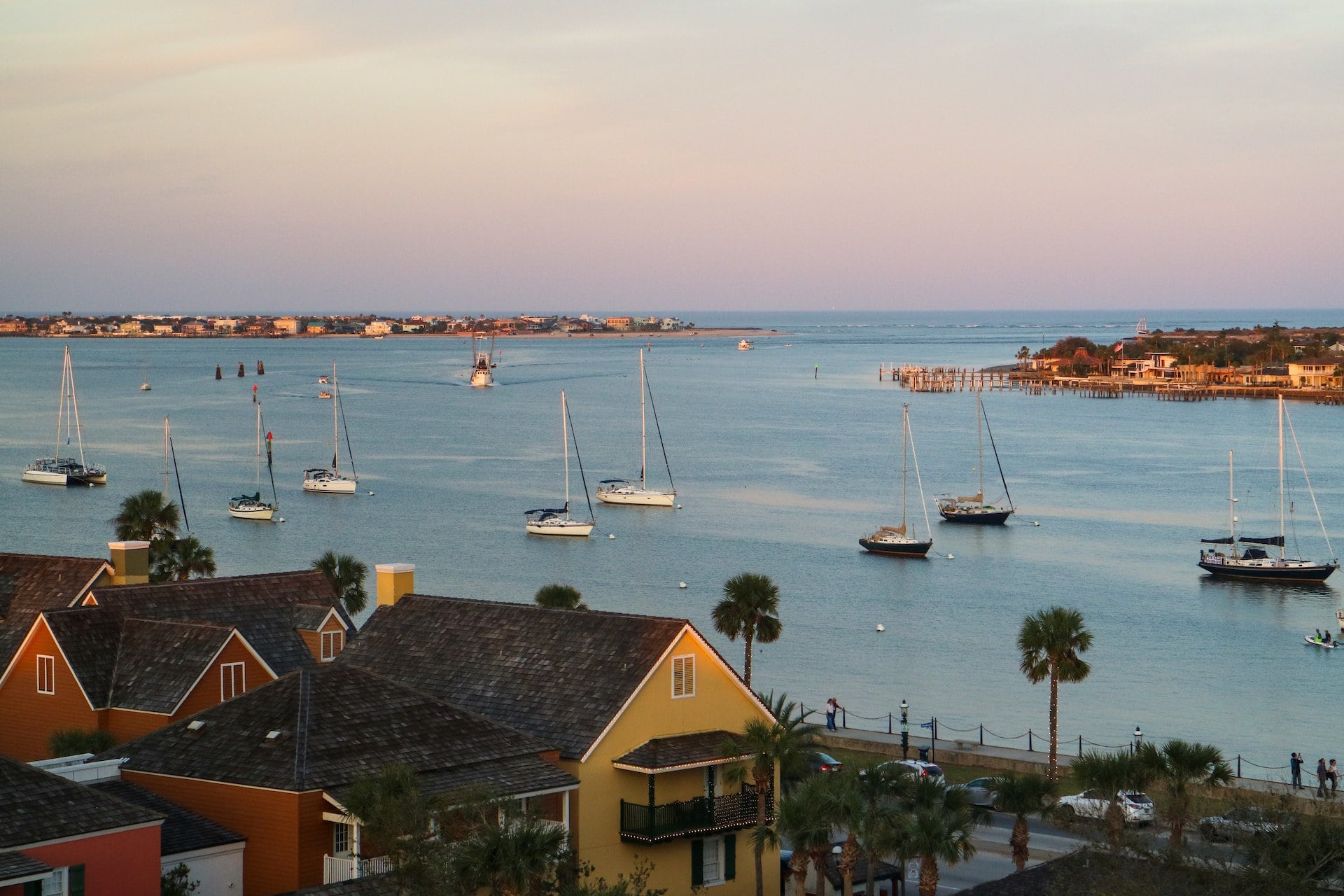
Fort Island – Anastasia District and St. Augustine Beach
St. Augustine Lighthouse and Maritime Museum
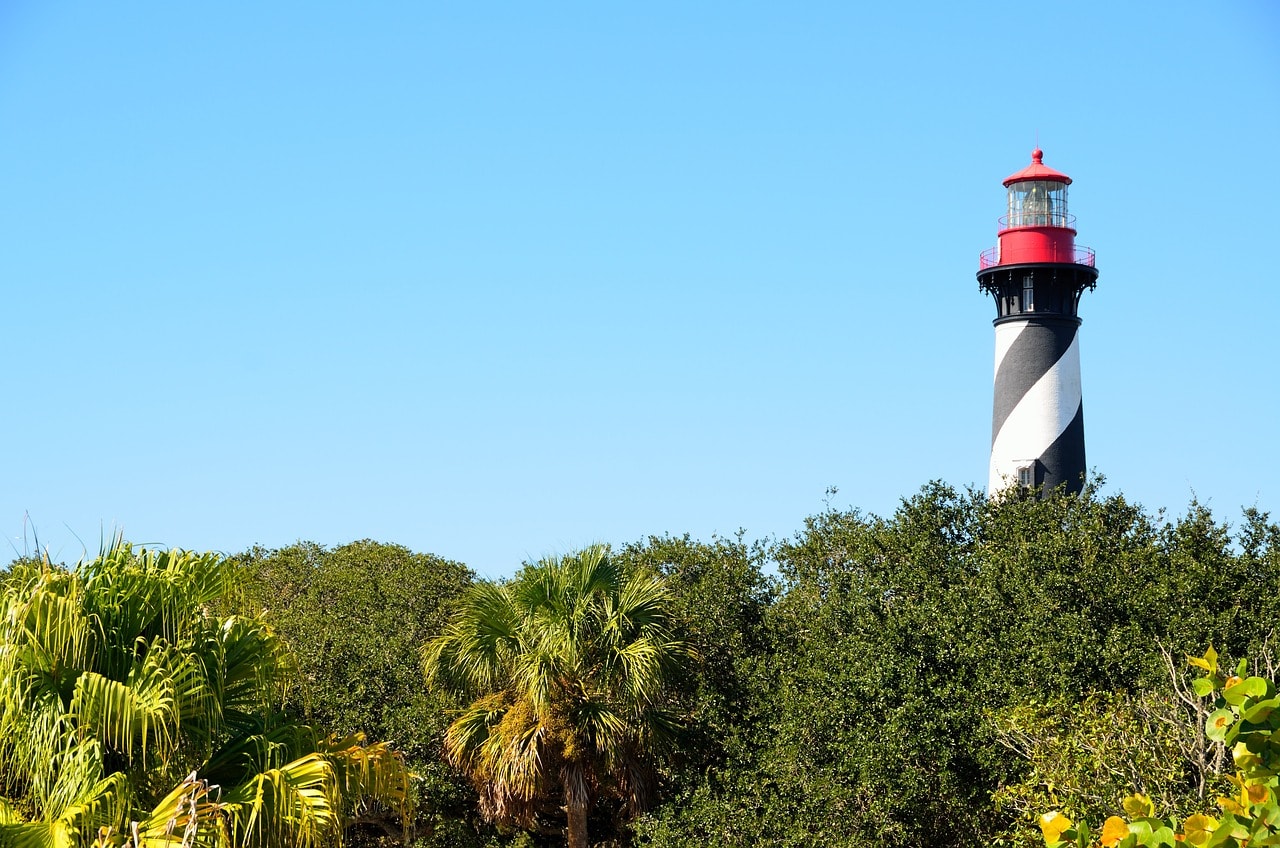
The historic St. Augustine Lighthouse is located south of Anastasia, adjacent to the Alligator Farm. It was built in 1874 after the previous lighthouse, constructed 50 years earlier, was destroyed. The lighthouse is renowned for its distinctive appearance featuring two spiraling black and white stripes ascending to its peak. The lighthouse stands 50 meters tall, and you can ascend to the observation deck at its top. The attached keeper's house has been converted into a small maritime museum where you can learn about the lighthouse's history and the development of shipping in Florida.
Address: Red Cox Dr. 100, St. Augustine
Click here for the museum's current opening hours…
St. Augustine Alligator Farm Zoological Park
The Alligator Farm in Anastasia, across from the historic lighthouse of St. Augustine, is one of the oldest attractions in all of Florida. The farm opened to the public in 1893, as part of the initial tourism boom of the tropical state, serving as entertainment for hotel guests established by Henry Flagler in the city itself.
The farm doesn't have an enormous number of alligators but offers a tremendous variety of different species, including significant representation of the main subspecies of the daunting reptile. Visitors can see different kinds of crocodiles, caimans, and of course, plenty of alligators. Besides the alligators, the zoological park features a large quantity of tropical animals, including birds, amphibious creatures, and more. It's a fascinating place for children to come and truly get in touch with Floridian nature.
Address: Anastasia Blvd. 999, St. Augustine
Click here for the updated operating hours of the farm…
Saint Augustine Beach
St. Augustine Beach is an independent town south of the Anastasia district in St. Augustine. It's a charming beach town that stretches from north to south along a stunning sandy beach. Along the coast, you'll find several lovely and affordable resorts offering direct access to the ocean. The long coastline connects to Crescent Beach to the south.
Click here for a dolphin and manatee observation tour by kayak…
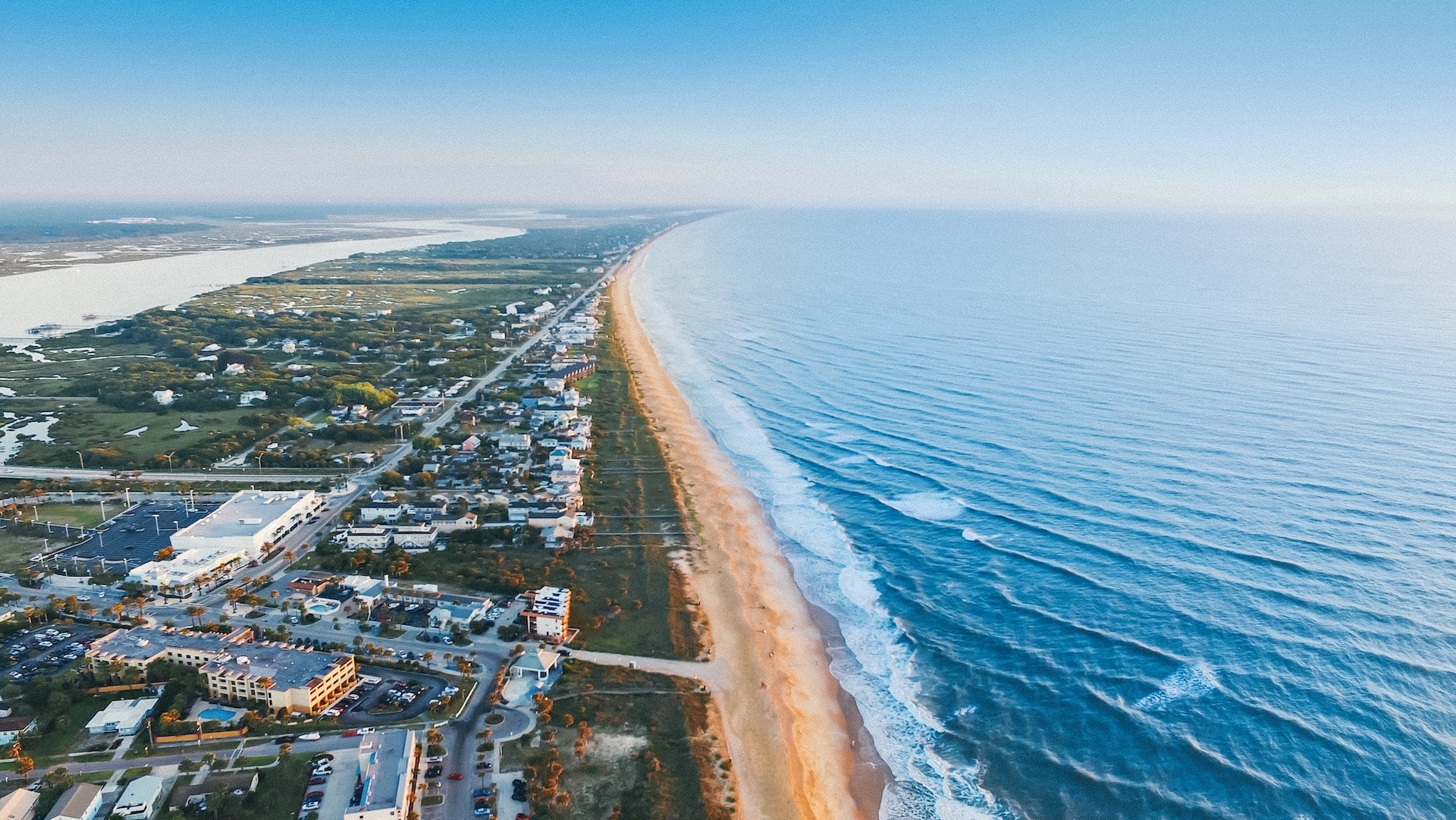
The Coastline South of St. Augustine
Fort Matanzas National Monument
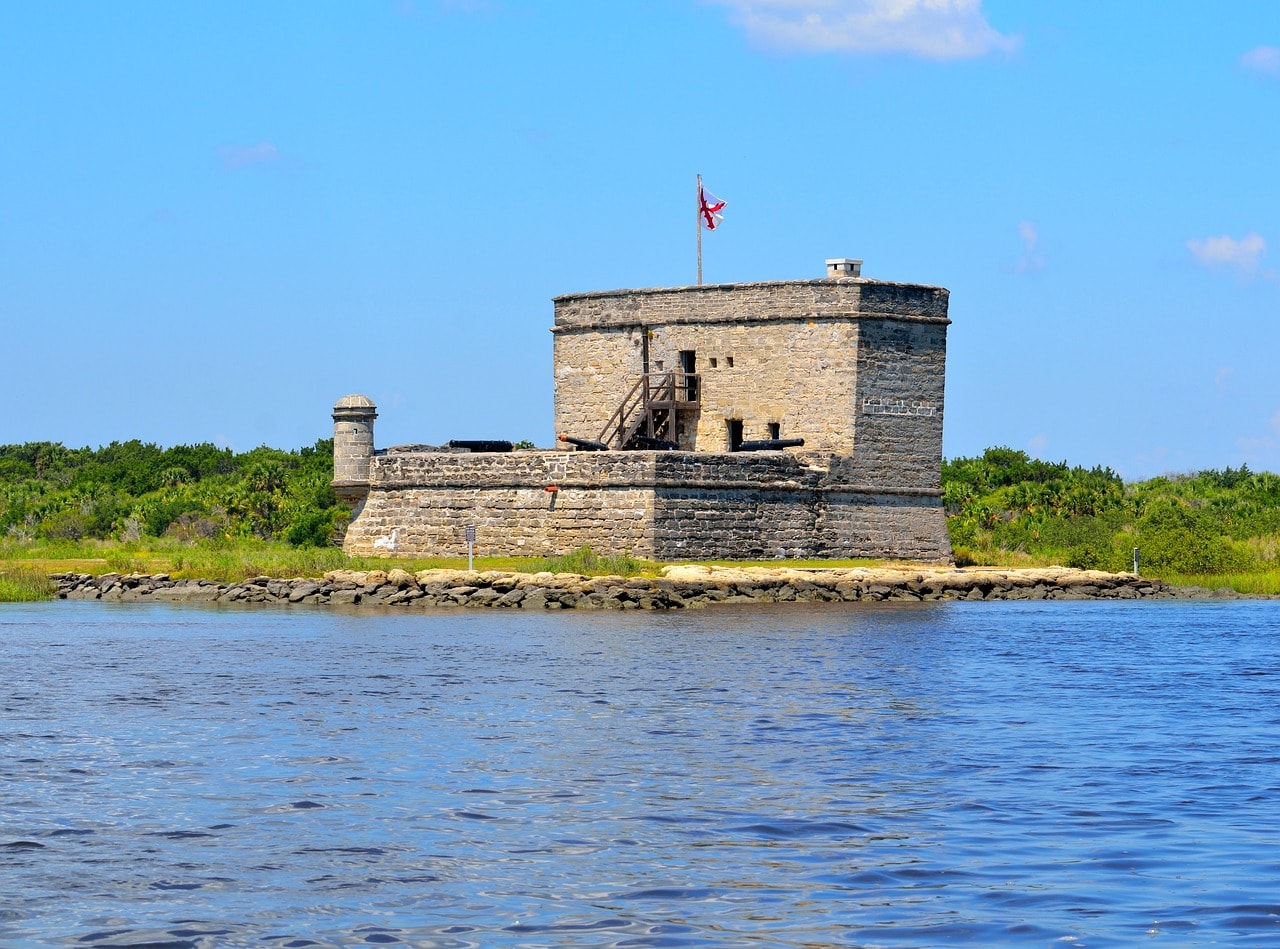
A twenty-minute drive south from St. Augustine takes you to the impressive Spanish fort. The Fuerte Matanzas was built in 1740 and, similar to the Castillo de San Marcos in the heart of the city's historic center, it is also a remarkable and particularly well-preserved example of a Spanish military fort. You can walk on the fort's walls and enjoy the view of the barrier island and the Matanzas River that separates the mainland from the barrier island and the ocean.
Click here to purchase online tickets for the Fort Matanzas National Monument…
Click here for all the information about visiting the fort…
Washington Oaks Gardens State Park
The stunning national park is located slightly south of the coastal town of Marineland, about a half-hour drive down the coast from St. Augustine. Once a vast agricultural plantation, impressive gardens have been created, featuring both flowers and a multitude of trees, most notably the oak trees. It's a very pleasant place for a walk in Florida's tamed nature (as opposed to its wild, alligator-filled nature).
Bulow Plantation Ruins Historic State Park
The Bulow plantations, or what's left of them, are located a half-hour drive south of Marineland and a half-hour north of Daytona Beach. In the past, there was a small village here where they grew sugar cane, rice, and cotton, but the village was abandoned around 1815 following an Indian attack as part of the Seminole War. Today, the village and plantation ruins have become a charming site to visit under the shade of tall, leafy trees. The ruins offer a glimpse into Florida's agricultural past.