Yellowstone – The First National Park
Yellowstone National Park is the birthplace of the conservation movement. It is the first national park in the world, established to preserve the unique nature of northwestern Wyoming. The park is an active volcanic area with geysers and breathtaking geothermal features.
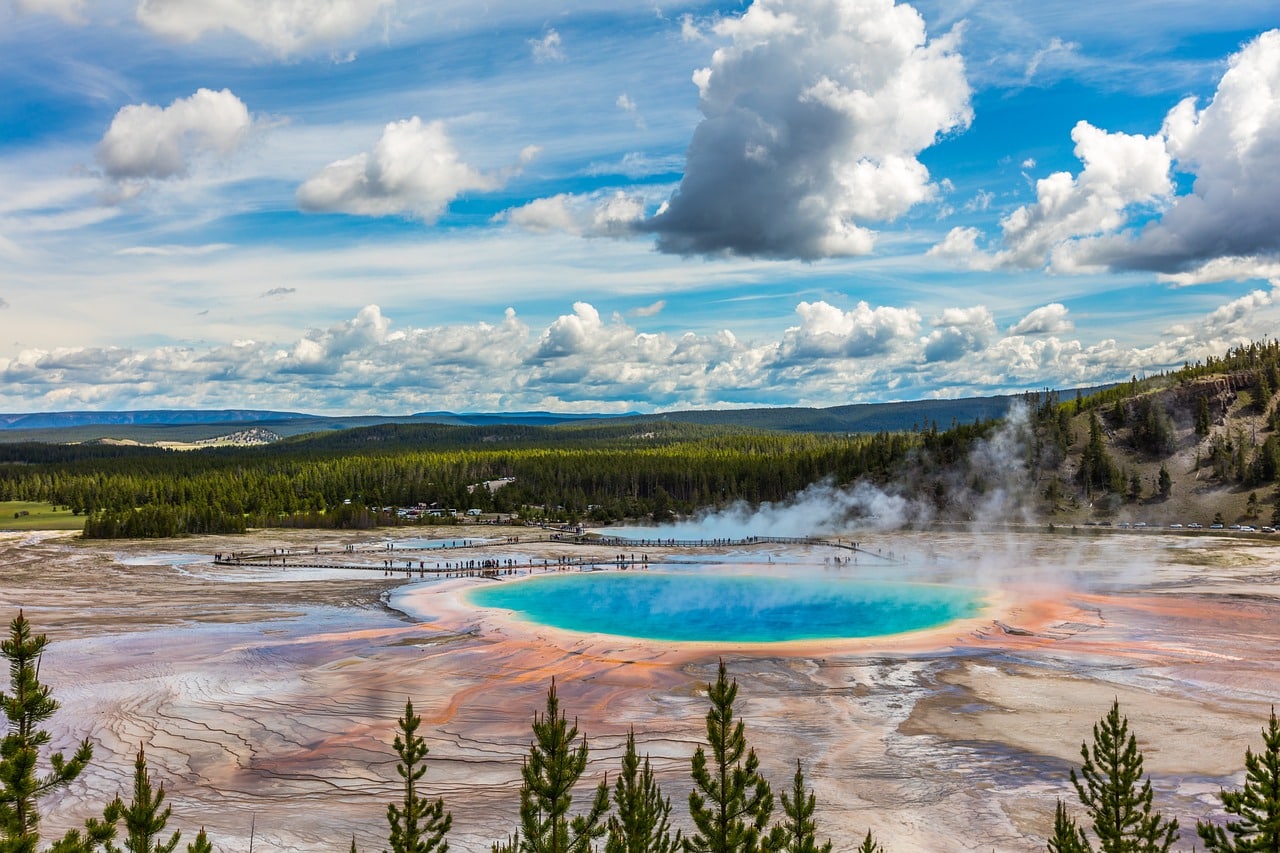
- Beyond the volcanic landscape, the park is a wild, rugged expanse filled with bison, moose, elk, and occasionally grizzly bears.
- Throughout the park, there are hundreds of kilometers of hiking trails of varying levels, along mountain stream channels, near lakes, on peaks, and along the rim of the magnificent Grand Canyon of Yellowstone.
How to Travel in Yellowstone Park?
The trip through Yellowstone Park is by car, driving between different clusters of sites and attractions. It is a very organized park with vehicle access to almost all the main attractions. Near these attractions, there is a large parking area from which hiking trails begin. The park offers dozens of marked trails of varying difficulty levels, so it's worth planning the trails you wish to explore in advance.
How many days are needed for a trip to Yellowstone National Park?
To explore all the breathtaking sites of Yellowstone Park, you need to dedicate at least two full days for the visit.
Since anyone visiting Yellowstone Park also needs to find accommodations in the villages and towns near the entrance gates, it is highly recommended to book a place to stay well in advance of your park visit.
Click here to check availability and prices for hotels around Yellowstone Park…
10 Must-See Sights and Activities in Yellowstone National Park
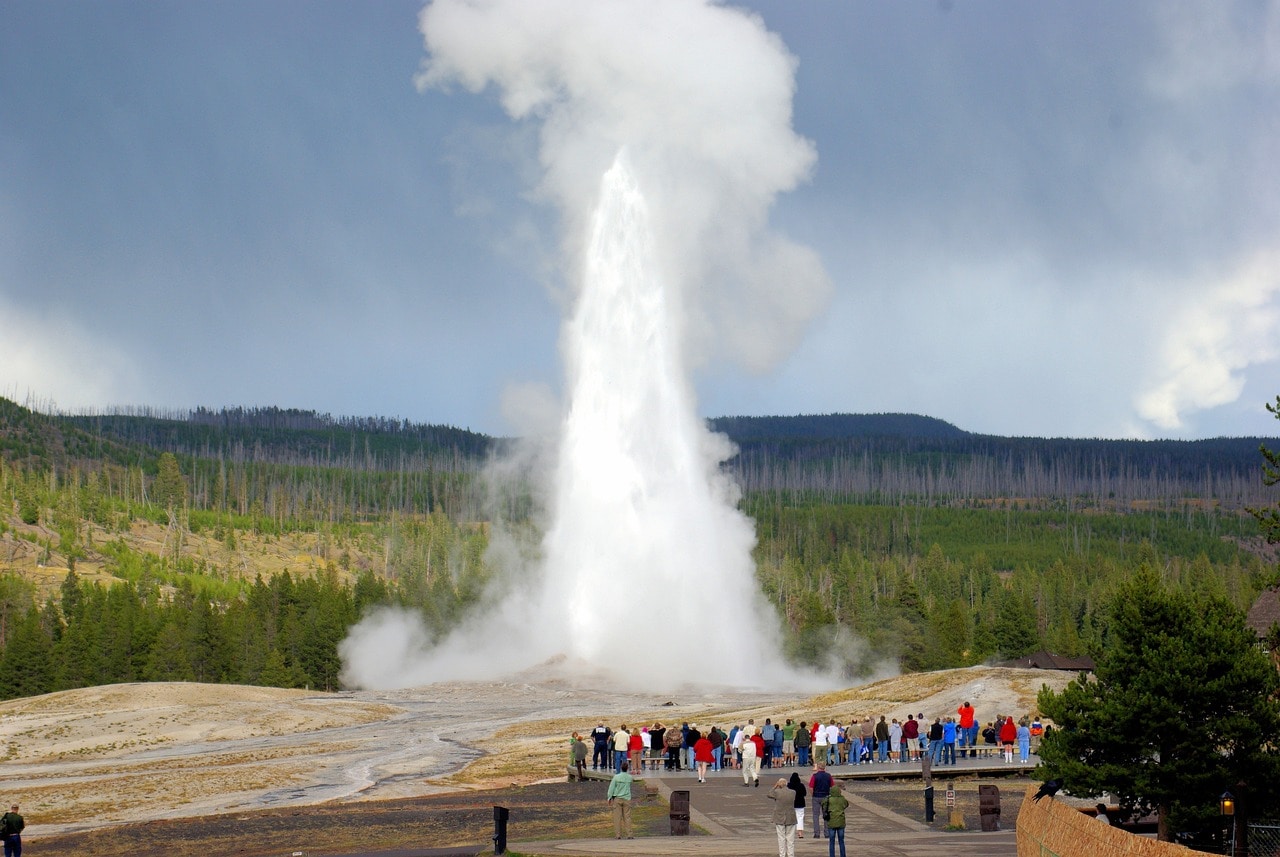
- The spectacular timed eruption of Old Faithful Geyser
- The boardwalk trails of Upper Geyser Basin and the Lone Star Geyser Trail
- Scenic views and hiking on the brink of the Grand Canyon of the Yellowstone
- The stunning boardwalk of Steamboat Geyser and Norris Geyser Basin
- Walking the boardwalk of the colorful Grand Prismatic Spring
- Fishing or picnicking at Yellowstone Lake
- Herds of elk or moose in Hayden Valley
- Natural limestone terraces at Mammoth Hot Springs
- Fascinating natural hiking on Mystic Falls Trail
- Herds of bison in Lamar Valley to the shadow of Mount Washburn
What is Yellowstone National Park?
Yellowstone National Park is a breathtaking space that combines wild nature, complex geological formations, an active volcanic area, an enormous variety of animals and botany, and all the fun of American mountain nature.
- The park is located in the northwest corner of Wyoming and partly extends into southern Montana and eastern Idaho.
- The park sits on a high plateau in the Rocky Mountain Range, with an average elevation of 2,400 meters above sea level.
- The highest peak in the park is Eagle Peak, rising to 3,462 meters.
- The park is located on the most significant watershed divide in the USA – the Yellowstone River ultimately flows east into the Mississippi-Missouri drainage basin and its waters empty into the Gulf of Mexico. The Snake River flows west and empties into the Columbia River in southern Washington before its waters reach the Pacific Ocean west of Portland, Oregon.
The park is located in the center of a mega caldera (volcanic crater) whose core is Yellowstone Lake. This massive caldera is not a volcano but a series of volcanic ridges whose eruption could impact the entire world. The park is a hot spot on the North American tectonic plate (at the heart of the plate, not on the boundary like the San Andreas Fault in California), with intense seismic and geothermal activity that includes large geyser basins, sulfur lakes, and other volcanic eruption features.
- Yellowstone National Park was established on March 1, 1872
- Upon its designation as a national park, it officially became the first nature reserve in the world. The park covers nearly 9,000 square kilometers (almost half the size of the state of New Jersey), most of which is pristine wilderness that has yet to be tread upon by travelers
- Every year, over three million travelers visit Yellowstone (actually within half a year), and as summer approaches, the number of visitors in the park increases significantly
- Most visitors to Yellowstone also visit Grand Teton National Park to the south
- In the summer months, the park can become almost unbearably crowded, with traffic jams and real difficulty finding accommodations within a reasonable distance from the park
Map of Yellowstone National Park
How to get to Yellowstone National Park?
How to fly to Yellowstone National Park?
Bozeman Yellowstone International Airport (BZN) – The main airport serving Yellowstone Park, located in Bozeman, southern Montana, is the northern gateway to the national park. This is a large commercial airport accessible from all over the United States. The airport is active even during the winter (when the park is not) as the main airport for southwest Montana, but in the summer it becomes very busy with numerous seasonal routes serving the national park's tourism traffic. It has flights from all major U.S. airports, including Los Angeles and New York. The travel time from the airport to Mammoth, the park's northern entrance, is almost two hours.
Click here to find cheap flights to airports near Yellowstone Park…
Yellowstone Regional Airport (COD) in Cody – A small airport that's only active during the summer, located in the eastern part of Cody, Wyoming. The airport is connected with flights to Denver and Salt Lake City. The travel time from Cody to Yellowstone Lake is about one hour and forty-five minutes, via the park's east entrance on Highway 14.
Jackson Hole Airport (JAC) – Jackson Hole Airport is located near Highway 89, which connects the town of Jackson with Grand Teton National Park. Technically, the airport is situated within the national park boundaries, making it the only commercial airport in the world located within a nature reserve. The airport is operational year-round.
Naturally, in winter, there are only four active routes to Seattle, Denver, Salt Lake City, and Dallas-Fort Worth. In summer, these routes are significantly reinforced, and there are additional routes to Atlanta, Los Angeles, San Francisco, and Minneapolis. The travel time from Jackson Hole Airport to Yellowstone to the north is about an hour and a half through Grand Teton Park.
Yellowstone Airport (WYS) in West Yellowstone – Yellowstone Airport is a small regional airstrip located in the northern part of West Yellowstone town. It's a seasonal airport with two flights landing from late spring to the end of summer: one from Denver and one from Salt Lake City. The travel time from the airport to interesting parts of the park is about half an hour on Highway 191.
How to get to Yellowstone National Park by car?
Yellowstone National Park is located in the heart of the Rocky Mountains, in a sparsely populated area. To the north, there's a row of relatively large cities in the state of Montana, like Billings, Livingston, and Bozeman. These cities are on the I-90 highway route, the northern road that crosses the USA from Seattle in the west to Boston in the east, passing through Chicago. The drive from Seattle to Bozeman takes almost 11 hours on the highway.
Click here for all the information on car rentals in the USA, helpful tips, and discounts…
From Livingston, Highway 89 runs south, the main road of the park. From Bozeman, Highway 191 heads south to West Yellowstone, from where it climbs into the park area through the western entrance gate and intersects with 89. Highway 191 continues south to the southern entrance gate to the park and connects with Grand Teton National Park.
The eastern entrance gate to the park is Highway 14 from the town of Cody. Highway 191 within the park area is called the Grand Loop Rd.
When to visit Yellowstone National Park?
Yellowstone National Park is located in the northern part of the Rocky Mountains, at an impressive altitude of over 2,000 meters. Due to the elevation and snowfall, the park is completely inaccessible during the winter months and even remains frozen in early spring.
Click here for a guided 4X4 tour in the Lower Loop of Yellowstone Park…
- The best month to visit Yellowstone Park is June. This month combines all the park's advantages including reasonable weather (though it can still be chilly), late sunsets allowing for longer exploration each day, spring blooms, wildlife venturing into the meadows, massive river and stream flows, and just on the verge of the tourist influx of July and August.
- The beginning of June is still relatively rainy in the park, but as you get closer to the end of the month, the rain has less impact on the trip.
- The summer months in Yellowstone are perfect weather-wise, but tough when it comes to park crowds. July and August are the peak tourist season, so it's best to get to the park early (before traffic jams), book accommodations well in advance, and focus more on hiking trails rather than driving within the park. During these months, there's not much rain and the weather can even be hot.
Click here for a guided tour from Gardiner including thrilling rafting…
From mid-September to mid-April, evening temperatures drop below zero. The weather is ideal for a park visit from May to September, but the park is also active in April and October. These months are particularly loved by Americans (from northern regions who enjoy the cold), as the park is almost deserted.
How to Plan a Trip to Yellowstone National Park?
Yellowstone National Park is an almost exclusive travel destination in a vast area of the USA where there are virtually no other points of interest. Planning a trip to Yellowstone Park requires advance preparation and includes overnight stays along the way (unless arriving in Bozeman by plane).
Click here for trip planning in Yellowstone Park, Wyoming, and professional advice…
- You can plan a road trip starting from Chicago heading towards Mount Rushmore, the Black Hills, and then continue to Yellowstone. You can return to Chicago via a southern route through Grand Teton, heading towards Denver, Colorado, and visiting Rocky Mountain National Park in the mountains above the city. From Denver, return to Chicago on the I-70 route through Kansas City and St. Louis
- Another travel route is from Los Angeles, Las Vegas, through Salt Lake City, and includes the stunning parks of southern Utah, such as Zion, Bryce Canyon, Arches, and more. You can end the route by traveling from Yellowstone towards Seattle
- The travel route in Yellowstone Park is closely related to areas accessible by car. The park is crossed by a few roads, mainly 89 and 191, and almost all attractions are located along them
- The park area is filled with hiking trails of varying difficulty levels. If you're planning to focus on hiking, it's a good idea to know which trails you're aiming to hike.
Everything You Need to Know About Staying in Yellowstone National Park
Yellowstone Park is generally located in what can be described as the middle of nowhere. The closest major cities to the park are Salt Lake City and Denver, each over a six-hour drive away.
The distance and the summer crowding make it necessary to find lodging near the park and enter early each morning before the traffic jams and bustle.
Accommodation around Yellowstone Park is divided into two options:
- Staying in lodges at several sites within the park area
- Staying in hotels and motels in the towns and villages near each of the park's entrance gates
- Accommodation and motels in the major cities of Montana along the I-90 route
Click here for a list of 10 lodges and motels near Yellowstone National Park…
Staying at Lodges within Yellowstone Park
Accommodation within the park is limited to a few fenced sites like Canyon Village, where you can find several two and three-star lodges. In the northern part of Yellowstone Lake, known as Lake, there are also some good lodges rated at three-star hotel level.
Staying within the park is definitely an experience and the hotels aren't bad at all, though they can be pricey. The main downside of staying in the park is that once darkness falls, there’s not much to do and it's not recommended to wander in the park (not by car and certainly not by foot).
Staying in Towns and Villages near the Entrance Gates to Yellowstone Park
West Yellowstone
West Yellowstone is the main town of Yellowstone Park. It’s the most popular lodging spot right on the edge of the park, just a twenty-minute drive from Old Faithful. This is an American frontier town that mainly thrives on motels, restaurants, and bars catering to the park's tourist traffic. The town's center is the intersection of Yellowstone Avenue and North Canyon Street.
The Grizzly & Wolf Discovery Center is located in the eastern part of West Yellowstone, slightly south of Yellowstone Avenue. This is a veterinary and treatment center that rescues animals that wouldn't survive in the wild. You can see grizzly bears, wolves, eagles, and much more of Yellowstone Park's wildlife. It's a place where injured animals are cared for or young ones abandoned by their mothers are raised.
Click here to check availability and prices for motels in West Yellowstone…
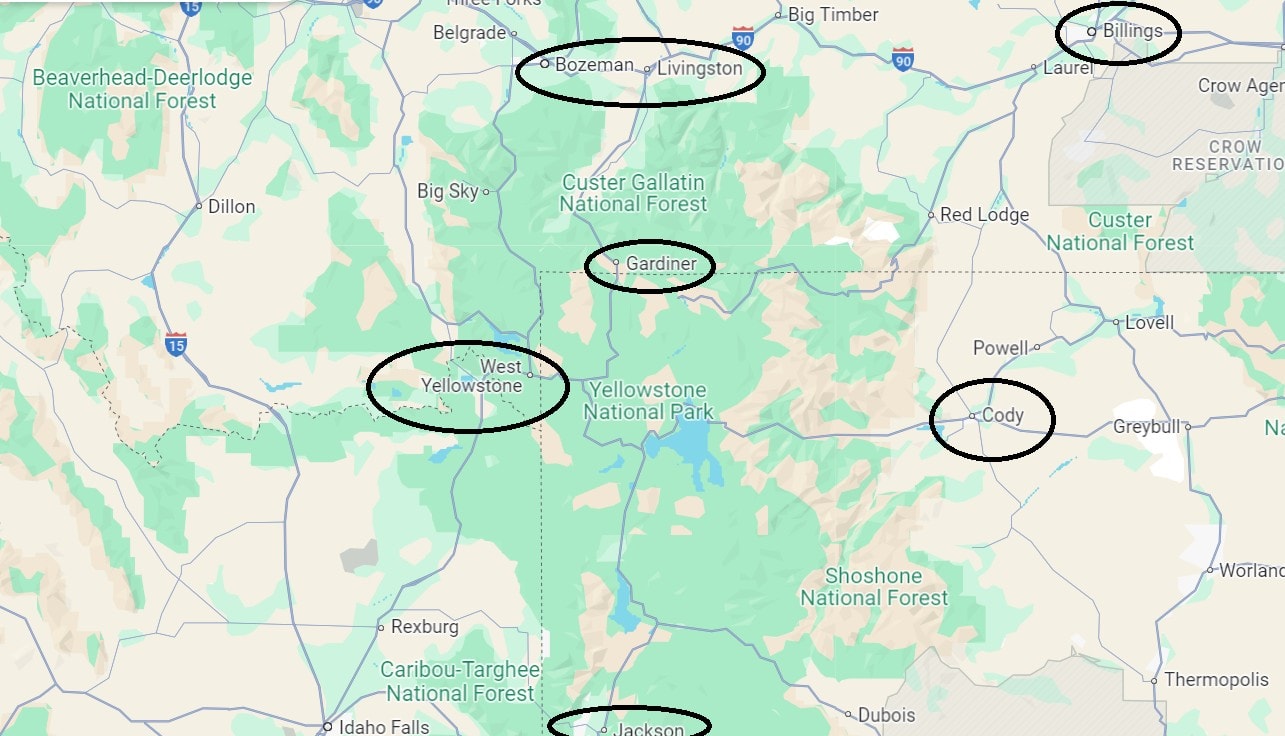
The towns of Gardiner, located at the park's north gate, and Cody, at the east gate, are popular lodging spots. They both offer an abundance of motels from all the major chains. The larger town of Jackson, to the south, is also a great option, especially for those looking to combine their Yellowstone trip with Grand Teton (there's absolutely no reason not to visit the neighboring park too).
Click here to check availability and prices for hotels and motels in Cody…
Click here to check availability and prices for Gardiner's hotels and motels…
Click here to check availability and prices for hotels and motels in Jackson…
Motels and Hotels in Montana Towns
Along the I-90, there are plenty of motels and hotels in the big cities. This is a remote area, but the cities along the 90 in Montana are typical (and a bit rugged) American cities, with everything from fast food chains and malls to Walmart. Livingston and Bozeman are about an hour and a half drive from the park. In these cities, all the well-known motel chains are available with good accommodation standards. Billings is a larger and slightly more distant city, where you can also stay if you really can’t find anything closer.
Click here to check availability and prices for the hotels and motels in Livingston…
Click here to check availability and prices for the hotels and motels in Bozeman…
Map of the best places to find accommodation in Yellowstone Park
All attractions in Yellowstone National Park
Old Faithful Geyser
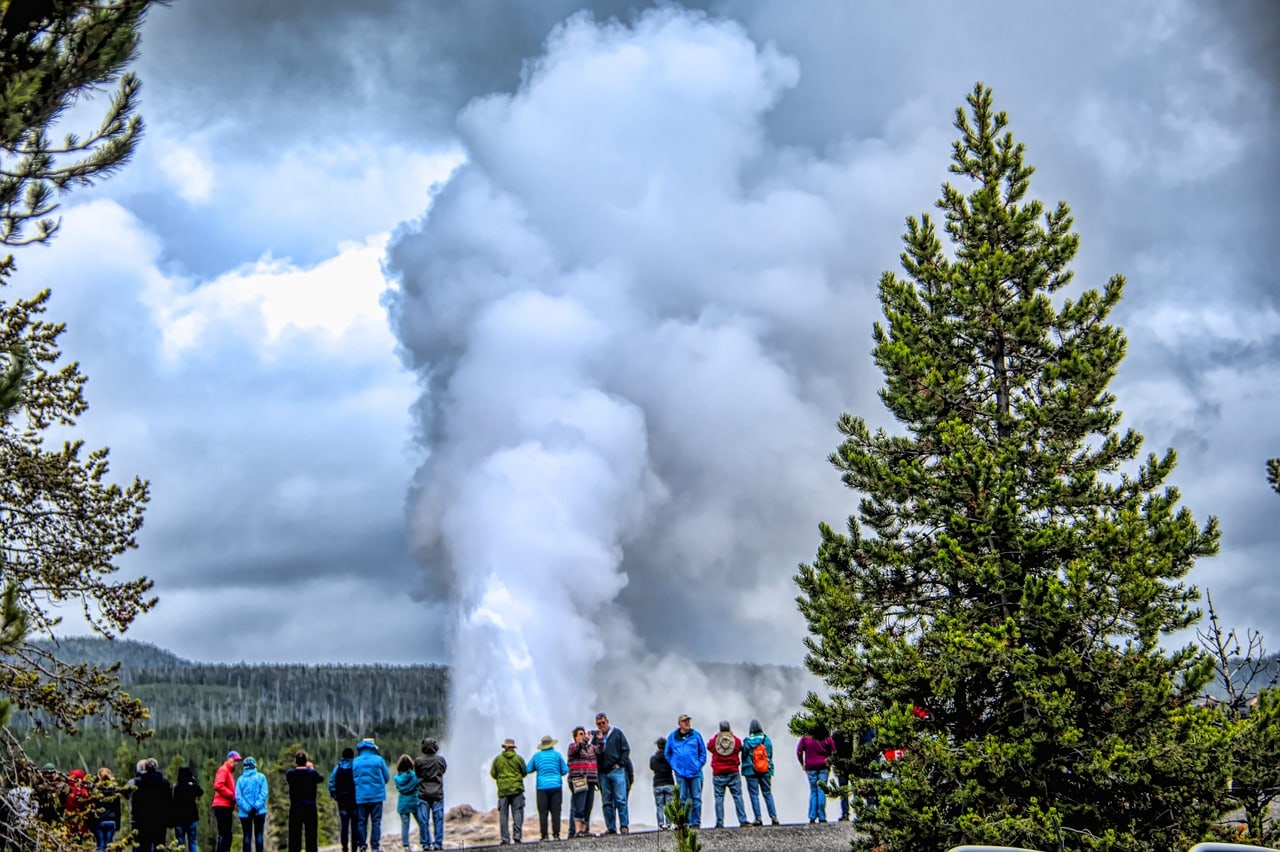
Old Faithful is probably the most famous geyser in the world and the most popular landmark of Yellowstone Park. It is considered the number one celebrity of Yellowstone Park, surrounded by giant facilities including parking lots, shops, restaurants, and all of Yellowstone's fun without much hiking. The geyser site is regarded as the heart of the national park, located on the main Highway 191, on the route between West Yellowstone and Yellowstone Lake and further south to Grand Teton Park.
- Old Faithful isn't the largest geyser (Steamboat Geyser is mightier), but true to its name, it's reliable with its schedule and can be counted on to always put on a show.
- The geyser erupts every hour and a half (can range from an hour to just over an hour and a half, there's a nearby timer that measures and pinpoints the eruption time) and shoots a jet up to heights of 30 to 60 meters.
- The duration of each eruption is between one and a half to five minutes, and the amount of water ejected from the geyser in each eruption ranges from 15,000 to 30,000 liters of boiling water from its underground reservoir, heated by volcanic activity along the fault line.
- The spring from which the water erupts originates solely from the Old Faithful's catchment area, allowing for its eruptions to be measured.
The geyser is the highlight of the Upper Geyser Basin, a breathtaking area along the Firehole River. The walking trail starting from the Old Faithful Visitor Center offers pleasant paths for a relaxing nature walk among numerous geysers, geothermal springs, and all the excitement of Yellowstone. The trail is partly a path and partly a wooden boardwalk above the volcanic ground.
South of the visitor center, you'll find the Lone Star Geyser Trail. This trail stretches for about 8 kilometers along the Firehole River channel, leading to the solitary Lone Star Geyser. The trail is quite popular as it offers a blend of the civilization from the visitor center and the wild nature of the park, being long and challenging enough to really immerse you in the wilderness. The geyser itself is breathtaking and definitely worth the trek (though it is a fairly long walk).
The Grand Canyon of the Yellowstone
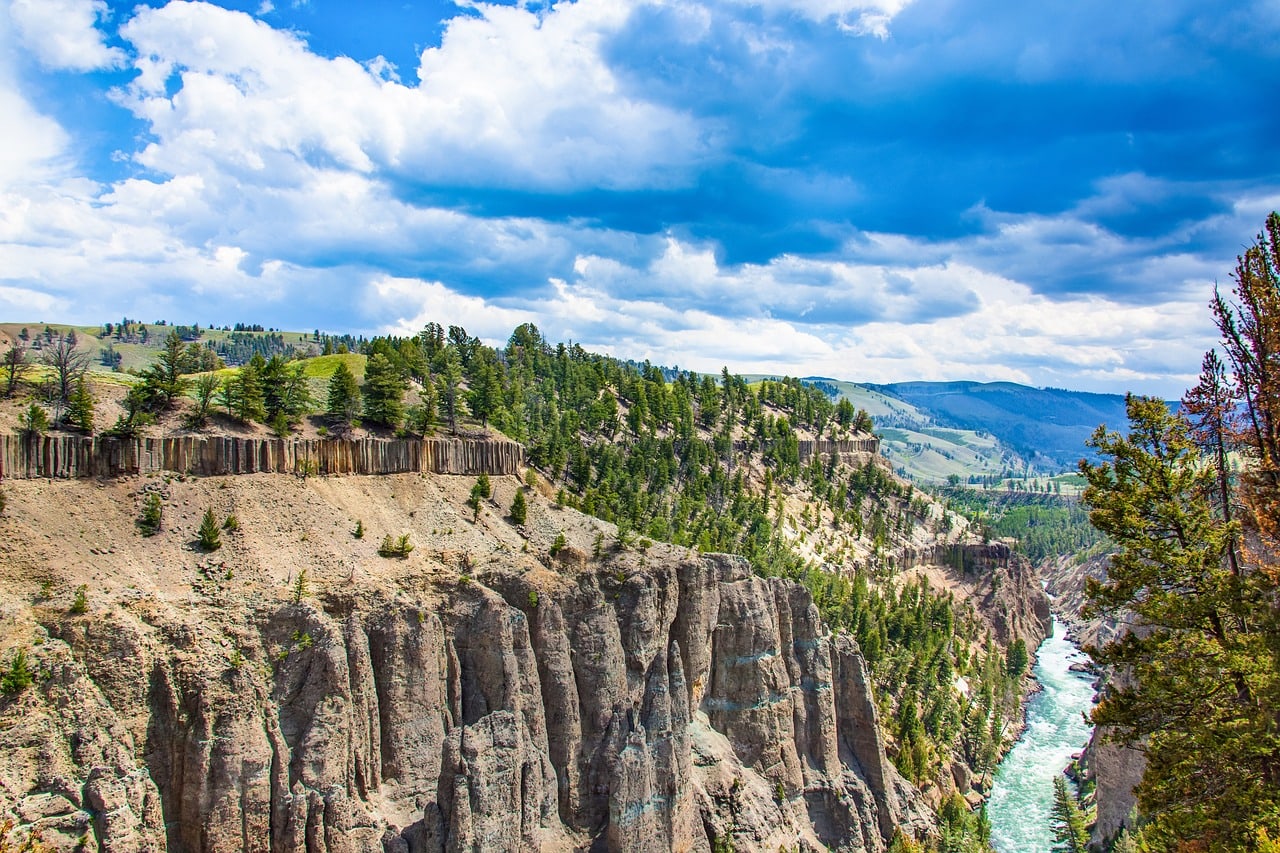
The Grand Canyon of the Yellowstone is one of the most beautiful spots in the large national park. The grand canyon of the Yellowstone River stretches for thirty kilometers just south of Canyon Village. It is the deeper continuation of the Hayden Valley, the high part of the river, which flows north from Yellowstone Lake.
- The canyon's width ranges from 500 meters to just over a kilometer, and at its deepest, it reaches about four hundred meters
- It was formed by the Yellowstone River carving its way for millions of years through soft limestone, creating and still shaping the massive chasm.
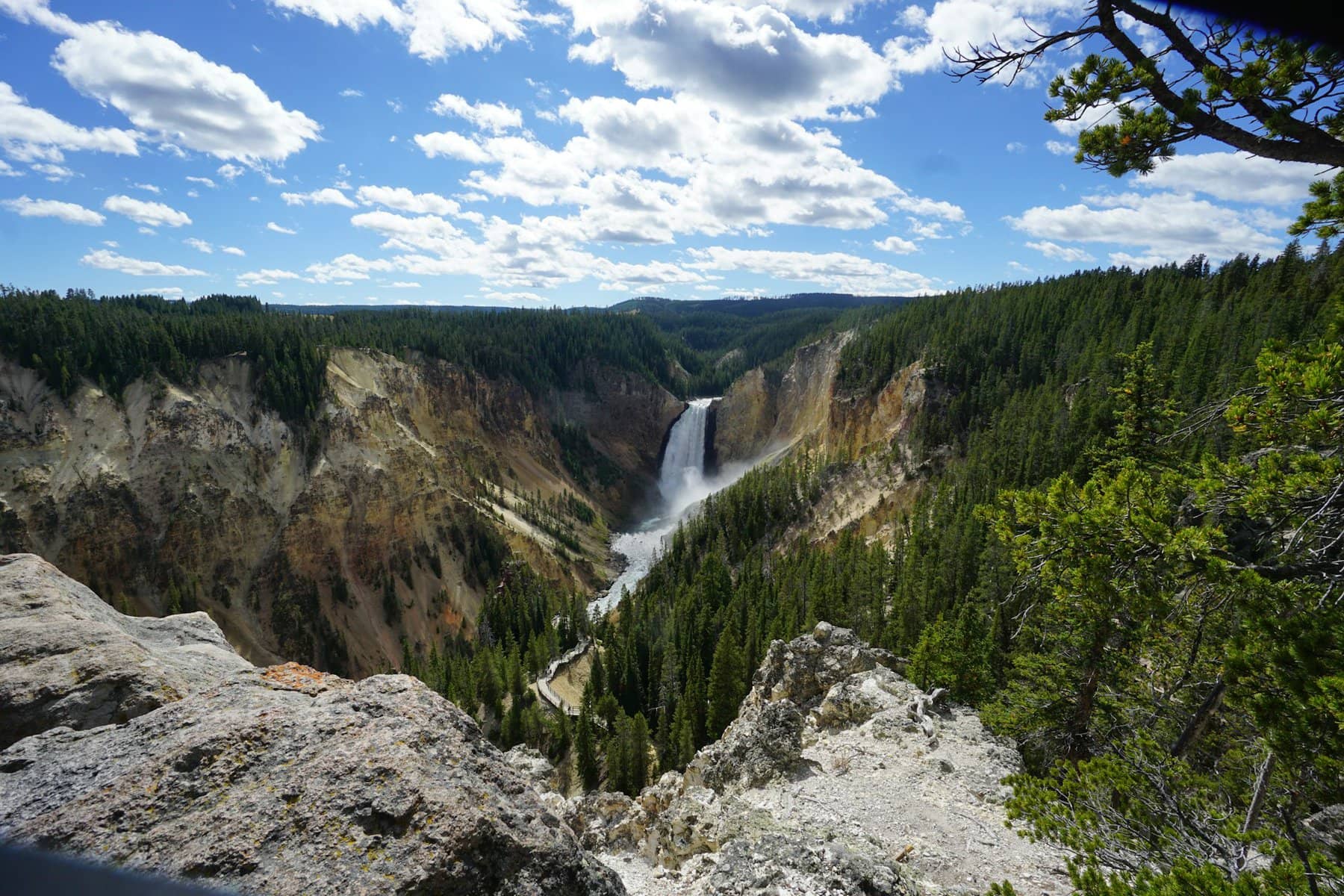
- The canyon trail features two sets of waterfalls – the Upper Falls, standing at 40 meters, and the Lower Falls, which are over a hundred meters tall.
- The base for exploring the Grand Canyon is from Canyon Village, Yellowstone Park's logistical and hotel hub. From the village, there is easy access to the Canyon Rim Trail by car, taking you to Inspiration Point and Grand View lookout points. These two stunning viewpoints are accessible by vehicle and are located on the canyon's north rim.
- From the Inspiration Point area, the spectacular hiking trail, the Seven Mile Hole Trail, begins. This path stretches eastward to the start of the river's carving in the canyon.
You can also drive along the southern rim of the canyon. The South Rim Drive offers access to both sides of the South Rim Trail, an easy hiking path with breathtaking views of the southern rim. The western section of the trail is Artist Point, a viewpoint with a stunning view of the lower falls.
Steamboat Geyser and Norris Geyser Basin
The Steamboat is the fiercest geyser in Yellowstone Park and the tallest active geyser in the world. It is the largest of the geysers in the Norris Geyser Basin, and due to the amount of water and height of the jet, it is considered the largest geyser in the world, following the inactivity of the Waimangu mega geyser near Auckland, New Zealand, after its aquifer pipe ruptured in 1904.
The geyser eruptions are not systematic, and years may pass between eruptions. In 2018, the geyser became active and erupted every few days, becoming a very popular attraction in the park. In recent years, its pace has significantly slowed, and it currently erupts once every two months with a slowing trend.
The steam jet of Steamboat rises over a hundred meters and can even reach 120 meters (for comparison, the Waimangu at its peak reached a crazy height of 450 meters). The geyser consists of two catch pipes, the northern and the southern, which are only about 6 meters apart. The northern jet is the taller of the two, but during an eruption, the jets from both pipes combine.
The hike to Steamboat Geyser is part of a trip in the spectacular Norris Geyser Basin. The hiking trail is on wooden deck paths above the boiling ground. From the deck, you can see dozens of geysers, some still active and occasionally erupting. In the northern part of the basin, there are the beautiful Porcelain Springs.
The Grand Prismatic Spring
The stunning colorful geothermal spring is located near the Grand Loop Road (Highway 191), on the Firehole River, the main tributary of the Madison River, which itself is one of the main tributaries of the mighty Missouri River. Technically, it's perhaps the longest river in the world, flowing continuously from its source just south of Old Faithful to the mouth of the Mississippi south of New Orleans, Louisiana.
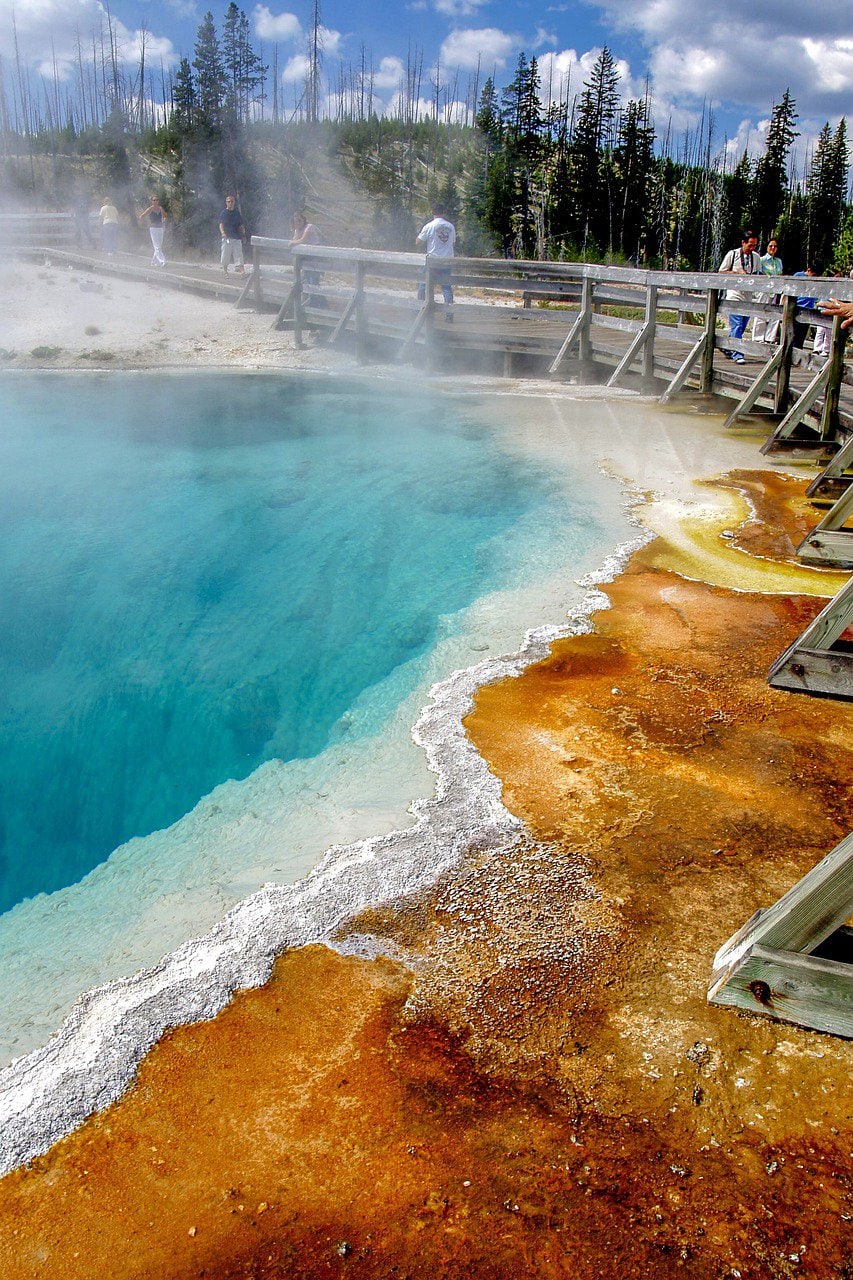
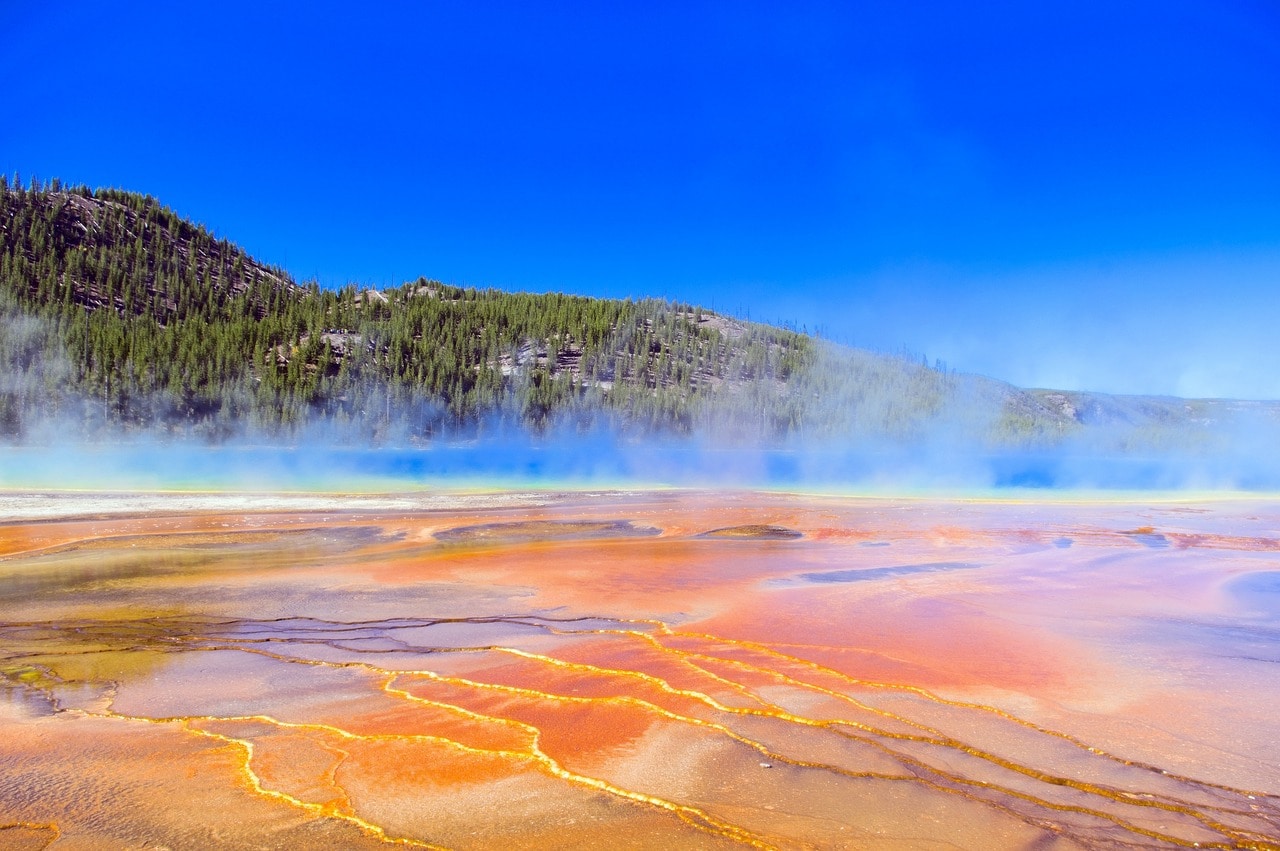
The spring itself is one of the most popular and fascinating accessible hikes in Yellowstone Park. The sulfuric lake is one of the world's largest thermal springs, characterized by vivid colors from which it gets its name. Its center is deep blue, while its edges boast shades of yellow and orange. These colors come from the bacteria thriving along the boiling edges of the spring.
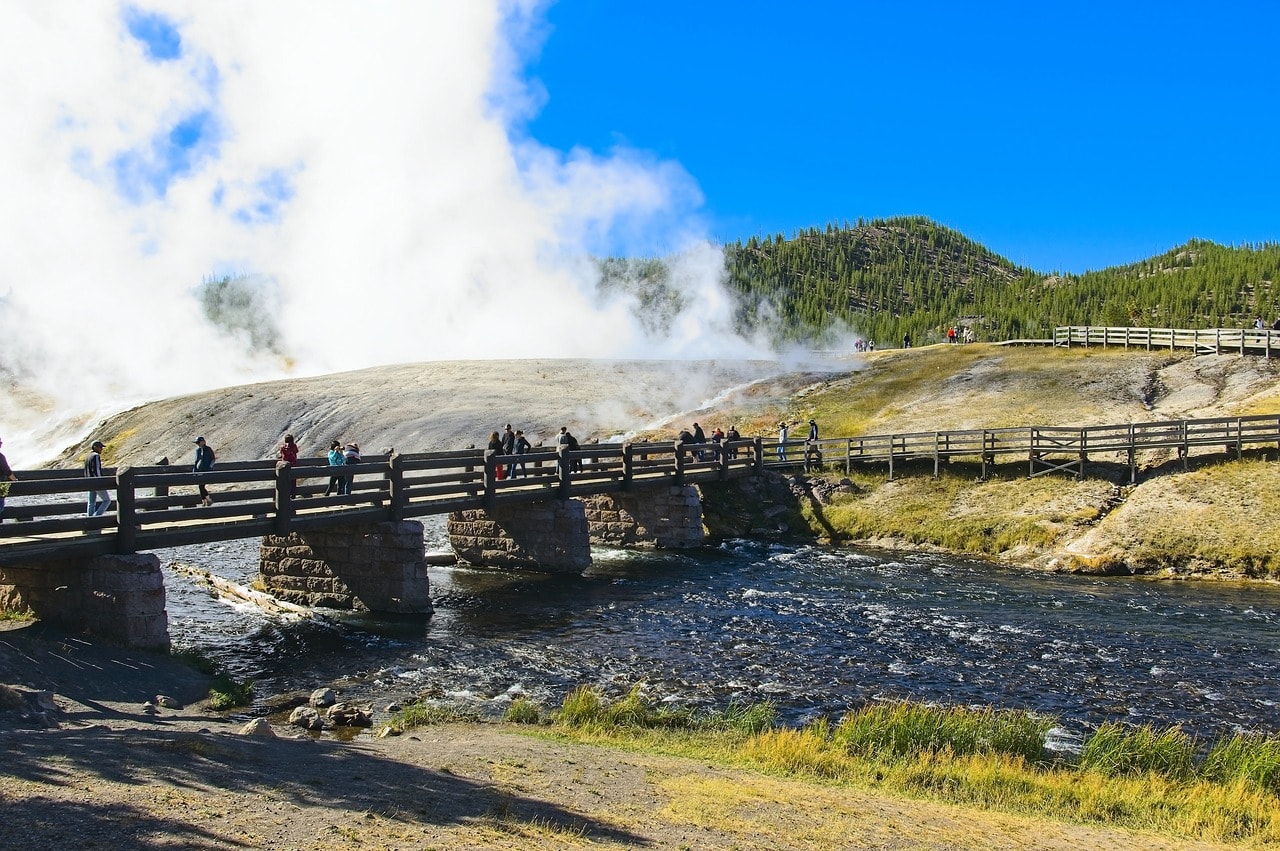
Around the spring is a narrow path that allows you to walk on the scorching volcanic ground. The trail is accessible from the large parking lot of the Midway Geyser Basin. You cross the Firehole River Bridge and walk on the exposed ground. Also on this route, you can see Excelsior Geyser, which is currently considered a dormant geyser. The last eruption of the geyser was in 2006, but before that, while it was active, it was considered the second tallest geyser in the world after the Steamboat Geyser just a bit to the north.
Yellowstone Lake
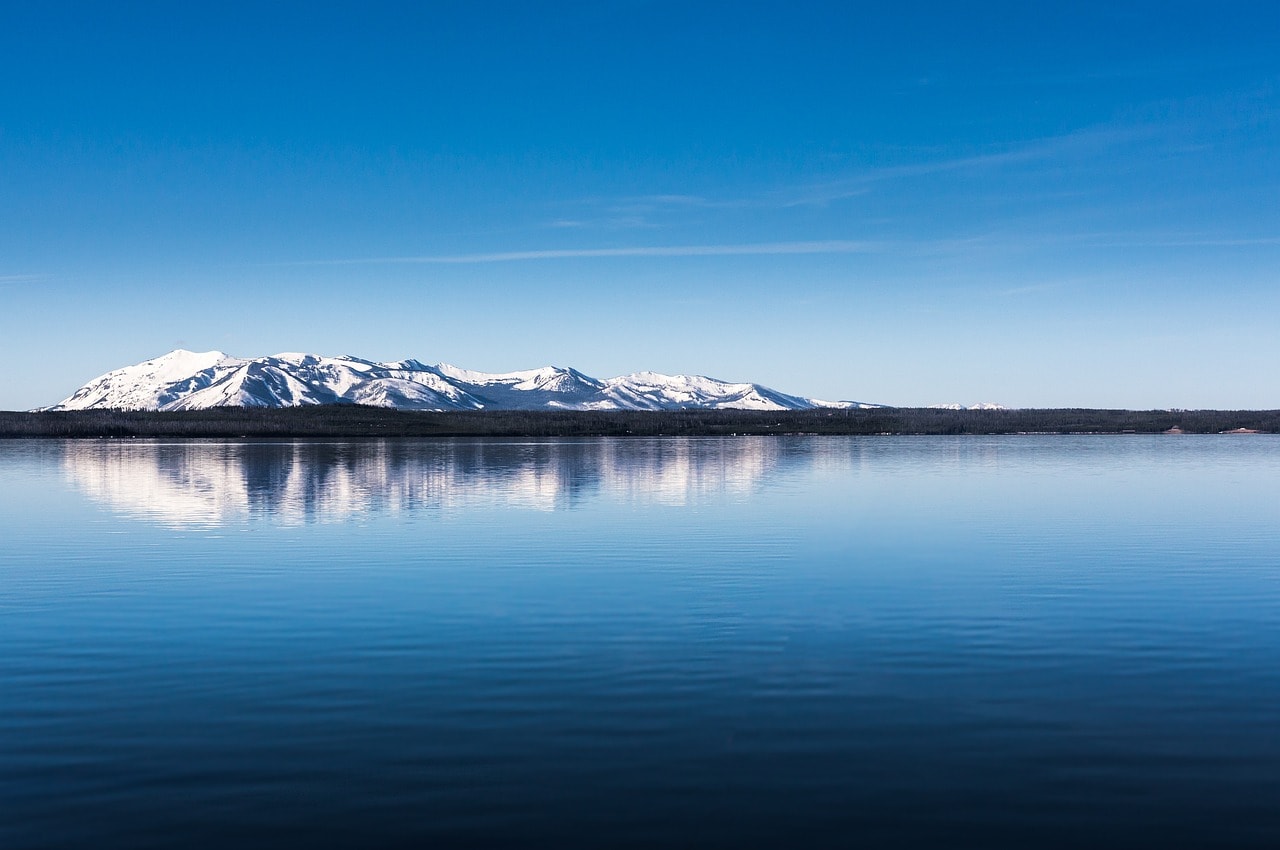
Yellowstone Lake is the largest body of water in Yellowstone Park and is a delightful destination for relaxation and fun. It's an alpine lake created by the retreat of a glacier. It is located at an elevation of over 2300 meters above sea level, with an area of 350 square kilometers and a maximum depth of 42 meters. Unlike the springs in the park, this is a freshwater lake chilled to the bone with fantastic beaches that are very popular among anglers.
The lake's temperature in summer is just a few degrees, and if you go for a swim, it shouldn't be for more than a few minutes; otherwise, you might suffer from hypothermia (even in summer, and in winter, it's completely frozen). The lake feeds the Yellowstone River, which flows from it northward until it empties into the Missouri River.
Hayden Valley
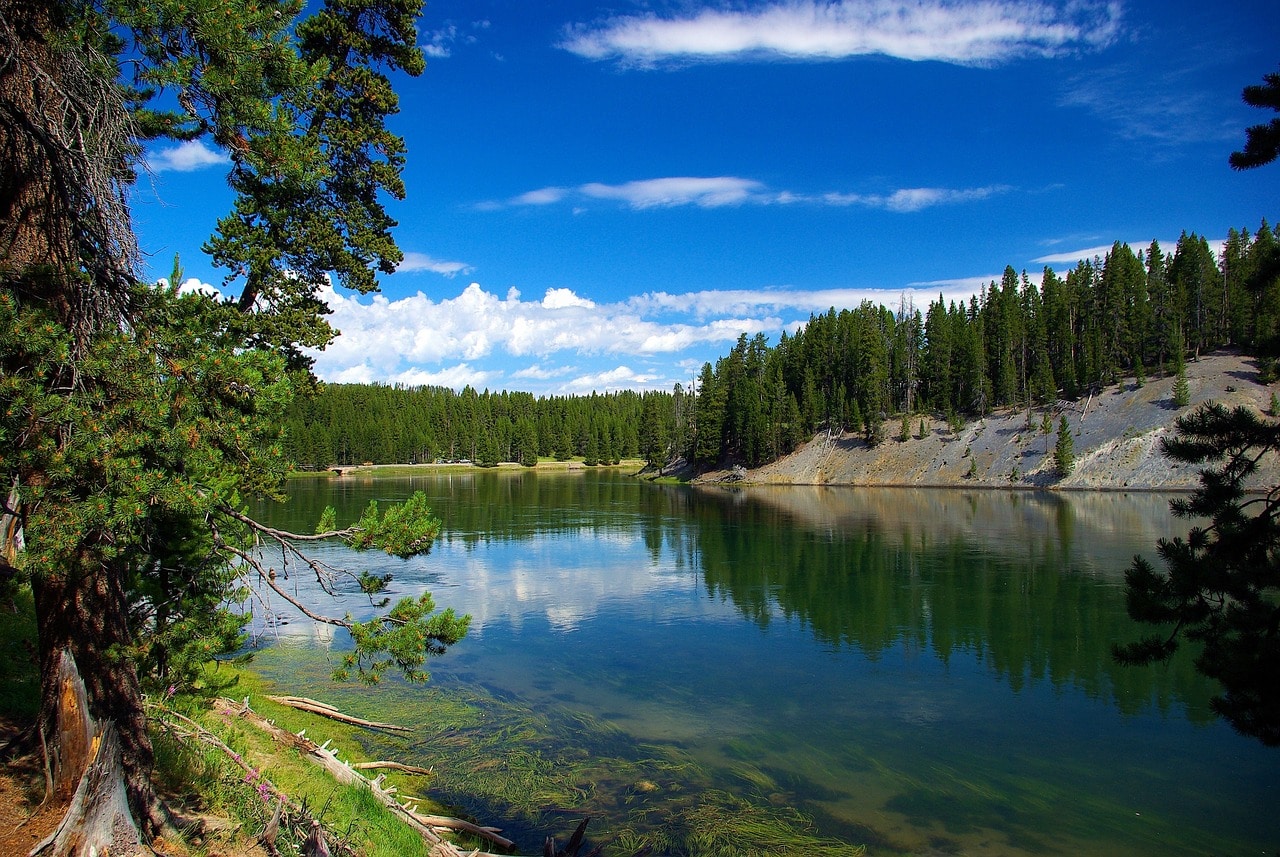
The wide Hayden Valley is the open part of the Yellowstone River as it exits Yellowstone Lake northward to the large falls. The falls are part of the Grand Canyon of Yellowstone, where soft rock has eroded over the years, and the river has carved its way through the canyon. Hayden Valley is the perfect spot in Yellowstone for wildlife viewing, including herds of elk, bison, the magnificent moose, and if you're really lucky, grizzly bears.
The travel path in the valley is the Grand Loop Rd, which starts from the northern tip of Yellowstone Lake and reaches Canyon Village. In the valley, there are hiking trails that allow access to the wildlife herds. The trails close during parts of the day according to the movement of the herds. Generally speaking, under no circumstances is it recommended to approach the bears and wolves in the valley, and less generally, also to the other wildlife. It's best to observe them from a safe distance, preferably with binoculars.
Mammoth Hot Springs
Mammoth is the northern gateway to Yellowstone Park and a place for resupply and lodging. This is the first encounter for those coming from the north with the volcanic activity of Yellowstone Park and a stunning destination in its own right. Mammoth is the logistical center of the park, built on the remnants of Fort Yellowstone, an American military base established in 1891, which was the base for the development and conquest of the wild park area.
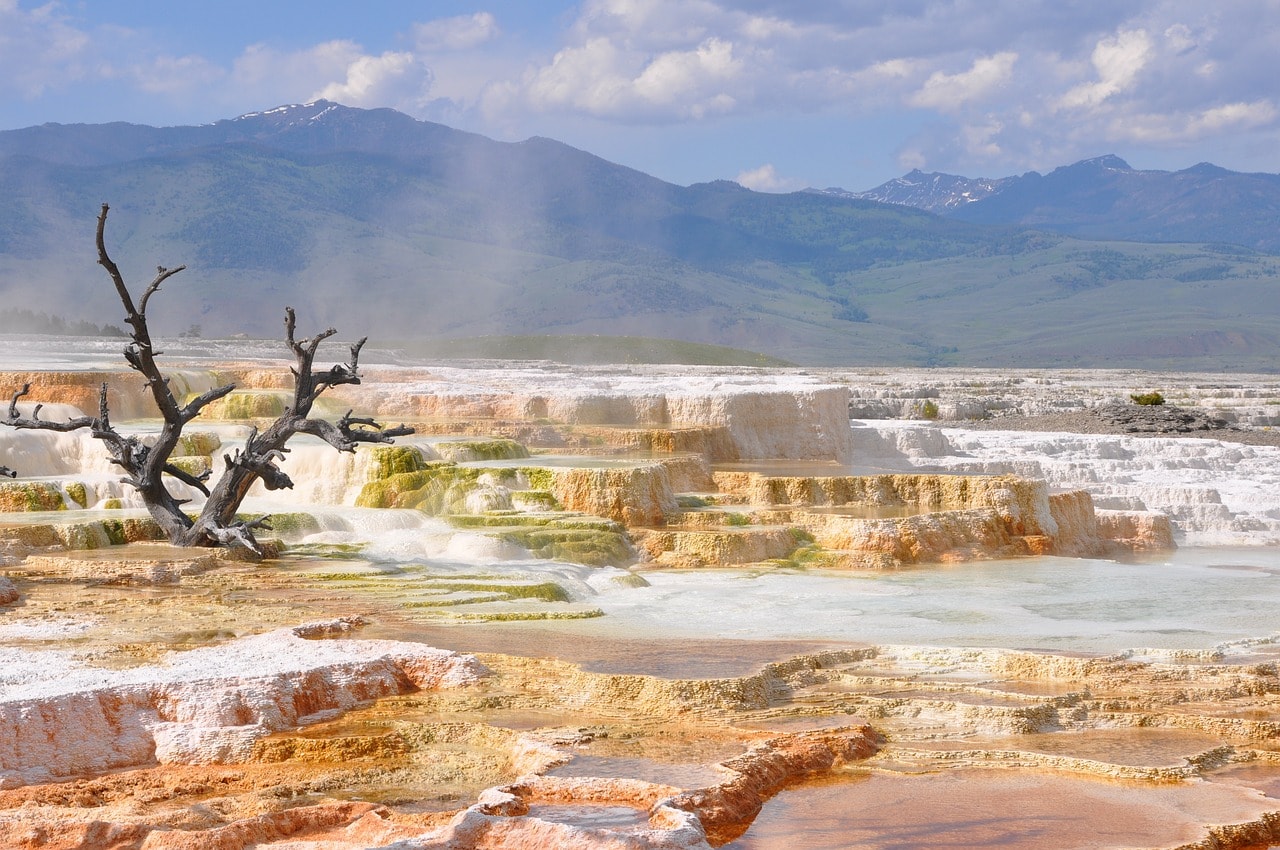
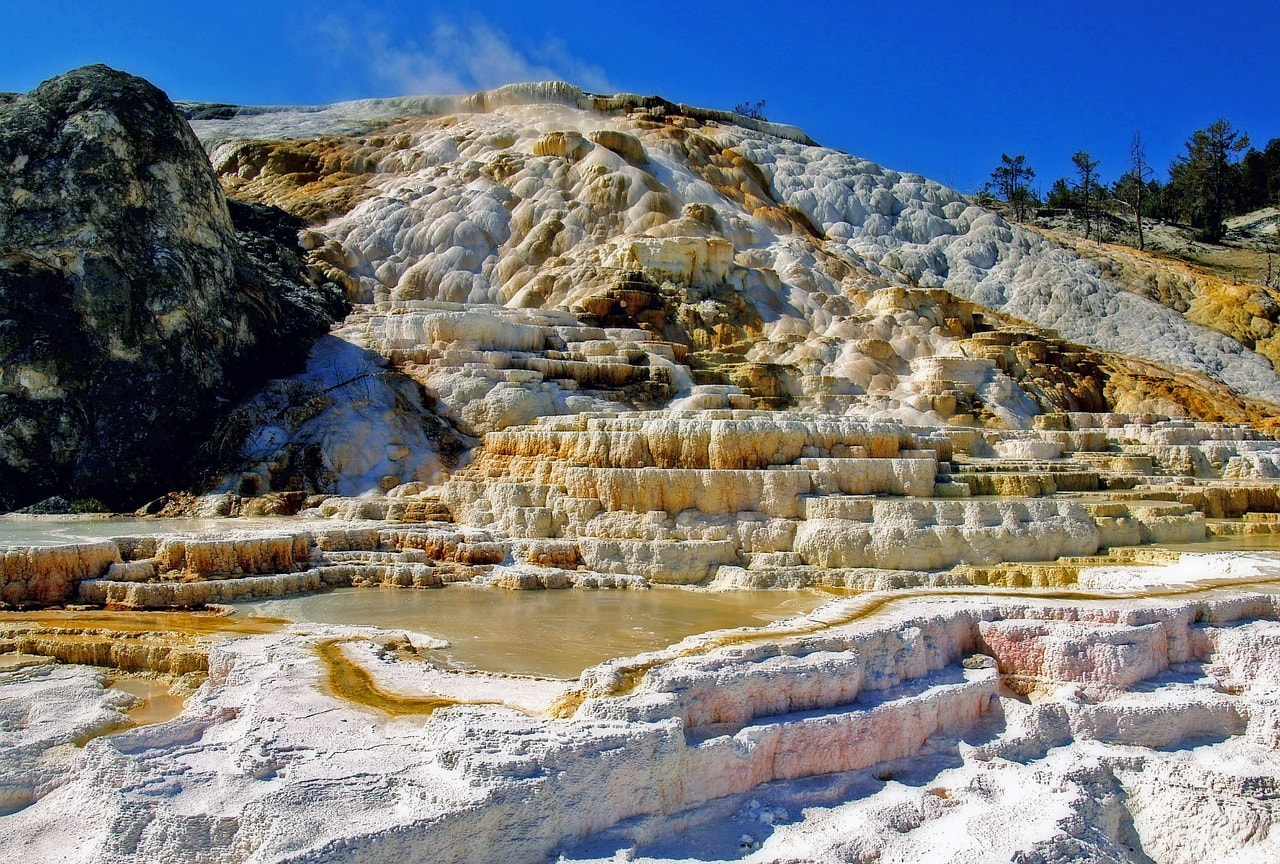
The ground of the springs consists of boiling geothermal vents and unique rocks composed of colorful calcium carbonate, part of the fermentation process of the rock from volcanic activity. The large terraces of the limestone rock are characterized by stunning geological sculptures against the backdrop of the springs' steam.
Between the springs and the limestone terraces, winding boardwalks with stairs allow walking over the volcanic ground. There is no possibility of descending to the ground due to the intense heat of the springs, and under no circumstances is it allowed to enter the hot and acidic springs.
Mystic Falls Trail
The Mystic Falls Trail is one of the most popular hiking trails in Yellowstone Park. The trail begins in the northern part of the Grand Geyser Basin, the most popular walking path in the park (starting at Old Faithful) and ends at Mystic Falls, a stunning area of cascades and waterfalls along the Little Firehole River channel. The trail gently runs along the mountain stream channel.
Lamar Valley
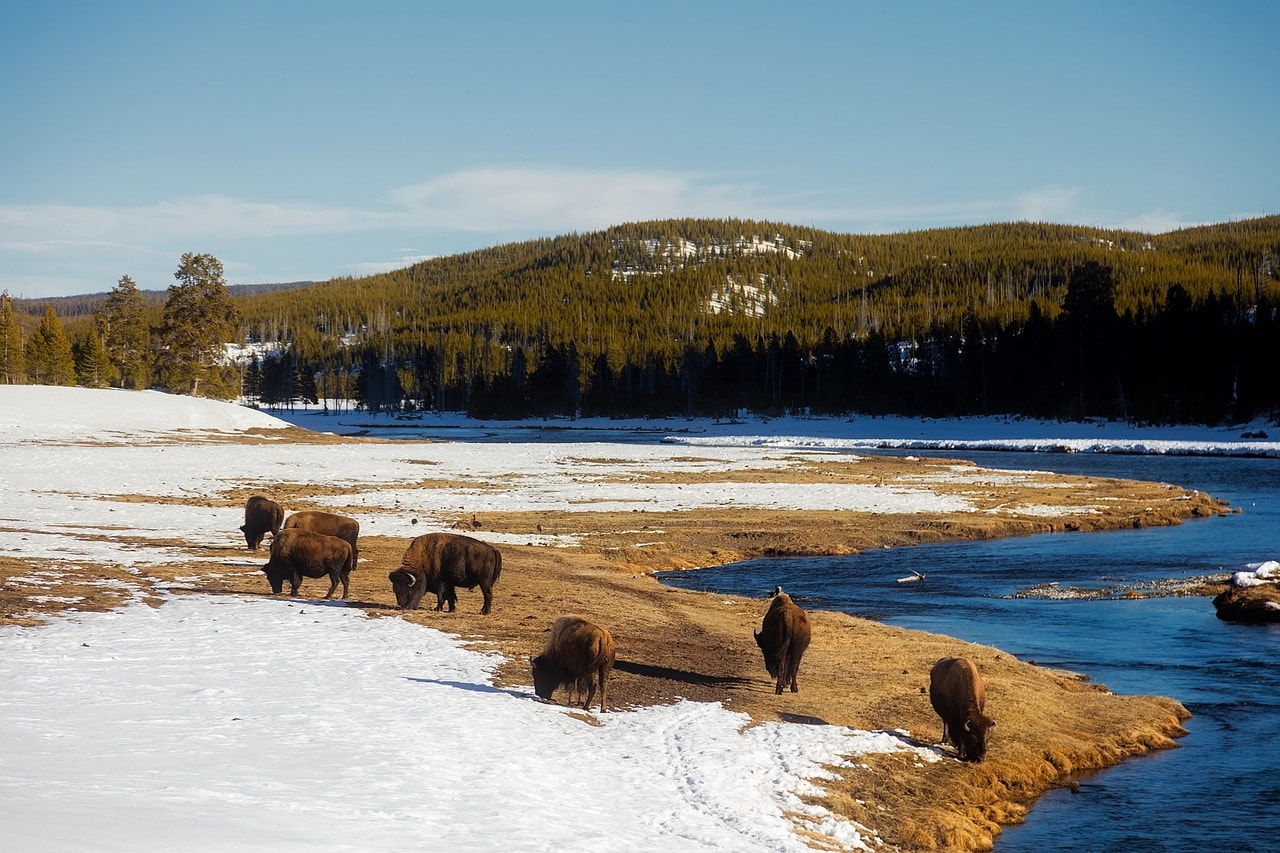
The wide valley of the Lamar River lies in the northeast part of the park, stretching from Tower Junction in the west to the northeast entrance gate of the park. Highway 212 runs along the river valley. The gently remote valley is a bit off the beaten path from the other attractions in the heart of the park, but it's a great place to encounter Yellowstone's wildlife. The valley is fondly called America's Serengeti and is home to huge herds of bison. The hike in the valley also includes the Trout Lake Trail, a gentle and pleasant path that runs around a small and pastoral alpine lake.
Mount Washburn
Mount Washburn is one of the highest peaks in Yellowstone National Park and a popular hiking destination. The mountain stands at an elevation of 3,115 meters above sea level and is located slightly north of Canyon Village, east of Grand Loop Road. This road heads north from the village towards Tower Junction and the Lamar River Valley. The mountain features an abundance of hiking trails amidst the park's lofty natural landscape, including a trail that leads to the summit itself.
Grand Teton National Park
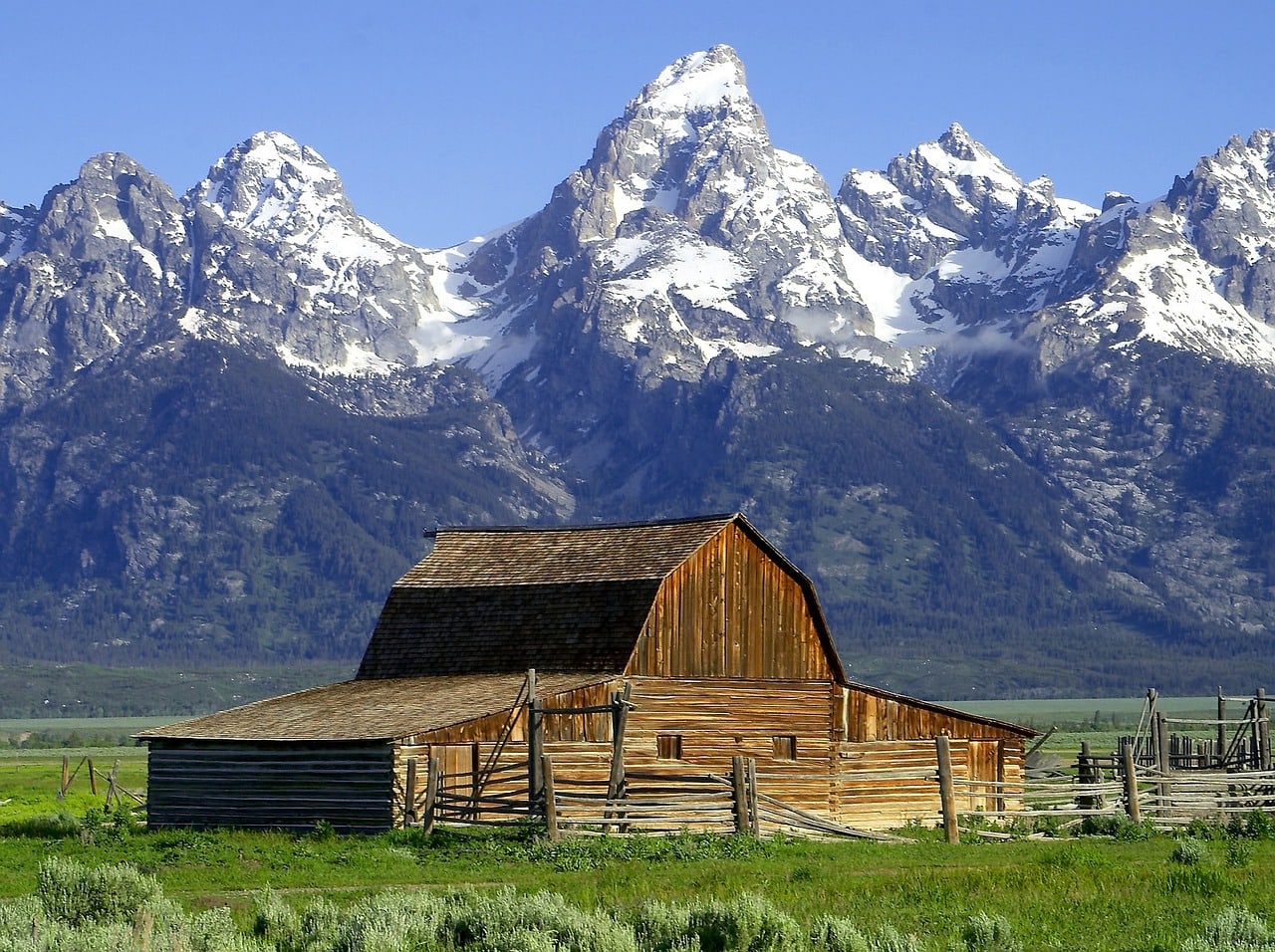
In the shadow of Yellowstone's rare geothermal sites lies a particularly green and pastoral alpine valley under the massive Grand Teton Mountain, which reaches about 4,200 meters high. The mountain and its two neighboring peaks are among the most beautiful sights in the Rocky Mountains. Grand Teton National Park stretches along Jackson Hole Valley, an elevated alpine valley with an altitude of over 2,000 meters.
The valley is full of natural attractions such as rafting on the rushing Snake River, magical lakes like Jenny Lake and Jackson Lake, unique scenic lookouts, hiking trails of various levels, and plenty of nature activities and scenic views.
Click here for all the information on a trip to the magnificent Grand Teton National Park…
How to explore Grand Teton National Park?
The Grand Teton is not a large park like its legendary neighbor, Yellowstone, and unlike the geothermal activities up north, it mainly offers stunning alpine views. A trip to Grand Teton National Park is short and sweet. Most visitors drive along its length, stopping at beautiful viewpoints with parking nearby, or venture to a few short hiking trails in the canyons on the eastern slopes of the range and in Jackson Hole valley.
For a guided tour to explore the wildlife of Grand Teton Park, click here…
For those craving more complex and challenging hikes, the park also has tougher trails. It's recommended to know their routes and difficulty in advance, and come prepared with gear, food, and maps. The park offers American nature at its peak, including rafting on the Snake River, fishing opportunities, kayaking, and more.