Old Montreal – Le Vieux Montréal
Le Vieux Montreal or Old Montreal is the oldest and most European part of the Canadian city (with a French touch), Montreal. This charming area by the St. Lawrence River and the Old Port (Vieux-Port) is filled with beautiful streets, historic buildings headed by the stunning Notre-Dame Basilica, great museums, and loads to see and do. This is the historic and oldest area of Montreal, which has undergone a revitalization in recent decades.

How much time is needed for a trip to Old Montreal?
A tour of Old Montreal or the historic district of Montreal can take a few hours up to half a day.
When traveling in Montreal, it's highly recommended to find accommodation in its historic center
Click here to check availability and prices for hotels in Montreal…
Click here for a list of 10 experiential hotels in downtown Montreal…
10 Must-See and Do Things in Old Montreal
- The Ferris wheel and view of St. Lawrence at Montreal's Old Port Vieux-Port de Montréal
- Old and new at Place d'Armes
- The stunning altar of the Notre Dame Basilica Basilique Notre-Dame de Montréal
- The tower and exhibits at the Archaeology and History Museum of Montreal Pointe-à-Callière
- Feel Parisian charm on Rue Saint-Paul
- Experience the rural Normandy vibe at Château Ramezay
- The elegant look of Hôtel de ville
- Gallery hopping at Marché Bonsecours
- The scents of the Far East in Montreal's Chinatown Quartier Chinois
- Exciting experiments at the Montreal Science Centre Centre des sciences de Montréal
Click here for all the info on traveling in Montreal…
Click here for a guided walking tour of the main sites of Old Montreal…
Click here for a guided bus tour of all Montreal's sites…
What is Old Montreal?
Old Montreal, or La Vieille Montréal, is the original core of the city and the initial settlement area. It's the part of the city that was once surrounded by the historic fortifications of the French city Ville-Marie, the historic nucleus nestled at the foot of the regal Mount Royal (Mont Réal) in the heart of the island.
- La Vieux Montréal sits on the banks of the city’s historic port on the St. Lawrence River, now fully transformed into a fun and entertainment area called the Old Port (Vieux-Port)
- Old Montreal is traversed by the long Rue Saint-Paul, a narrow and charming street with a European (Parisian, if you will) vibe full of cafes and shops
- Above it towers the massive Notre-Dame Basilica, dominating the entire district
- Not far away are the city’s historic government buildings like the Hôtel de Ville (City Hall), Château Ramezay (the governors' residence), and Marché Bonsecours, which was once the city's large market (also the seat of Quebec's parliament)
Map of Old Montréal
Everything to See and Do in Old Montréal Le Vieux Montréal
Place d'Armes
Place d'Armes is the heart of Vieux-Montréal (Old Montreal) and one of the most beautiful squares in the city. On its eastern side stands the façade of the Notre-Dame Basilica. Opposite the basilica, right in the center of the square, the bronze statue of the city's founder, French military man Paul de Chomedey, rises. It was Paul de Chomedey (at the foot of Mont Blanc) who established Fort Ville-Marie, the original settlement core of Montreal in the mid-17th century.
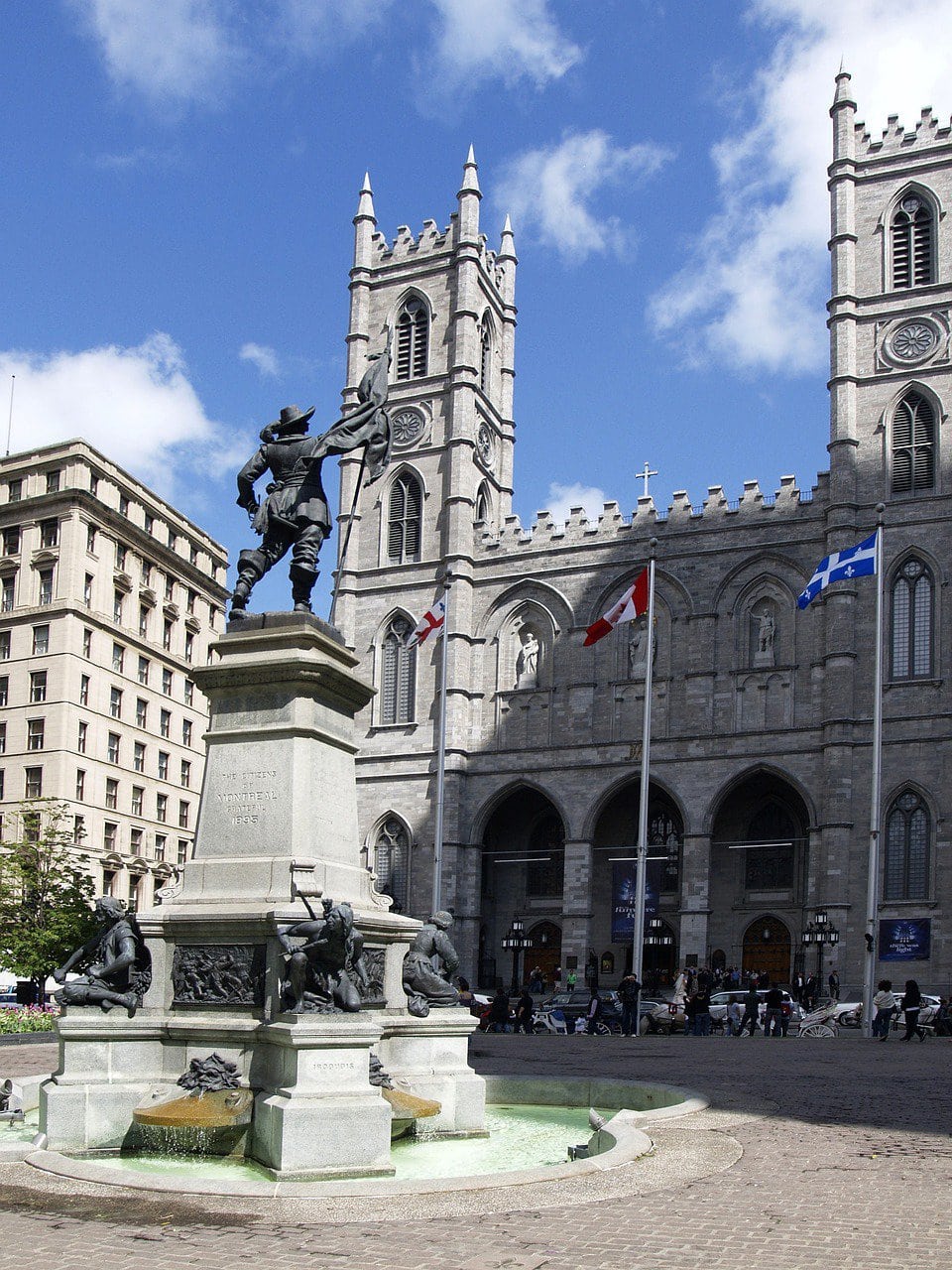
Opposite the basilica is the charming neoclassical building of Michel Beaubien & Associés and the Museum of the Bank of Montreal.
Click here for a combined walking tour in Old Montreal and the Plateau district…
Notre-Dame Basilica Basilique Notre-Dame de Montréal
As befits the largest French-speaking city in North America (and also the largest Catholic city north of the Mexican border), Montreal boasts its own particularly impressive and ornate Notre-Dame Basilica, a church dedicated to Mary, the mother of Jesus. The basilica is located on the eastern side of Place d'Armes, the central square of old Montreal.
The basilica is one of the most stunning churches in all of North America, competing with the older churches of Catholic Europe. It was completed in 1830 in a neo-Gothic style, designed by François Bailly.
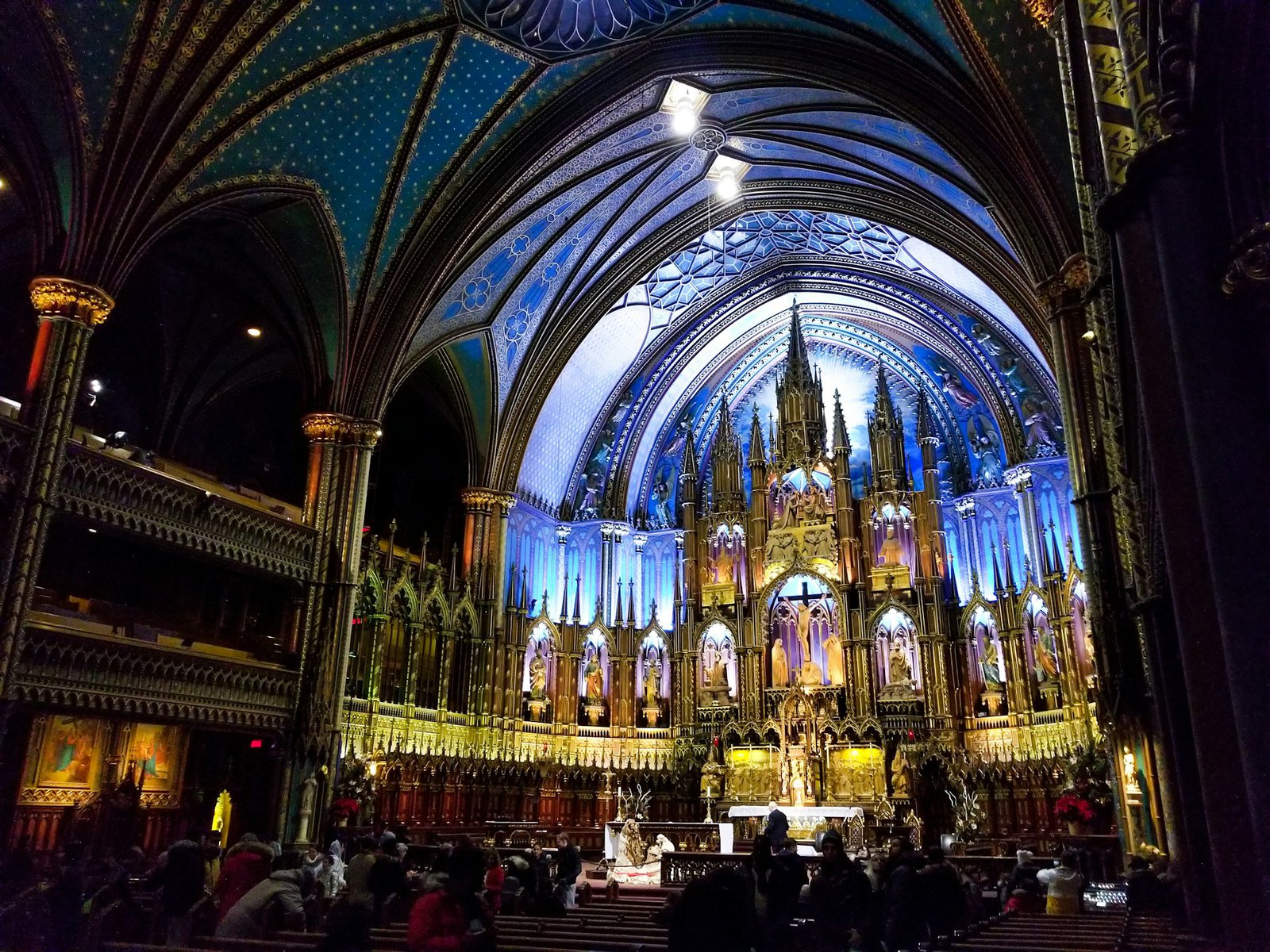
At the forefront of the church are two bell towers towering 70 meters high. The massive basilica space holds 3,000 worshippers and is richly adorned with religious sculptures, paintings, and immense stained glass windows. The church's altar is breathtakingly beautiful, beneath a ceiling painted sky blue and speckled with stars. Nearby is the grand organ installed at the end of the 19th century.
Address: R. Notre Dame O, 110, Montréal
Pointe-à-Callière Archaeology and History Museum of Montreal
The Montreal Archaeology Museum is located near the promenade of the wharfs' line, or the Grand Quai du Port de Montréal. The museum opened in 1992 in one of the city's unique modern buildings. The structure isn't particularly tall or impressive, but it certainly catches the eye and piques curiosity. The modern building absorbed the historic Customs House of the city, which was built in 1836, and today the historic structure serves as the museum shop.
The museum features fascinating displays related to the ancient history of Montreal, including an archaeological exhibit of findings from the city's ancient fort, Fort Ville-Marie. The museum's wings house a permanent archaeology collection and quite a few captivating temporary exhibitions.
Address: Pl. Royale, 350, Montréal
Click here for the museum's current hours…
Rue Saint-Paul
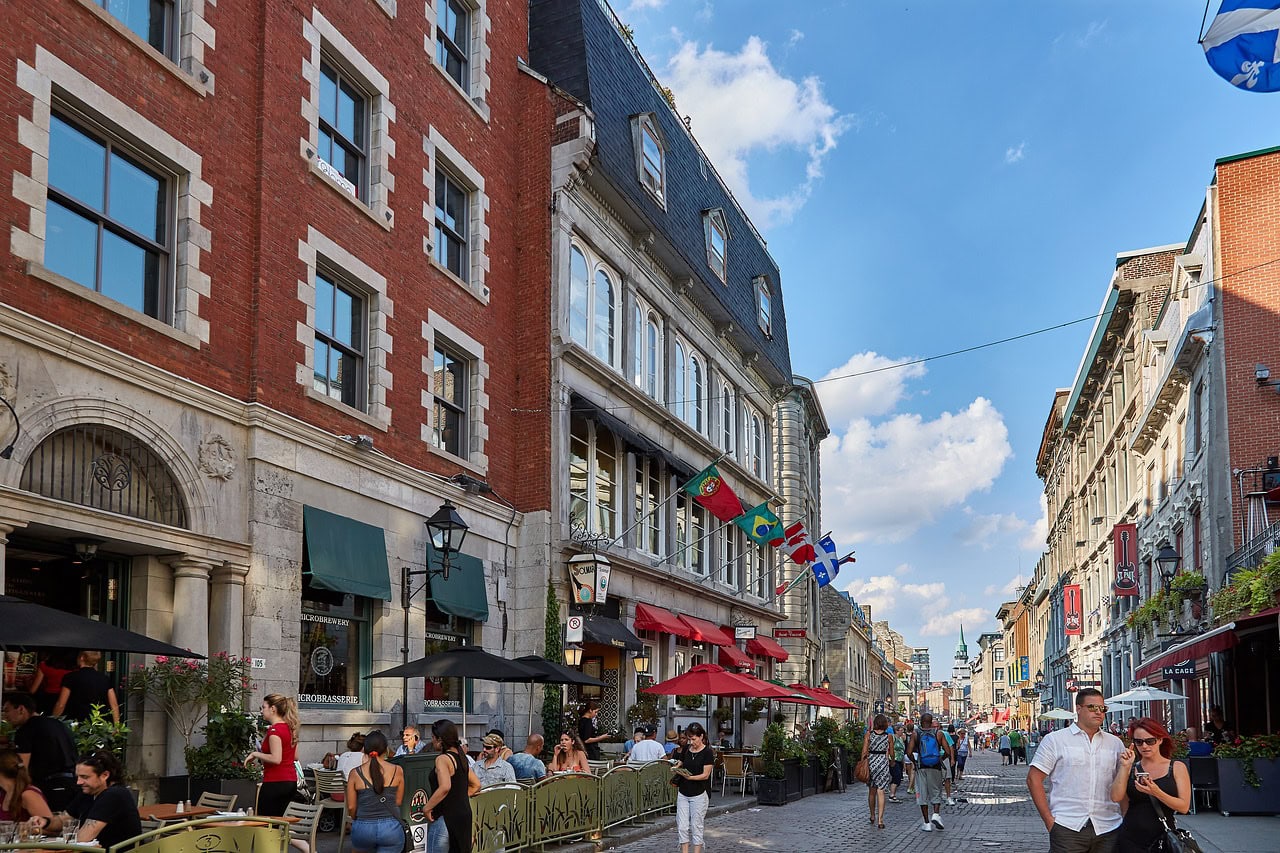
Saint Paul Street runs through the entire Old City of Montreal parallel to the St. Lawrence waterfront. It is built parallel to Rue de la Commune, one block west, with a line of commercial buildings on one side and open towards the port and riverbank on the other. Rue Saint Paul is divided into east and west but is filled with commercial activities throughout its length. It's a narrow, pleasant street for strolling with shops, restaurants, and cafes boasting a distinct French flair (the place to sip chocolate like in Paris).
Click here for a guided tasting tour of Montreal's culinary gems…
Montreal Science Centre Centre des sciences de Montréal
The Montreal Science Centre is located on King Edward Pier, just a two-minute walk from the Notre-Dame Basilica. The museum opened in 1982 as part of the Port Authority's plan to develop Montreal's waterfront into a tourist and leisure destination. It is an advanced science museum featuring rotating themed exhibitions and permanent displays with various experiments and loads of information.
Address: R. de la Commune O, 2, Montréal
Click here for the museum's current opening hours and costs…
Hôtel de ville
Montreal's city hall, the Hôtel de ville, is one of the most beautiful buildings in the city's center. It was built in the 1870s in a grand Parisian style. The building stands on an elevated section above the expansive lawn of the Champ-de-Mars. Behind the city hall is the wide boulevard or square named for Jacques Cartier, Place Jacques-Cartier, which descends to Rue de la For and behind it, the Château Ramezay.
Next to the City Hall is Place Vauquelin, with statues and a fountain. Between the two squares stands the Monument à Nelson, an obelisk inspired by Trajan's Column in Rome and reminiscent of Nelson's Column in Trafalgar Square, London.
Address: Rue Notre Dame E, 275, Montréal
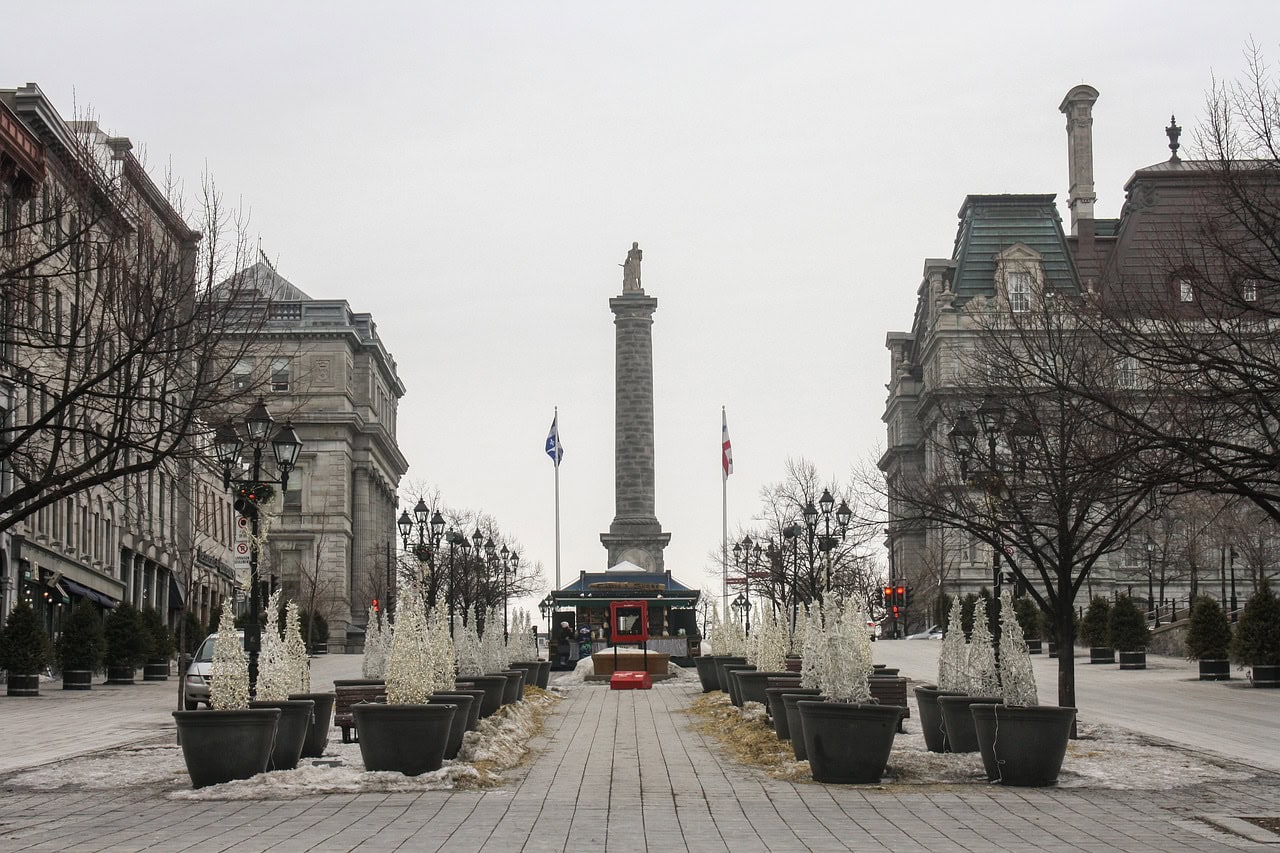
Château Ramezay
The palace of Claude de Ramezay, the 11th governor of the city of Montreal on behalf of France, is one of the most magnificent buildings in the city. It was built in the first decade of the 18th century, inspired by the architecture of his childhood region, Normandy. The exterior of the palace echoes the rural architecture of northern France and after Ramezay, it remained the governor's residence. It also served as offices for the West India Company. Today, the entire palace has been restored and opened as a period museum that allows you to see the architecture and lifestyle of the city's French rulers.
Address: Rue Notre Dame E, 280, Montréal
Click here for the museum's current opening hours and fees…
Marché Bonsecours
The Bonsecours Market used to be the hub of life and commerce in the city of Montreal. The narrow, elongated building stands right on Rue de la Commune, the city's old port. Established in 1852, it was a bustling marketplace for decades. Even before it was built, the building served as the gathering place for the Quebec Parliament following the riots in the city in 1849.
Today, the building hosts the Quebec Council of Arts and is filled with galleries, restaurants, and shops. Adjacent to it is the beautiful Notre-Dame-de-Bon-Secours Chapel from 1771.
Address: Rue Saint-Paul E, 350, Montréal
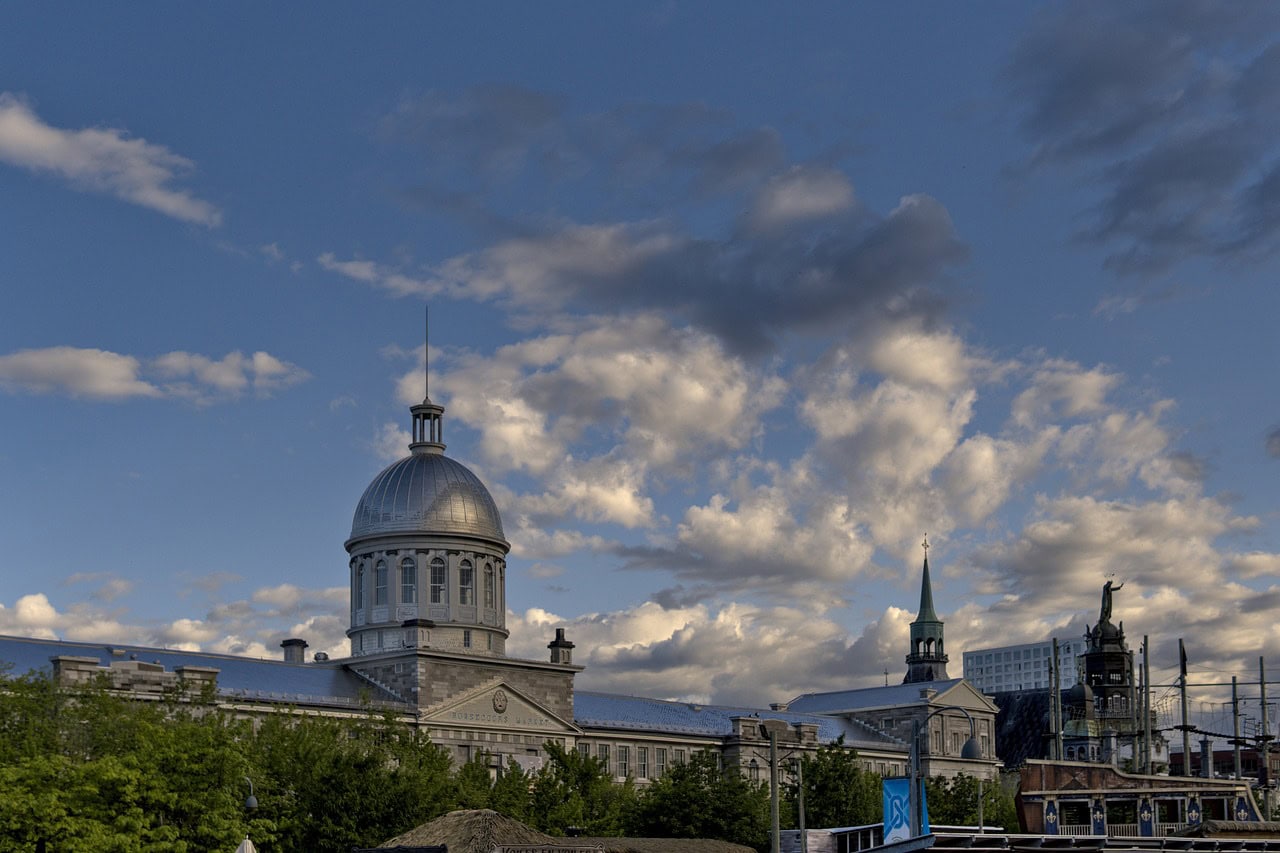
Vieux-Port de Montréal
The old port of Montreal was once the beating heart of the city and one of the most important ports in North America a hundred years ago. The port dominated maritime trade into Canada's territories towards Ontario and the Great Lakes, but it also controlled trade to the Midwestern cities of the USA. At the beginning of the 20th century, with the opening of various canals and the improvement of overland transport, the port lost its significance and became secondary.
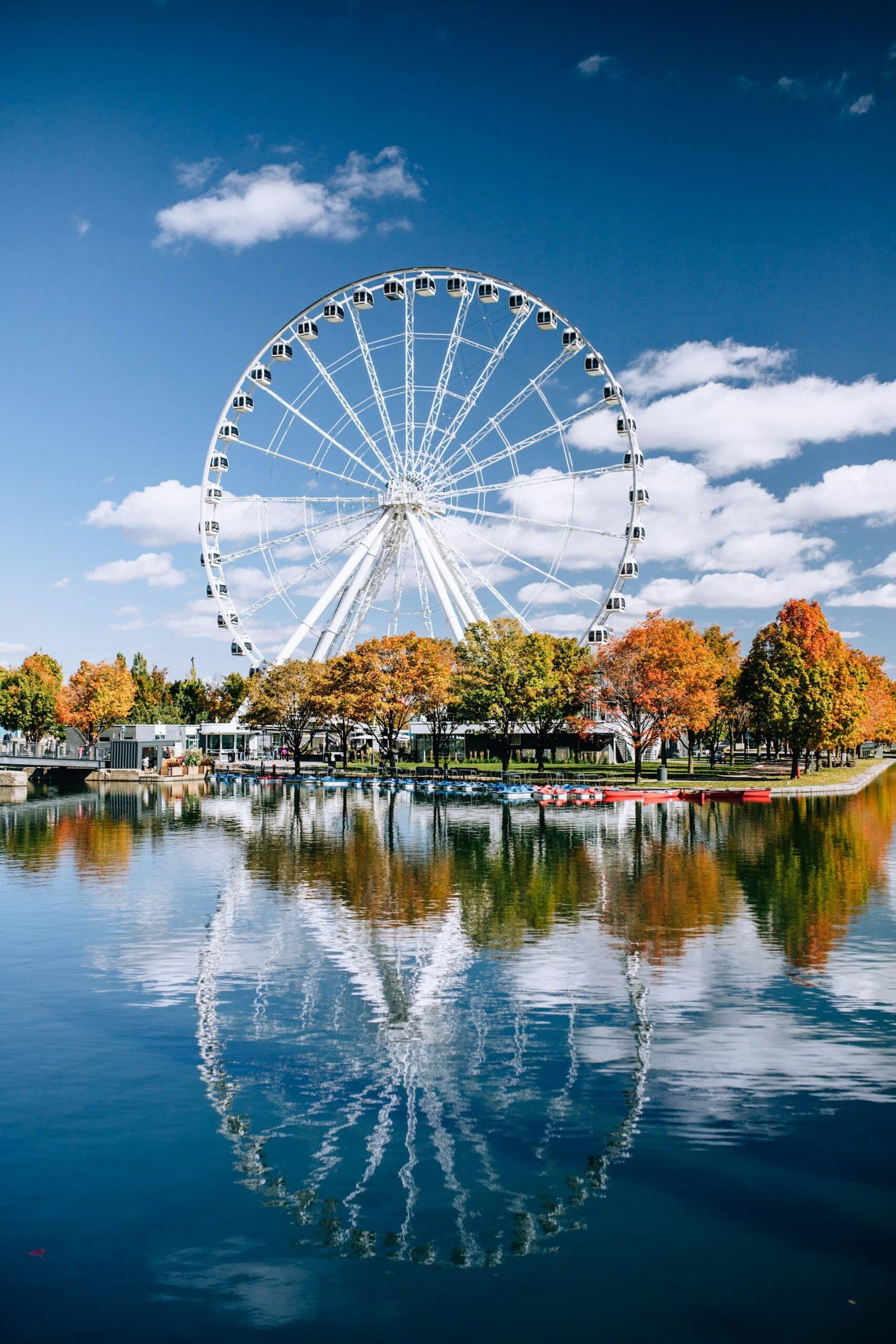
In the early 1980s, the city decided to transform the docks into a recreational and leisure area. The northern part of the old port was turned into a yacht marina, and its front part, right on the banks of the Saint Lawrence, was converted into a city park. At the end of the park stands the stunning Tour de l'Horloge clock tower. The location also houses the Ferris wheel of Montreal, La Grande Roue de Montréal.
Click here to purchase online tickets for the Ferris wheel – La Grande Roue de Montréal…
The Chinatown of Montreal, Quartier Chinois
Montreal's Chinatown is one of the most fun urban walking spots in the city. It's a genuine Chinatown, a crowded residential district of immigrants that started with the Chinese during the major migration of the 1880s and remains home to Far East immigrants today.
Today, there are hardly any Chinese left in the district, with most residents being immigrants from Indochina. The area is brimming with excellent ethnic restaurants from the Far East (including Chinese), unique shops, markets with cool goods, and foreign scents (not that Montreal isn’t considered international in American terms). The heart of the district is Place Sun-Yat-Sen on Clark Street.