SoHo and TriBeCa
SoHo and TriBeCa are the western-edge neighborhoods of Lower Manhattan. These areas once served commercial and industrial functions and have undergone gentrification, making them some of the most sought-after neighborhoods in Manhattan. In the 1960s, the industrial buildings and cast iron warehouses in the neighborhoods became a popular living space for artists and hippies. With the artists came wealthier individuals who transformed the buildings from industrial spaces to trendy lofts and apartments.
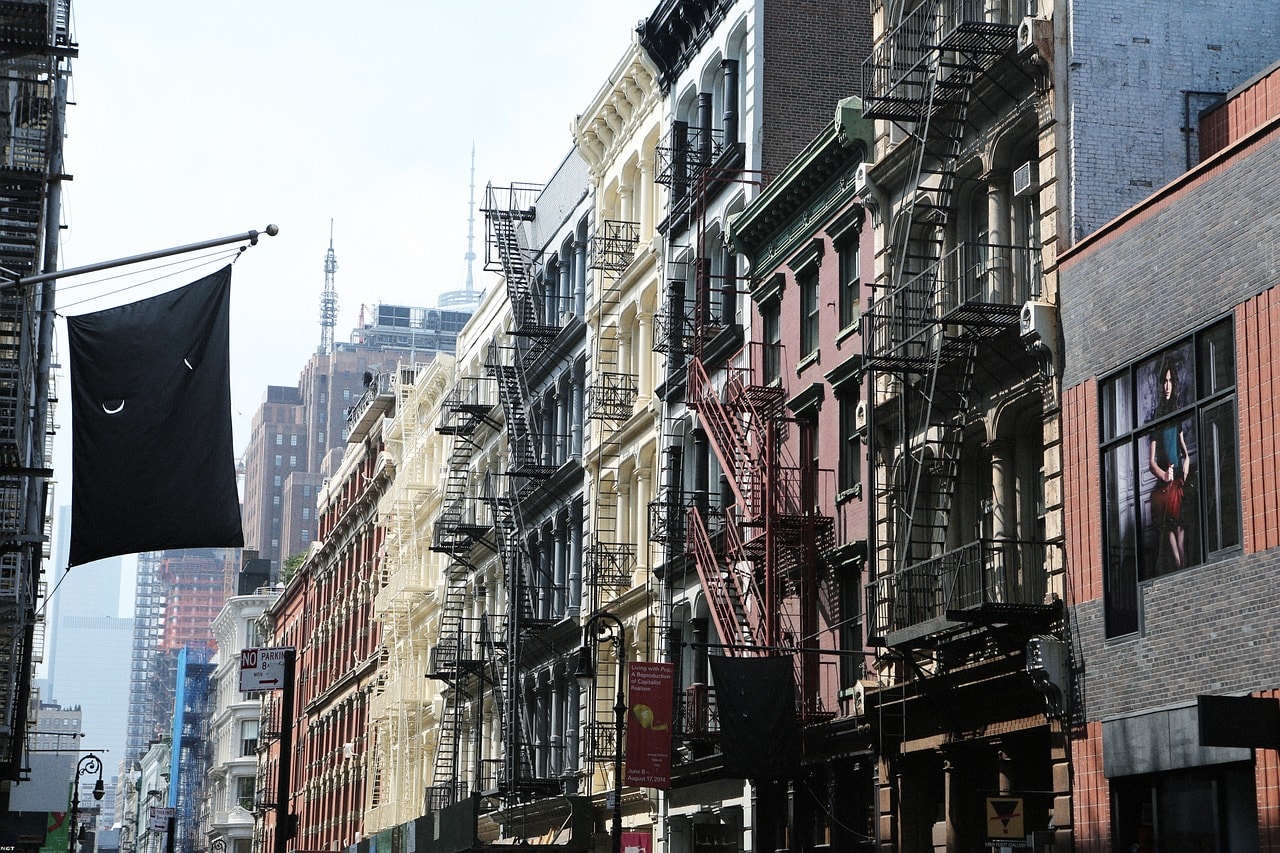
- Today, SoHo and Tribeca are filled with galleries, high-quality designer boutique stores, excellent restaurants, vibrant nightlife, and everything that smells trendy
- A bit south of SoHo and Tribeca, heading downtown, you'll find New York's governmental hub. Around City Hall Park, there's an impressive lineup of courthouses, each a masterpiece of architecture. The City Hall is located in City Hall Park, with the NYPD headquarters nearby
Click here for all the information on traveling in New York City…
8 Must-Do Things in SoHo, Tribeca, and the City Hall Area
- Trendy galleries and restaurants on Green Street
- Quality shopping on Broadway
- Beautiful preserved houses on Harrison Street in Tribeca
- Learn about the origins of New York skyscraper design at the Woolworth Building
- Be impressed by the power of the American judicial system at the Manhattan Municipal Building named after Dinkins
- Meet the city's firefighters at the New York Fire Museum
- Historic architecture at St. Paul's Chapel
- Classic SoHo architecture at the Ouat Building
Click here to check availability and prices at Soho hotels…
Click here for a list of 12 excellent hotels in Manhattan…
How to reach SoHo, Tribeca, and the City Hall area?
You can reach the neighborhoods of SoHo and Tribeca via the blue subway line (Lines A, C, and E) and get off at Spring, Canal, or Chambers Street stations. This line also goes to City Hall, and you can get off at Fulton Street. The red line (1, 2, and 3) also reaches these neighborhoods, with stops at Hudson, Canal, Franklin, and Chambers. This line also serves City Hall, with a stop at Park Place.
Map of Soho and Tribeca in Lower Manhattan
Soho
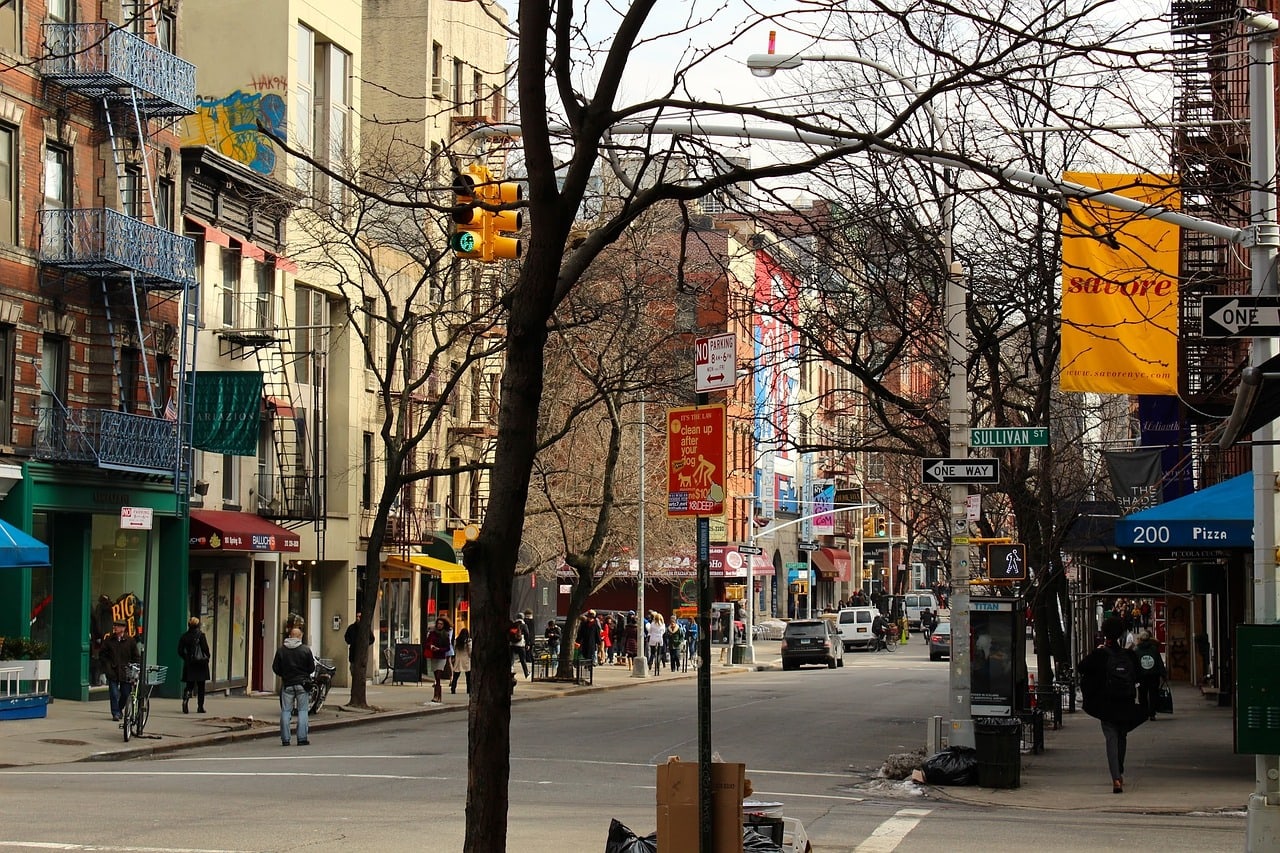
In the whirlwind of gentrification that swept through southern Manhattan during the 90s, Soho became a sought-after residential neighborhood and a great place to stay. Much like its neighbor to the north, Greenwich Village, Soho first attracted artists (during the 60s), then the bourgeois, and finally the affluent. The neighborhood was originally built as industrial buildings, many of which still stand and have been converted into very trendy residential properties.
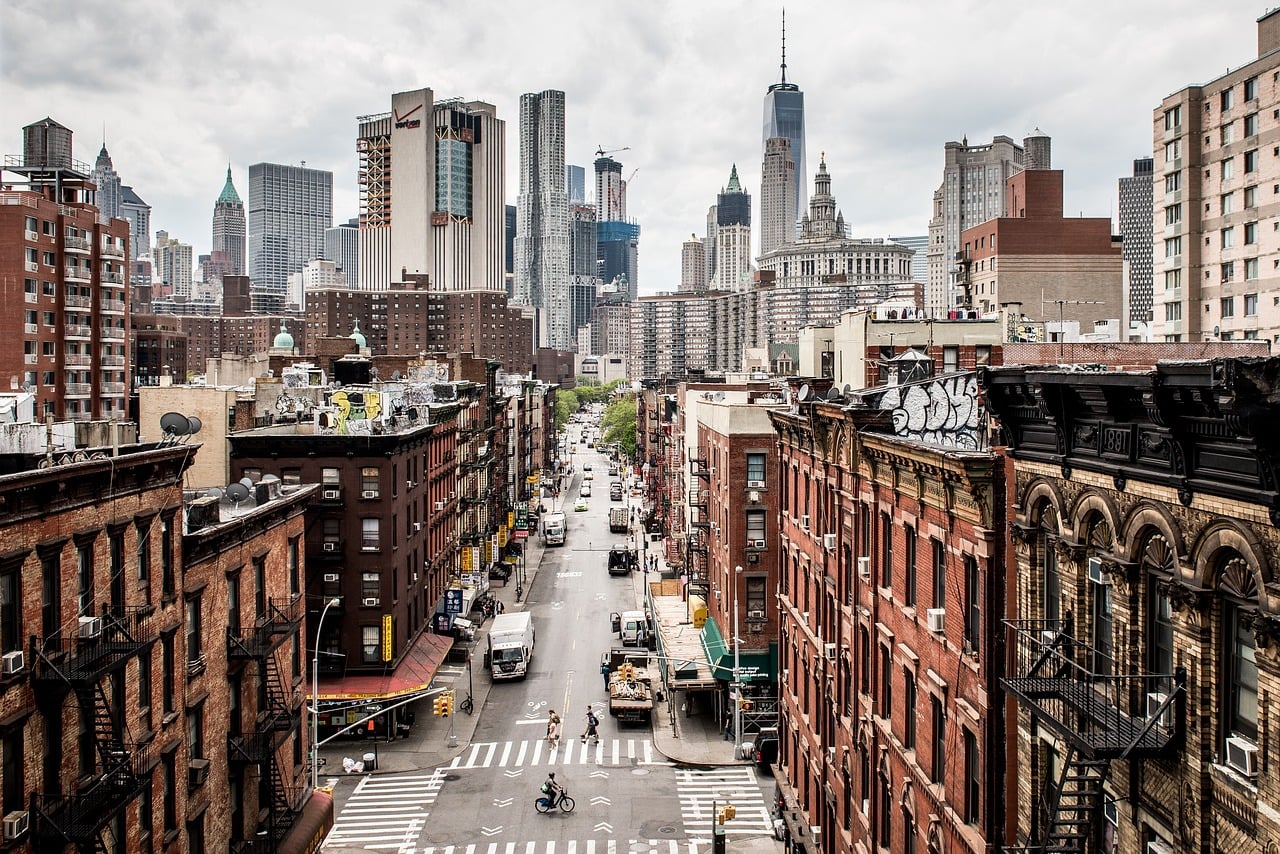
The neighborhood is structured in a grid pattern between Lafayette Street to the east (the street that heads south to City Hall Park and the governmental and judicial center of New York) and Sixth Avenue to the west. The area is bordered to the south by Canal Street and to the north by the street it is named after, Houston Street. The neighborhood's acronym stands for South of Houston. The central axis of the neighborhood is the southern part of Broadway, which cuts through the neighborhood from north to south in a straight line, continuing all the way downtown.
Click here for a guided street art tour of SoHo and Tribeca…
The Haughwout Building
The stunning building at the intersection of Broadway and Broome Street is considered one of the most accurate reflections of the neighborhood's character and history. The industrial structure of the Out Glass Company was constructed from cast iron in 1857. The building's clean and precise design is one of the most beautiful in the entire neighborhood, and the structure is regarded as an architectural masterpiece that tells the story of Soho. It is a four-story building with a higher entrance floor, featuring rows of arched windows.
Greene Street
While Soho is the commercial center of the neighborhood, with all the international chains and department stores, Greene Street is the true local hub, featuring unique restaurants, galleries, and boutique shops. The most architecturally striking part of the neighborhood is the section between Broome Street to the south and Prince Street to the north. In this section, dozens of buildings made from cast iron are characteristic of the industrial structures built in the neighborhood starting from the mid-19th century.
Little Singer Building
An impressive building constructed in 1904, it is also considered one of the most beautiful in the neighborhood. The building is the work of Ernest Flagg, who also designed its larger sibling (the Big Singer Building) further south on Broadway. The Big Singer Building was demolished in the 1960s, and this building remains as a testament to the talented architect's work.
For the full Soho + Chinatown + Little Italy tour, click here…
The building is located at the intersection of Broadway and Prince Street, in the northern part of Soho. It features a combination of Art Nouveau balconies with terracotta bricks over cast iron. The structure served as an important office for the sewing machine company and is named after it.
New York City Fire Museum
The Fire Department Museum is located west of SoHo, at the intersection of Spring Street and Hudson Street. Originally, the building was a large fire station and has now been converted into a museum that tells the story of the famous New York department. There is a display of fire extinguishing equipment and fire trucks from the 18th century onward. Of course, there is also a section entirely dedicated to the events of September 11 and the role of the firefighters in the catastrophe.
TriBeCa
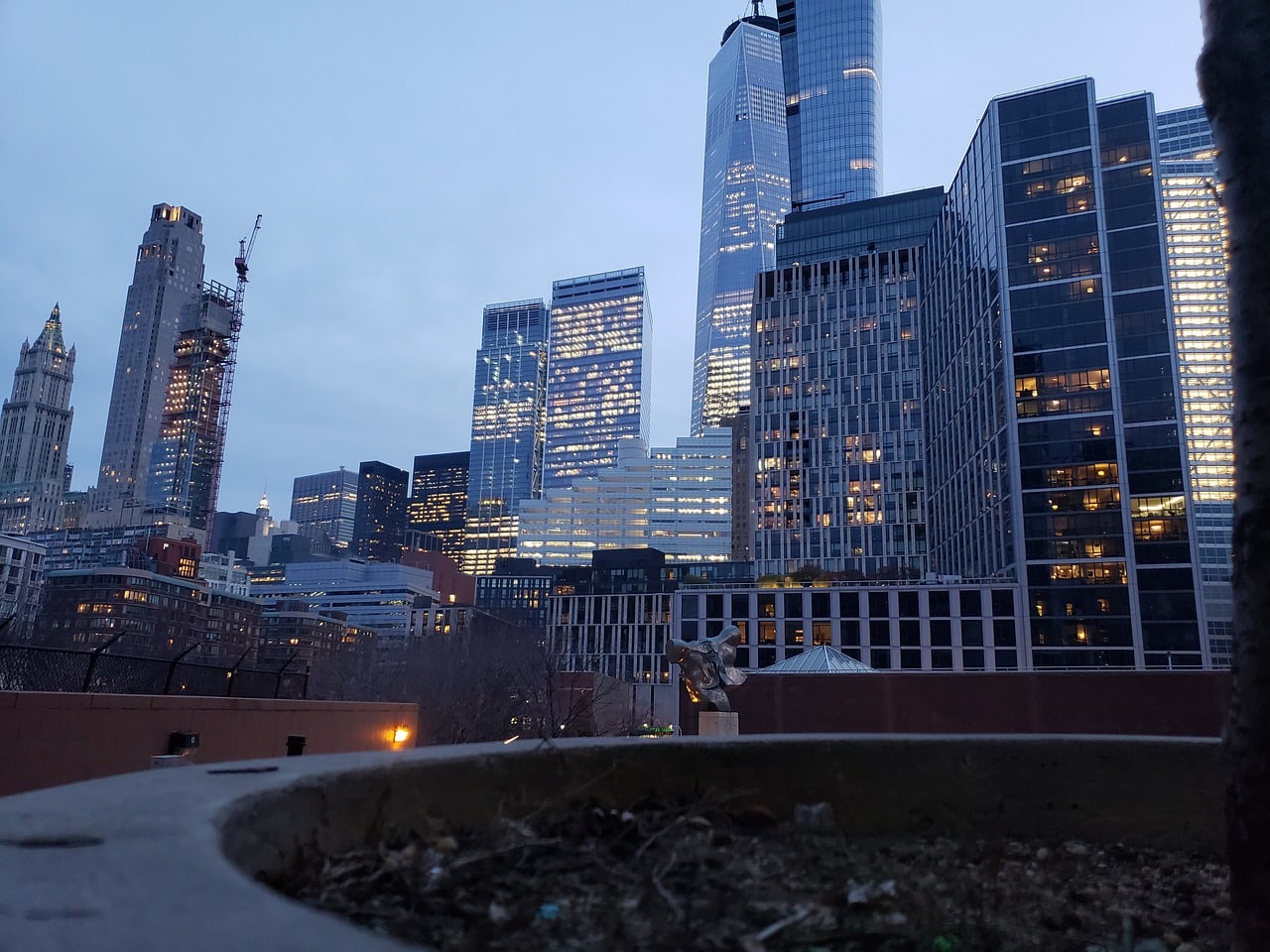
The name Tribeca stands for Triangle Below Canal Street. This Lower Manhattan neighborhood also underwent (a bit after SoHo and Greenwich Village) a gentrification process. A large part of the neighborhood's buildings is still based on old port warehouses that have been converted into residences in lofts or apartments. The neighborhood's fame was sealed by its film festival, which began in 2002. Initiated by Robert De Niro, the festival was intended to help rehabilitate the area after September 11.
Click here for the Tribeca Architecture and History Tour…
Tribeca is bordered to the south by Canal Street and SoHo, and to the north by the World Trade Center site, which was affected by the terror attack. The eastern boundary of the neighborhood is Broadway, and to the west, the piers along the Hudson River have been converted into parks and recreational areas. The neighborhood streets are also filled with boutiques, galleries, trendy shops, and restaurants.
Harrison Street is the most photogenic street in the neighborhood, running from Hudson Street in the east to Greenwich Street in the west. The block features a row of preserved houses originating from the mid-18th century.
City Hall Area
New York City's Courthouse Complex
The legal center of New York is located north of City Hall Park and the municipal government center. This massive complex houses several types of courts, each with different functions, both municipal and federal. The complex is located north of City Hall Park at the rise of the Brooklyn Bridge. The court center is Foley Square and Thomas Paine Park. To the west of the complex is the main building of the New York City Police Department.
New York County Criminal Court Building
The northernmost of New York's courthouses is the Criminal Court, located between Columbus Park to the east and the well-tended Collect Pond Park to the west. The building was built in 1939 and hosts the city's criminal trials. Nearby, in the northern part of Collect Pond Park, is the New York City Civil Court.
Address: Centre St. 100, New York
New York County Supreme Court
The front of the County Courthouse faces Foley Square and it's one of the most photogenic spots in downtown. The building was completed in 1926. The courthouse steps lead up to a neoclassical facade with nine columns crowned by Corinthian capitals. Above the columns, there's a classic pediment with sculpted reliefs. The building has a hexagonal shape, with six connected buildings surrounding a round courtroom at the center. Between the passages are inner courtyards.
Address: Centre St. 60, New York
Thurgood Marshall United States Courthouse
Another one of the area's magnificent and unique skyscrapers is the United States Courthouse. This special building was designed by Cass Gilbert, who also designed the Woolworth Building to the south, one of the key prototypes of Manhattan skyscrapers. Above the courthouse is a 31-story structure completed in 1933.
At the top of the tower is a pyramid whose base is a temple in a neo-classical style. The architectural elements and quotes from the golden ages of yesteryear are signature marks of Gilbert, combined with the power and size of skyscrapers.
Address: Foley Square. 40, New York
The David N. Dinkins Manhattan Municipal Building
The municipal building is a popular tower situated opposite the Tweed Courthouse in the northern part of City Hall Park. It completes the New York courthouse district from the south. The tower was completed in 1914 and combines interesting architectural elements in neo-classical and Gothic styles. On the roof of the tower is Adolf Weinman's golden statue “Civic Fame”.
Address: Centre St. 1, New York
Surrogate's Court
The most ornate building among New York's courthouse buildings, located in the northern part of City Hall Park. The facade and the interior feature numerous quotes from different periods and styles of the world of architecture. The building was completed in 1911.
Address: Chambers St. 31, New York
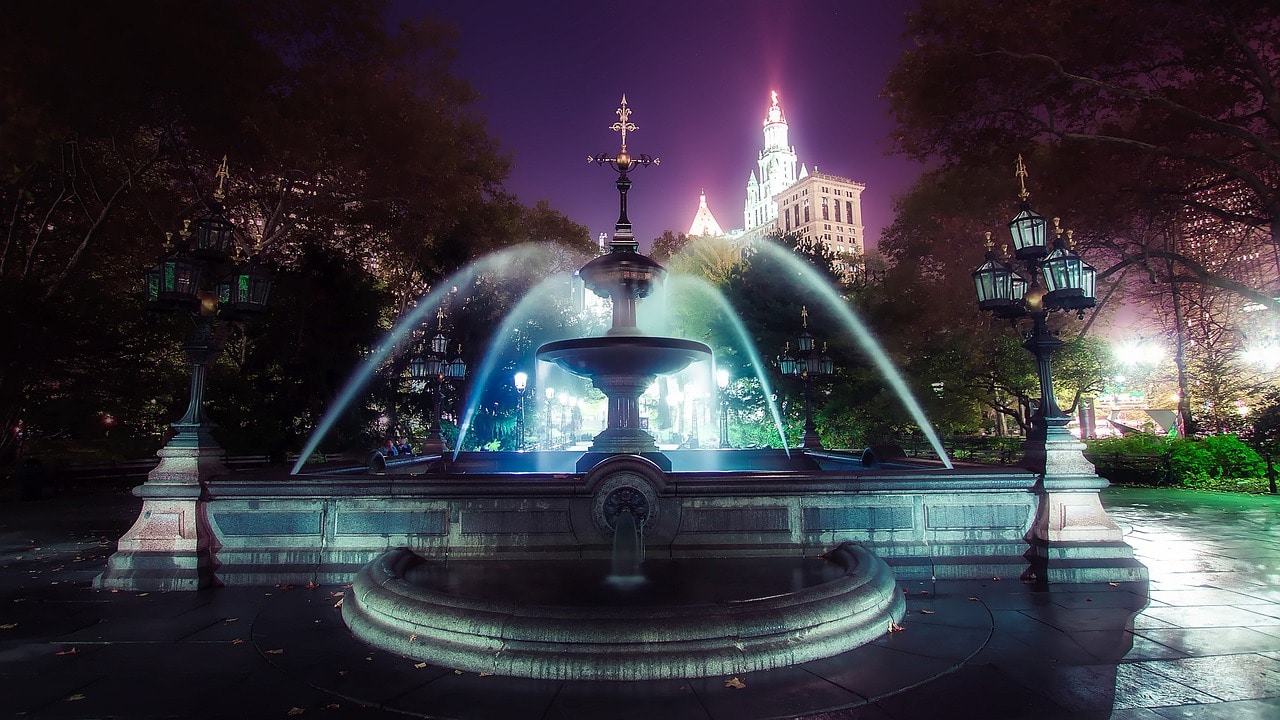
City Hall Park and New York City Hall
City Hall Park is the historic civic center of settlement in southern Manhattan. It has been a municipality of importance since the days of New Amsterdam and was the governmental center of the city at the end of the 18th century under British rule. Today, the park and its surroundings remain the municipal governing center of New York.
In the heart of the park lies New York City Hall, a building constructed in 1812. At the foot of City Hall’s steps stands the Nathan Hale Statue, commemorating the American soldier hanged by the British during the American Revolutionary War. Behind City Hall is the Tweed Courthouse, now part of the City Hall complex.
The Woolworth Building
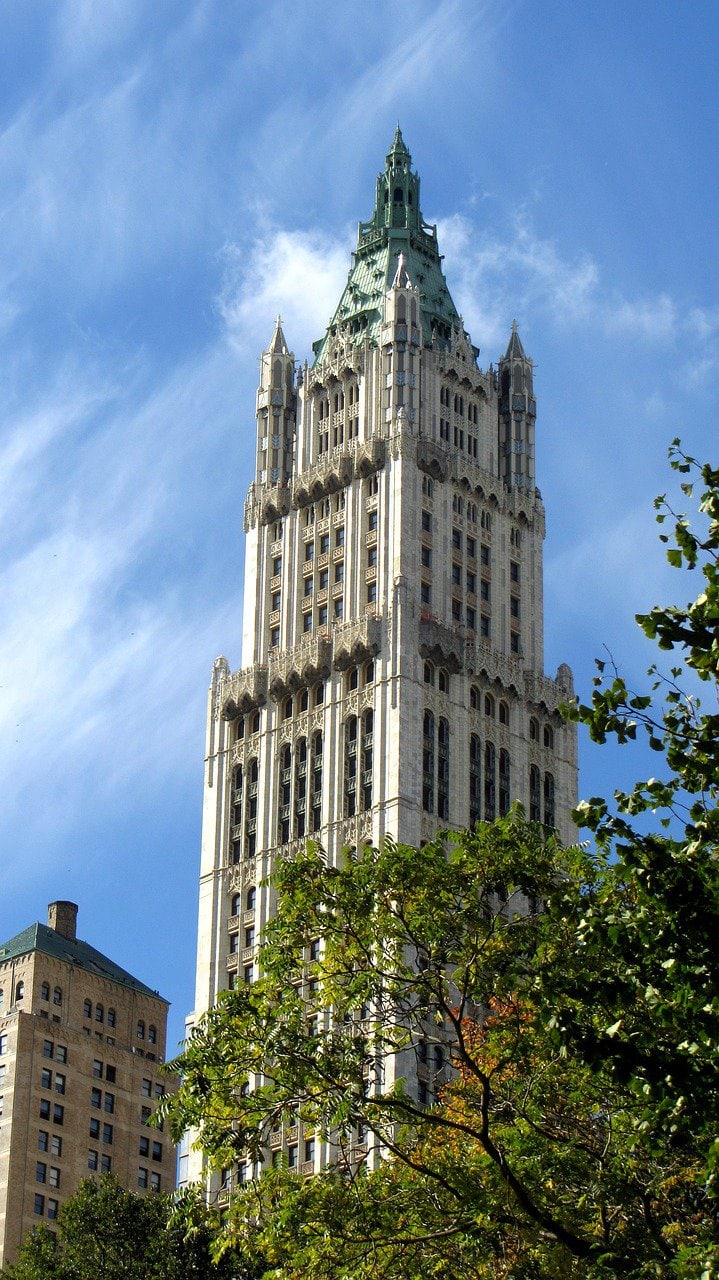
The beautiful tower in the southern part of City Hall Park on Broadway is one of the finest and most exemplary examples of the skyscraper style in Manhattan. The building was constructed in 1913 as the headquarters of the Woolworth's chain, a legendary chain that predated today's American chains like Walmart or Target.
The skyscraper combines stunning Gothic elements of carvings that seem to be taken from European cathedrals, together with clean American elements of tower building. The tower is something of a prototype for the magnificent skyscrapers built after it during the 1920s and 30s, what we recognize as the vintage skyscrapers of New York.
St. Paul's Chapel
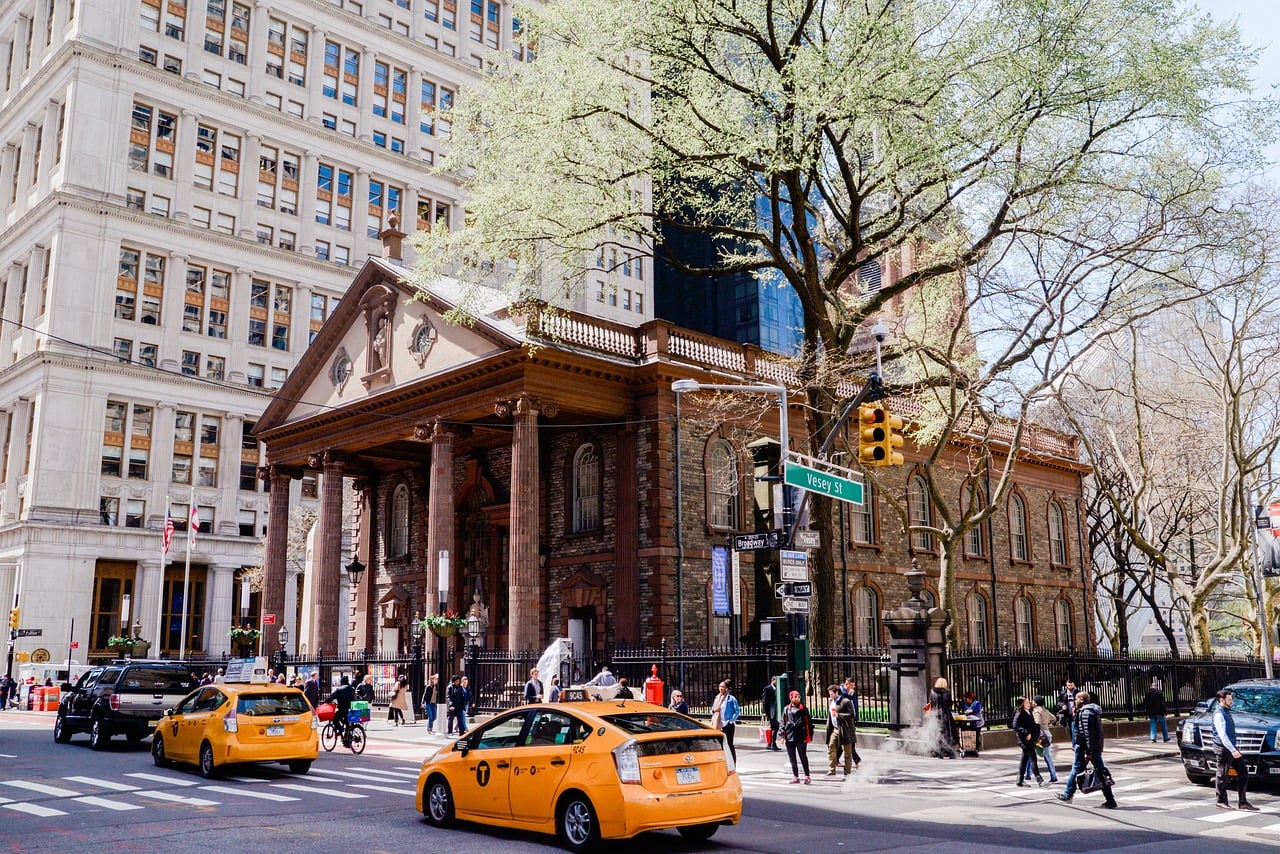
One of the oldest buildings in Manhattan, the chapel dedicated to Saint Paul is located near the Woolworth Building on Broadway at the southern tip of City Hall Park. It is the last church built in pre-independence New York in 1776, and in 2001 it was almost destroyed with the collapse of the Twin Towers to its west.
The church building boasts a charming neoclassical style, with four columns featuring Corinthian capitals at the entrance and a massive pediment above, resembling a classical Greek temple. George Washington, the first president of the USA, sat and prayed in this church, and to this day, the bench he sat on is preserved.