Greater Montreal – Attractions, Parks, and Neighborhoods
Montreal is a city with a fascinating center that combines a French touch with American purchasing power (lots of malls and shopping). On the outskirts of Old Montreal and Centre-Ville, there are plenty of other major attractions that are an integral part of touring the city. The Olympic Park, north of downtown, is a must-see, including the botanical gardens. The Montreal Tower, which is part of the Olympic Stadium, is one of the most iconic towers in all of Canada. Not far from the Olympic Park, on the southern slopes of Mount Royal Park, the hill for which the city is named, lies the vibrant Plateau district. South of the hill is the Oratory of Saint Joseph, dominating the city's skyline. Saint Helen's and Notre Dame Islands in the Saint Lawrence River are also popular tourist destinations, home to Jean Drapeau Park and the Canadian Grand Prix circuit.

How much time do you need for a trip in Greater Montreal?
For a trip to Mount Royal, the Plateau district, the islands in the Saint Lawrence River, and the Olympic Park, you'll need at least a full day. You can combine a tour of some of these sites with routes in the city center.
10 Must-See and Do Things in Greater Montreal
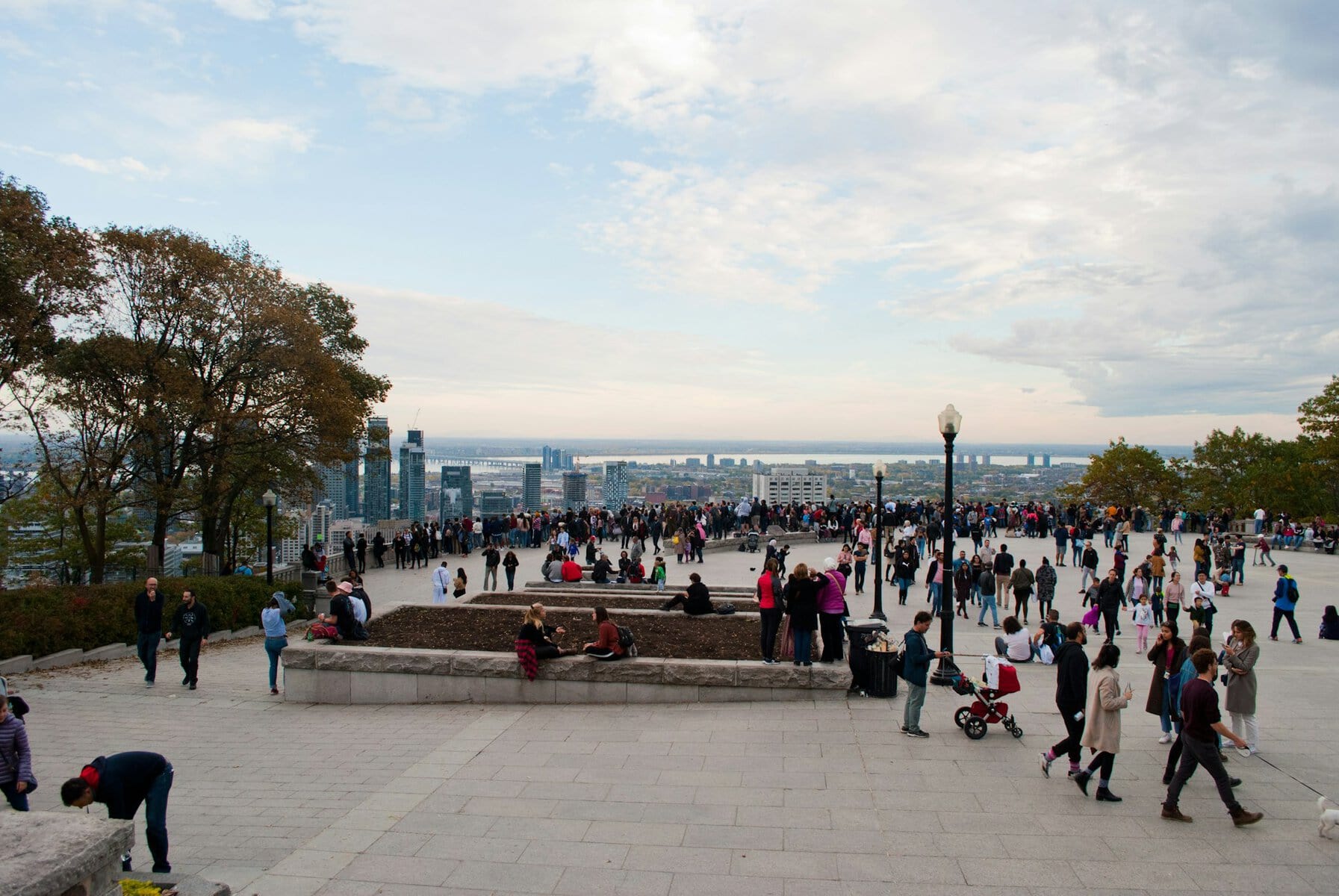
- The city skyline view from the top of Mount Royal Park Parc du Mont-Royal
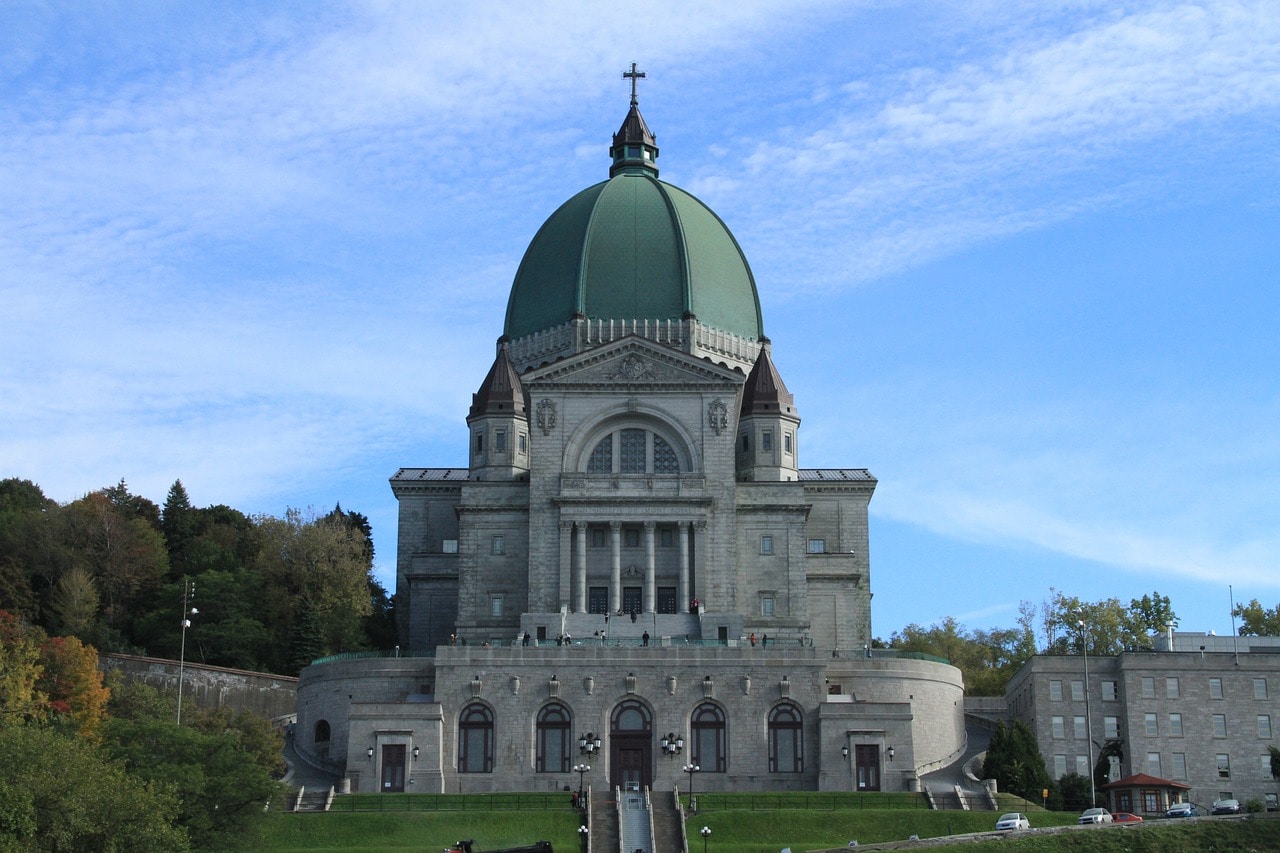
- The massive dome of Saint Joseph's Oratory of Mount Royal L'Oratoire Saint-Joseph du Mont-Royal
- Trendy atmosphere in the Plateau-Mont-Royal district Le Plateau-Mont-Royal
- Relaxed trendy atmosphere on Sundays on the grass in La Fontaine Park Parc La Fontaine
- The futuristic design of the Montreal Tower La Tour de Montréal above the Olympic Stadium Stade olympique
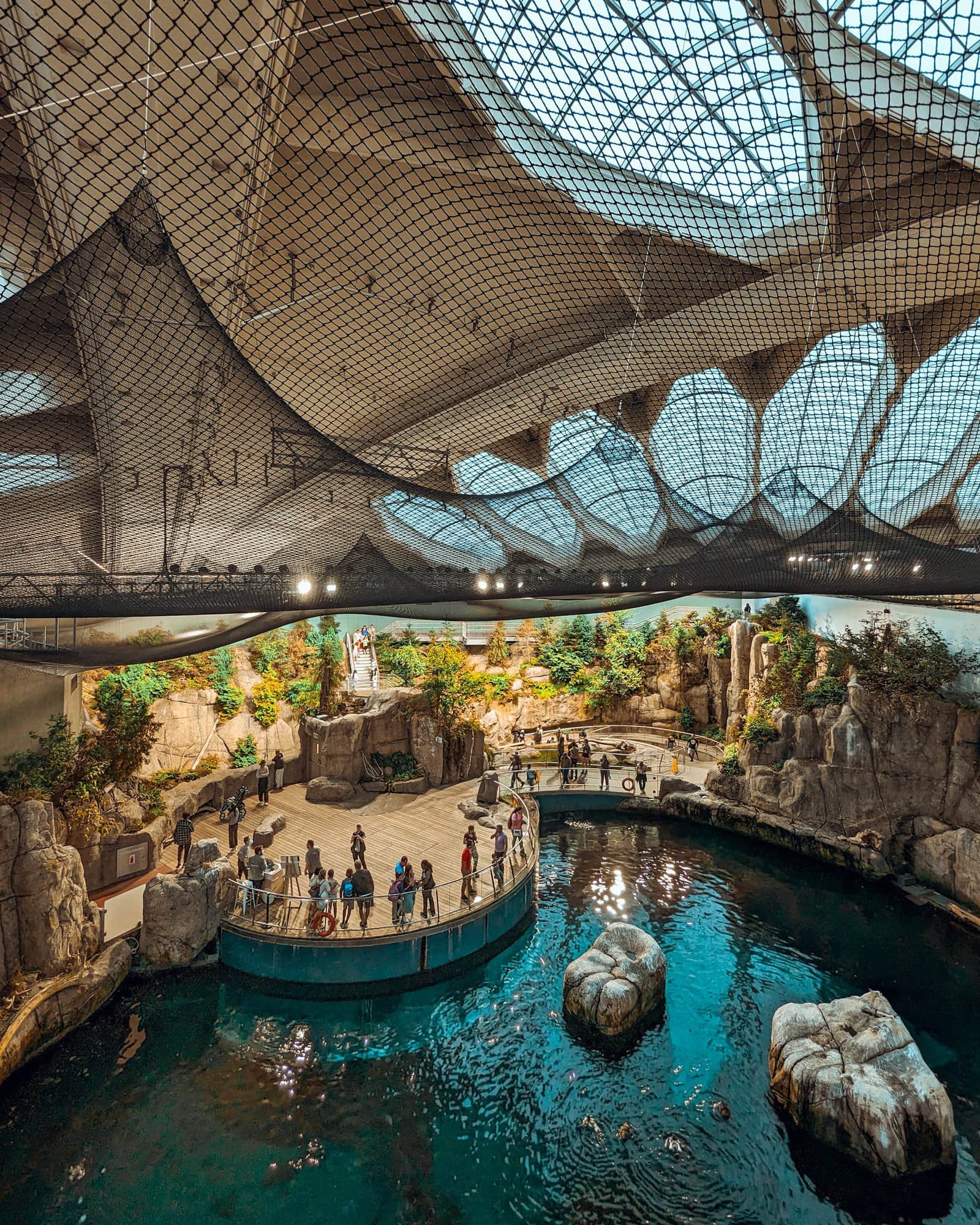
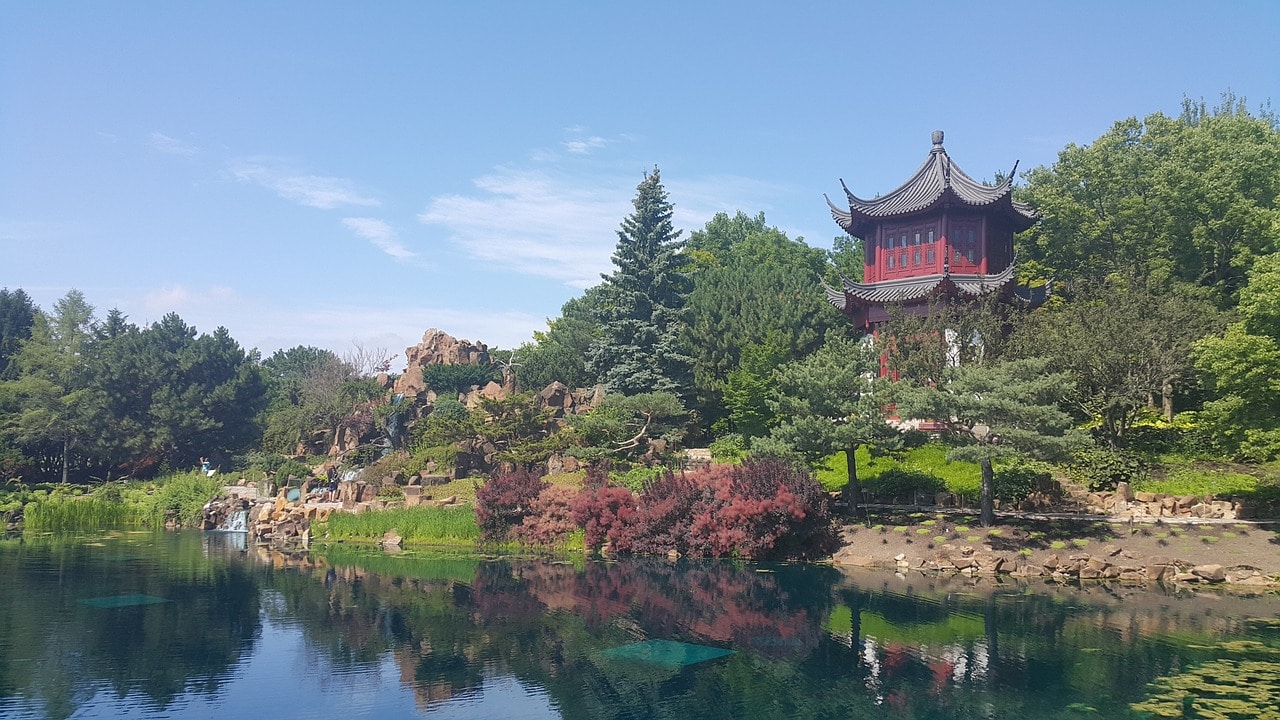
- The Biodome of Montreal Biodôme de Montréal and the Botanical Gardens Jardin botanique
- View of the Old Town and Jacques Cartier Bridge from Jean Drapeau Park Parc Jean-Drapeau
- Spend time with the kids at La Ronde amusement park of Six Flags
- Formula 1 race at Circuit Gilles Villeneuve Circuit de Gilles-Villeneuve
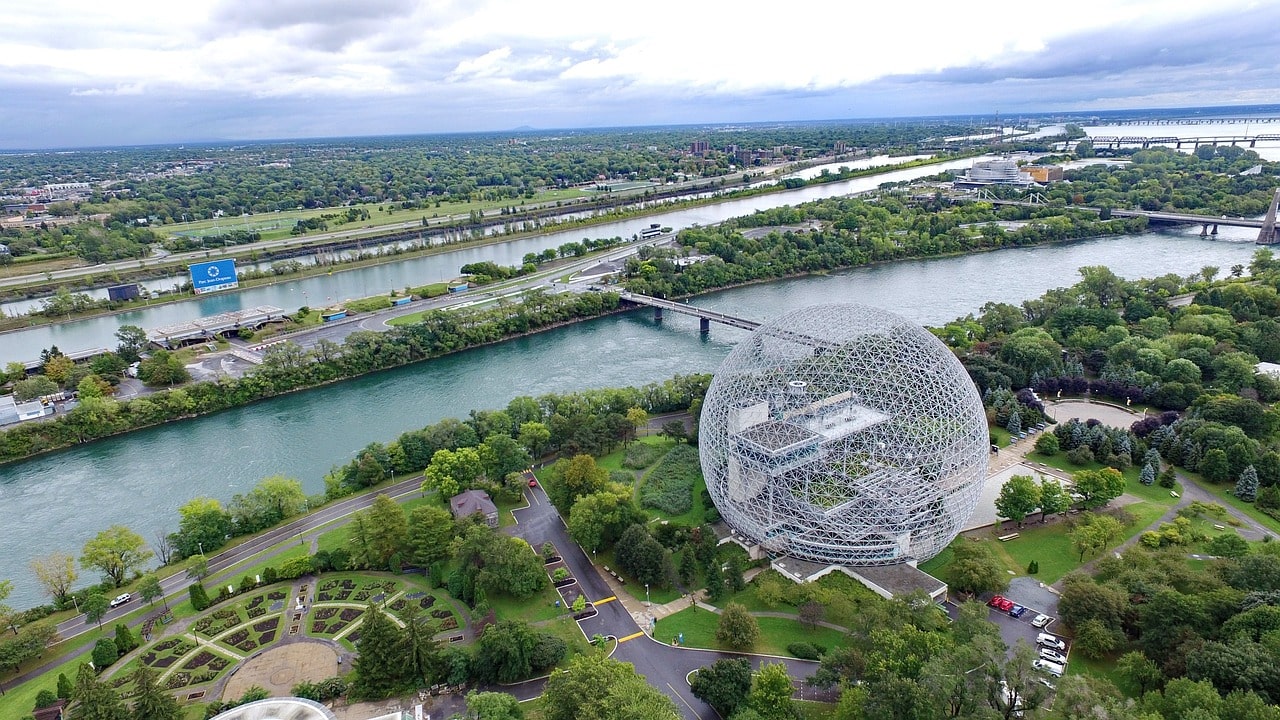
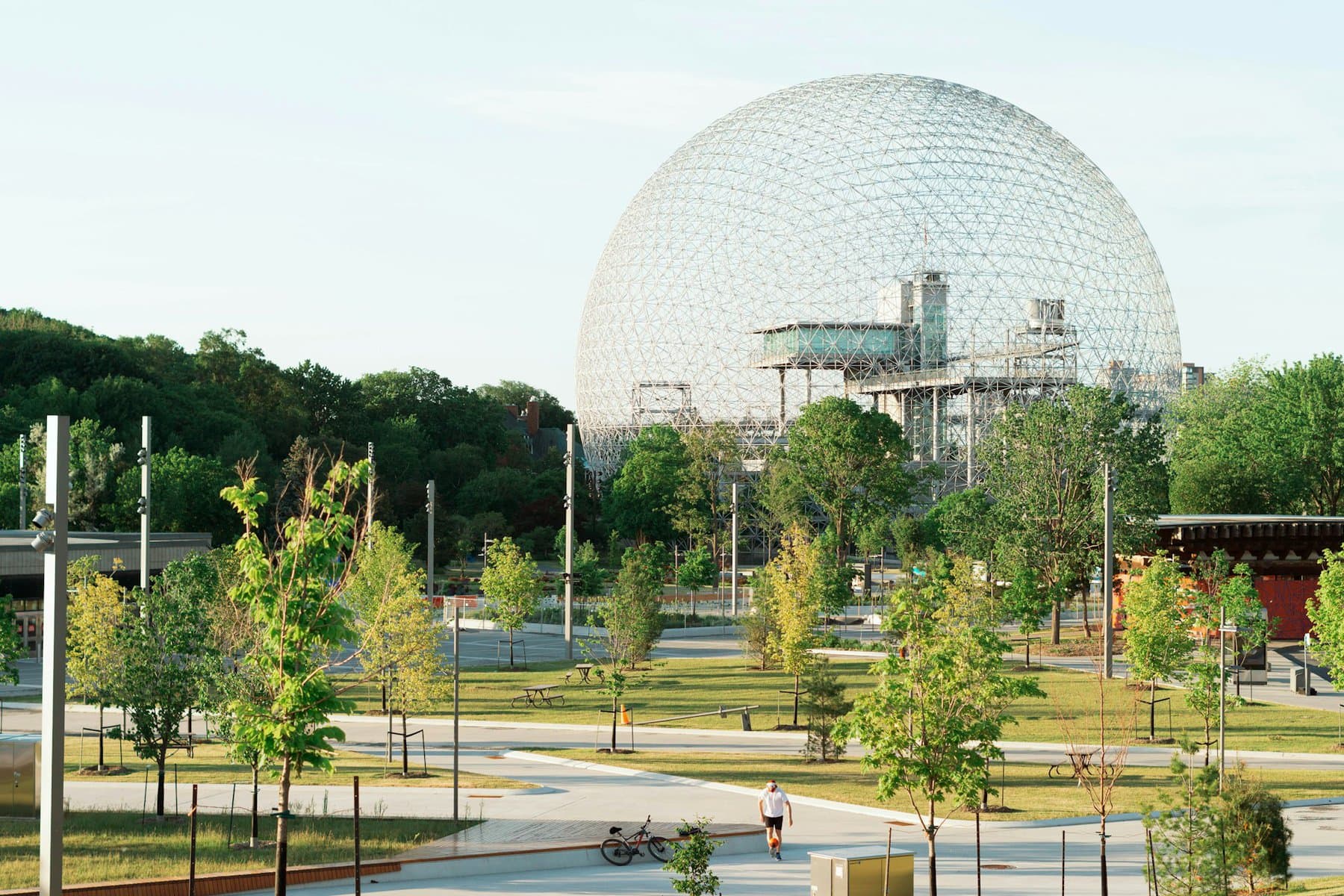
- The spectacular geodesic dome of Montreal's Biosphere Biosphère de Montréal
Click here for all the info on a trip to Montreal…
Click here to check availability and prices in Montreal hotels…
Click here for a list of 10 experiential hotels in the center of Montreal…
What are the sites and attractions in Greater Montreal?
Around the center of Montreal, there are many unique sites and attractions. The city lies at the foot of the hill for which it is named, topped with a well-planned park featuring forests and stunning viewpoints over the city and the Saint Lawrence River.
- Downtown is located on the eastern slopes of the hill, while the vibrant and trendy Le Plateau district, one of the most enjoyable neighborhoods to wander in the city, sits on the northern slopes.
- On the southern slopes of the hill, you'll find the stunning Oratoire St. Joseph Church, with its massive dome that dominates the city's skyline
- To the north of downtown lies the magnificent Olympic Park, where the mellow 1976 Olympics were held (in contrast to the disastrous Munich 1972 and the boycotted Moscow 1980). Above the Olympic stadium rises the Montreal Tower, considered one of the city's symbols
- Nearby, you'll find the city's meticulously maintained Botanical Gardens and the Montreal Biodome, an Olympic facility converted to a natural conservation exhibit
- Another great spot to visit are the two islands in the St. Lawrence River: Île Sainte-Hélène and Île Notre Dame, which are connected to Old Montreal by the stunning Jacques Cartier Bridge and the yellow metro line. The islands are home to Parc Jean-Drapeau and also to the Six Flags amusement park, La Ronde
- On Île Notre-Dame is Montreal's massive city casino, and there's also the Grand Prix du Canada race track, where Formula 1 competitions are held every June in the city.
Click here for a combined walking tour of Old Montreal and the Plateau district…
Map of Greater Montreal Attractions
Everything to See and Do in Greater Montreal
Mont-Royal Park Parc du Mont-Royal
The royal mountain (Mont Royal) rises to a height of 235 meters above the city center at its western slopes. Although technically a hill, Mont-Royal is an integral part of the island on which the city sits, and of course, the entire city is named after it. Residents call the hill ‘La Montagne' – the mountain, a name given by the explorer Jacques Cartier, who ventured up the Saint Lawrence River. The southern slopes of the hill were (and still are) the city’s burial place.
In 1876, the city turned what wasn't covered with graves into a city park that remains one of the favorite leisure spots for the city's residents to this day. From the top of the park, there are plenty of breathtaking views of the Downtown and Old Montreal. The large observation terrace, Belvédère Kondiaronk, is the most popular spot in the park. The park includes the small Royal Lake – Lac aux Castors or Beaver Lake, which turns into an ice skating rink during the winter months. Nearby, there's a large parking area with access to wooded trails leading to a series of viewpoints on the hill.
Click here for a guided tour of Mount Royal…
Oratoire Saint-Joseph of Mont-Royal
As befits a Catholic city, Montreal also boasts an enormous church built on the mountain, dominating downtown as a religious authority. The Oratory of Saint Joseph is dedicated to Mary's husband and Jesus' earthly father. It was constructed in the mid-1920s, but officially opened to the public only in 1964. Above the church rises one of the largest domes in the world, nearly 40 meters wide and about 44 meters high.
The church is the brainchild of Brother André, who has since been canonized as a Catholic saint. Brother André built the church as a place of healing, and over time, rumors of his abilities spread, attracting the sick and needy. To this day, the church is a pilgrimage site visited by millions of pilgrims. Tradition has it that one should climb nearly 300 steps at the church's facade, with the last 99 steps being climbed on one's knees as a gesture of supplication.
Click here to purchase tickets online for the Saint Joseph Oratory…
Le Plateau-Mont-Royal District and Parc La Fontaine
Le Plateau district is the youthful and vibrant area of Montreal. It's a big, lively residential borough on the northern slopes of Mount Royal. The main artery of the district is Saint-Laurent Boulevard. Along the boulevard, you'll find countless cafes, bistro restaurants, delis, and all the fun of the French-American fusion.
Click here for a guided tasting tour of Montreal's culinary gems…
Parallel to it runs Saint Denis Street, considered much livelier and youthful, featuring jazz clubs, restaurants, and galleries. In the heart of the street lies the green and elegant Square Saint-Louis. On the eastern side of the district, you'll find Parc La Fontaine, a peaceful retreat for locals and one of the most beautiful urban parks in Quebec.
Click here for a bike tour of Le Plateau District and downtown…
Parc olympique de Montréal
Montreal's Olympic Park is one of the city's most attractive travel destinations. The vast park was built in honor of the Olympics held in the city in 1976, which was considered the calmest amidst the tense years of the 70s and 80s of the 20th century (between the cursed and terror-stricken Munich Olympics of 1972 and the Games in Moscow and Los Angeles in 1980 and 1984, respectively, boycotted by each of the blocs during what was seen as one of the peaks of the Cold War).
The park is filled with tourist attractions, including the Olympic Stadium known for its futuristic adjacent tower and the nearby Biodome. To the west of the stadium are the beautiful Montreal Botanical Gardens.
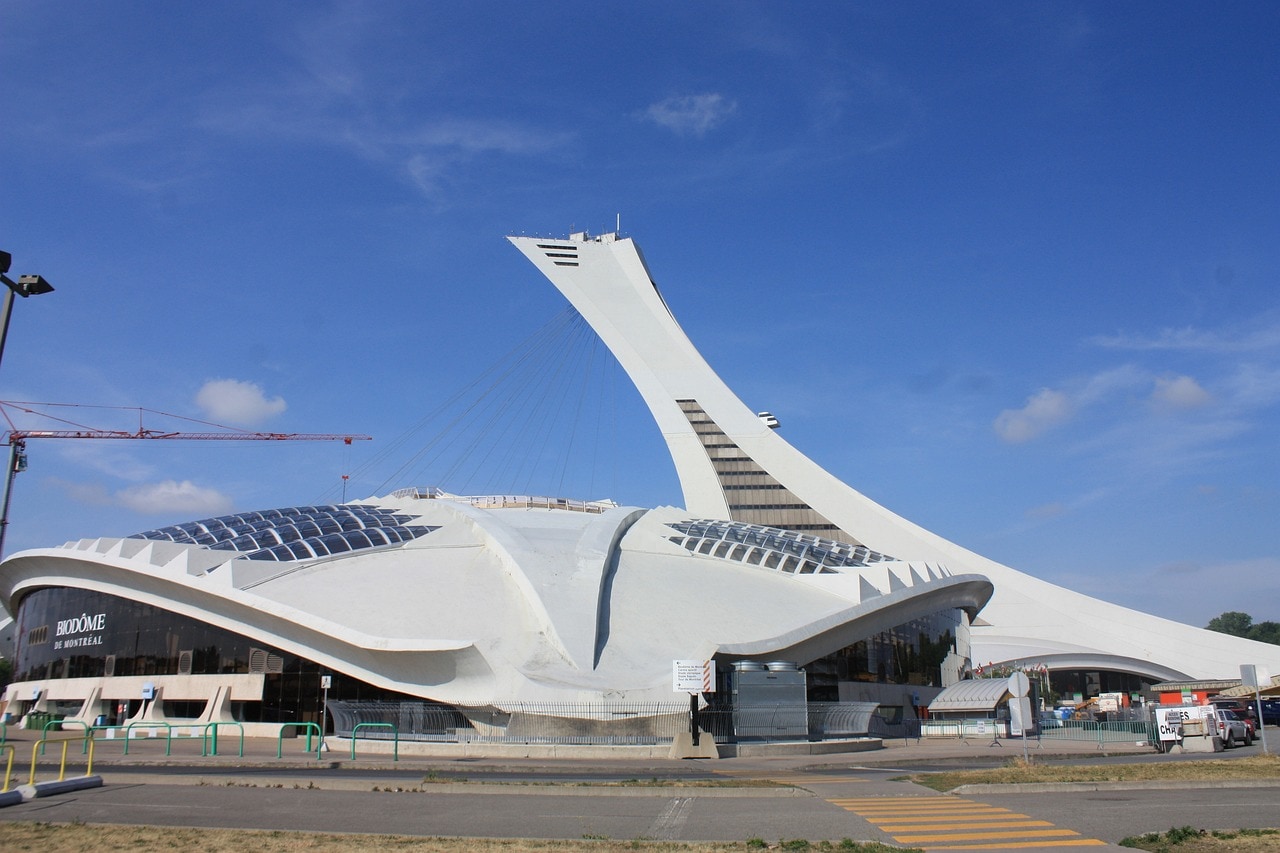
The Olympic Stadium Stade olympique and the Montreal Tower La Tour de Montréal
Access to the park is via the Pie-IX metro station on the green line. From there, you arrive at the Esplanade du Parc olympique, leading to the Stade olympique, the athletic and opening and closing ceremonies stadium, which seats 56,000 spectators.
Today, the vintage stadium is a popular venue for large concerts by top international pop and rock stars. The stadium is mainly known for its unique tail – the Montreal Tower, which has a popular observation deck at its top. The tower's appearance is so 1970s futuristic that over the years, it has become a symbol of the entire city.
The Montreal Biodome Biodôme de Montréal
Montreal's Biodome is adjacent to the Olympic Stadium and the park's Planetarium. During the Olympics, the Biodome's structure was used for the cycling races and judo competitions. After the games, the large hall stood unused until 1988 when the city decided to repurpose it as part of the nearby botanical gardens. The Biodome features five different climate zones, four typical of Canada with their unique plants and animals, and one dedicated to the tropical climate.
Montreal Botanical Gardens
The magnificent Montreal Botanical Gardens are located in the Olympic Park, right west of the stadium. The gardens also include the Insect Hall, Montreal's Insectarium de Montréal, featuring a fascinating display of all things you'd rather not encounter. The gardens themselves are among the largest botanical gardens in the world, with many covered areas and greenhouses designed to protect the plants from the city's unfriendly winter. The stars of the gardens are, of course, the Chinese and Japanese gardens. Starting in the spring, stunning plant sculptures are planted in the gardens.
Île Sainte-Hélène
Saint Helen's Island is one of the most popular tourist destinations in Montreal. The island is conveniently connected to downtown Montreal via the Metro (the yellow line), with the station located next to the island's landmark – the Montreal Biosphere. The entire southern part of the island is part of Parc Jean-Drapeau, which extends beyond what is known as the Islands Bridge, connecting Saint Helen's Island with Notre Dame Island to its east on the Saint Lawrence River. The entire northern part of the island is dedicated to tourist attractions, including the yacht dock and the large amusement park La Ronde.
Parc Jean-Drapeau
Jean-Drapeau Park is another top-notch urban park in Montreal. It covers the entire southern part of Saint Helen's Island and technically all of Île Notre-Dame (around which lies the Formula 1 Grand Prix circuit, Circuit Gilles-Villeneuve). The park boasts several attractions, notably the Tour de Lévis, a towering stone structure located in the heart of the wooded island. The park's hallmark is the Montreal Biosphere, a stunning geodesic dome that was originally built as the American pavilion for Expo 1967 and now serves as a biosphere.
La Ronde Amusement Park
La Ronde, the large amusement park, sprawls across the northern part of Saint Helen's Island. The park is accessible via the stunning Jacques Cartier Bridge, which is itself one of the city's landmarks. This park is the Canadian representative of the large American Six Flags chain and is considered one of the favorite entertainment spots in the city.
Île Notre-Dame
The neighboring Notre Dame Island is also a popular hangout spot. The park's main daily attraction is the Casino de Montréal, the giant city casino located on the eastern part of the island. Every year, in June, the island becomes Canada’s top tourist destination with the Canadian Grand Prix held there as part of the Formula 1 competitions. The race typically takes place at the beginning of June and is considered one of the city's main attractions. The Circuit de Gilles-Villeneuve racetrack circles the entire island, right at the edge of the river.