Grand Canyon – The Awe-Inspiring Canyon
The Grand Canyon National Park is one of the most famous icons among the stunning national parks in the USA. Located in the western part of Arizona, on a mountainous plateau of the Rocky Mountains at an elevation of 2,000 meters, the Colorado River carves into the soft, desert rock, creating a chasm nearly two kilometers deep from the surface.

- This immense gorge stretches almost 450 kilometers, with its western part not far from Las Vegas.
- The Grand Canyon Village is the main hub of the park, offering trails, roads, and everything needed for breathtaking scenic views.
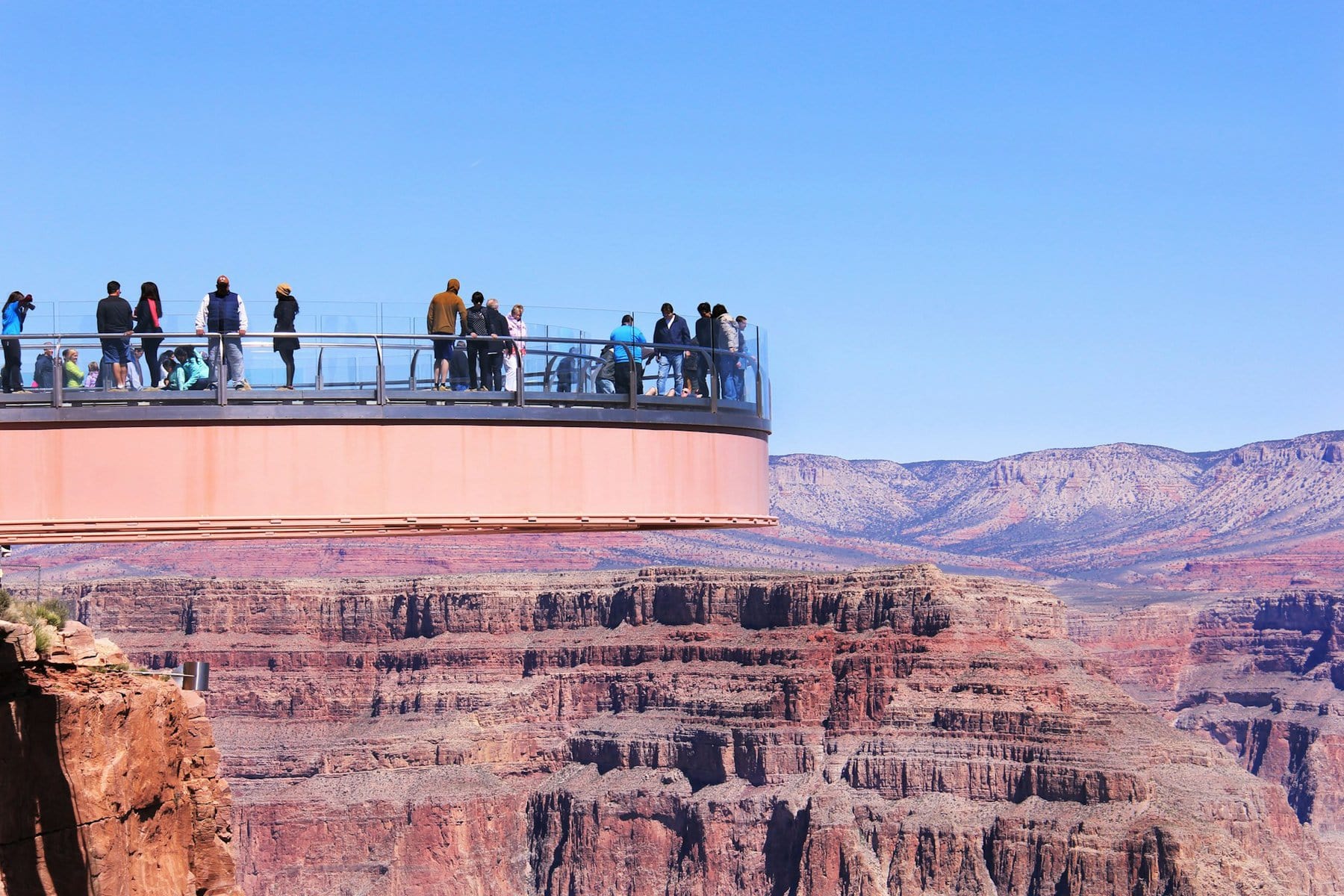
- Further away, in the western chasm, lies the sensational Skywalk at Eagle Point, a viewpoint with a glass floor right above the canyon. The Skywalk is one of the most attractive day-trip destinations from Las Vegas.
How to explore the Grand Canyon?
The trip to the Grand Canyon is divided into two parts:
- The South Rim, where the Grand Canyon Village is located – This is the official hiking area of the national park. Here you'll find hiking trails along the edge of the canyon, a challenging hiking trail that descends to the Colorado River, lodge accommodations, shops, organized viewpoints, and scenic driveways.
- Eagle Point at the West Rim – A small site with one stunning attraction – the Skywalk. This is the closest hiking area to Las Vegas, offering the most popular glimpse of the canyon for those who don't want to make the long journey to the Grand Canyon Village.
How many days are needed for a trip to Grand Canyon National Park?
For a trip to the national park focused on the Grand Canyon Village at the South Rim, allocate at least two full days, with the main part being the drive from Las Vegas or Phoenix.
Since the journey to Grand Canyon Village is long, it's highly recommended to plan your lodging in advance.
Click here to check availability and prices for hotels and motels near Grand Canyon Village…
Click here for a list of 6 motels and lodge hotels near the Grand Canyon…
For a trip to the West Rim, dedicate a half to a full day, mainly for the drive from Las Vegas (two and a half hours each way).
Click here to check availability and prices for hotels on the Las Vegas Strip…
10 Must-See and Do Things in Grand Canyon National Park
- Full day tour from Las Vegas to the Skywalk at Eagle Point in the West Rim
- All the attractions and viewpoints of Grand Canyon Village
- Visitor Center & Mather Point Overlook
- Hiking along the rim with Rim Trail
- Challenging hike down to the Colorado River on Bright Angel Hiking Trail
- Getting to know the rock formations of the Grand Canyon at the Yavapai Geology Museum
- Breathtaking views from your shuttle or car at Hermit Road Drive
- Desert View Watchtower on Desert View Drive
- See the Little Colorado River Overlook heading towards the Colorado River
- Movies at The National Geographic Visitor Center in Tusayan
What is the Grand Canyon National Park?
The Colorado River's carving path through the Grand Canyon
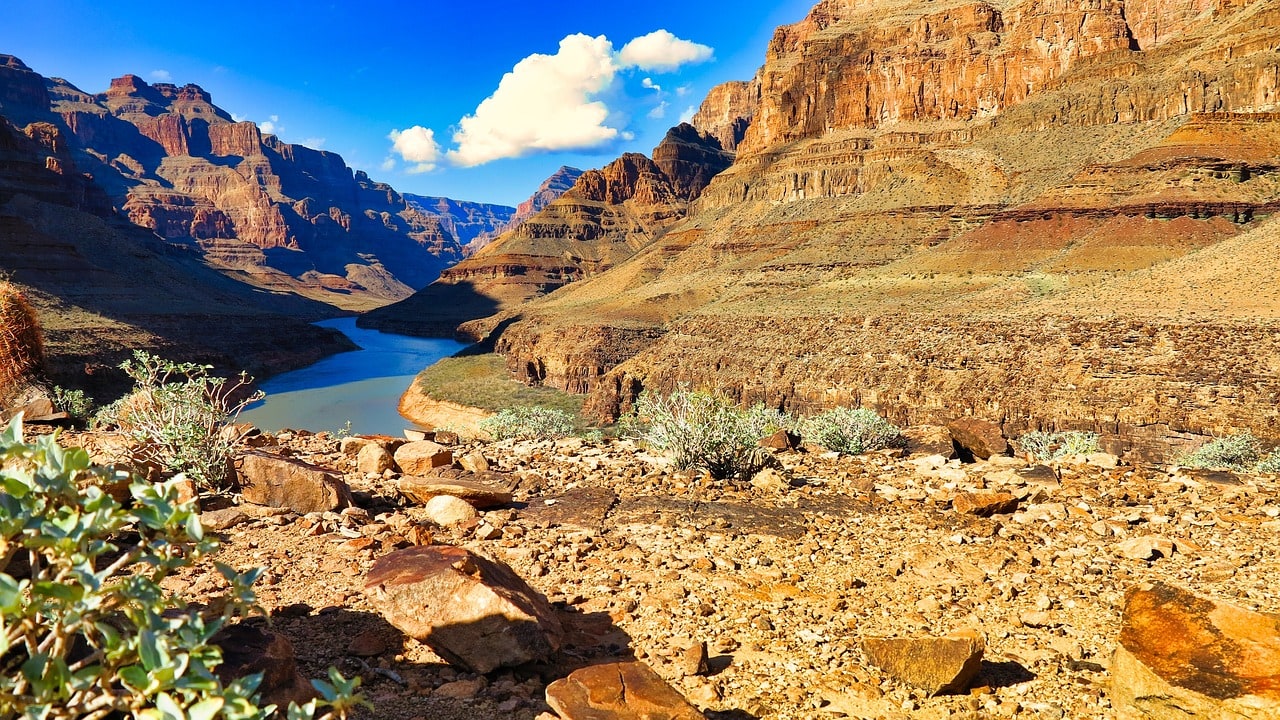
The Grand Canyon National Park is one of the most stunning and mind-blowing natural wonders in the desert area of the USA. It's the largest canyon in the world, in terms of both depth and length. The canyon was formed by the intense flow of the Colorado River, also known as Río Colorado – the river whose name means ‘red' in Spanish.
- The river flows from the high valleys of the ranges west of Denver, Colorado, and has a vast drainage basin throughout much of the southwestern United States.
- It continues to Arizona and Nevada, where it winds through the desert landscape, carving and creating deep gorges and canyons, including the Grand Canyon.
- The river flows past the Hoover Dam near Las Vegas and heads south along the eastern border of California until it empties into the Gulf of California in Mexico.
For a day trip from Las Vegas to Hoover Dam and the Grand Canyon, click here…
Grand Canyon National Park
The great canyon of the Colorado River, or the Grand Canyon, was declared a national park in 1919. The park covers an area of nearly 5,000 square kilometers (about a quarter the size of New Jersey).
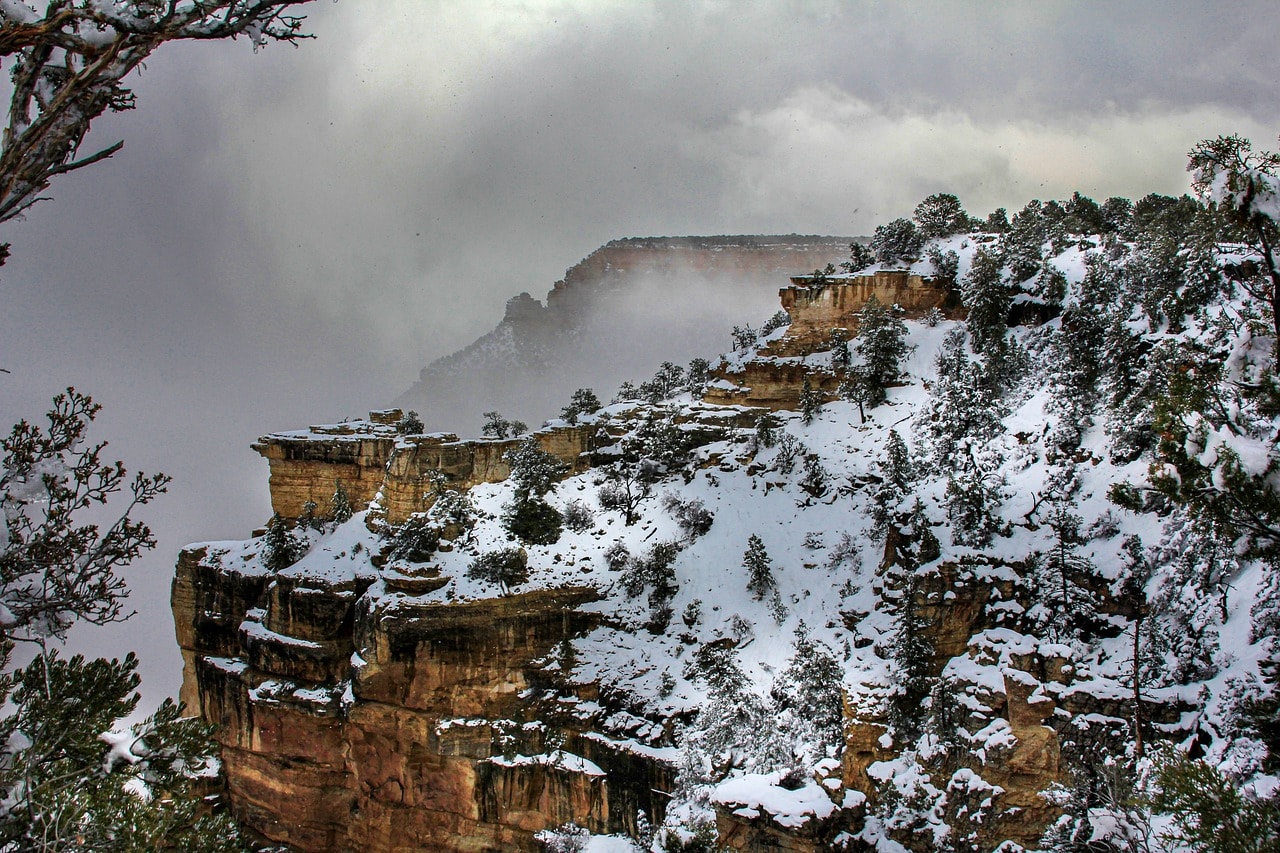
- The canyon stretches approximately 446 kilometers long (more than the distance from Metula to Eilat), with a width of up to 18 kilometers and an astonishing depth of nearly 2,000 meters
- There is a significant elevation difference of 300 meters favoring the northern bank of the canyon, which creates a climate difference between the two banks where the climate of the northern bank is almost subtropical, including precipitation.
- The South Rim of the canyon (just a few kilometers from the north) is desert-like and arid.
- The eastern part of the South Rim, north of the city of Williams, Arizona, is the most developed in the park and the main tourist destination in the vast canyon.
- The main accessible viewpoint of the vast canyon is from the Grand Canyon Village and its surroundings, the village considered the visitor center of the South Rim.
- The elevation of the upper brink is around 2000 meters, and the river's flow elevation is approximately 760 meters above sea level. Since the flow is mountainous, the power of the river continues to erode the soft rock, carving it deeper, which further deepens the canyon.
Today, the Grand Canyon is one of the two most visited national parks in the Rocky Mountains, alongside the nearby Zion Park in Utah (these parks rank second in visitor numbers, significantly behind the Great Smoky Mountains National Park near Knoxville, Tennessee), with almost five million travelers a year.
The park also includes the Kaibab National Forest, located south of the primary tourist area in the Grand Canyon Village.
A secondary hiking area is the Grand Canyon West, which is closer to Las Vegas and features the Skywalk, a transparent observation balcony that has become one of the most popular tourist attractions in the park.
Click here for a full day trip from Las Vegas to the western part of the Grand Canyon…
Map of the Grand Canyon National Park
How do you get to the Grand Canyon National Park?
How to fly to the Grand Canyon National Park?
Phoenix Sky Harbor International Airport (PHX) – Known as Phoenix Airport or Sky Harbor, this is one of the major airports within the USA. It's located east of downtown Phoenix, just a five-minute drive from the city center. This airport is heavily connected within the United States, offering routes to every corner of this vast country. It's also well-connected with airports in Mexico and Canada, and there are a few routes to major European airports. The drive time from Phoenix Airport to the Grand Canyon Village is about three and a half hours.
Click here to book flight tickets at attractive prices to Las Vegas or Phoenix…
Harry Reid International Airport (LAS) – The airport of Las Vegas is nestled right next to the Strip and feeds the outrageous number of tourists to the long boulevard. The airport, known more by its former name McCarran, is located in the city/district of Paradise, just a 5 to 10-minute drive from the heart of the Strip, the area of Bellagio and Caesars Palace.
This is one of the busiest airports in the US, entirely dedicated, throughout the year, to accessing Sin City and the city's tourist functions. It is connected with nearly every airport in the US and Canada, both small and regional. There are several lines arriving at the airport, including major European airports, making it easy to get to the airport via a transfer in Europe or airports in South America or Asia. The airport is connected to the Strip by a bus line, but the most efficient and cost-effective way to reach the Strip is by taxi (due to the proximity to the Strip, the taxi fare is more worthwhile for couples and up).
The travel time from the airport to the west side of the Grand Canyon is about a two-hour drive. The drive from Las Vegas to Grand Canyon Village is nearly 6 hours.
To fly in a light aircraft over the Grand Canyon, round-trip from Las Vegas airport, click here…

Grand Canyon National Park Airport (GCN) in Tusayan – The small airport of the Grand Canyon rarely serves commercial flights. It is located in the town of Tusayan, just a fifteen-minute drive from Grand Canyon Village in the more interesting eastern part of the national park. It's the launching point for one of the park's favorite tourist attractions, a light aircraft or helicopter flight over the canyon.
For a 45-minute flight by light airplane from Tusayan over the Grand Canyon, click here…
How to get to Grand Canyon National Park by car?
- The access routes to what is called the South Rim of the Grand Canyon, or the Grand Canyon Village, are from the town of Williams and the town of Flagstaff in central Arizona, both on Route 40.
- The towns are located halfway between the national park and Phoenix.
- Williams and Flagstaff lie on the I-40 highway, which connects Los Angeles with Albuquerque, New Mexico.
- From the main road, two routes lead to the Village, the 180 and the 64, both reaching what is called the Grand Canyon Junction, the southern entrance gate of the park and a place where you can stay overnight and stock up on food.
Click here for all the information on car rental in Arizona + useful tips and significant discounts…
Click here for a day trip from Las Vegas to the Grand Canyon at sunset…
Access to the western section of the park for the amazing Skywalk and Eagle Point attraction is from Las Vegas, on Highway 93 via the Hoover Dam.
Click here to check availability and prices for hotels on the Las Vegas Strip…
When to visit Grand Canyon National Park?
- The Grand Canyon is defined as a semi-arid area, meaning it is semi-desert. It's a region with very extreme continental weather, with significant temperature differences between day and night and winter and summer
- The best seasons to visit the Grand Canyon are spring and autumn when the weather is relatively mild, usually pleasant and almost rain-free
- Summer weather at the Grand Canyon can be really hot but is usually reasonably warm, though a hat is a must. There are summer days when the weather can be extremely desert-like with high temperatures and significant dryness
- Winter weather can be quite the opposite, cold to freezing, and often very dry with snow accumulations (the elevation of the rims is over 2000 meters)
- There are few precipitations throughout the year in the area, which don't affect the trip at all
For tandem skydiving (with a guide, of course), over the Grand Canyon, click here…
How to Plan a Trip to the Grand Canyon National Park
The Grand Canyon is an attractive enough tourist destination to serve as the sole destination on a pretty long trip from Phoenix or Las Vegas. For those heading to Las Vegas, the Grand Canyon is a coveted tourist spot, especially the western side of the immense canyon, which is only a two and a half-hour drive from Sin City.
- Access to the South Rim and the Grand Canyon Village is from Phoenix, which isn't considered a favored tourist destination but serves as the gateway to the park, just hours of driving away
- You can combine your Grand Canyon trip with an extensive road trip in the southern part of the Rocky Mountains, including Nevada, Arizona, and Utah.
- The route mainly includes Zion National Park and Bryce Canyon National Park, but also the Grand Staircase-Escalante National Monument and the Glen Canyon National Recreation Area in southern Utah, along the San Juan River, a tributary of the Colorado. Another must-see site, a 4-hour drive from the park, is Monument Valley in northern Arizona, towards the city of Moab. Near Moab are Arches National Park and Canyonlands National Park.
The Grand Canyon trip is divided into the South Rim, where Grand Canyon Village is located, and Eagle Point at the West Rim, near Las Vegas. It is not recommended to combine both areas on the same trip, as the drive between them takes almost 5 hours!
Alternatively, you can reach the North Rim via Highway 67 from the direction of Utah, where you'll find the Bright Angel Point viewpoint.
Click here for planning a Grand Canyon trip itinerary and professional advice…
Everything You Need to Know About Staying in Grand Canyon National Park
Accommodation options in Grand Canyon National Park are generally divided into 4 categories:
- Staying inside the park at lodges in Grand Canyon Village, RVs, or camping
- Great hotels and motels in Tusayan, just a 15-minute drive from Grand Canyon Village
- Motels at Grand Canyon Junction, a 35-minute drive from Grand Canyon Village
- Staying in motels and hotels in towns and villages near the park's entrance gates, mainly in Williams
If you're planning to visit the rare Skywalk attraction from Las Vegas, the terrace is a day trip from the city of gambling, and naturally, accommodations are in the Strip hotels.
Click here to find accommodations in Las Vegas hotels…
The hotels and lodges within the park offer the most stunning Grand Canyon experience available. Close to the Grand Canyon Railway, several lodges such as Thunderbird Lodge, Kachina Lodge, and El Tovar Hotel, a three-star hotel. The view from the hotel and lodge rooms provides the craziest canyon experience you can imagine.
Staying in Tusayan or Grand Canyon Junction is the most budget-friendly and efficient. The town's motels include well-known brands such as the Holiday Inn Express of IHG, a Best Western brand, and more. These are very comfortable accommodations in the wild American outdoors, with a proper breakfast and several restaurants like McDonald's. Tusayan is located a very short drive from the canyon rim and the Grand Canyon Village, while the facilities at Grand Canyon Junction are slightly further south towards Williams.
Additional lodging options are available in Williams and Flagstaff along the I-40 highway, about a two-hour drive from the Grand Canyon Village.
Click here to check availability and prices for hotels and motels near the Grand Canyon Village…
The Attractions of the West Rim Grand Canyon
The Skywalk at Eagle Point
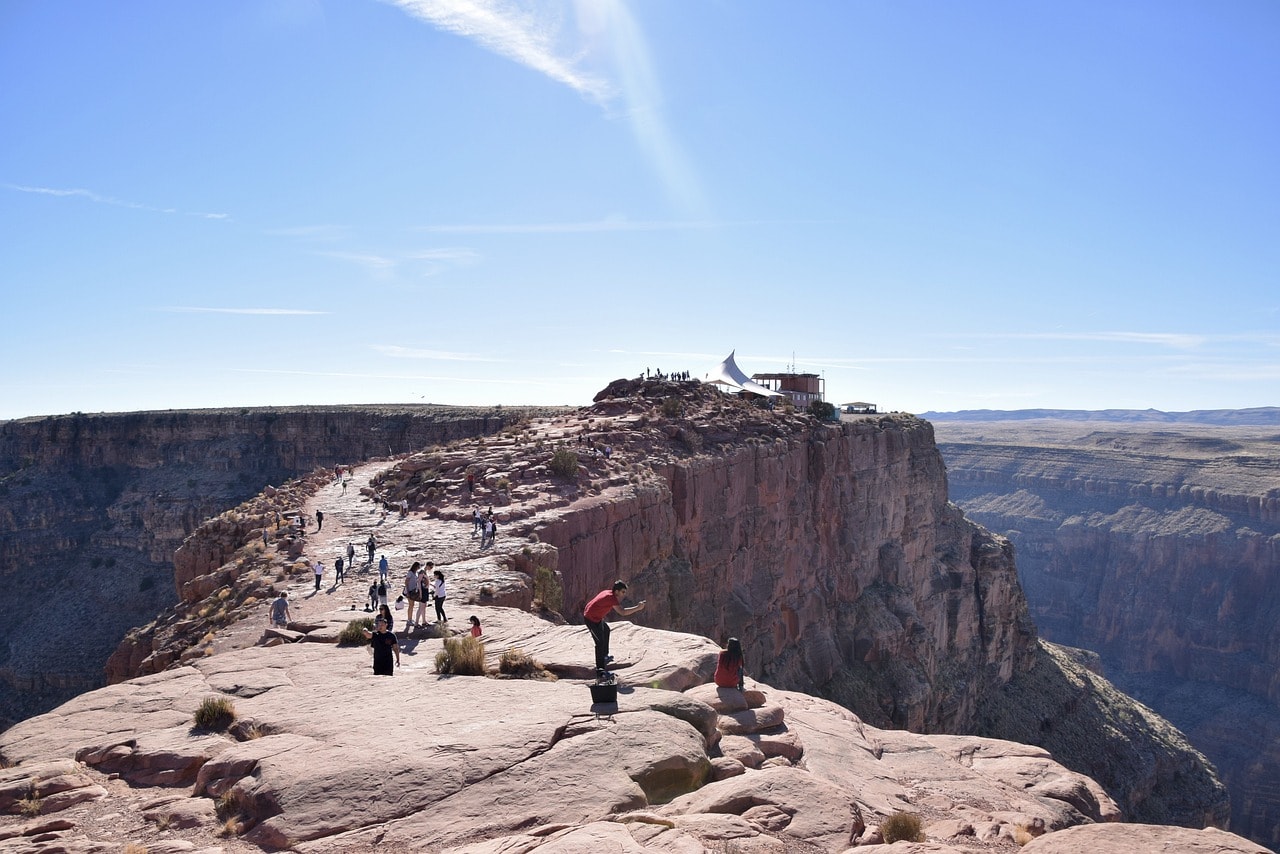
Skywalk is the most extreme taste of the Grand Canyon and the coolest attraction in the desert part of the USA. It's an observation deck with a transparent glass floor letting you walk right over the abyss, hundreds of meters above the slopes. The attraction is on the west side of the Grand Canyon, at the stunning Eagle Point, mainly to cater to the massive tourist flow from Las Vegas. It's a two-hour drive from the Strip, making it a very popular day trip destination for tourists visiting the gambling city. Technically, Skywalk isn't part of the national park, about a five-hour drive from the Grand Canyon Village, but it is definitely part of the Grand Canyon experience.
Just north of Skywalk is Guano Point (we all remember Ace Ventura 2 – guano is bat poop), which also offers a stunning view of the western side of the massive canyon. The entire Eagle Point site is a well-developed tourist facility, with a souvenir shop, cafeteria, and large parking area.
Click here for a West Rim tour from Las Vegas + Skywalk tickets…
The attractions of the South Rim in the Grand Canyon
Grand Canyon Village
The official entrance to the gigantic national park is the village, located at the northern edge of the Kaibab National Forest, right on the southern rim of the canyon. It serves as the park's official visitor center, the main lodging area, logistical hub, and also an attractive destination for scenic views. The core of the village is a residential area for park employees and hotel staff in the village. It's the base for the main South Rim attractions like the visitor center and Mather Point viewpoint located in the eastern part of the village, the Grand Canyon Railway station, and the starting point for the Bright Angel Trail and Rim Trail.
The most attractive part of the village is, of course, the canyon's edge. Here, you'll find the Lookout Studio and the Kolb Gallery, Verkamp's Visitor Center, Hopi House, and a row of lodges, ranging from one-star to three-star accommodations, all boasting stunning views of the canyon. This is ostensibly the village center, with walking paths that thread between the buildings right on the canyon's edge.
Click here for a Grand Canyon Hummer tour + helicopter tour…

Visitor Center & Mather Point Overlook
The Visitor Center is the main destination for the trip in the southern part of the Grand Canyon. The Visitor Center offers explanations about the park and you can receive helpful tips from the staff regarding hiking sections (according to your fitness level, of course). Mather Point is one of the most popular, accessible, and stunning viewpoints of the vast canyon. It's conveniently accessible by road with a huge parking lot in the eastern part of the Grand Canyon Village, just a short walk from the large Trailer Village RV Park.
Rim Trail
The Rim Trail is one of the most accessible and popular trails above the Grand Canyon. Its full length is about twenty kilometers. It stretches from the South Kaibab Trailhead east of Grand Canyon Village to the Pima Point area west of the village. This is one of the most beautiful hiking trails in all of America with breathtaking scenery right on the canyon edge.
Along the way are all the accessible viewpoints of the Village area, including Mather Point, the Geological Museum, Monument Creek Vista, The Abyss, Great Mohave Wall Viewpoint, Mohave Point, Hopi Point, Powell Point, and more.
Yavapai Geology Museum
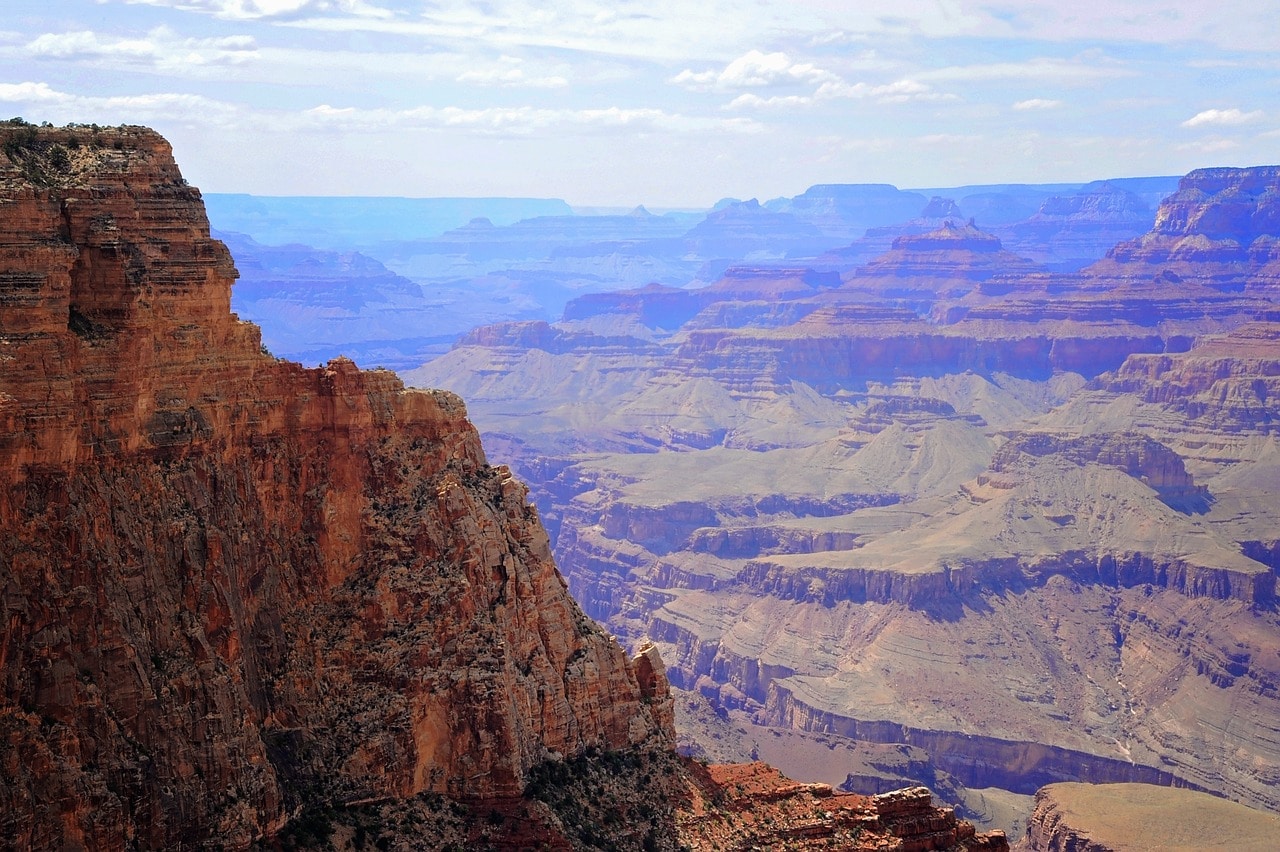
The Geological Museum is one of the most fascinating points of interest in the Grand Canyon Village area. It is located near Yavapai Point, one of the most stunning viewpoints of the accessible areas above the canyon. The museum is an intriguing research site that explains the geological layers the river reveals within the rock formations. The deeper you go down the chasm towards the Colorado River, the older the geological layer becomes, estimated to be up to two billion years old at the canyon's bottom.
Bright Angel Hiking Trail
The challenging hiking trail of the Bright Angel is a captivating course of mountain trails. While the gentler path runs along the edge of the abyss, the Bright Angel descends into the chasm in a winding path to the Colorado River. Of course, the real challenge is not the way down, which is no easy feat in itself, but mainly the climb back up. The full length of the trail to the river is over thirty kilometers round trip, and you should be prepared for camping or resting stops along the way.
Down the river, there are two pedestrian bridges – the Bright Angel Trail Bridge and the Black Bridge. Needless to say, these are remarkably beautiful bridges, set in a breathtaking landscape that words can hardly describe. The journey of the Bright Angel is a strenuous one but a must for hiking enthusiasts. Smaller sections of the trail can be done, including a slight descent into the abyss and then returning on paths slightly below the rim.
Hermit Road Drive
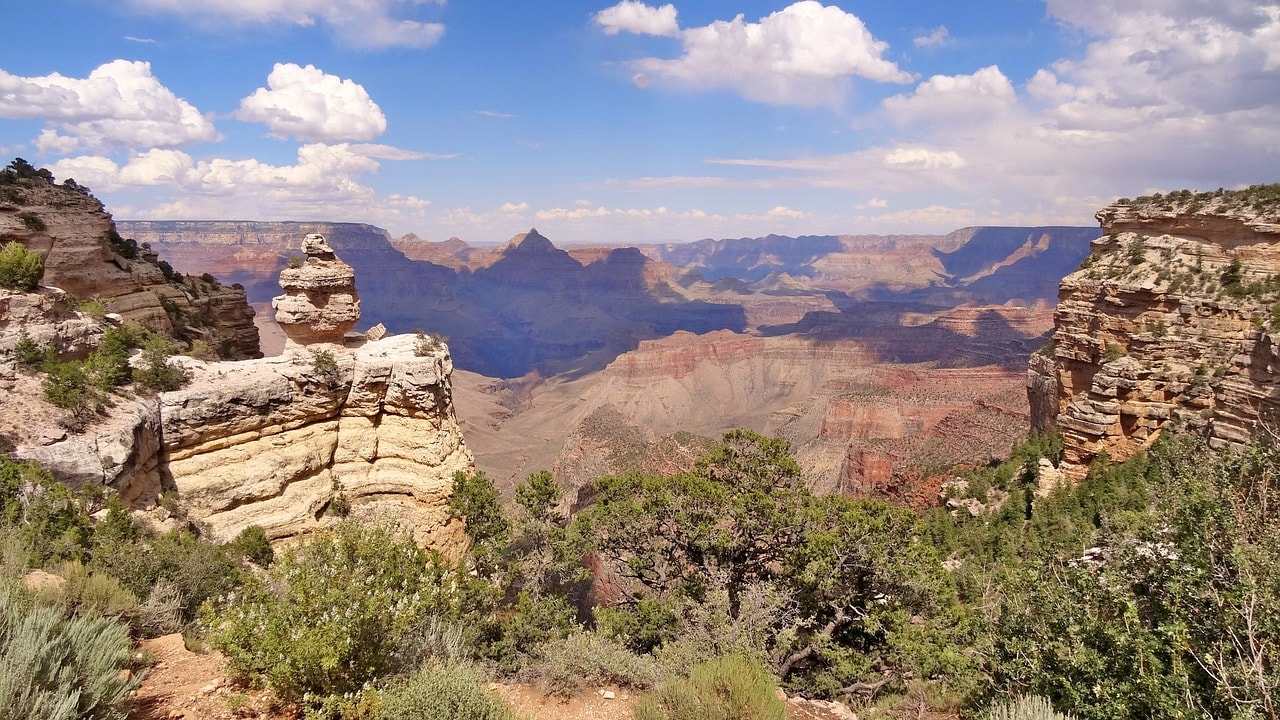
Hermit Road runs along the edge of the South Rim, in the northern section of Grand Canyon Village. Hermit Road is one of the most beautiful drives in the United States, stretching over ten kilometers from the village to Hermit's Rest in the west. The road slightly wraps south around the hiking trail of Hermit Trail. It begins descending towards the river along the Bright Angel Trail.
The road itself is a must-see for anyone wanting to experience the Grand Canyon and its scenery without straining their muscles too much. It is restricted to travel from March 1st to the end of November, during which only the park's official shuttles are allowed. In winter, you can drive on the road with your private or rented vehicle. The road features numerous stops at the many viewpoints along Hermit Trail.
Desert View Drive
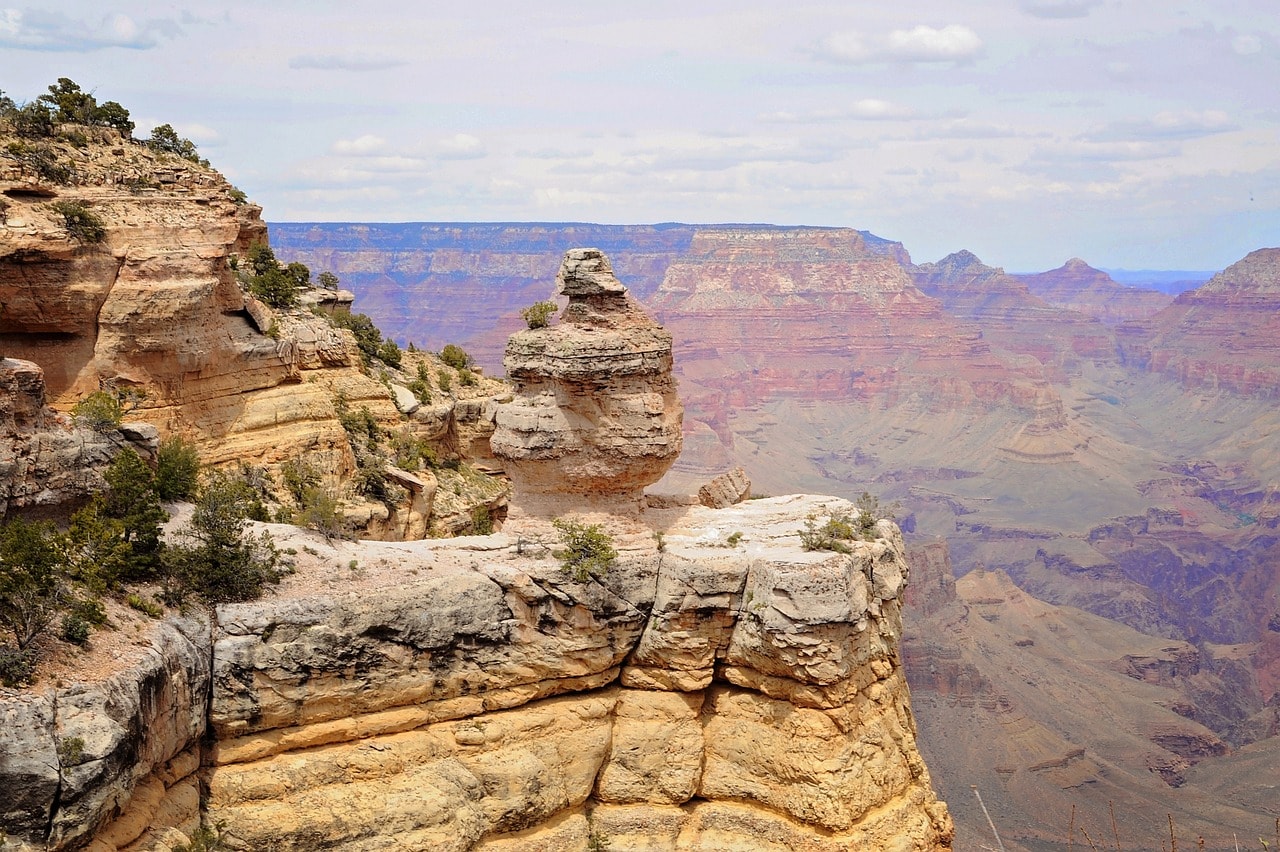
The Desert View Drive is the park's internal road stretching 35 kilometers from the village of Cameron, east of the park, to the Grand Canyon Village. It serves as the eastern entrance gate to the park, offering access to many viewpoints along the rim such as Shoshone Point, Yaki Point, Lipan Point, Pipe Creek Vista, and more. Another attraction along the route is the view of Duck on a Rock Viewpoint, one of the canyon’s unique formations that has become iconic.
Desert View Watchtower
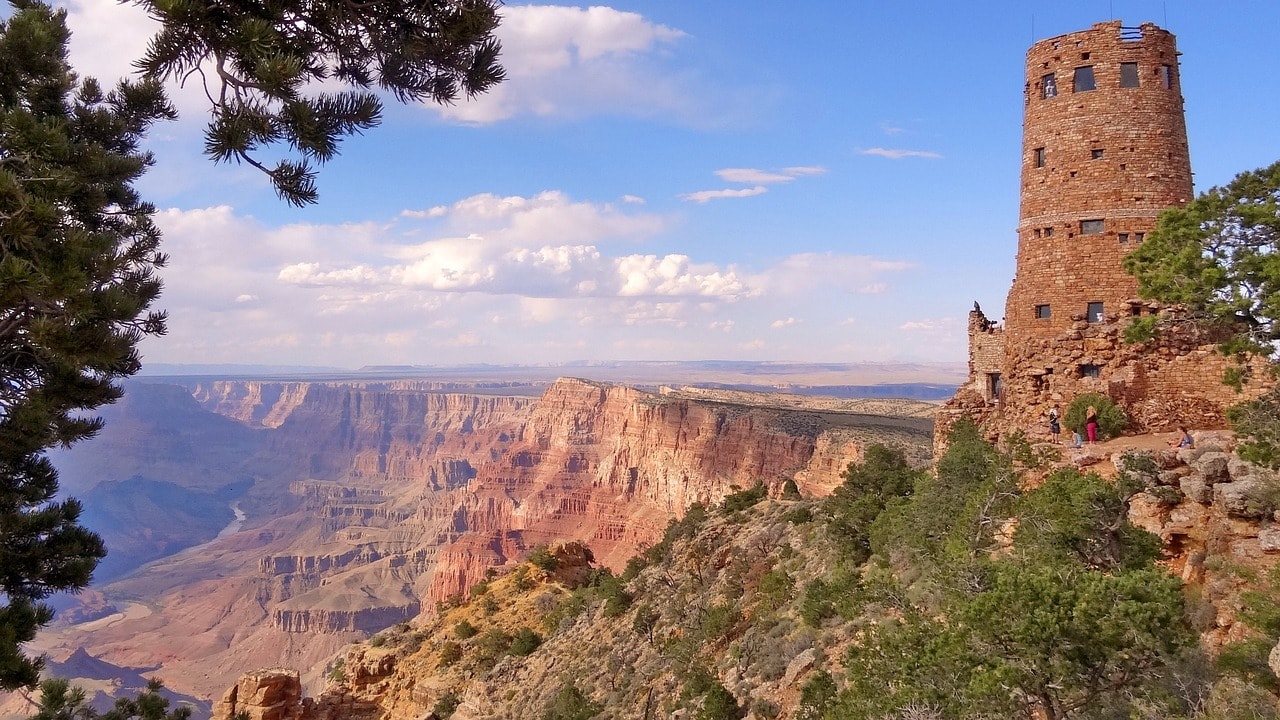
The famous watchtower is located on the Desert View Drive near Navajo Point. It's an organized attraction with a grocery store and souvenir shop. The tower, built in 1932, stands about thirty meters tall. Around it are organized viewing terraces with stunning views towards the canyon and the Colorado River.
Little Colorado River Overlook
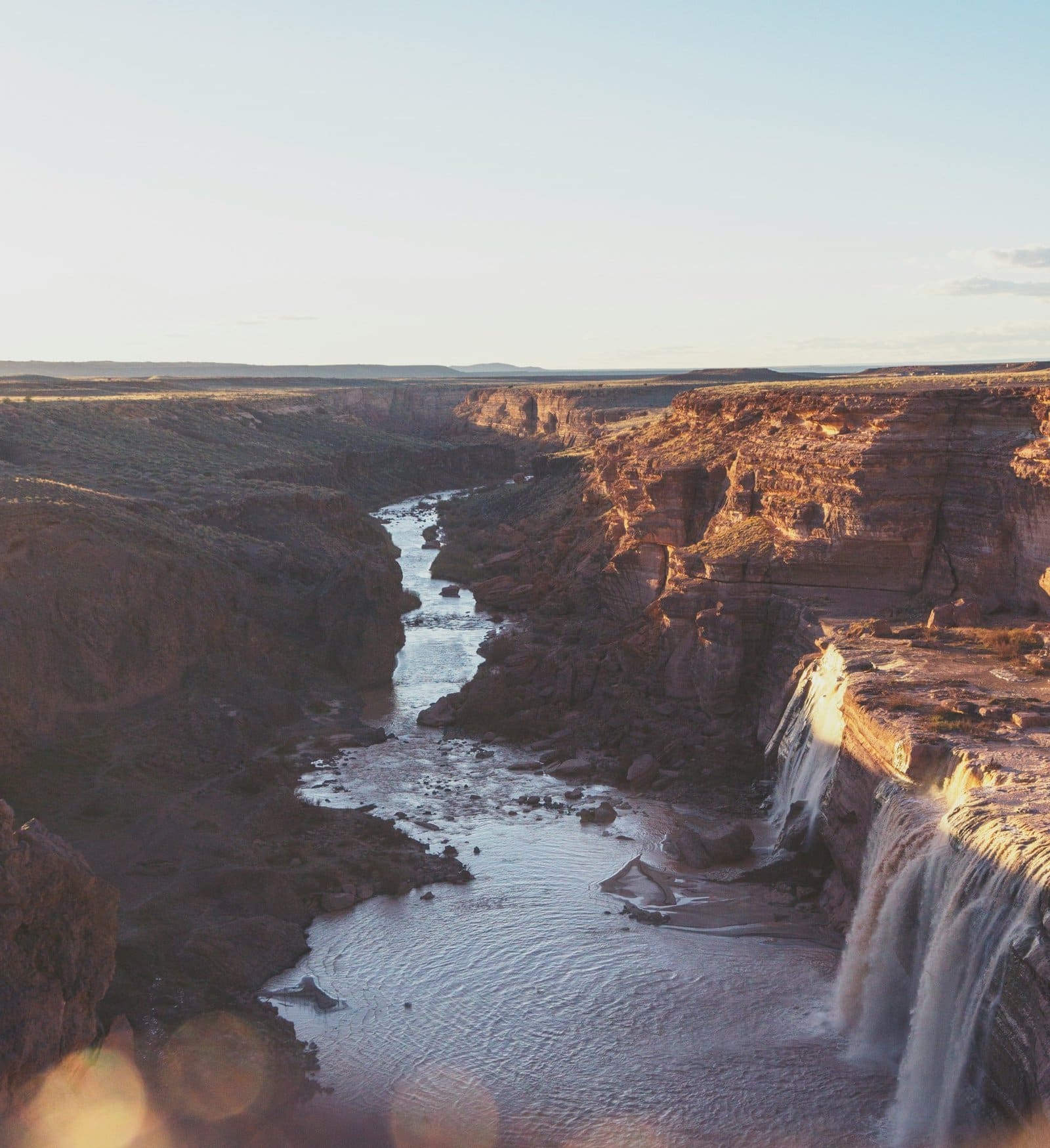
The overlook of the southern Little Colorado tributary is located near Desert View Drive, a fifteen-minute drive from Cameron, the park's eastern entrance. For those coming from the east, this is the first opportunity to get a taste of the mild chasm before reaching the grandiose canyon of the Colorado River. The Little Colorado is the most accurate example of canyon formation, and you can truly see the tributary's excavation and the deepening of the chasm as the river continues north until it merges with the Colorado River.
The National Geographic Visitor Center in Tusayan
The National Geographic Visitor Center is located in the town of Tusayan, the park's southern entrance and the place where light planes and helicopters depart for journeys over the canyon.
Click here to check availability and prices for hotels and motels near the Grand Canyon Village…
The visitor center features an IMAX cinema showing fascinating documentaries about the park. It's a favorite evening hangout for families, or just before entering the park, with nearby lodging and motels, restaurants, and everything you need to feel civilized.
Click here to purchase IMAX cinema tickets online…