Boston Metropolis and Harvard University in Cambridge
The Boston metropolitan area is full of fascinating places to visit. Like the city center itself, the broad metropolitan area of New England's capital boasts a large number of museums, historical sites, and most importantly – some of the world's leading academic institutions. In the city of Cambridge, north of the Charles River, you can find two of the world's top universities – Harvard and MIT.
- Cambridge is a wonderful university city to explore, including the campuses of the technology institute and the university. Harvard has a large collection of excellent academic museums, especially the art museums, the Peabody Museum, and the important Museum of Natural History
- On the northern bank of the Charles River lies the historic district of Charlestown, where the pivotal Battle of Bunker Hill was fought during the American Revolutionary War
- The entire Charlestown district is a part of the history of the patriots and of Boston itself
- On the outskirts of the city, there are other significant sites such as the library and museum built in memory of the city's son, President John F. Kennedy
- Not far from the Kennedy Museum, in Quincy, are the homes of two additional presidents – John Adams, the second president, and his son John Quincy Adams, the sixth president of the USA
- West of Boston, there are more important places like the estate of Walter Gropius in the charming rural town of Lincoln, and Lexington and Concord, where early battles of the Independence War were fought
10 Things You Must See and Do in the Boston Metropolitan Area
- A tour starting from the bustling Harvard Square to the university campus at Harvard Yard and a jump to the MIT campus
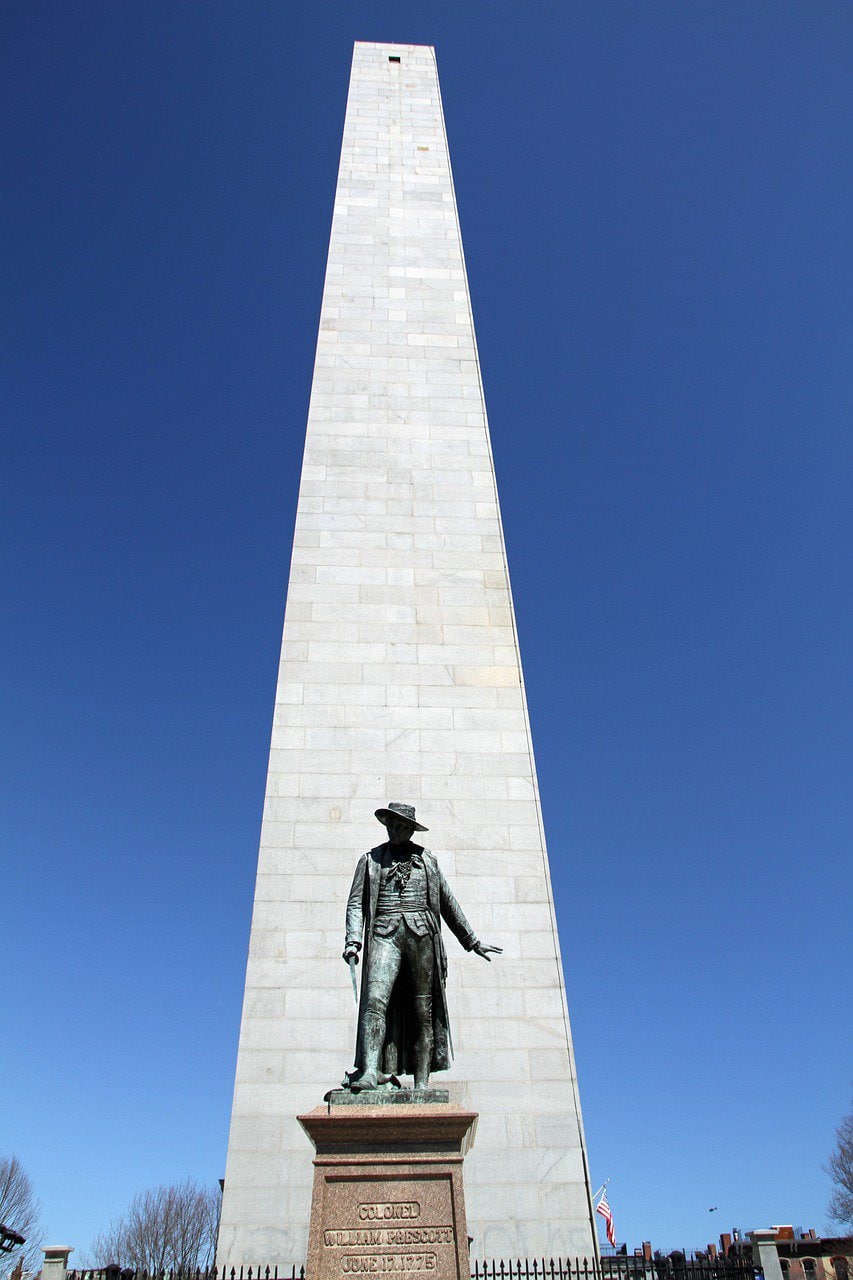
- Climb to the top of the obelisk at the Bunker Hill Monument in Charlestown
- Top-notch art at the Harvard Art Museums
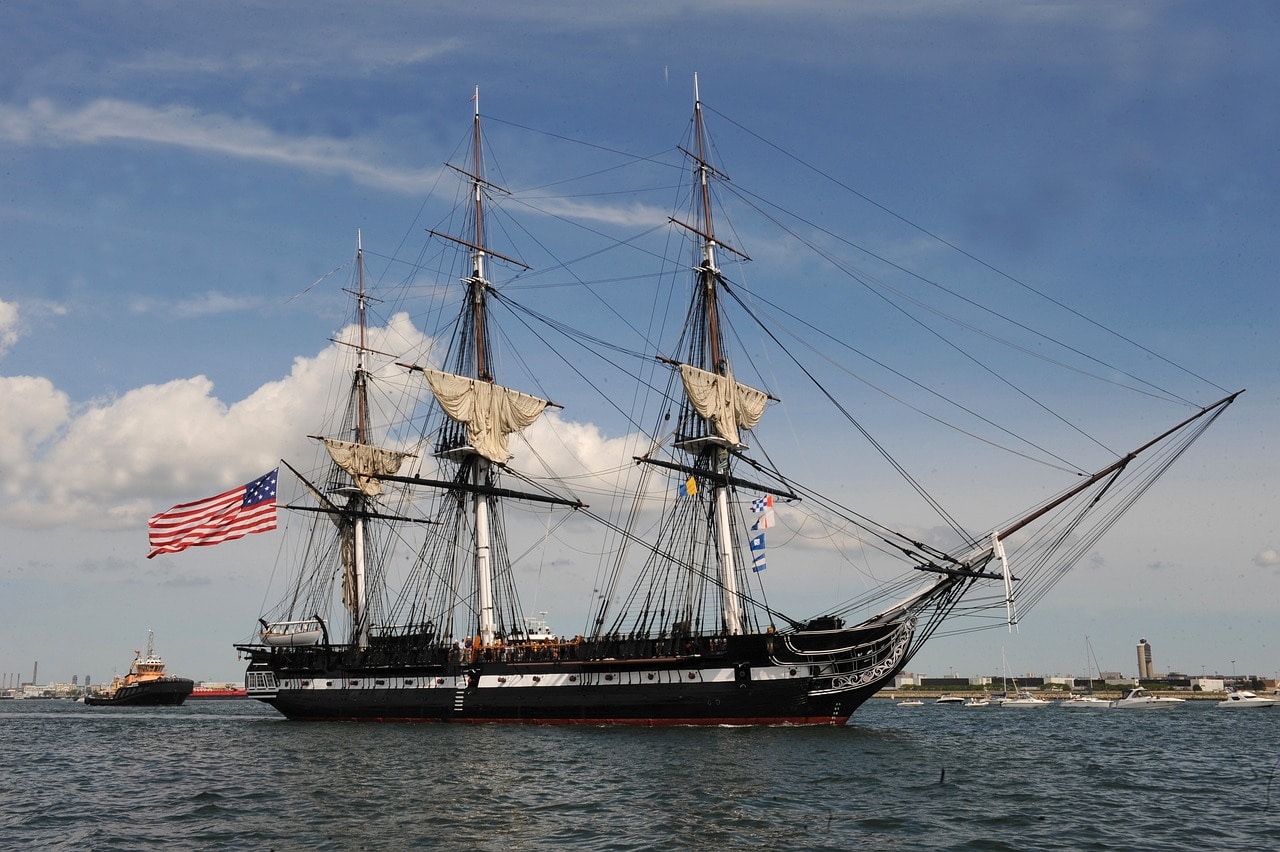
- Visit the Charlestown Navy Yard and board the USS Constitution
- Academia at the Peabody Museum of Ethnology and the Harvard Museum of Natural History
- Get to know Kennedy up close at the John F. Kennedy Presidential Library and Museum
- Stroll among the blooming flowers and lilacs at Arnold Arboretum
- A Patriots football game at Gillette Stadium
- Modern architecture and sculptures in beautiful Lincoln
- Reenactment of the independence battles in Lexington and Concord
Click here for the complete Boston travel guide…
Click here to purchase the Boston CityPASS online, all attractions in one ticket…
Map of the Boston and Cambridge Metropolitan Area
Charlestown Neighborhood
Bunker Hill Monument
The massive obelisk of the Bunker Hill Monument marks one of the key battles of the American Revolutionary War. The monument is located on Breed's Hill, a bit south of Bunker Hill, in the northern part of the neighborhood. Although the battle is named after Bunker Hill, it took place at the current location of the monument. The battle ended in a British victory, but with heavy losses, and is considered one of the most influential in gaining American independence from the British.
The monument was dedicated in 1843 and has since been a popular visitor spot and an important part of commemorating the battles of the Revolutionary War. You can climb to the top of the 67-meter high obelisk, which requires an ascent of nearly 300 steps. From the top, there's an opening offering a stunning view of the northern metropolitan area. South of the monument stands the small Bunker Hill Museum, which tells the story of the battle.
Address: Monument Sq. Charlestown, MA
Boston National Historical Park's Charlestown Historic Park
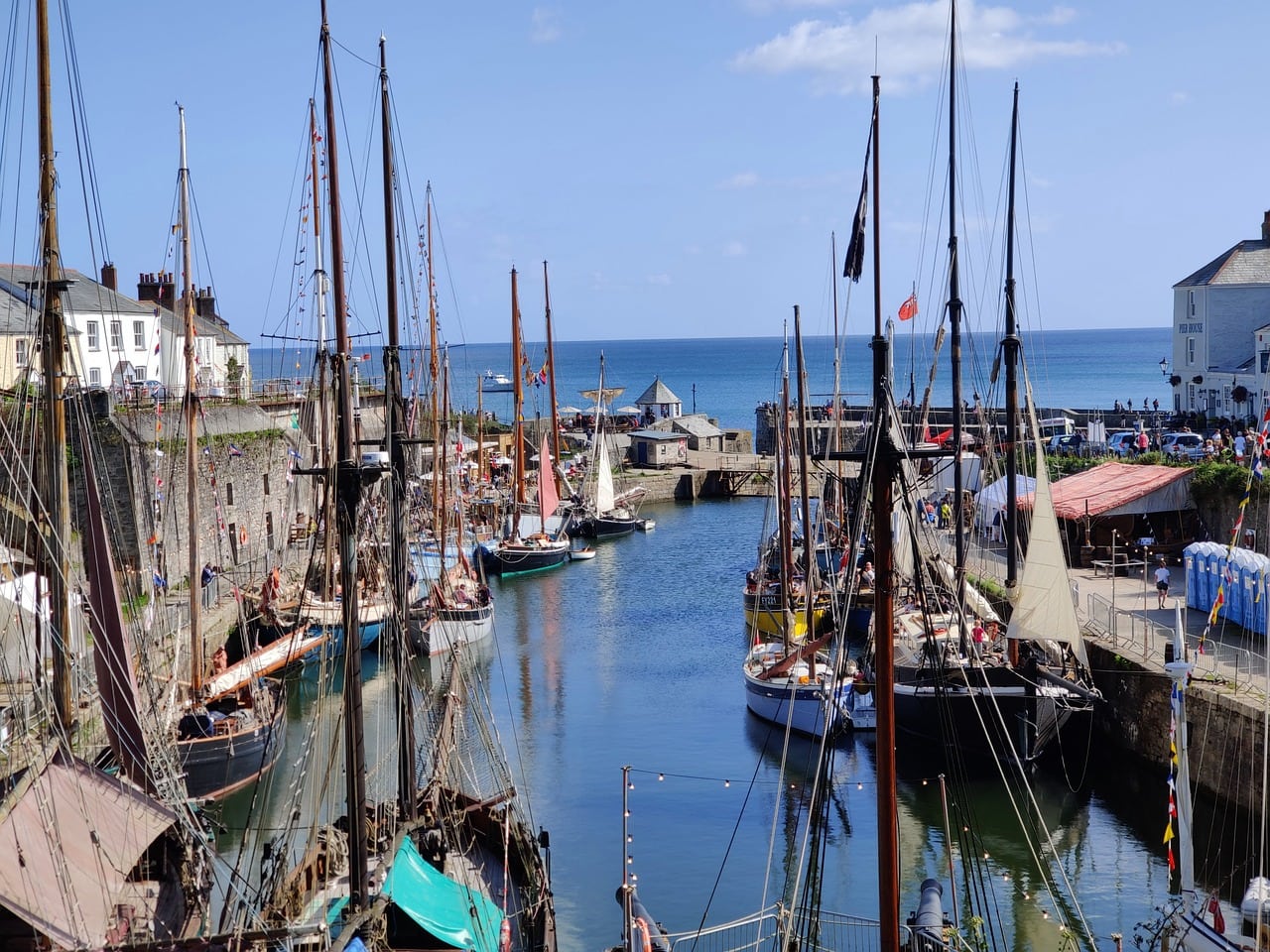
Charlestown Navy Yard was the historic location where ships and vessels were constructed in America. Upon gaining independence, it became the site where the American fleet was built, and over the years, a place where various merchant ships were also constructed. Nowadays, the navy yard has transformed into a national museum preservation site that tells the history of shipbuilding there. The park features two historic ships you can visit – the USS Constitution and the USS Cassin Young, a destroyer built during World War II.
The USS Constitution Ship
The historic and stunning ship is located in the Charlestown Navy Yard National Historic Park. Built in 1797, it participated in numerous naval battles, including against ships of the British fleet. Affectionately called Old Ironsides, the ship underwent preservation after the city of Boston considered sinking it in the mid-19th century. In 1997, it was extensively renovated and has proudly stood in the museum complex of the national park ever since. Once a year, on July 4th, it takes a short sail in the harbor, a popular ceremonial part of the city’s Independence Day celebrations.
Charlestown Center
City Square Park and John Harvard Mall
In the southern part of Charlestown, on the north bank of the Charles River opposite the North End and downtown Boston, lies the historic urban center of the important town that is now absorbed by Boston. The City Square Park is the place where the Puritans who built the town settled in 1630.
At the northern part of City Park begins the avenue named after John Harvard. Harvard was the pastor of the Puritan settlers in Charlestown. After his death, he donated his wealth to build the college in Newtown that was named after him. The college moved west to Cambridge and became one of the world's most important academic institutions. Warren Tavern, slightly north of the avenue, is a historic tavern that was restored and today houses a modern restaurant.
Cambridge
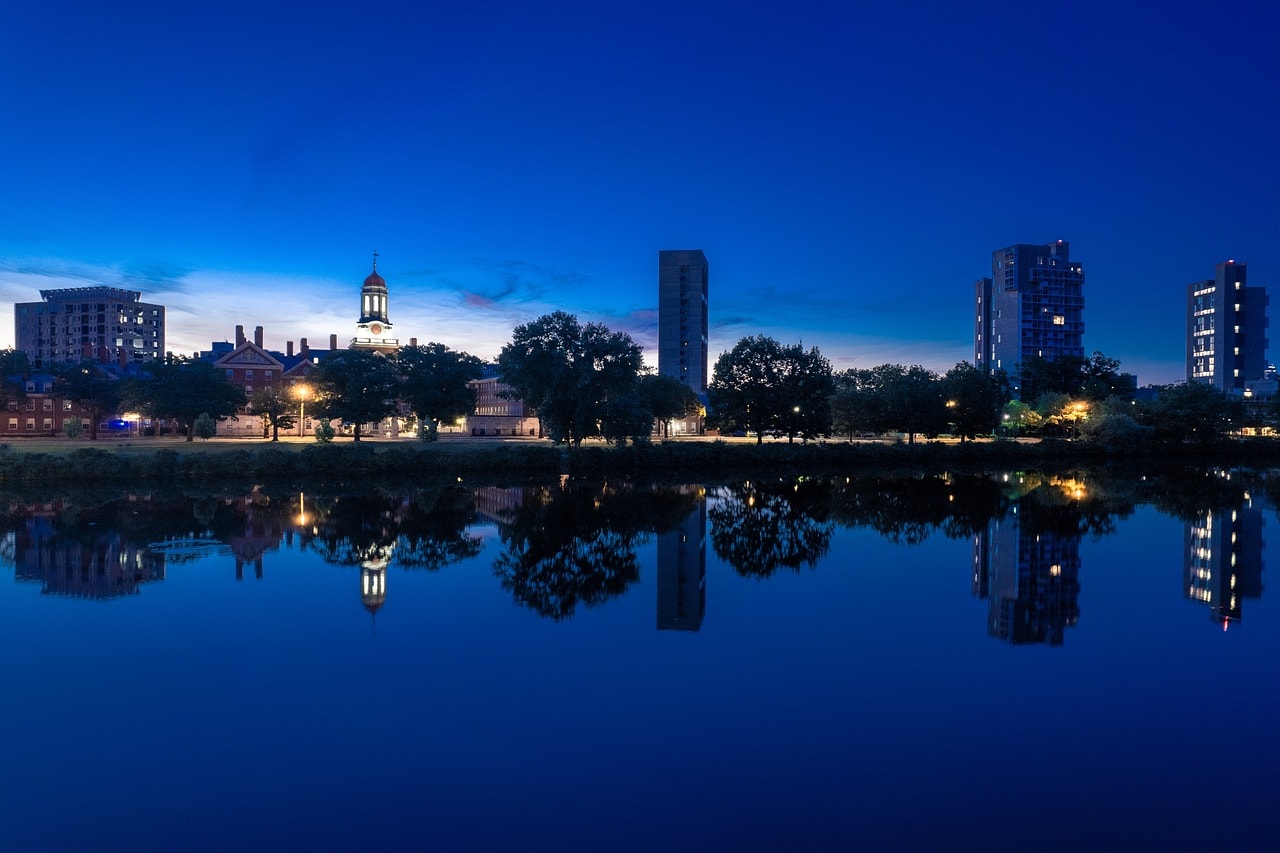
The city of Cambridge in Massachusetts is currently the world's most important academic center, competing with Cambridge in the UK after which it is named. Cambridge is home to two of the top four universities in the world – Harvard and MIT. About one hundred thousand residents live in the city, most of whom are somehow connected to the two magnificent campuses in the city. The center of Cambridge is Harvard Square, the heart of the university.
The MIT campus is located in the east of the city, on the north bank of the Charles River opposite Boston's prestigious Back Bay district. The settlement in the area was called Newtowne in the 17th century, but with the establishment of New College, which was later named after John Harvard, the city was renamed Cambridge, due to the university importance of the British city.
Harvard University
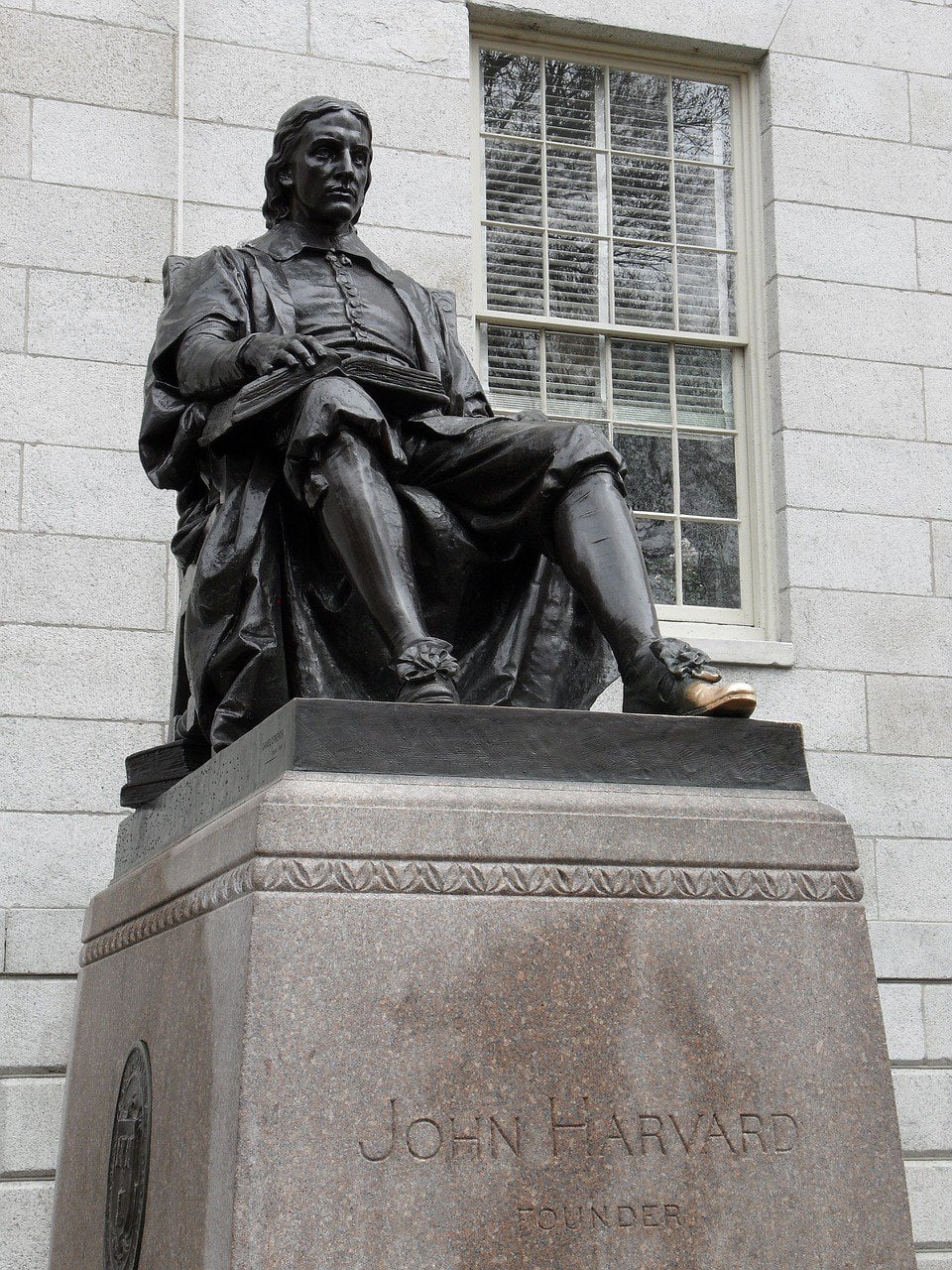
Harvard University, located in Cambridge, is currently considered the leading university in the world. The university has around twenty thousand students across all degrees, and a faculty of more than two thousand professors. It is regarded as one of the most sought-after and prestigious institutions globally, accepting less than ten percent of its applicants.
Click here for a bike tour of the Cambridge campuses…
The core of the university was founded in 1636 as an institution for training Protestant ministers of the Puritan community in Charlestown. It was initially named New College, and after a donation from John Harvard, the minister of the Puritan community in Charlestown, the college was named after him. The college named after Harvard was established west of Charlestown up the north bank of the Charles River and now forms the center of the city of Cambridge.
The Harvard Museum of Natural History
The Museum of Natural History is one of a series of university museums located in the northern part of Harvard University's campus. It consists of three sections – the Museum of Comparative Zoology, the Museum of Geology, and the Museum of Botany. The museum features exhibitions and the results of important research conducted at the university, along with fascinating samples of minerals, fossils, and more. The Geology Museum houses a concentration of rare mineral collections, including a large collection of meteorites. The zoological section includes collections inherited by the museum's researchers, such as collections of reptiles, butterflies, taxidermy, and dinosaur skeletons. The botanical collection showcases glass flower species, which were made in the mid-19th century as learning aids for the Botany Faculty.
Peabody Museum of Archaeology and Ethnology
The Peabody Museum is located in the same building as the Museum of Natural History, showcasing findings from studies and excavations conducted by or donated to Harvard. The Peabody is considered the first museum in the US dedicated to ethnology, featuring significant artifacts from Native American cultures in Central America, Egyptian pharaonic culture excavations, and digs conducted in the Polynesian islands.
Address: Oxford St. 26, Cambridge, MA
Click here for the museum complex's current opening hours…
Harvard Art Museums
The cluster of Harvard Art Museums consists of three separate wings/museums: the Fogg Museum, the Busch-Reisinger Museum, and the Arthur M. Sackler Museum. The first two house collections of paintings and sculptures, while the latter is essentially an archaeological museum focusing on ancient Western and Eastern cultures.
The Fogg Museum is the largest of the wings and was founded in 1896. Seven years later, the second art wing, the Busch-Reisinger Museum, opened, and the exhibitions were combined. The museum collections hold several important Renaissance masterpieces, such as Titian's painting ‘Ideal Countryside,' the most significant of the Venetian Renaissance artists, and ‘The Crucified Christ' by Fra Angelico, a key figure in early Florentine Renaissance. The modern collection includes famous paintings like ‘Summer Scene' by the Impressionist Frédéric Bazille, works by Edgar Degas, Claude Monet's famous ‘Gare Saint-Lazare,' Vincent van Gogh's ‘Self-Portrait Dedicated to Paul Gauguin,' and a series of paintings by modern art giants such as Paul Gauguin, Toulouse-Lautrec, Jacques-Louis David, and many other greats.
Click here for the latest museum opening hours…
Harvard Square and Harvard Yard
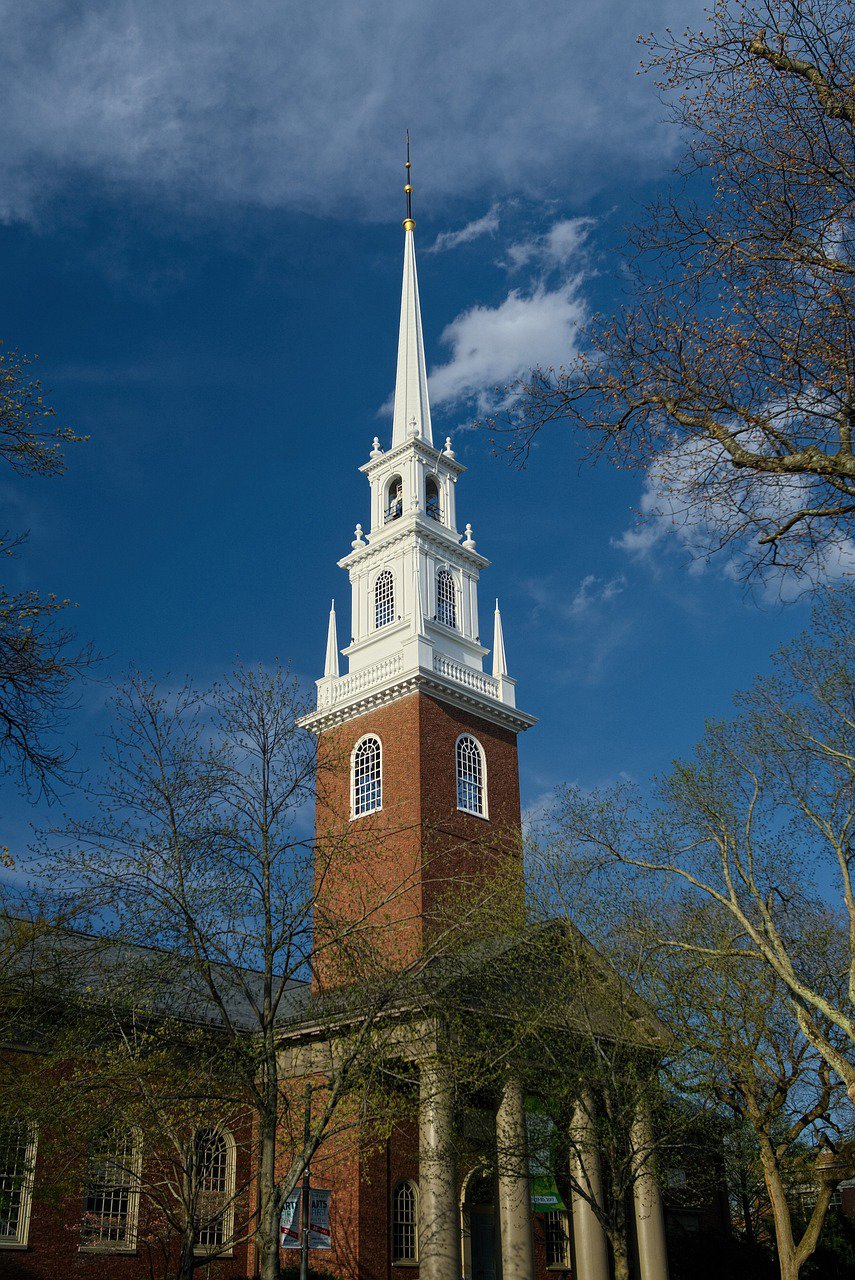
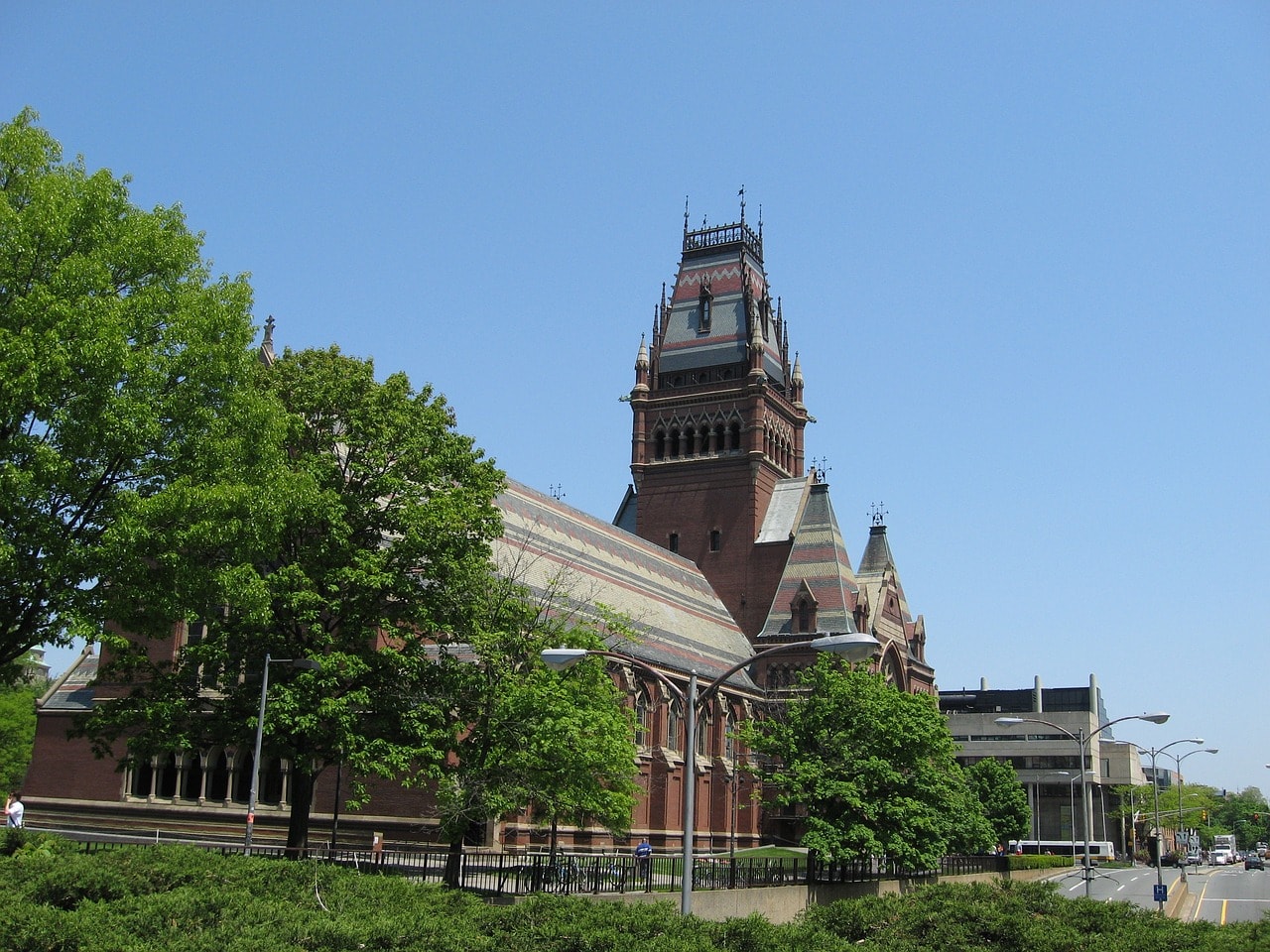
The historical heart of Cambridge city is Harvard Yard, where the New College was established, later named after Reverend John Harvard. Harvard Yard is the official campus of the university, where neo-classical houses are nestled in lawns and greenery. The large building on campus is the central library named after Harry Elkins Widener, a famous bibliographer from a wealthy family who perished with the Titanic. After his death, his family donated the money to build the library, considered the largest university library in the world. Opposite the library building is the impressive Memorial Church.
In the southwest corner of Harvard Yard is the famous Harvard Square. The square is the vibrant center of the campus and the entire city. To the northwest stretches the Cambridge Common, a park where the American army camped in 1775 and where George Washington took command of the army.
Massachusetts Institute of Technology – MIT
MIT is the world's leading technological institute and one of America's important research institutions. The university campus is located in the eastern part of Cambridge, on the northern bank of the artificial lake created by damming the Charles River in the northern part of downtown Boston. The campus is home to about 12,000 students who have undergone a long and exhausting admission process. The institute is less attractive for a tour than the nearby Harvard University, but it's definitely worth a short visit to the campus, just a quick hop from the Back Bay neighborhood in Boston.
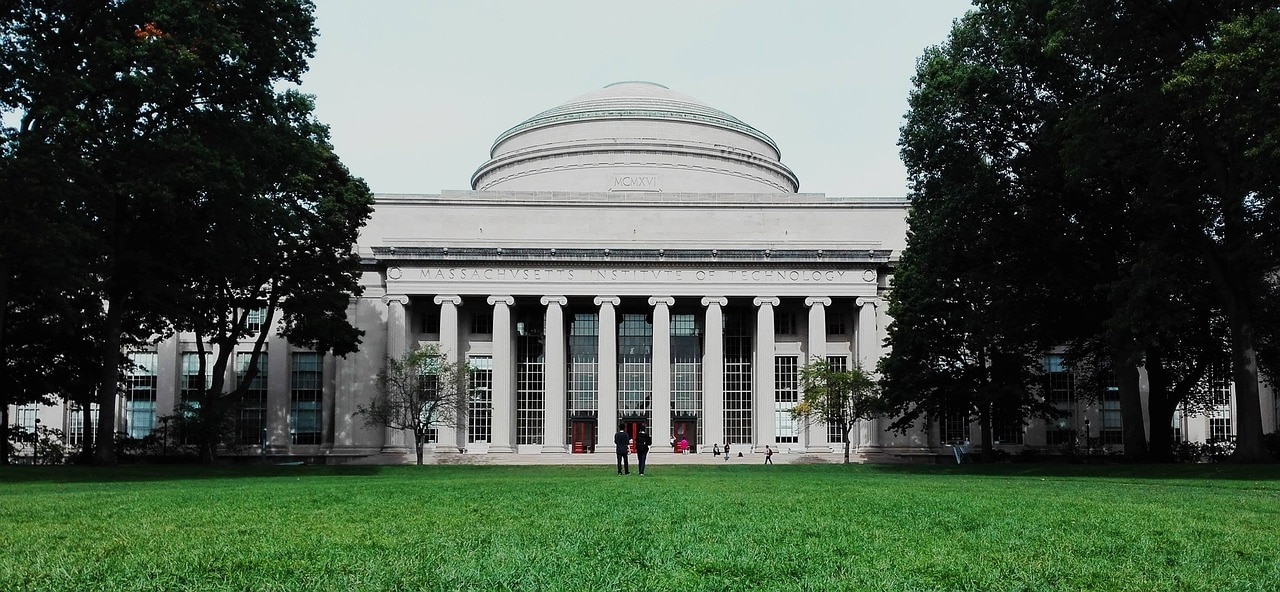
South of Boston's downtown
John F. Kennedy Presidential Library and Museum
The Presidential Library commemorating the city-born President John F. Kennedy is just a ten-minute drive south from downtown Boston. In addition to the library building, there is an impressive museum that explores the works and life of Kennedy, the first Catholic President of the United States. Kennedy, the son of a wealthy Bostonian family, was assassinated after serving only two years in office in Dallas on November 22, 1963. The library is located adjacent to the bay, east of the University of Massachusetts Boston campus. Inside, there is a massive glass wall overlooking the bay waters. Just north of the building is Boston's popular Carson Beach.
Address: Columbia Point, Boston, MA
Click here for the current opening hours of the library…
Quincy
Just a fifteen-minute drive south along the coast from the Kennedy Library lies the former town, now a suburb of Boston, Quincy. Quincy is renowned as the birthplace of U.S. Presidents from the family lineage – John Adams, the Vice President of Washington and the second President of the U.S., and his son John Quincy Adams, the sixth President of the U.S. In the heart of Quincy is the John Adams Birthplace – Adams National Historical Park, where the adjacent houses where the two presidents were born are located.
Arnold Arboretum Arnold Arboretum of Harvard University
The Harvard University Botanic Garden is located in the southern part of Jamaica Plain, a neighborhood about a 15-minute drive southwest of downtown Boston. Established in 1872, the garden houses more than twenty thousand different species of trees and plants. From spring to fall, the vast park is adorned with a huge variety of blooming trees and flowers. In early May, the garden celebrates Lilac Sunday, an event where visitors come to admire and smell the lilac trees in bloom. The garden hosts a large collection of these trees, making the event an integral part of the city's culture. Just east of the botanic garden lies Boston's popular Franklin Park Zoo.
Gillette Stadium in Foxborough
The Boston Patriots are the third legendary team of Boston city. It was founded in 1960 with the establishment of the NFL and played under this name for about 11 years. In 1971, the team moved to its home stadium The Razor, or by its official name Gillette Stadium, in the city of Foxborough, about 33 km south of downtown Boston. With the move, the team changed its name to New England but is still part of the city. The New England Revolution soccer team also plays in the stadium, whose games are naturally much less interesting.
The Patriots, of course, celebrate the city's fundamental essence as a critical part of the US independence struggle. In recent years, the team is considered among the best in the league, under the leadership of the legendary quarterback Tom Brady, who brought the team 7 Super Bowls under the controversial coaching of Bill Belichick. Getting tickets for games at the stadium, which has a capacity of 20,000 spectators, is quite challenging. There aren't many home games in the season, and the games are in high demand by the local crowd. It's advisable to try and secure tickets for Patriots games well in advance.
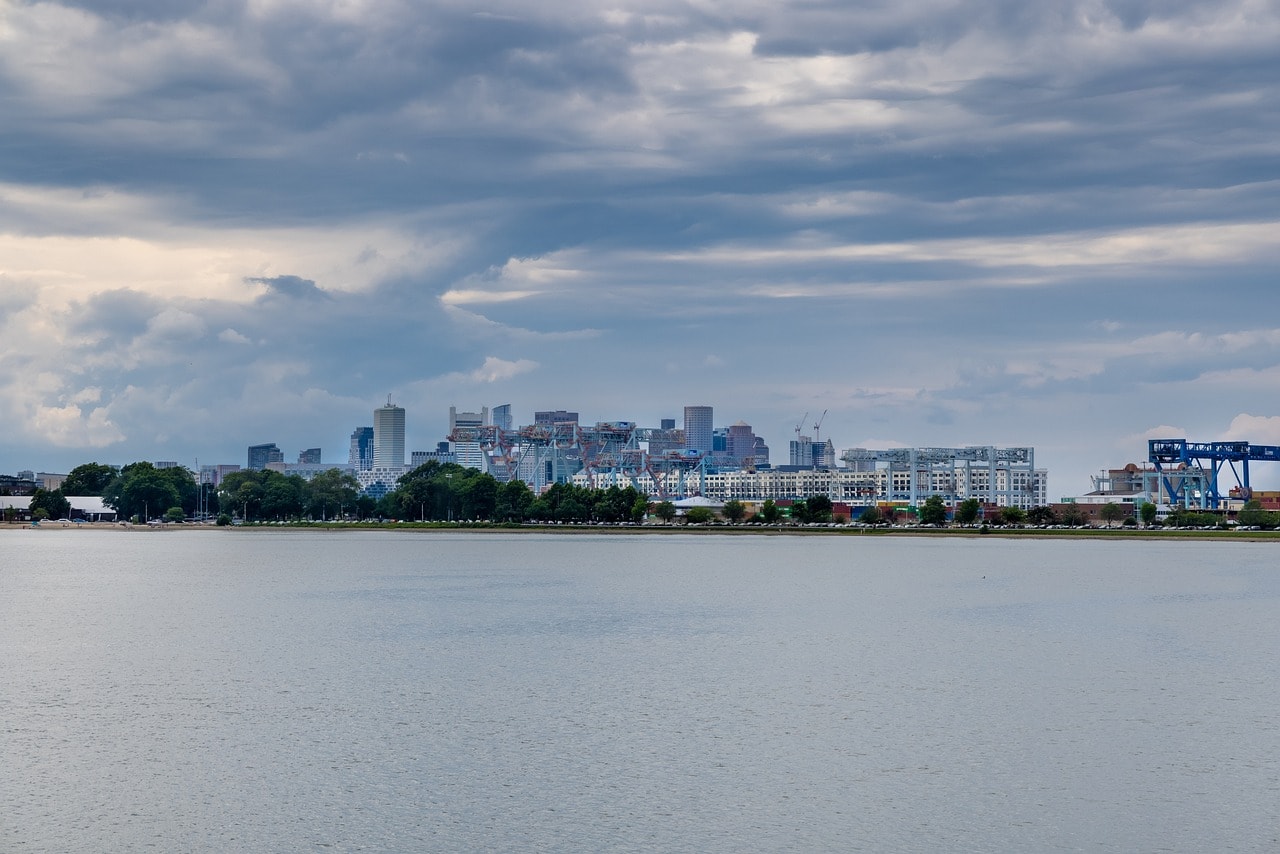
West of downtown Boston
Lexington and Lincoln
Lexington and Lincoln are two historic towns located west of downtown Boston. In Lexington and its western neighbor, Concord, early battles of the American Revolution took place, and from there Paul Revere set out to warn the patriots in Boston that the British were coming. In the center of Lexington is the Lexington Battle Green site, a historic park where reenactments of the battle take place in April.
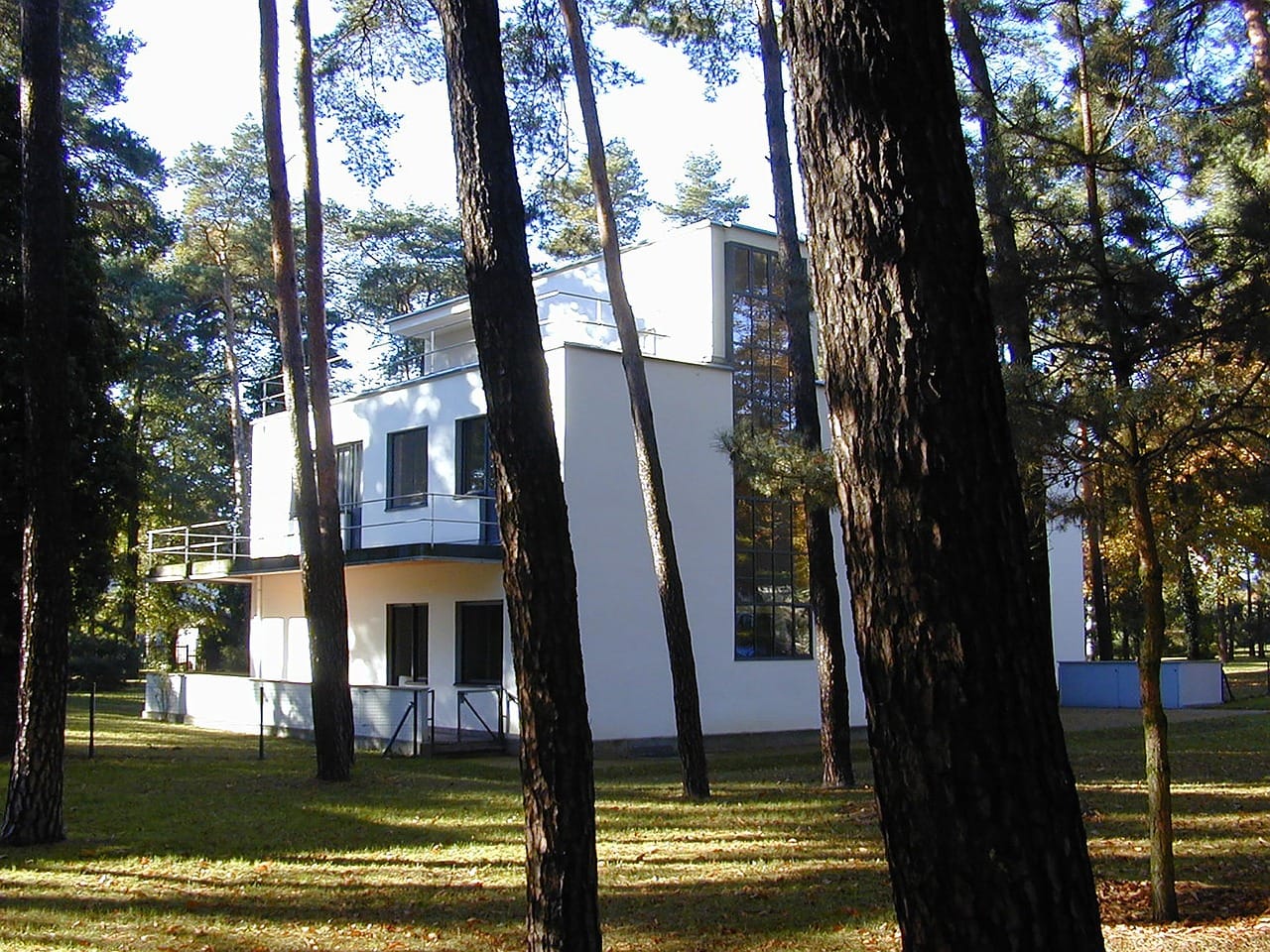
A little to the west, the town of Lincoln has always been a rural retreat for wealthy families from Boston and New England. In 1937, Walter Gropius, who fled his homeland of Germany, settled in the town and accepted a position at Harvard. The prominent architect is the father of the Bauhaus movement and the International Style of architecture. Gropius House in Lincoln is a favorite site for enthusiasts of modern architecture and is one of the beautiful examples of Gropius's architectural style (as opposed to the dreadful railroad homes also attributed to his name).
In Lincoln, you'll find the deCordova Sculpture Park and Museum, showcasing dozens of post-modern sculptures. To the south of the town lies the Codman Estate, a grand mansion built in the mid-18th century that welcomes visitors. Just south of the estate, you'll encounter the rustic expanse of Mass Audubon's Drumlin Farm, a farm dedicated to nature conservation and educational activities for children.