Downtown Manhattan
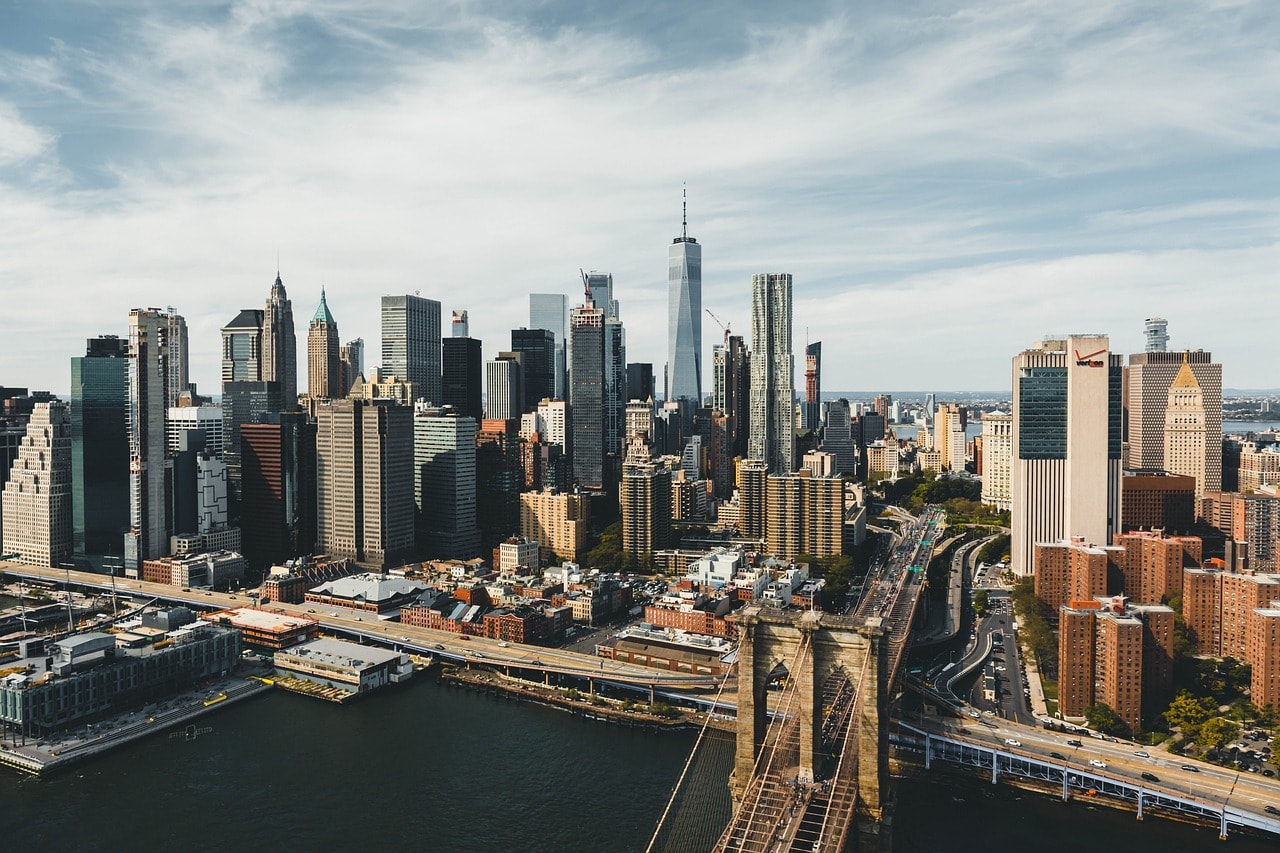
Downtown Manhattan or Lower Manhattan is one of the most popular areas for a stroll in Manhattan. The important space is everything you could envision in terms of power and height, with giant towers, formidable bridges, financial offices, parks, restaurants, shops, chains, and sites. Downtown New York is the commercial growth engine of the city, with Wall Street at its heart, likely the beating heart of the financial world. On Wall Street are the New York Stock Exchange and the Federal Hall.
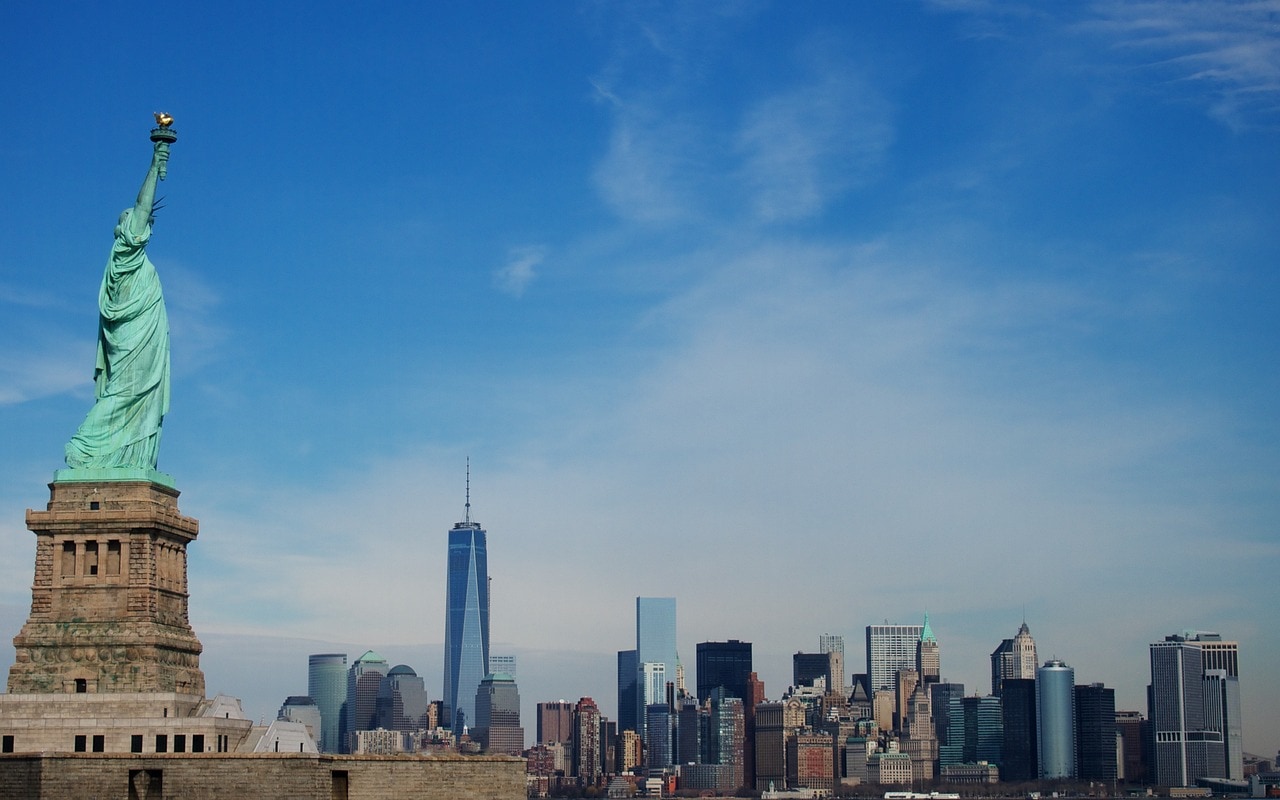
- Just south of the Financial District lies the green Battery Park, from where ferries depart to the islands of the Upper Bay towards Staten Island
- Just north of the park are two massive bridges – the Brooklyn Bridge and the Manhattan Bridge, near the revitalized Seaport area, now a very popular entertainment spot for both locals and tourists
- In the northern part of downtown, the gaping void left by the Twin Towers. Nearby, America's triumphant answer, the sparkling Freedom Tower, the tallest building in the Western Hemisphere
Click here for all the information on a trip to New York City…
How to get to Downtown Manhattan?
You can reach downtown with a significant portion of the subway lines: the red line (Line 1 goes to the Staten Island ferries and Lines 2 and 3 stop at Wall Street station). The yellow line (R and W) and the green line (4 and 5) reach the tip of the island. The brown line (J and Z) connects downtown with northern Brooklyn and JFK airport.
10 Must-See and Do Things in Downtown Manhattan
- Climb the observation deck of the Freedom Tower – One World Trade Center
- The memorial commemorating the void created with the collapse of the Twin Towers at the 9/11 Memorial
- The New York Stock Exchange building on Wall Street
- Walk across the Brooklyn Bridge
- Eat and enjoy in the lively Seaport, in the shadow of the Brooklyn and Manhattan Bridges
- Conquer Castle Clinton at Battery Park
- The Charging Bull at Bowling Green
- The spire of Trinity Church on Broadway at the corner of Wall Street
Click here for a list of 12 great hotels in Manhattan…
Click here to check availability and prices for hotels in Lower Manhattan…
Downtown Manhattan Map
The Financial District
9/11 Memorial & Museum
You simply cannot start your tour of Downtown Manhattan without visiting the wound that has left its mark on the city and the entire USA. The 9/11 terrorist attack in 2001 brought down the Twin Towers, two sparkling giants that dominated New York City's skyline since the 1970s. Today, the site remains open, with two silent square pools called The Footprints of the Twin Towers commemorating the location of each tower's base.
Around the pools are bronze plaques engraved with the names of three thousand victims of the terrorist attack, both in the Twin Towers, the hijacked planes, and those killed at the Pentagon in Washington. Between the pools, there's a green park with trees and monuments that tell the story of the historic day and the fate of the victims. The park and museum were officially inaugurated exactly ten years after the catastrophic events.
Between the two pools, in the eastern part of the site, stands the museum entirely dedicated to September 11. The entrance to the museum is from the eastern corner of the site, from Greenwich Street. The museum features an overview of the terrorist attack events and also silent relics from what remains of the building's foundations. It has a deep space called the Western Chamber, where you can witness the excavation of the towers' foundations.
Address: Greenwich St. 180, New York
Click here for all information about visiting the museum…
The Freedom Tower or One World Trade Center
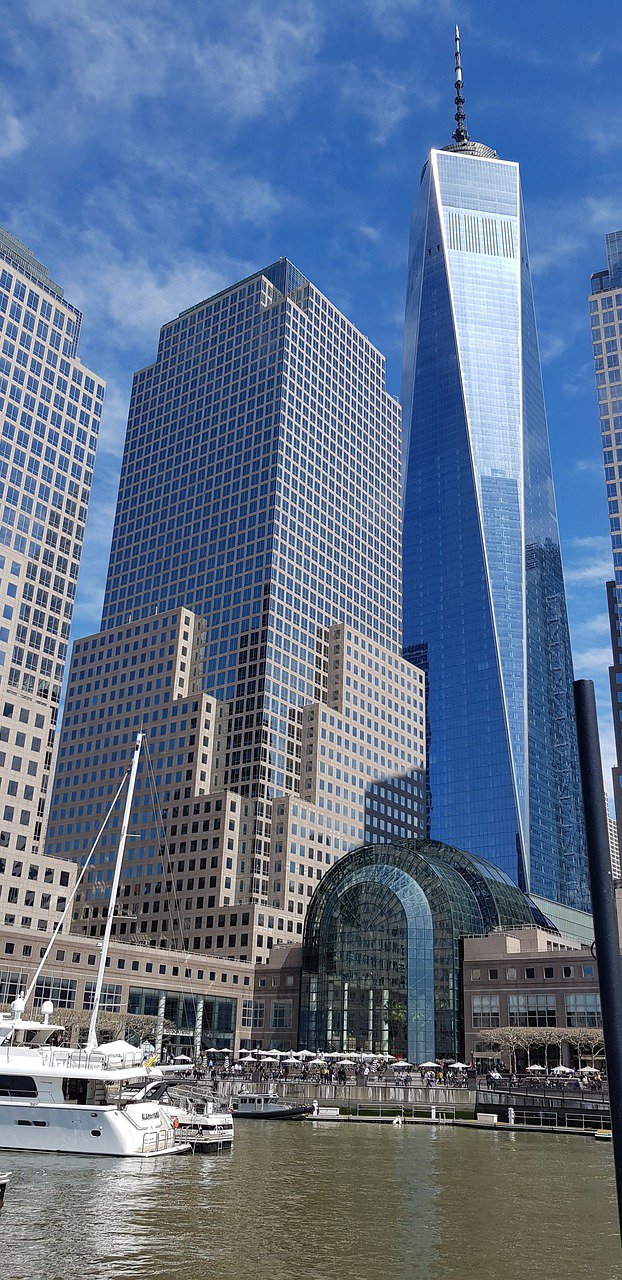
The Freedom Tower, which some claim is the true monument to the Twin Towers, is located at the northern corner of the memorial, just 15 meters from the pool commemorating the North Tower. The tower stands approximately 541 meters tall (1776 feet – the year of American independence) and is currently considered the tallest tower in the U.S. and the seventh tallest (as of today) in the world.
The tower was inaugurated in 2014 and successfully fills the terrible void that opened in downtown Manhattan for more than 13 years. The tower is the creation of Jewish-Polish architect Daniel Libeskind. The tower's observation deck has become a very popular place to visit. It's located on the 100th to 102nd floors of the tower at a height of 387 meters. From the deck, there's a breathtaking view of the entire metropolis.
Click here to purchase an online ticket for the One World Observatory…
Address: West St. 117, New York
The Federal Hall
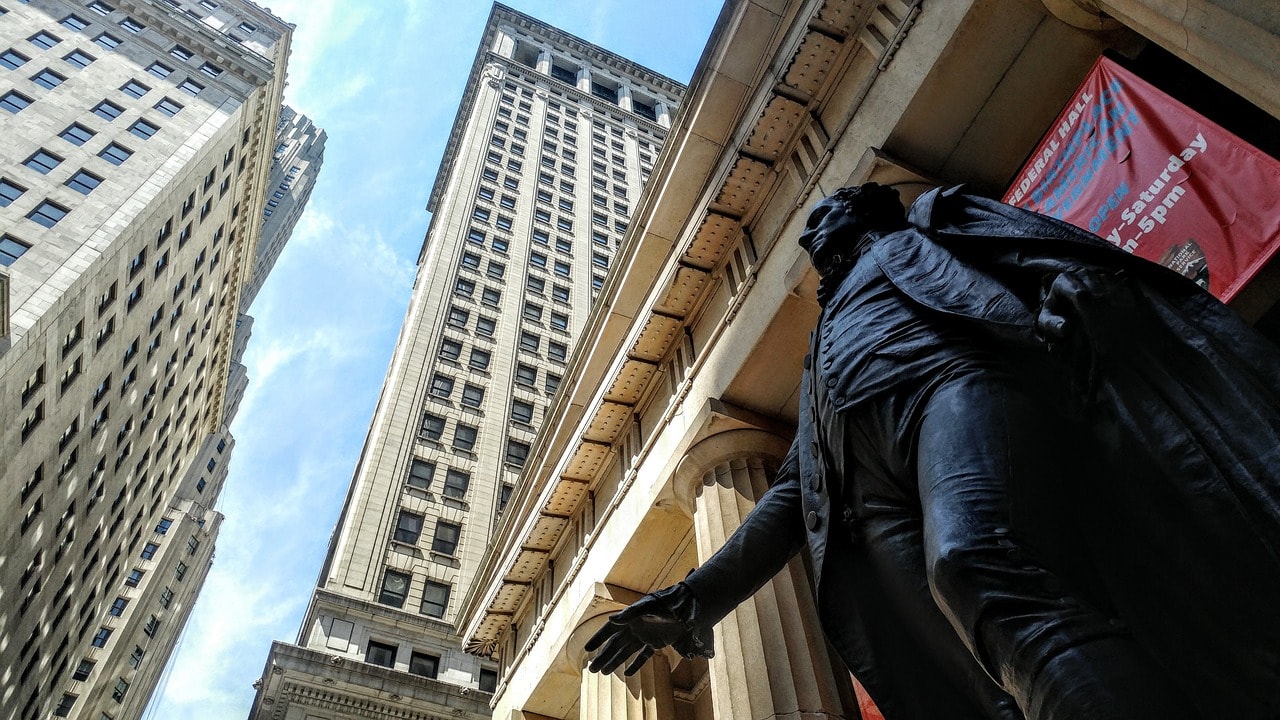
Federal Hall is one of the crucial historical buildings in New York. On the steps of this neoclassical building, George Washington was inaugurated as the first President of the USA in 1776. Today, Washington's statue remains on the steps, but the building around it was rebuilt in the mid-19th century in an impressive neo-classical style.
Above the steps and the statue of Washington, there is an entrance to the building through columns with Corinthian capitals and above them an empty pediment. The steps face Wall Street, at its intersection with Broad and Nassau Streets, directly opposite the Stock Exchange building. Some consider the location of these street intersections to be the pinnacle of America's power.
Address: Wall St. 26, New York
Click here for a free guided tour of downtown Manhattan…
Wall Street and the New York Stock Exchange
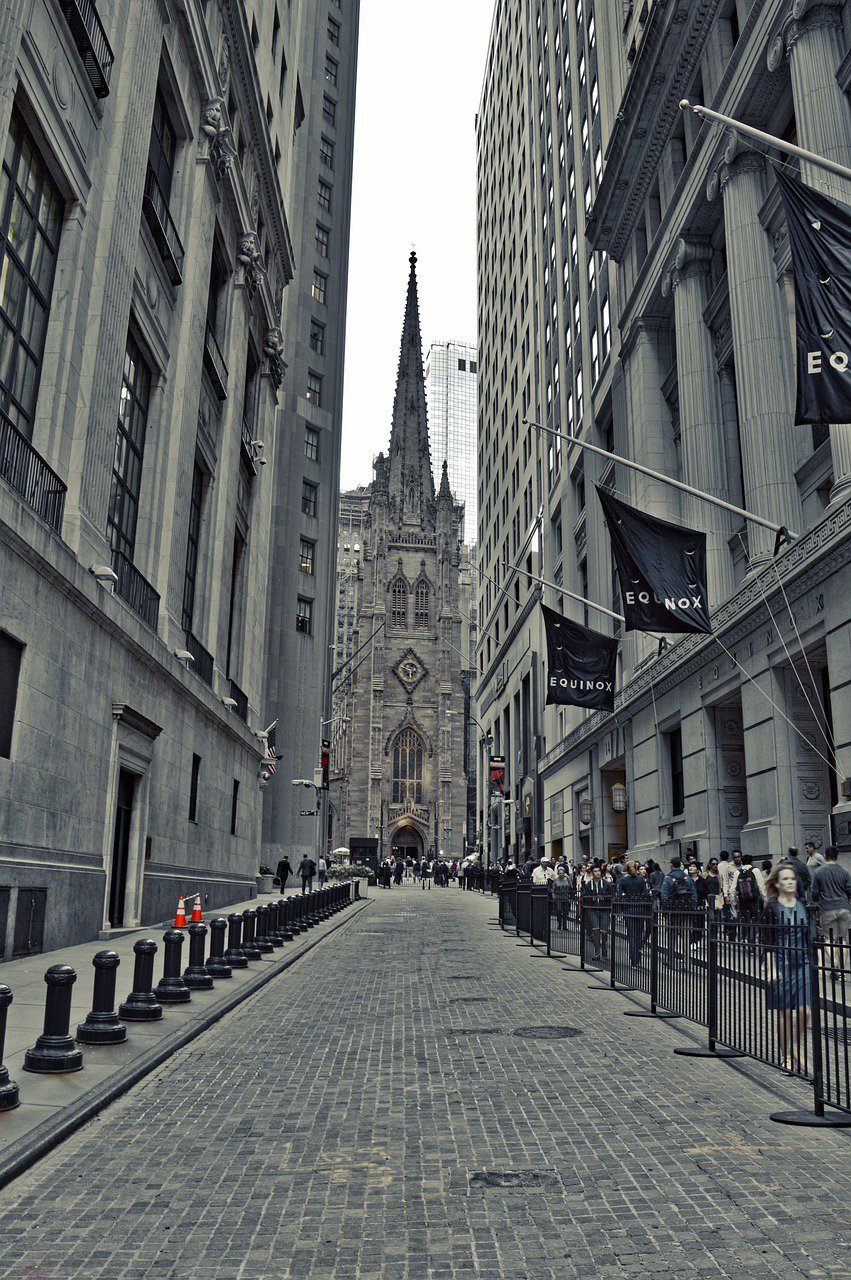
Wall Street, the heart of the financial world, stretches from Broadway on the west to the East River at the southern part of the Seaport. In the central part of the street, you'll find an impressive concentration of all things related to commerce. It is home to headquarters of major corporations and, of course, the iconic New York Stock Exchange building, the most important trading building in the entire world.
Click here to rent electric bikes for a downtown Manhattan tour…
You can enter the complex to the open spectator stand and watch the economic engine of the world. Walking along the street itself is a rather marvelous experience. A mix of tourists and finance professionals in suits dashing from place to place. Lunchtime in the street is the peak of its hustle and bustle. At lunchtime, thousands of finance people pour out from their offices to the area's restaurants and stalls for lunch.
Click here for a guided tour exploring the secrets and history of Downtown Manhattan…
Trinity Church
The Trinity Church is an impressive Episcopal church located on Broadway, opposite the intersection with Wall Street. Built in 1864 in the Neo-Gothic style, it prominently features influences from Renaissance architecture. The church's spire, nearly 90 meters tall, was New York's tallest tower before the construction of skyscrapers. The church's interior is equally impressive, boasting a clean design within a very high space.
The Seaport
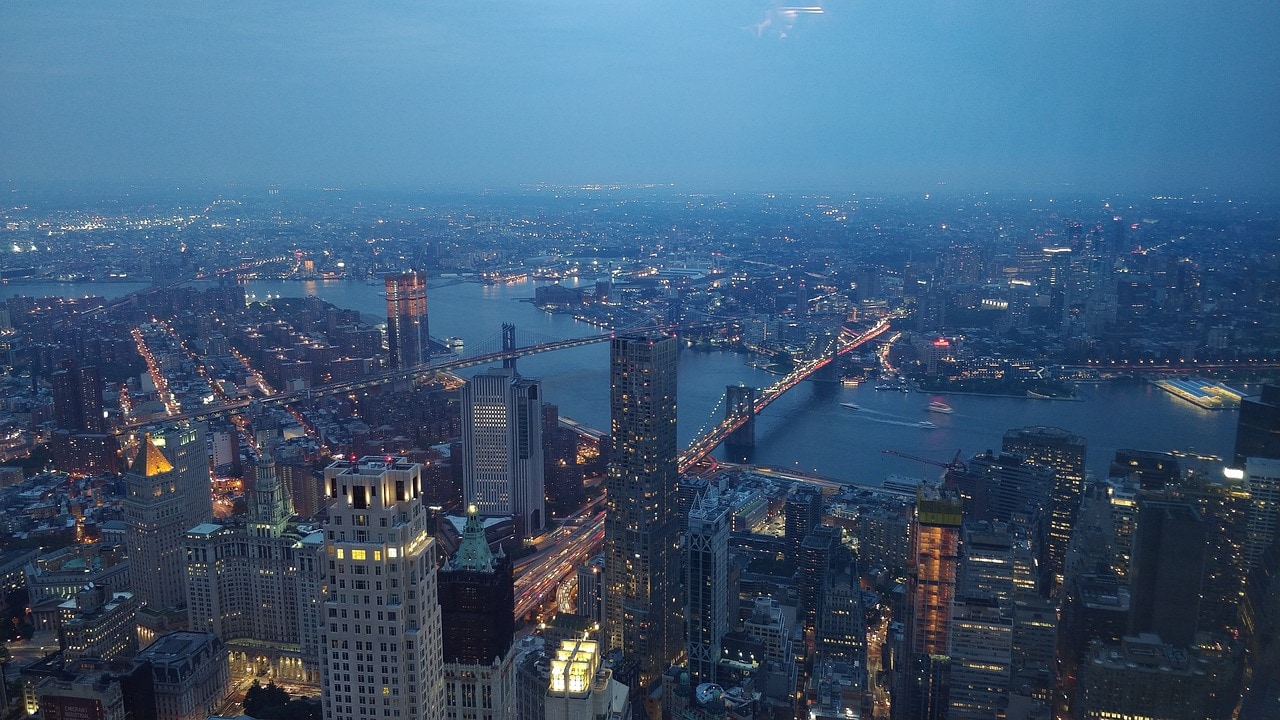
Seaport is an area at the mouth of the East River to the Upper Bay, which was once part of New York's harbor. Nowadays, the area has undergone a process of restoration and development and is considered one of Manhattan's most attractive entertainment zones. The biggest advantage of the area is its skyline view, both to the north towards the two bridges – Brooklyn Bridge and Manhattan Bridge – and to the west towards the downtown towers. Seaport is full of restaurants, entertainment venues, nightlife, cinemas, and all sorts of spots combining stunning urban scenery with fun around the clock.
Pier 17 of the port has been completely transformed into a complex of restaurants and entertainment spots and is considered the heart of the area's tour. The neighboring piers, numbers 15 and 16, have also been converted into entertainment and dining places, and you can walk on the decks on the water for breathtaking views of the Brooklyn Bridge. The nearby South Street Seaport Museum houses an immense collection of ships, objects, and details related to maritime transportation and the history of New York's harbor.
For a guided tour of all the bars and lounges at the top of downtown towers, click here…
Brooklyn Bridge
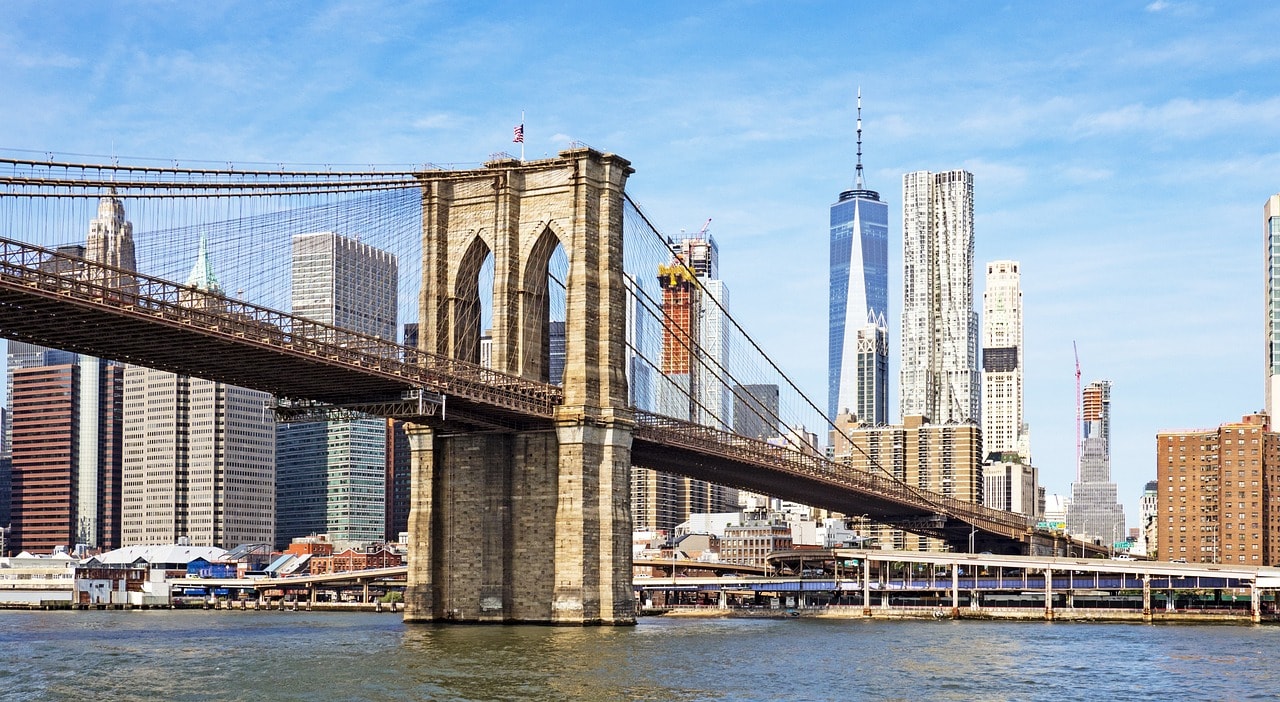
The Brooklyn Bridge is undoubtedly one of the most beautiful and impressive symbols of New York City. The bridge connects downtown Manhattan with downtown Brooklyn. You can access the bridge from both City Hall Park and from the FDR Drive, the eastern Manhattan highway that runs along the East River.
The giant steel bridge accompanies the story of the entire development of Manhattan. It was inaugurated in 1883 after 14 years of strenuous work. The bridge stretches a length of almost 2 kilometers and stands about eighty meters above the East River. The bridge allows the passage of cars and pedestrians. You can cross the bridge in a walk that takes about half an hour.
For a guided bicycle tour of the Brooklyn and Manhattan Bridges, click here…
Manhattan Bridge
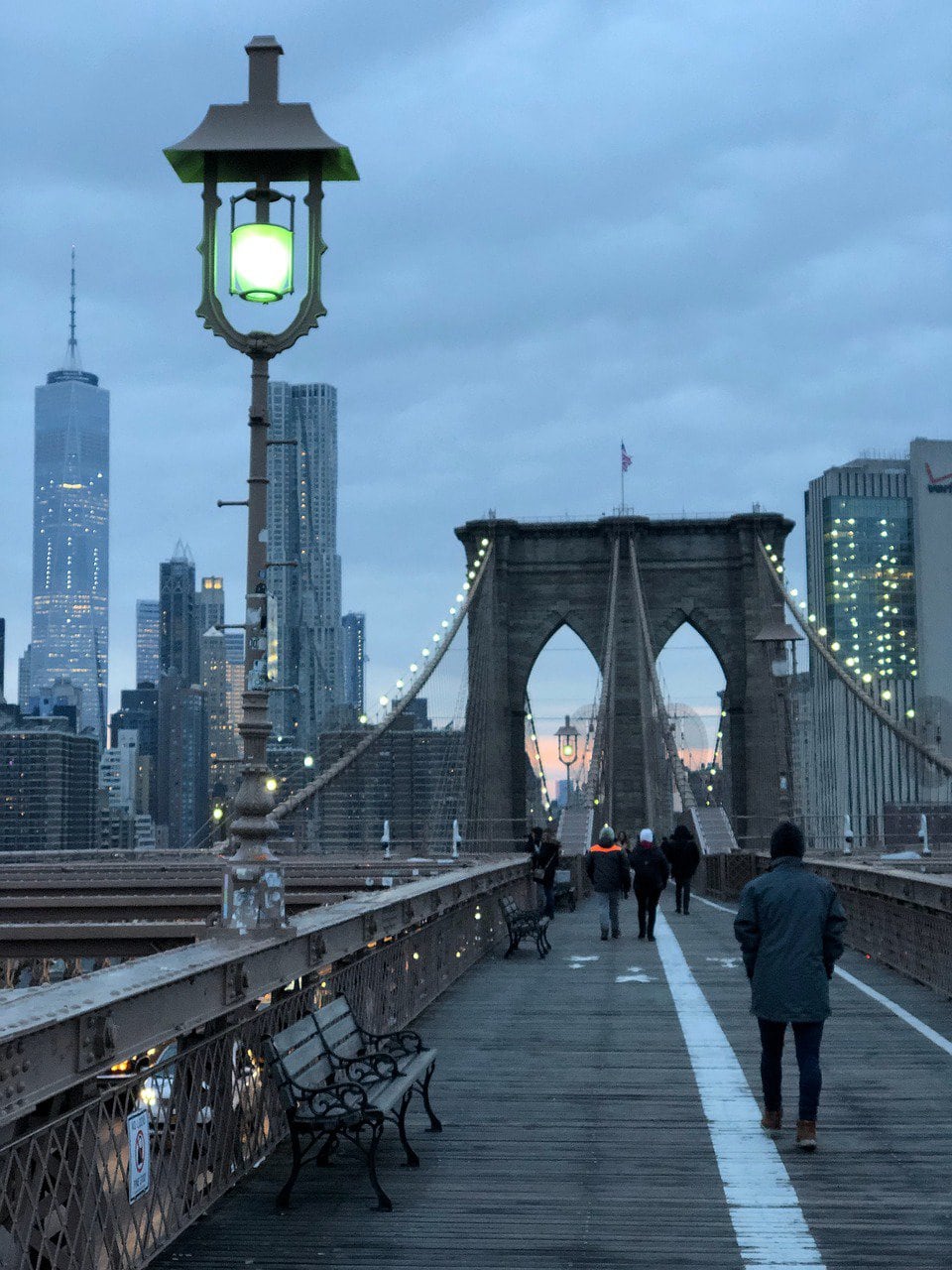
When you look at the Brooklyn Bridge, you can't ignore its backdrop sibling, the beautiful Manhattan Bridge. The Manhattan Bridge opened about thirty years after the Brooklyn Bridge, in 1909. It was built as a complement to its impressive southern sibling, primarily to channel subway traffic and connect routes to Brooklyn.
Currently, the bridge carries two subway lines—the orange (B and D) and the yellow (N and Q)—converging towards Atlantic Avenue in downtown Brooklyn. There are additional lines crossing the East River through dedicated tunnels. The bridge also features a highway and a path for pedestrians and cyclists. The bridge is 2.1 km long and 102 meters high. It offers a stunning view of the Brooklyn Bridge and downtown.
Battery Park
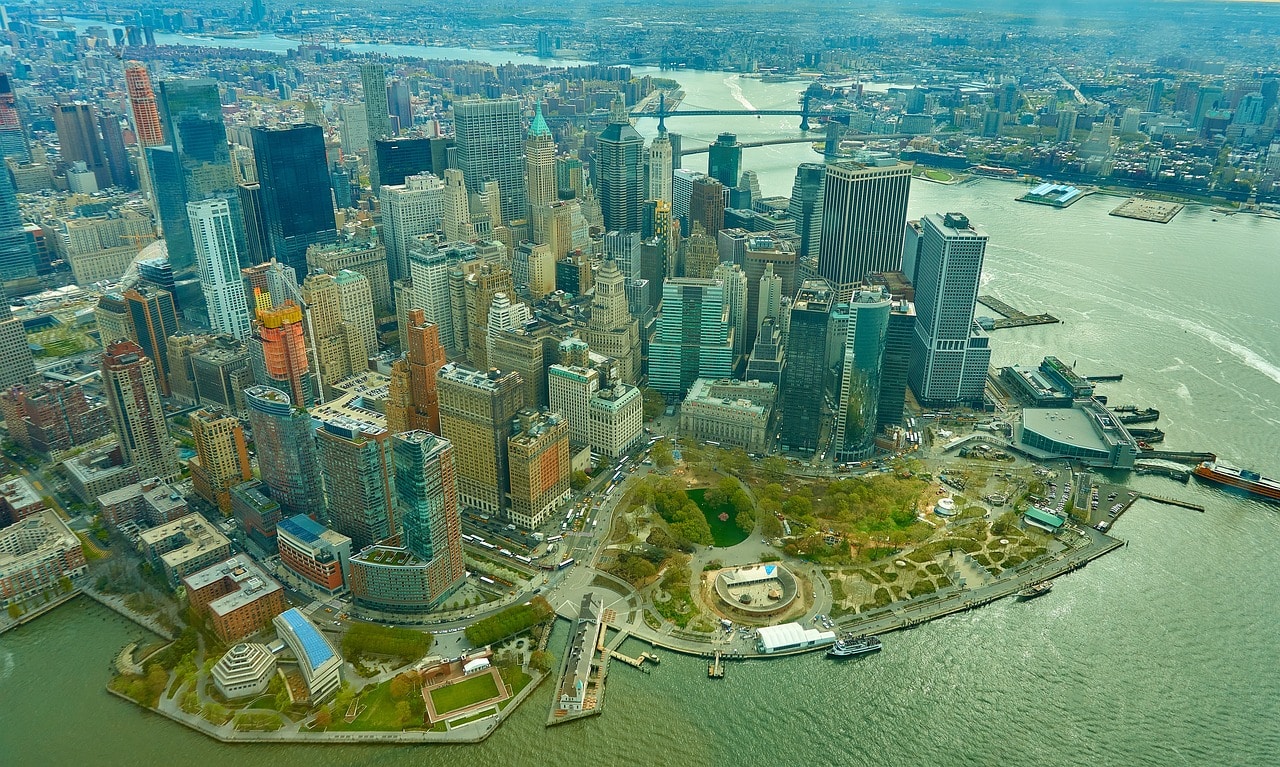
At the southern tip of Manhattan stands Battery Park, named after the artillery batteries that once protected the city. The park was created by filling in the land of the East River bay areas west of State Street, which wraps around the park from the east. The park serves as a small green lung at the edge of downtown, featuring monuments and historical fortifications.
On the eastern side of the park are ferry terminals where ferries depart towards the bay islands (Governor's Island, Ellis Island, and Liberty Island) – the Staten Island Ferry terminal. Therefore, it is bustling with tourists throughout the morning and afternoon hours. Visitors come to enjoy one of New York's unique attractions that is still free of charge.
Click here for a cruise to the Freedom Tower and along the Hudson…
Castle Clinton National Monument
Originally, Fort Clinton was built on a small island connected to the shore by shallow waters. With the filling of Battery Park, the island merged with Manhattan, and today the fort is part of the park. The fort was built at the beginning of the 19th century and had a battery of cannons to protect Manhattan. By 1824, the fort was already out of use and became a popular theater. Later, it served for a while as a reception center for immigrants arriving in the USA from Europe, before the process moved to nearby Ellis Island. The fort and theater building also served as the city's aquarium before it was finally placed in Coney Island in 1953.
Click here for transfers from Manhattan to New York's airports…
Museum of Jewish Heritage – A Living Memorial to the Holocaust
The Museum of Jewish Heritage is located at the northern tip of Battery Park. The museum opened in 1997 as a complement to the monument placed there to commemorate the Holocaust of European Jews. While it isn't one of the largest and official Holocaust museums in the USA, it has been gaining momentum and developing over the years. The site offers educational activities, film screenings, and more, and also serves as a public meeting place for the Jewish community of Lower Manhattan.
Click here for a guided tour of all the important sites in Downtown Manhattan…
Bowling Green Park and the Charging Bull Statue
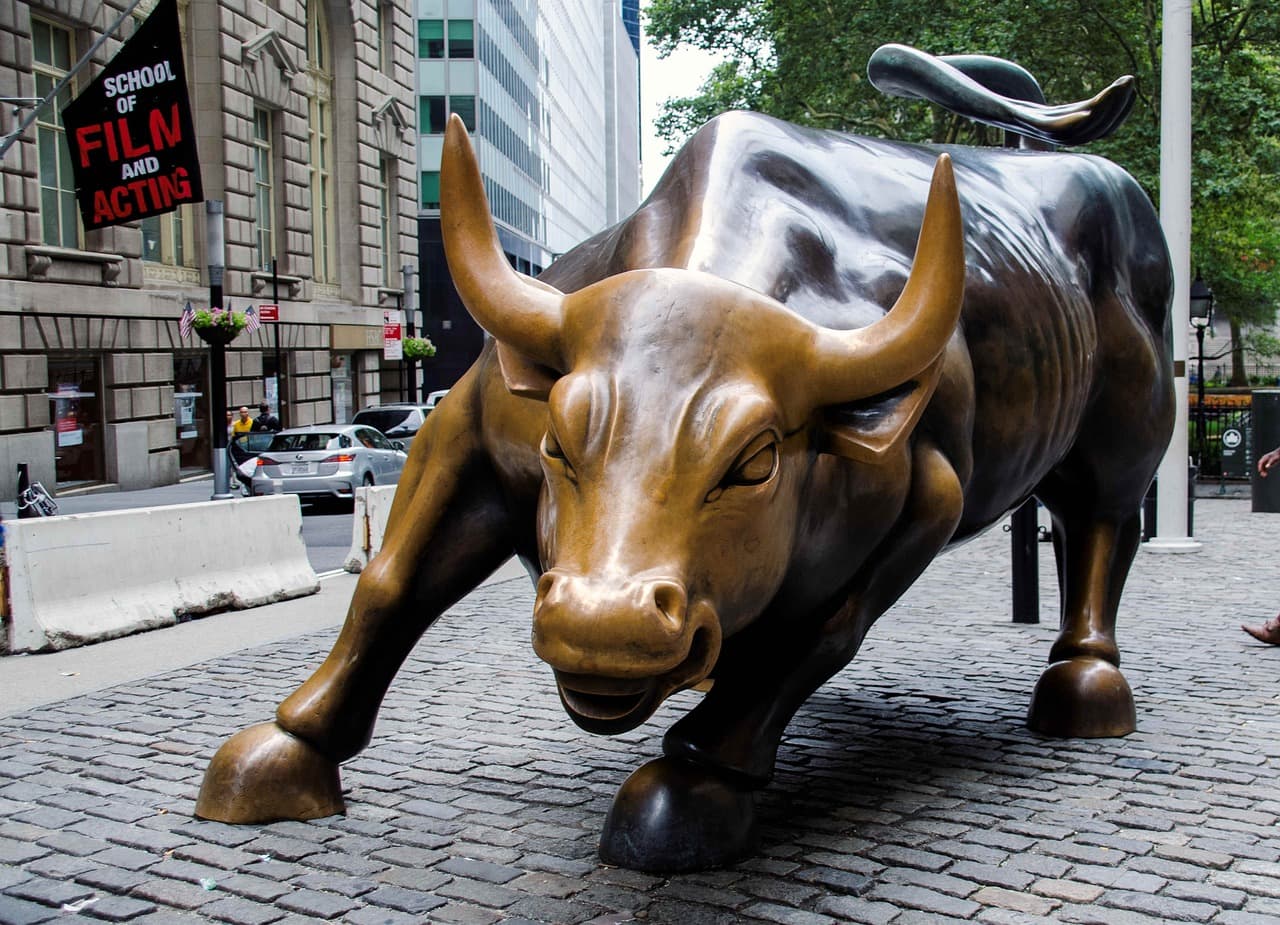
The famous Charging Bull sculpture was designed in downtown under the cover of night during the winter of 1989. The sculpture, crafted by Arturo Di Modica, quickly became a favorite among the New York audience. Therefore, even after the police removed it, it was decided to return it to its original location at the southern tip of Broadway in Bowling Green. The massive sculpture is entirely made of bronze and weighs more than three tons.
The bull has become the modern symbol of the Financial District, and the trend of bull sculptures has spread to other cities. Today, the statue symbolizes Bowling Green Park, Manhattan's first park. The park today is a triangular-shaped square that marks the southern end of Broadway.
For a guided tour of famous filming locations in Manhattan, click here…
New York Vietnam Veterans Memorial Plaza Square
Just east of Battery Park and the Staten Island ferry terminal, lies the Vietnam Veterans Memorial. It is located in a narrow plaza between skyscrapers that opens up to the East River. The memorial is made up of a milky green glass wall inscribed with quotes from speeches and writings from the war era. Nearby is the Fraunces Tavern Museum, a charming historical museum that tells the story of New York's role in the independence of the USA.