Brooklyn and Queens
Even though New York at its core is the island of Manhattan, the boroughs of Brooklyn and Queens, the city's important residential boroughs, are also worthwhile places to visit. These two large boroughs are home to about five and a half million of New York's residents.
- Brooklyn is the most populous borough of New York City, with almost three million residents
- Even though when you think of New York, you picture the skyscraper-filled Manhattan, with its museums and world-class offerings, Brooklyn also has plenty to do.
- Just like New Amsterdam in southern Manhattan and Harlem in the north, as well as Flatbush and Bushwick (in southern Brooklyn), Brooklyn also grew from a Dutch settlement. It is named after the city of Breukelen, north of Utrecht.
- The character of Brooklyn is fundamentally different from Manhattan's, relying more on residential neighborhoods, some with distinct ethnic characteristics.
- Historically, the immigrant population living in Manhattan's Lower East Side moved to Brooklyn for better housing.
- Borough Park is the largest concentration of Orthodox Jews.
- Nearby, Bensonhurst and Bay Ridge are home to many Italians.
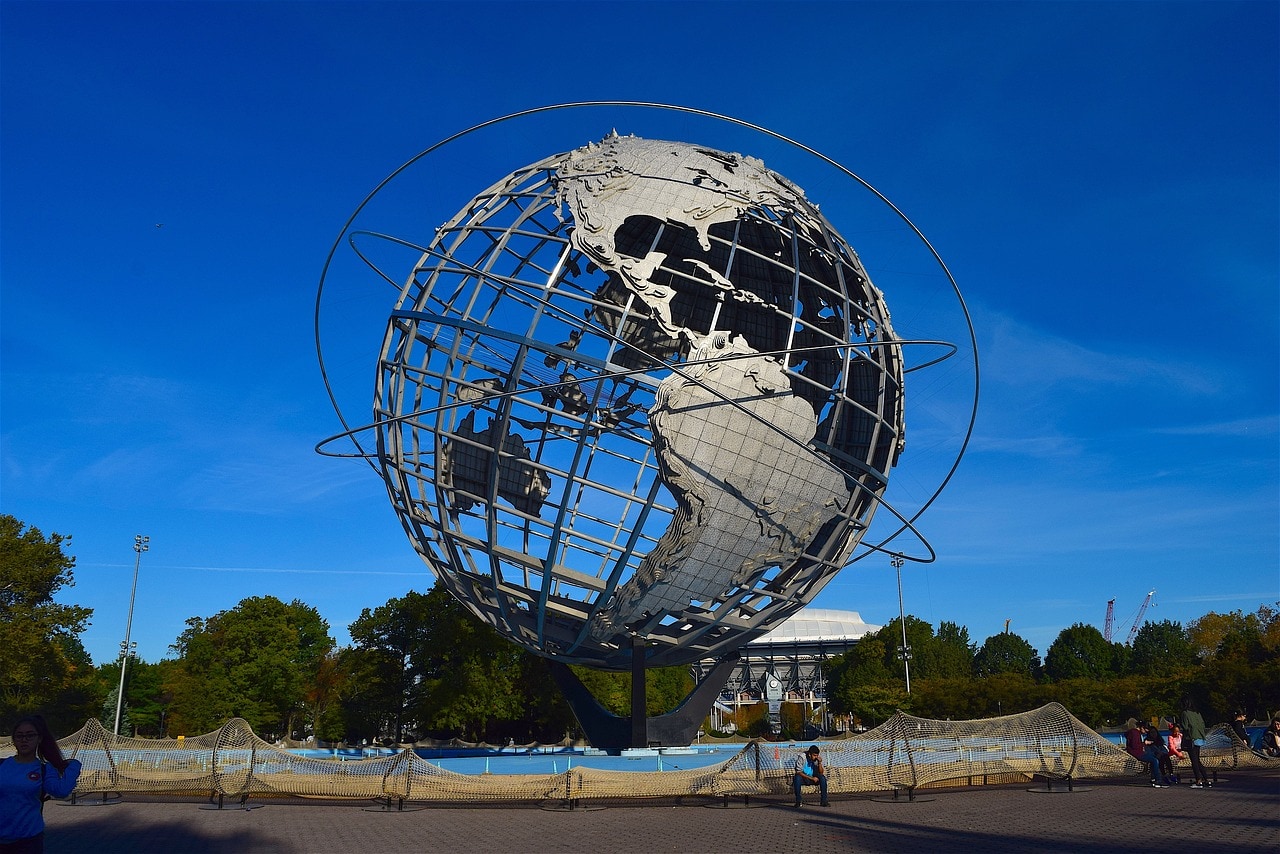
North of Brooklyn, the borough of Queens is a somewhat drab residential area, with parts undergoing gentrification. About two and a half million people live in the borough. To the east of the borough lies Flushing Meadows Corona Park, where the famous Unisphere from the 1964 World's Fair stands. The park is the location of the US Open Grand Slam tournament and also the home field of the New York Mets baseball team.
Click here for all the information about traveling in New York City…
Click here for a comprehensive tour of all the outer boroughs of New York City…
How to Get to Brooklyn?
Almost all the subway lines passing through Midtown and Downtown Manhattan reach Brooklyn heading southeast. The red (2,3), green (4,5), orange (B), and yellow (Q) lines reach Grand Army Plaza and Prospect Park from Manhattan. The other branches of these lines go to different neighborhoods and areas in Brooklyn, so pay attention to which train you board on the line.
For a guided bicycle tour on the Brooklyn and Manhattan Bridges, click here…
8 Must-See and Do Things in Brooklyn and Queens
- Art and Archaeology at the Brooklyn Museum
- The original Luna Park and a bit of beach fun at Coney Island
- An interactive experience for kids at the Brooklyn Children’s Museum
- A Mets game at Citi Field
- The Unisphere in Flushing Meadows
- Fresh air and landscape gardening at Prospect Park
- The spectacular rose garden and cherry blossoms at the Chinese Garden in the Brooklyn Botanic Garden
- The beautiful homes of Park Slope neighborhood
Click here to check availability and prices at Brooklyn hotels…
Click here to buy online tickets for Luna Park on Coney Island…
Tour in Brooklyn
Most of your visit to Brooklyn will focus on downtown (which isn't all that interesting) and the more intriguing area of Prospect Park. Both areas are connected by Brooklyn's main thoroughfare – Flatbush Avenue, which is also where you'll find the Barclays Center, home court of the Brooklyn Nets from the NBA.
In the charming park designed by Central Park planners Frederick Law Olmsted and Calvert Vaux, there are several intriguing points of interest. Next to the park is the Brooklyn Museum, accessible from Grand Army Plaza, and the botanic gardens. East of the park is the residential neighborhood of Park Slope, considered one of the most elegant in the entire city.
Click here for a guided bike tour in Brooklyn…
Click here to rent bikes for a tour in Manhattan and Brooklyn…
In the southern part of Brooklyn, there's another spot that is definitely worth visiting if you have time in New York. Coney Island is a much-loved entertainment venue for all New Yorkers. Next to the wide, famous sandy beach, you'll find a boardwalk with vintage-style amusement rides, including the birthplace of the term ‘amusement park.'
Click here for a bike tour on the Brooklyn Bridge and the district…
Map of Brooklyn and Queens
Downtown Brooklyn
Grand Army Plaza
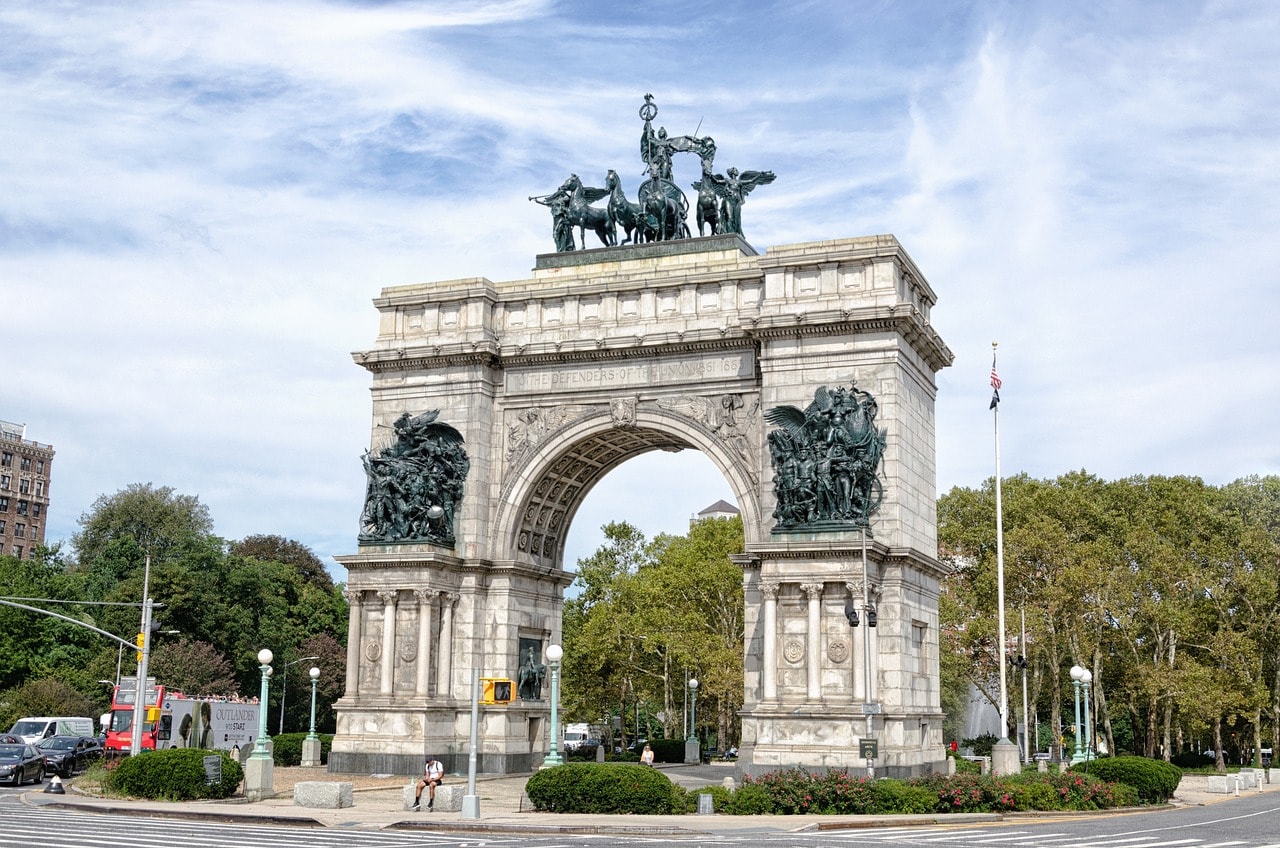
The impressive plaza was originally designed as the official entrance gate of Prospect Park. It was designed together with the park by Olmsted and Vaux. The plaza was built in 1870. The giant Soldiers and Sailors Memorial Arch, an impressive triumphal arch leading to the park's paths, was placed in the plaza in 1892.
Click here for an in-depth tour following the culinary delights and history of Brooklyn…
Brooklyn Museum
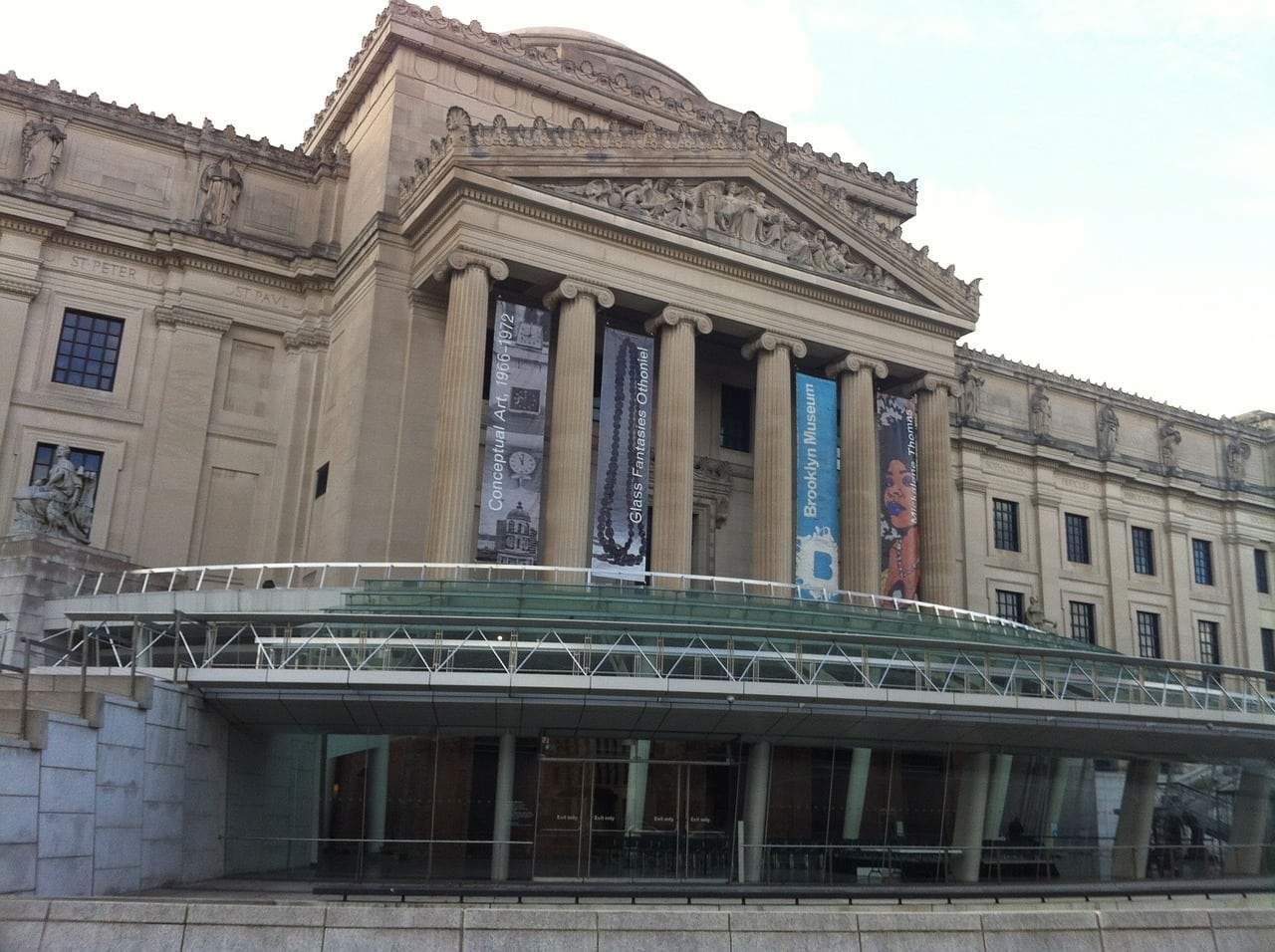
The Brooklyn Museum is one of the largest and most impressive in all of New York. It is much less popular and crowded than Manhattan's masterpiece museums, headed by the Metropolitan, yet it offers a very impressive collection of archaeological, ethnographic items, and important artworks. The museum is located in the northern part of the Botanical Garden not far from the Grand Army Plaza. The entrance to the huge neoclassical building is from Eastern Parkway.
The museum has a large collection of American art, including paintings by Winslow Homer, Georgia O'Keeffe, Mary Cassatt, and George Bellows. In classical European art, there's representation of the great Impressionists, including Gustav Caillebotte, Alfred Sisley, Gustave Courbet, Edgar Degas, Toulouse-Lautrec, and more. The collection includes the famous painting by Claude Monet, ‘Palazzo da Mula, Venice'. The archaeological collection features intriguing items from ancient Egypt, Greece, Rome, and Byzantine culture.
Address: Eastern Pkwy. 200, Brooklyn, NY
Click here for all information on museum hours and ticket purchase…
Prospect Park
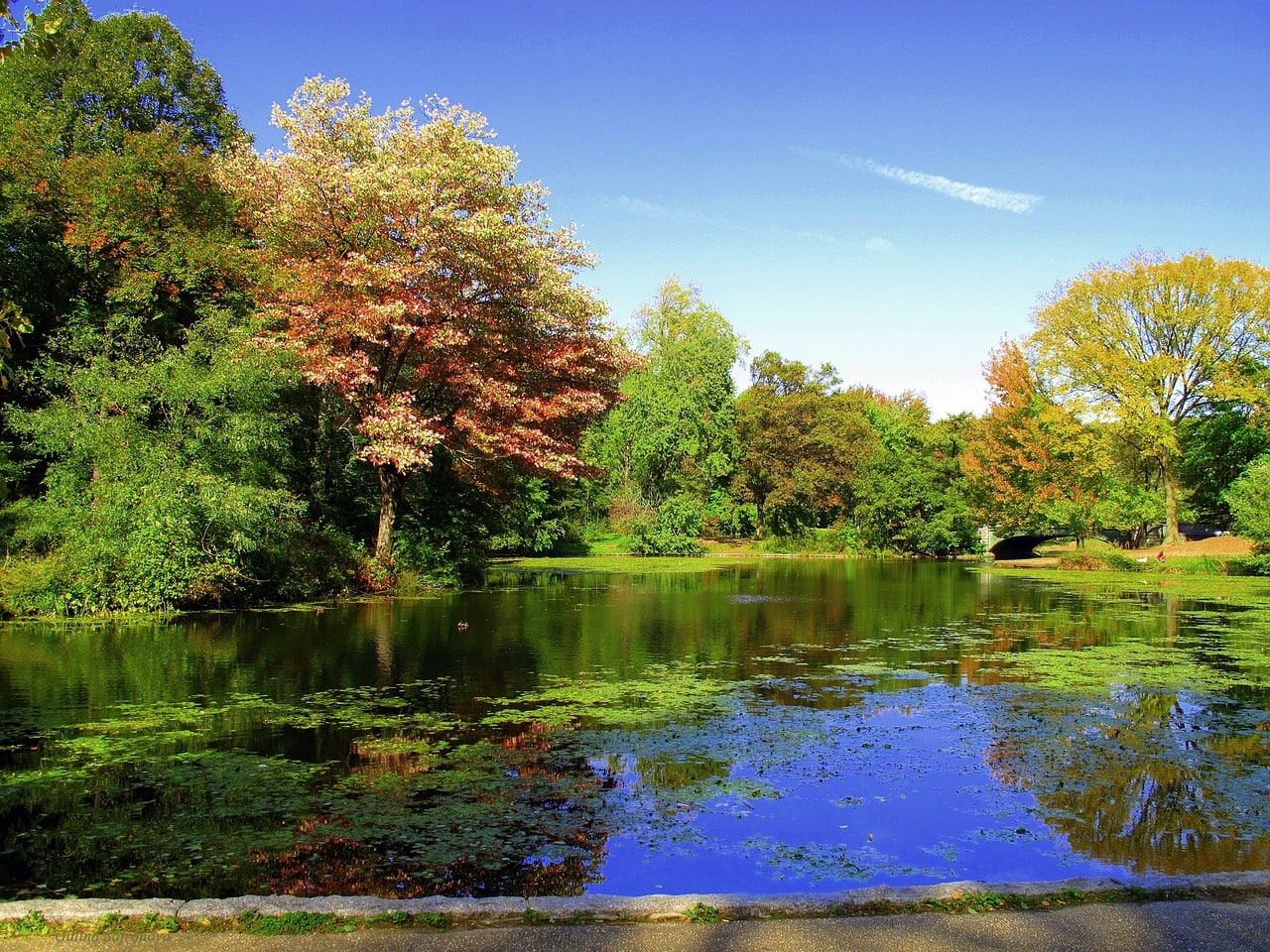
Brooklyn's massive city park is the next project of landscape architects Olmsted and Vaux after completing their work on Central Park in Uptown Manhattan. The park was built in the 1860s on a swampy area that became a complete experience of landscape and gardening design. The walk in the park is reminiscent in many ways of the walk in Central Park, just without the skyscraper views alongside the park.
Click here for a guided tour of Prospect Park's charming spots…
Prospect Park's lake spans the entire southern part of the park and offers a wealth of sports activities and the option to rent boats for sailing. This park also has many cute stone and wooden bridges, expanses of grass and forests side by side, statues, and monuments.
Click here for Brooklyn's complete pizza tour…
Brooklyn Botanic Garden
The Brooklyn Botanical Garden is one of the most beautiful gardens in North America. It spans only about 200 acres, but it boasts an especially stunning collection of plants from all over the world, along with exceptional landscape design and gardening. The most beautiful part of the garden is the Cranford Rose Garden, located just south behind the Brooklyn Museum. Adjacent to the Rose Garden is the Japanese Hill-and-Pond Garden, where every spring features a breathtaking cherry blossom, true to Japanese tradition. The garden also hosts several dedicated smaller gardens, with the favorite being the fragrant Herb Garden.
Click here for the full tour following the history, food, and culture of Brooklyn…
Park Slope and Prospect Heights
The two residential neighborhoods adjacent to Prospect Park are lovely places for a pleasant stroll. Park Slope, or the slopes of the park, has undergone gentrification and transformed into an upscale residential area. The district stretches westward from the park, featuring a grid of streets and avenues typical of New York's urban planning character. The neighborhood houses were built at the end of the 19th century, inspired by Victorian architecture. Similarly, the streets of Prospect Heights north of the park are also great for a short and pleasant walk. You can stroll near the Grand Army Plaza, where there are nice homes and plenty of places to eat.
Click here for a tasty food tour at a selection of unique Brooklyn restaurants…
Brooklyn Children's Museum
The Brooklyn Children's Museum is one of the first established specifically for children and had a tremendous impact on shaping the concept. It was founded in 1899 in the northern part of the Crown Heights neighborhood and underwent a comprehensive renovation in 1976 which expanded its area. The museum has a ton of activities and exhibitions for kids with interactive displays that require children to play and touch them. It's a fantastic solution for keeping kids entertained while in New York, especially on a rainy day.
Address: 145 Brooklyn Ave, Brooklyn, NY
Click here for all the information on museum opening hours and ticket purchases…
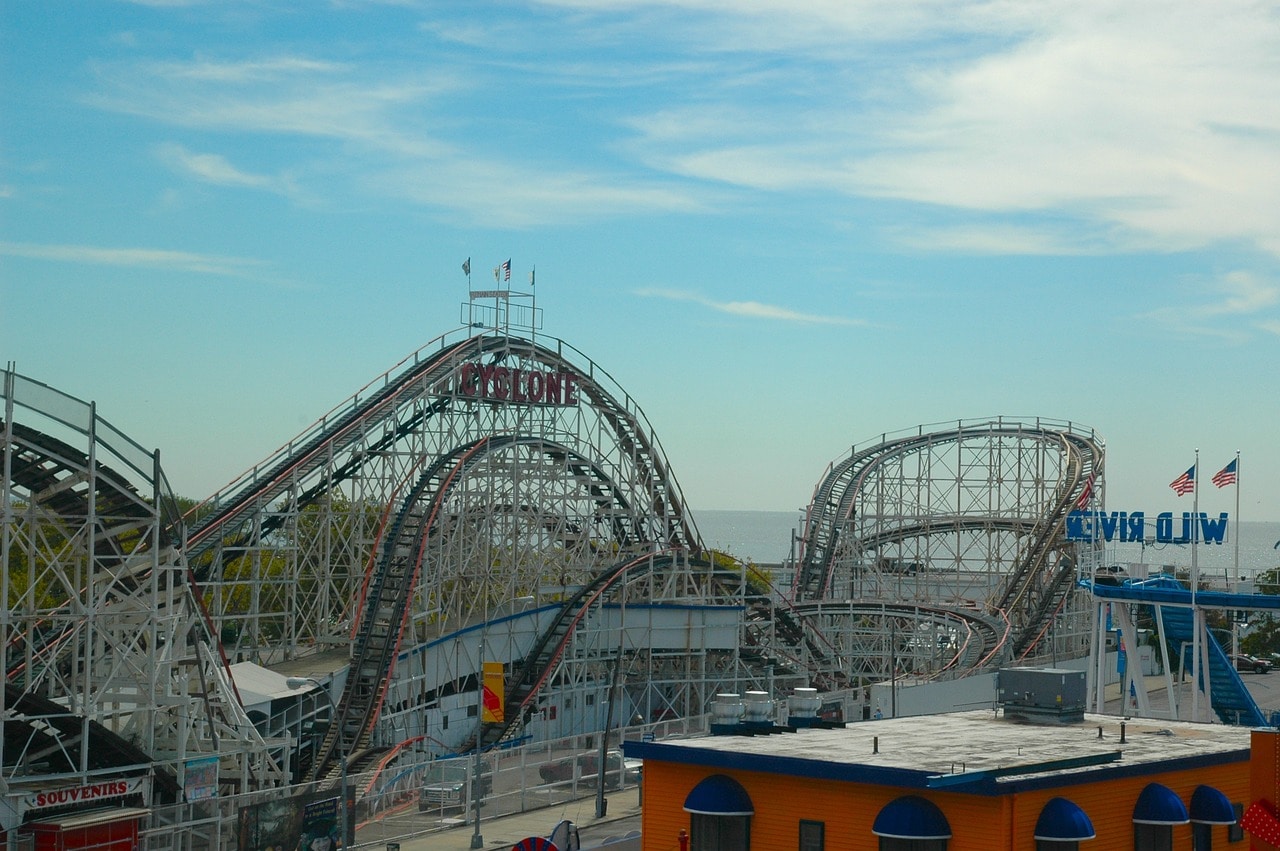
Coney Island
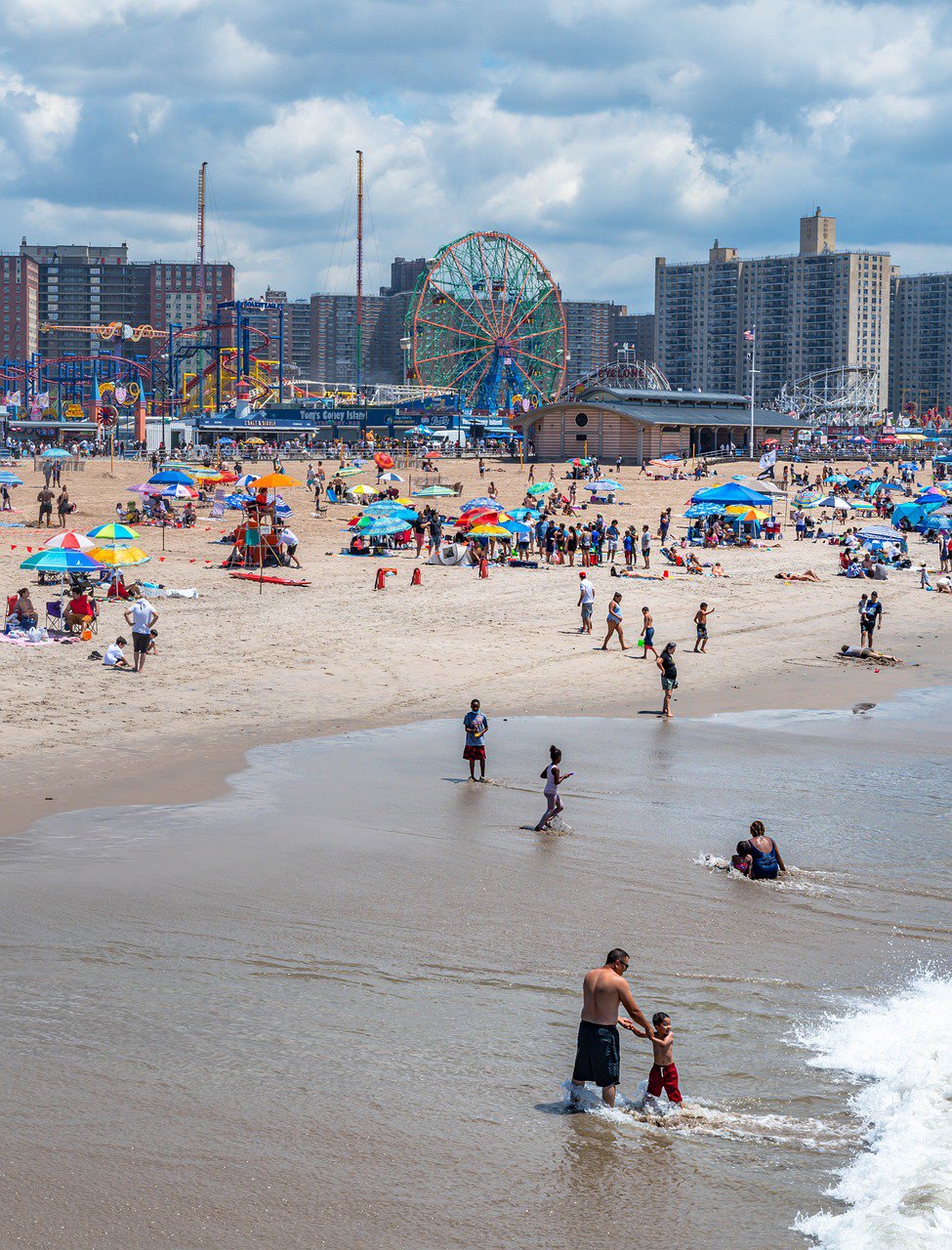
Coney Island's beach became part of New York City's lifestyle with the neighborhood's development at the end of the 19th century. The long, wide sandy beach turned into a leisure spot for New Yorkers at the beginning of the 20th century, when neighborhood houses were built along the shore. Alongside the neighborhood construction, a long promenade was also built, where entrepreneurs recognized its tourist potential and built attractions and facilities.
In 1903, three amusement parks opened on the promenade – Luna Park, Steeplechase Park, and Dreamland. This cluster of amusement parks was once the biggest and most popular in the entire world, attracting a massive number of New Yorkers daily, especially on weekends. Luna Park became a generic name for amusement parks.
Click here to purchase entry tickets to Coney Island's Luna Park…
During the rapid development of the beach, Nathan Handwerker, a Jewish immigrant from Galicia, opened his legendary hot dog restaurant called Nathan's. He sold hot dogs there for a dollar. Today, the hot dog chain is one of the largest in the USA and is considered one of the foundational institutions of American fast-food culture.
Coney Island Today
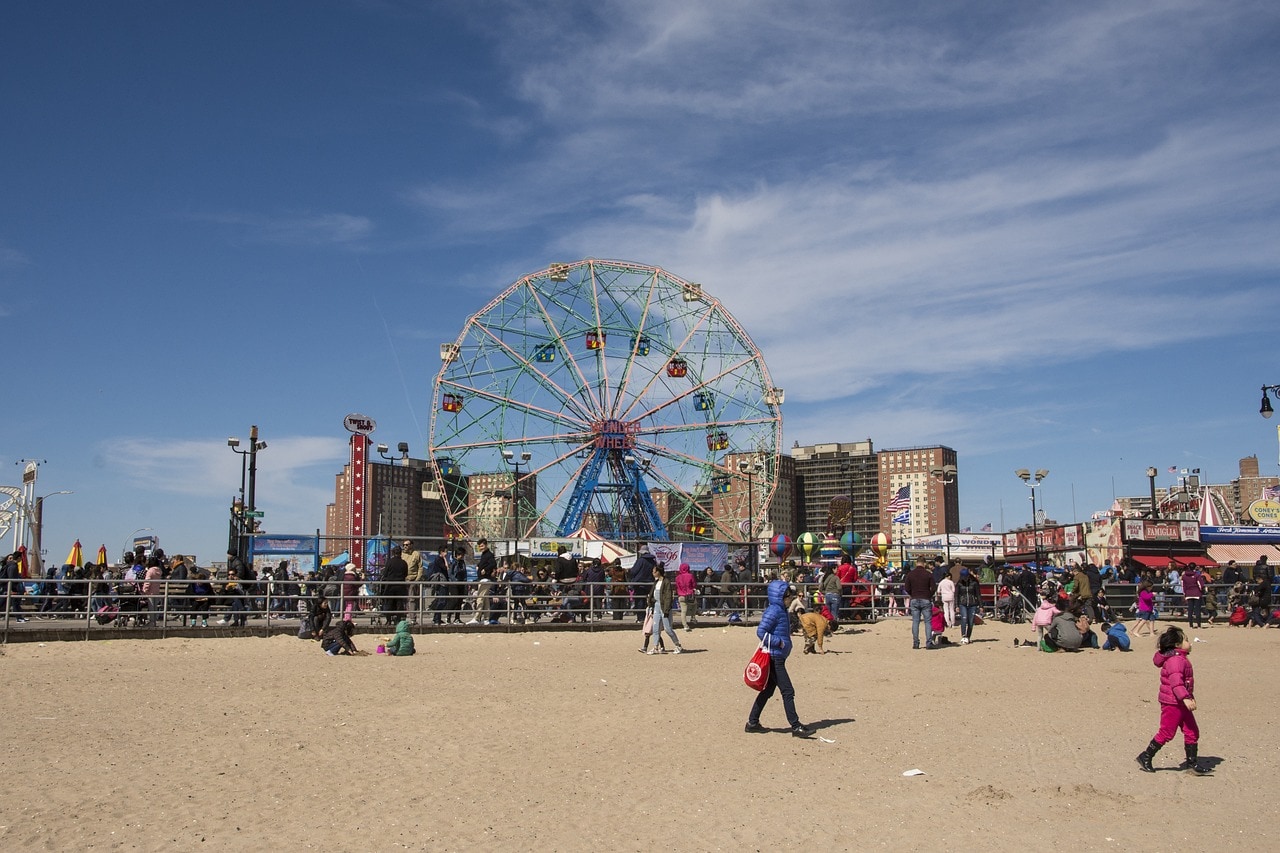
Coney Island's amusement park underwent renovation and renewal in 2010 and today is once again a modern attraction with a particularly fun vintage feel. Several well-known rides are still active in the park, such as Deno's Wonder Wheel Amusement Park and the famous roller coaster – the Cyclone.
The beach is packed with people on hot summer days and the boardwalk is full of cool beach attractions that blend old New York with today's New York. Next to the amusement park operates the New York Aquarium. The aquarium opened in 1896 in Battery Park in downtown Manhattan and moved to the shores of Coney Island in 1956.
How to get to Coney Island?
You can get to Coney Island from Manhattan to the Coney Island-Stillwell Av and W 8 St-NY Aquarium stations via the orange (D,F) and yellow (N,Q) subway lines.
Queens
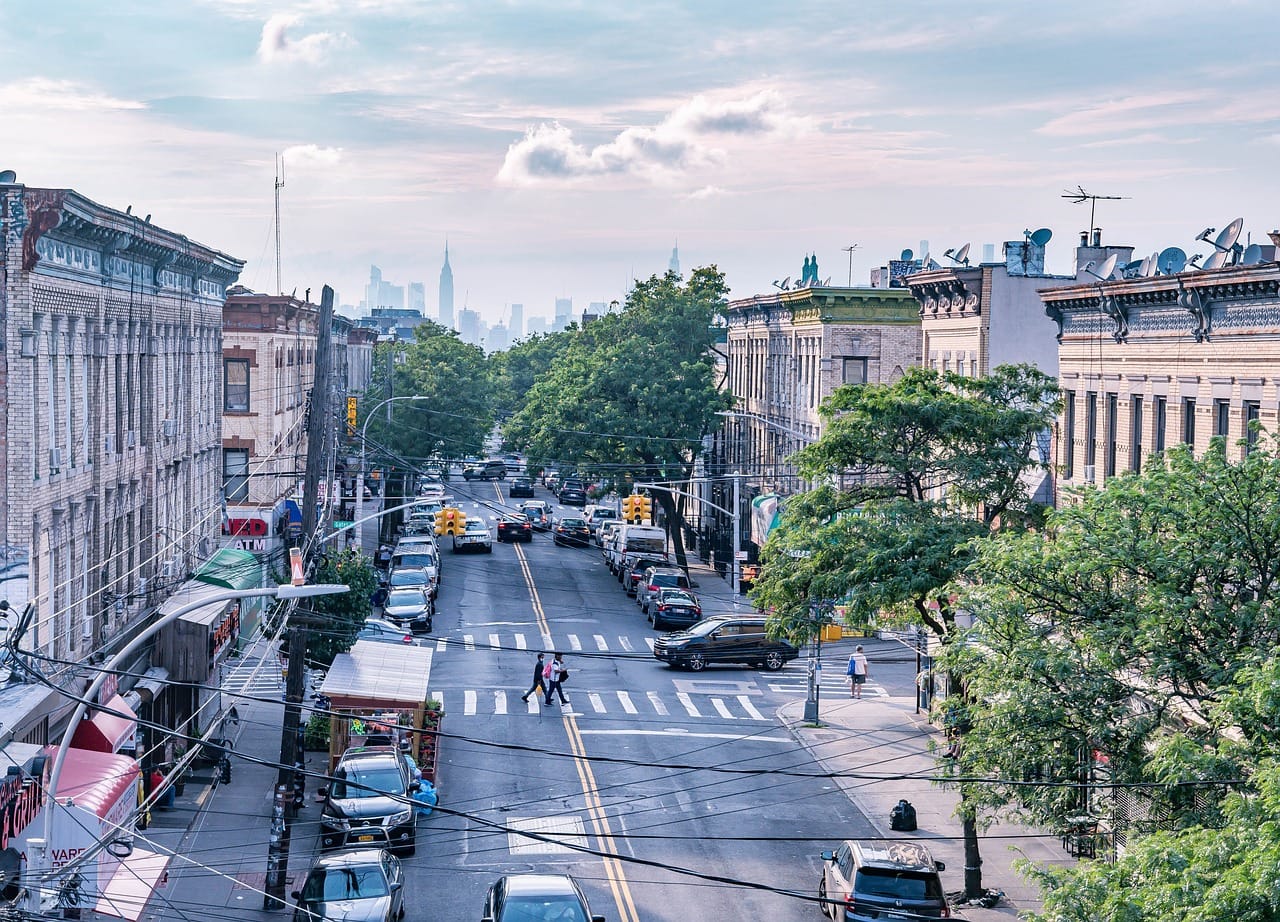
Queens is the largest borough in terms of area among the five boroughs of New York and the second most populated after Brooklyn. Like its southern sibling, Queens is a massive residential borough mainly connected to Manhattan as a primary commercial center. The Williamsburg neighborhood adjacent to Manhattan is the most commercial area of the borough.
Williamsburg also hosts a large number of hotels due to its convenient proximity to Manhattan, both geographically and via subway. Coming down from the Williamsburg Bridge that connects the borough to Manhattan, there's a row of excellent restaurants, led by the famous Peter Luger Steak House. Within the boundaries of Queens are two airports, with LaGuardia to the north not too far from Manhattan and New York's main airport named after President John F. Kennedy.
Flushing Meadows Corona Park
The large and important park is located north of the central Jamaica neighborhood of Queens. The park was established in honor of the New York World's Fair held in 1939. In 1946, the main building of the fair was the seat of the United Nations in its early days. The UN was based in Flushing Meadows until the official opening of the UN building in the eastern part of Midtown in Manhattan.
In preparation for the 1964 World's Fair, the main building was renovated again, and a scaled model of New York City, which still exists, was placed there. Today, the building itself houses the Queens Museum of Art.
A tour of Flushing Meadows Park
Opposite the museum, the Unisphere structure was built for the 1964 fair. The Unisphere is a round model of a globe on a metal frame, situated in the center of a pool and fountains that conceal its base. Surrounding the globe are several metal hoops symbolizing an orbit in space, constructed during the preparations for the Americans' journey to space. At the feet of the Unisphere, the dramatic ending scene of the movie “Men in Black” was filmed, bringing this vintage exhibit from the sixties back into the consciousness of popular culture.
Opposite the Unisphere is the circular Fountain of the Planets. In the southern part of the park, you'll find the New York State Pavilion, topped by two prominent observation towers. In the northern part of the park are the tennis courts where the US Open Grand Slam is held, and nearby is Citi Field, the home stadium of the New York Mets.
US Open Tennis Championships
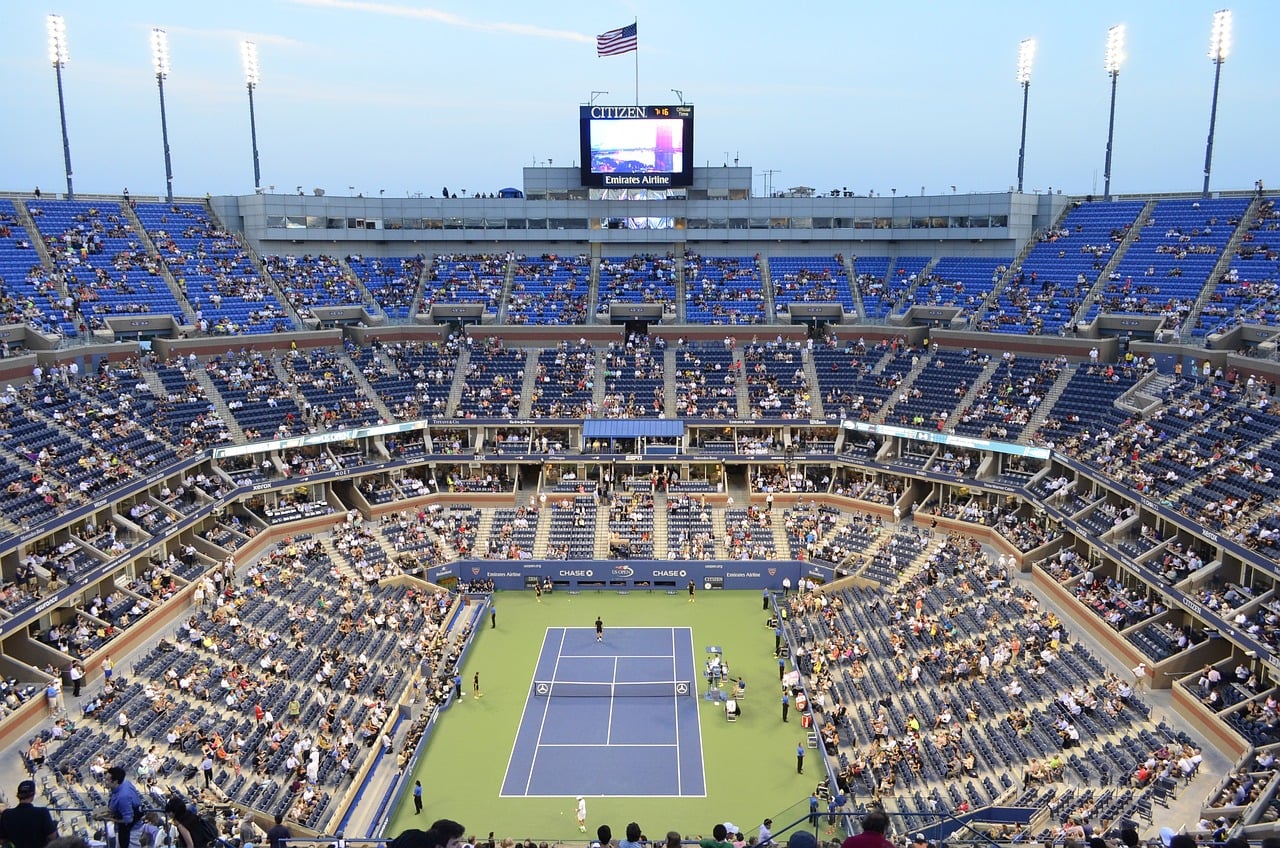
The US Open is one of the four Grand Slam tennis tournaments, alongside Wimbledon, the Roland Garros, and the Australian Open. The tournament takes place every year starting in late August (the last Monday of the month) and the finals are in mid-September. The competition has been held at this location since 1978, originally beginning in the city of Newport, Rhode Island in 1881.
The tournament is held at the luxurious tennis complex in North Flushing Meadows, Queens, at the Billie Jean King National Tennis Center, Arthur Ashe Stadium, and Louis Armstrong Stadium. The finals are held at Arthur Ashe Stadium, the largest tennis stadium in the world with a seating capacity of 22,000. This tournament is the last of the Grand Slam series and attracts all the tennis stars.
Citi Field Stadium
North of Flushing Meadows lies Citi Field, the home stadium of New York City's second baseball legend, the New York Mets. The team was established in 1962 after the Dodgers and Giants moved to Los Angeles and San Francisco (respectively) in 1957.
After a few terrible years, in 1969, they won the World Series and since then have been nicknamed The Amazin's. They won the World Series again in 1986 in what is known as the sixth game miracle, where the Boston Red Sox were just one out away from winning the championship. The sixth game is still a part of the team's fan mythology and is mentioned in the series Seinfeld. The team played at the famous Shea Stadium in Queens and in 2009 moved to Citi Field in Flushing Meadows. The stadium holds 42,000 seats, and it's usually easy to get tickets (except for the playoffs).
How to get to Queens?
There are several subway lines connecting Manhattan with Queens. The purple line (7) connects Times Square in Midtown with Flushing Meadows. The orange line (E), the blue line (E), and the yellow line (R) cross the borough from west to east towards Kennedy Airport.