Travel Itinerary – Two Days Between Chicago's Skyscrapers
Where are we traveling? In the Windy City, Chicago.
What's the itinerary? Daily routes in the city's center.
When is it best to visit? The best season to visit Chicago is late spring, from May to July. During these months, there are long sunny hours, and the weather is mostly comfortable, though it can be quite rainy. June is the rainiest month in the city, so it's wise to have a sturdy umbrella. Chicago's winter isn't simple at all, with temperatures below zero from December to February. These months are snowy, and the city is usually covered in white. Summer can be hot and humid and also quite rainy.
Who is the trip suitable for? An urban trip suitable for everyone.
What kind of transportation will we use? Walking and a bit on the L system (the M of Chicago).
What's the level of intensity? An intense tour between sites and attractions in a small area. Can be spread over an additional day.
Trip itinerary information
Where to stay?
Staying in Chicago is a particularly fun urban experience under the shadow of mighty skyscrapers and bustling streets of shopping, restaurants, and entertainment venues. In Chicago's Loop and the Magnificent Mile, there are plenty of hotel institutions located in the city's historic skyscrapers. West of the Magnificent Mile, on the Michigan Avenue near North Side, there are great urban hotels at more modest prices in the elegant River North district.
Click here for a list of 12 experiential hotels in the skyscrapers of Chicago…
Expert Tips for Travelers in Chicago
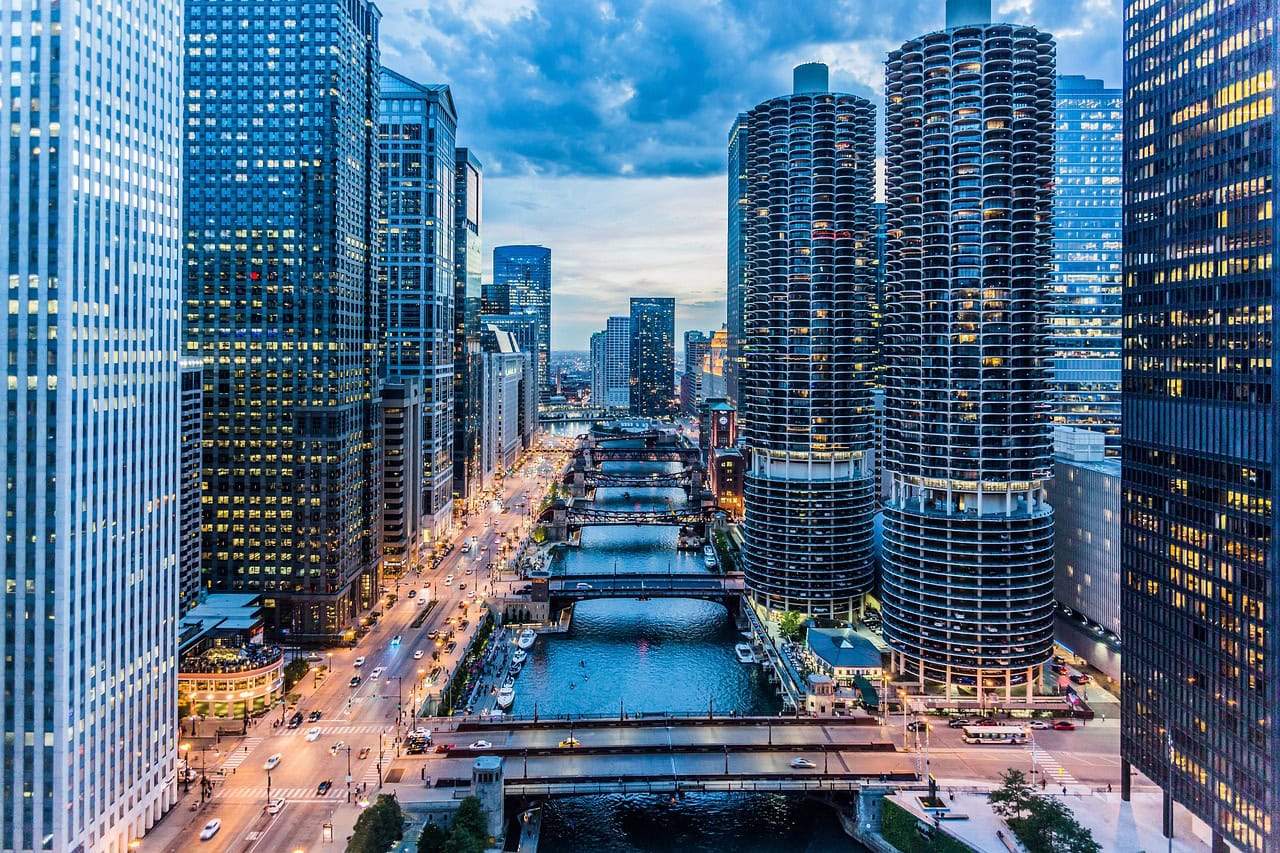
- Chicago's nickname is the Second City, often compared directly to New York City. But Chicago isn’t New York. Sure, Chicago stands tall in an impressive way, but its geographic size doesn’t match Manhattan, nor does its intensity. You can wrap up the city in just two or three days (New York takes a week or more).
- Getting around Chicago is mostly by foot, with little need to use the L system. The downtown area and the Magnificent Mile aren’t small, but they’re certainly walkable. Here and there, you might want to hop on the system or grab a cab to cut down on walking a little.
- A significant part of Chicago's main attractions come with an entry fee. There are several tourist passes on the market that are definitely worth buying to save on costs.
Click here to buy the Chicago C3 CityPASS, discounted rates for 3 top attractions in Chicago…
Click here for the Chicago CityPASS, five top attractions in Chicago at a discount…
What to do in the evening?
- Chicago is a vibrant cultural city with plenty to do in the evening. The entire area around Millennium Park, Navy Pier, and the Magnificent Mile is filled with restaurants and entertainment spots open late into the night. Near Michigan Avenue, there are also several theaters where you can catch a show (but it's definitely not Manhattan).
- Chicago is a very competitive and sporty city with quite a few professional sports teams. The White Sox and Cubs baseball games are also held in the afternoons, but Bulls games in the NBA, Bears in the NFL, and Blackhawks in hockey are mostly held in the evenings, making for a particularly fun tourist attraction (if you manage to get tickets). Most of the stadiums are close to downtown (Click here for all the information on Chicago's professional sports teams…)
Map of Chicago
Detailed Itinerary
Day 1: Millennium Park and Downtown Chicago
On the first day of our Chicago tour, we'll focus on the Chicago Loop, the downtown area rich with skyscrapers and points of interest. The loop was created by the elevated train tracks of the L system. We'll start our tour at the southern end of Michigan Avenue along Lake Michigan, where Millennium Park and the Art Institute of Chicago are located. From there, we'll head into the city center to visit the city's historic skyscrapers and modern ones, with the Willis Tower at the forefront.
Exploring Millennium Park
- We'll kick off our day in Chicago bursting with energy to tackle one of America's most intensive and rich museums. The Art Institute of Chicago is a phenomenal museum with numerous important masterpieces, including Edward Hopper's “Nighthawks,” Grant Wood's “American Gothic,” Georges Seurat's “A Sunday on La Grande Jatte,” Van Gogh's “Bedroom in Arles,” and Gustave Caillebotte's “Paris Street; Rainy Day,” among others.
- We'll leave the institute on Michigan Avenue and walk a bit north to the Chicago Cultural Center. The building was completed in 1897 and has since served as the main library of Chicago. It's worth entering the building just to see the Tiffany Dome from the inside, a stunning dome covered with blue glass tiles in casings, inspired by the construction of the Pantheon in Rome. The dome was built by Tiffany and is named after it.
- Then we'll head into Millennium Park, one of the symbols of modern Chicago. We'll reach the Crown Fountain, an interactive fountain combining video with water effects.
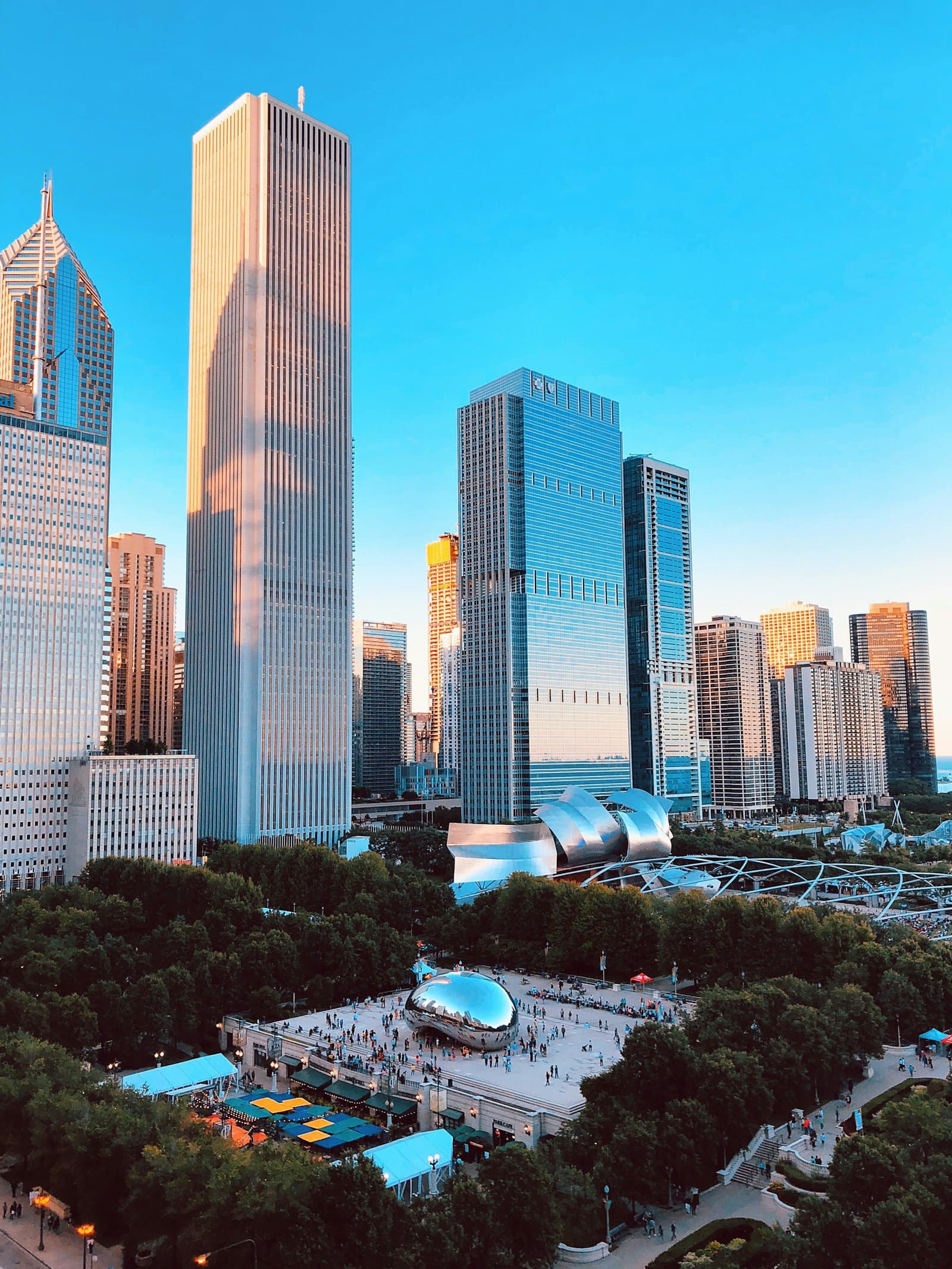
- We'll arrive at the plaza of the Cloud Gate, the shiny bean that's currently the city's number one selfie spot (photo with the reflection from the unique metal structure).
- From the Cloud Gate, we'll walk to the Jay Pritzker Pavilion, the amphitheater which is Frank Gehry's architectural masterpiece, seating 11,000 spectators.

A Stroll in Grant Park
- Millennium Park is the northern and modern section of Grant Park. We'll head to the older parts of the park and reach the famous Buckingham Fountain from 1927. This fountain is one of Chicago's veteran stars, gaining celebrity status with the debut of the timeless sitcom, Married with Children.
- We'll move south with the park to the shore of Lake Michigan, heading toward the Chicago Bears' football stadium – Soldier Field. We'll enter the Field Museum, the city's natural history museum, known for its famous dinosaur replicas.
- From the museum, we'll head to its neighbor, the Shedd Aquarium, home to more than 32,000 different marine animals.
- From the aquarium, we'll go to the Adler Planetarium, located next to the lake, a museum combining telescope exhibits with space displays.
Exploring Downtown Chicago
- From the planetarium, we’ll return to Michigan Avenue and head north to the Auditorium Theatre, one of the most impressive vintage theaters in Chicago.
- From the theater, we'll head to its neighbor, the Fine Arts Building, one of Chicago's oldest and most beautiful skyscrapers from the late 19th century.
- We'll continue a bit north on Michigan Avenue and turn inward into downtown on East Jackson Boulevard. We'll walk two blocks and reach the Monadnock Building, an old skyscraper standing 16 stories tall, built in 1891.
- We'll cross the road and enter the skyscraper compound of the Federal Center. We'll pass through the famous square of the three black towers from the seventies.
- We'll cross again to the north and reach the Marquette Building, a historical building constructed in 1895 that is still considered a model of the Chicago School.
- We'll head west on West Adams Street and arrive at the The Rookery Building from 1888. It's one of the most important historic skyscrapers in the USA and a key prototype for building American city downtowns.
- Continue on West Adams Street for two more blocks and you will reach the foot of the Willis Tower (formerly known as Sears Tower), Chicago's tallest building and a symbol of the city. The building's observation deck, the Skydeck, opened to the public in 1974 and has since become an attraction. It is located on the 103rd floor of the building and offers a stunning panoramic view of all of Chicago and Lake Michigan.

Day 2 Tour: The Magnificent Mile and Near North Side
We'll dedicate the second day in Chicago to the city's legendary stretch – the Magnificent Mile. This avenue, which starts from the Chicago River heading north, is considered one of the most prestigious in the USA, akin to Fifth Avenue in Manhattan. Along its length, you'll find historical sites and, of course, iconic skyscrapers. We'll begin by the Chicago River and explore sites in the northern part of The Loop, then head along Michigan Avenue connecting to the Near North Side, Oak Street East, the city's luxury shopping street, and the historic neighborhoods to the north – the Gold Coast and Old Town Triangle.
Exploring the Magnificent Mile

- We'll start the second day at Millennium Park and head north towards Macy's of Chicago.
- After comparing the giant dog store to its famous branch in Manhattan, we'll continue along North State Street to the famous Chicago Theatre from 1921.
- From the theater, we'll climb one block north to the Chicago River, where the Thirty Five E Wacker Building, or the Jewelers' Building, stands. It's a vintage skyscraper from the early 20th century that has appeared in numerous Hollywood films.
- We'll walk along the Chicago River on the Riverwalk (it's highly recommended to take a boat ride to see the stunning skyscrapers alongside it: Click here for a guided boat tour on the Chicago River with explanations about all the city's skyscrapers…) and we'll cross the river at DuSable Bridge. Michigan Avenue on the other side of the bridge is the official start of the Magnificent Mile. Once we cross the bridge, we'll see the The Wrigley Building from 1920, one of the city's most beautiful skyscrapers.
- We'll walk along the riverbank to the magnificent black Trump Tower, the king of the city's 80s skyscrapers.
- We'll head back east along the Riverwalk and arrive at the Tribune Tower, the neighbor of Wrigley, topped with flying buttresses characteristic of the Gothic cathedral architecture in Europe.
- Adjacent to the Tribune Tower is the equally impressive tower of the InterContinental Hotel, characterized by Moorish architectural elements.
- From the InterContinental, we'll cut towards the lake and reach Navy Pier. In 1995, the pier, once part of the city's port, opened as a pedestrian mall lined with shops, restaurants, hotels, and entertainment venues. The pier also features Chicago's popular Children's Museum, a small amusement park with the Centennial Wheel, the Navy Pier Auditorium, and a host of other attractions.
- From Navy Pier, we'll return to the Magnificent Mile and head north on Michigan Avenue. We'll arrive at the historic Water Tower, one of the few structures that survived the Great Chicago Fire of 1871.
- A block north of the tower, we'll climb to the observation deck of the iconic John Hancock Center, on the 94th floor of the city's second-tallest skyscraper.
- We'll descend from the John Hancock and head to the upscale shopping street – E Oak Street.
- From the street, we'll head toward Lake Michigan to Oak Street Beach, one of the city's most popular swimming beaches.
Tour in Near North Side
- We'll walk a little north and arrive at Astor Street, traditionally considered Chicago's most prestigious residential street. This street attracted all of the city's wealthy at the end of the 19th century and was a real status symbol. It is located two blocks from Lake Michigan in the heart of the luxurious Gold Coast district.
- We'll enter the Charnley-Persky House Museum, regarded as the house where the torch passed from the local skyscraper pioneer, the great architect Louis Sullivan, to Frank Lloyd Wright, the father of modern architecture.
- From the historical museum, head west one block and you'll reach the Original Playboy Mansion, the former residence of the city's own Hugh Hefner and the place where the Playboy Mansion concept originated before it became a major attraction in LA.
- We'll head back to Astor Street and continue north along it. You'll see magnificent mansions from the late 19th century along the way. At the end of Lincoln Park, you'll find the Chicago History Museum. You can also visit the Chicago Zoo and the Peggy Notebaert Nature Museum, or you might just want to wrap up your day wandering through the Old Town Triangle streets.