Downtown Boston – History in the shadow of the skyscrapers
Downtown Boston combines two prominent elements – giant modern buildings and a sprinkling of many historic structures directly tied to the history of the USA and the War of Independence. Beneath the towering skyscrapers of the American downtown lies the history of the USA in churches, customs buildings, governance structures, and more originally built by the British, preserved since the 18th century.
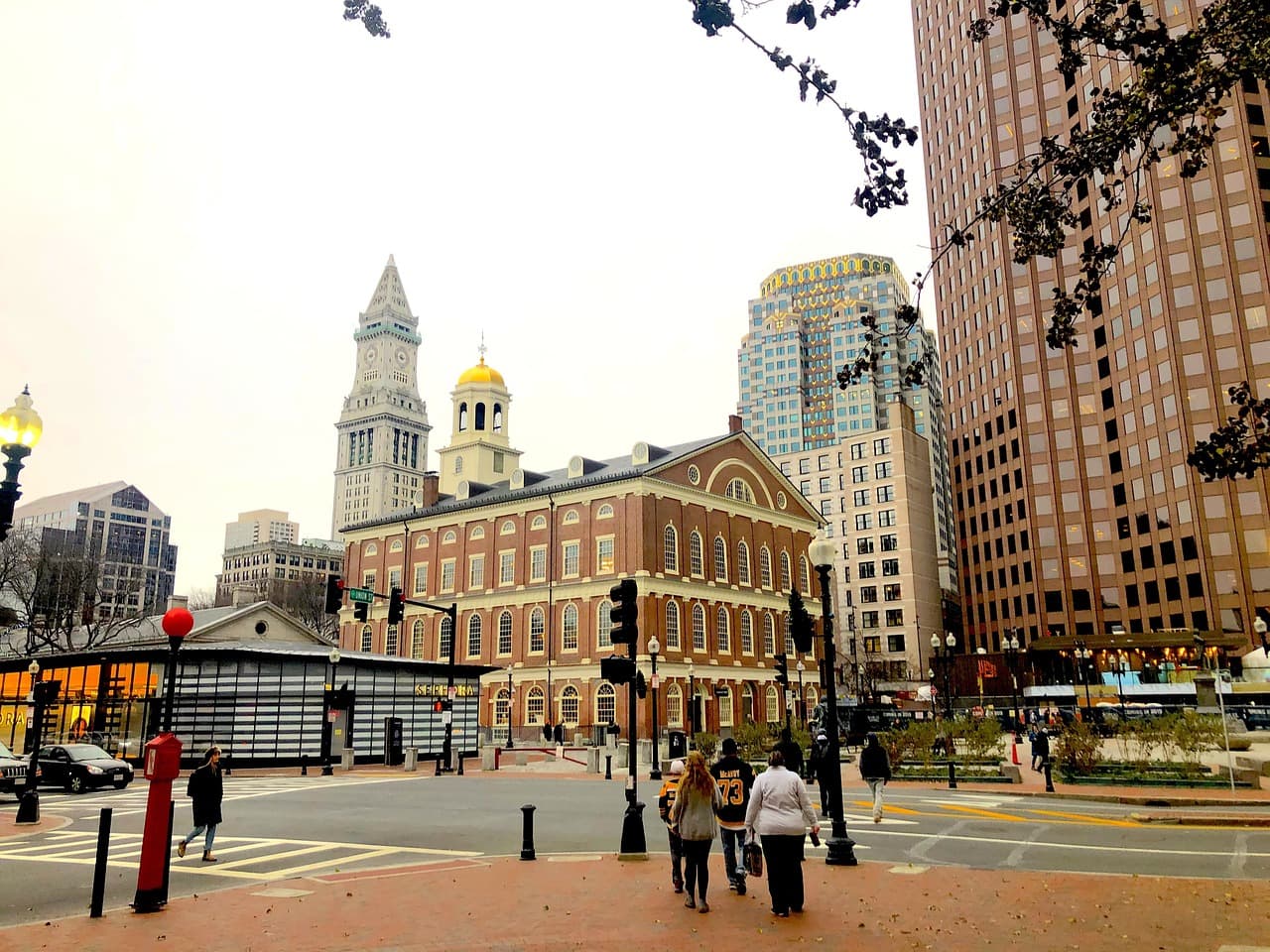
- In the ancient buildings, America's founding fathers operated and organized the American Revolution, which began with the Boston Tea Party and ended with the achievement of independence
- Downtown Boston boasts significant modern structures like the Governor's Center, the city's government hub, near Quincy Market, one of the most popular food markets in America
Click here to check availability and prices of hotels in Downtown Boston…
Click here for a list of 8 great hotels in central Boston…
8 Must-See and Do Things in Downtown Boston and the Waterfront
- Eat at Quincy Market (Faneuil Hall Marketplace)
- Sightseeing and leisure at the Marriott Hotel in the Custom House Tower
- American patriotism at the Old South Church
- Shopping at Downtown Crossing
- American history at the Old State House
- Relaxing at Post Office Square
- Fresh produce at Boston Public Market
- The rounded facade of the Grain Exchange
Click here for the complete guide to traveling in Boston…
Click here to purchase the Boston CityPASS online, all attractions in one ticket…
Click here to purchase the Go City Boston: Explorer Pass online…
Click here for a FREE!! guided tour of central Boston's main sites…
Map of Downtown Boston
Downtown Boston
Faneuil Hall
The impressive brick building is probably the most central point in all of Boston. The building overlooks its historic plaza, now Dock Square, with the city’s governmental and administrative complex, the Government Center, on its other side. Across from the impressive building, in the square, stands Samuel Adams Statue, one of the Founding Fathers of the USA and the main organizer of the Boston Tea Party.
Click here for a particularly tasty food tour of the culinary gems of downtown Boston…
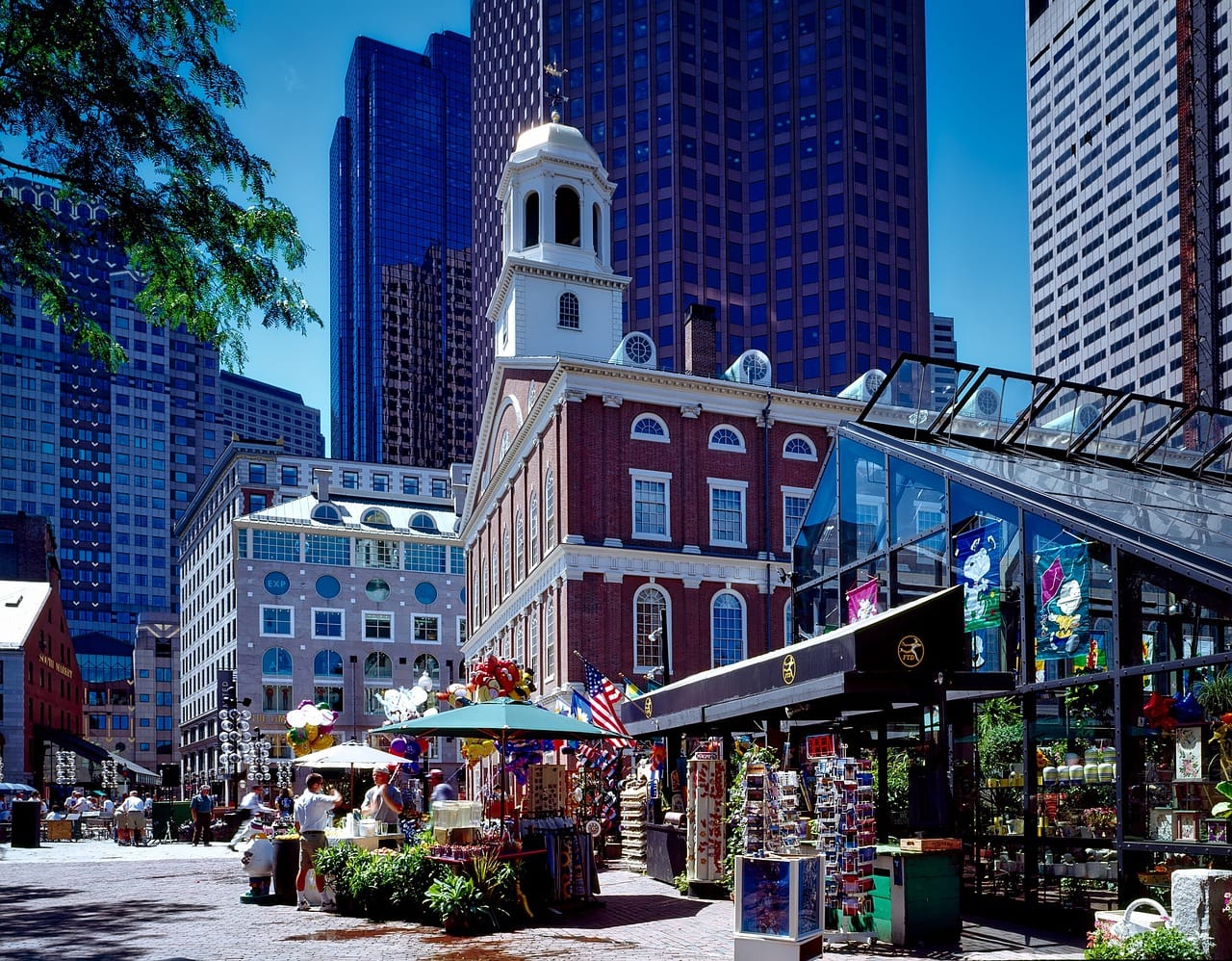
The square is located on Congress Street, the wide and central street of the downtown. The street cuts through the downtown from the North End to the museum that reenacts the tea party at the Fort Point Channel. The building was given to the city by the merchant Peter Faneuil in the mid-18th century and has mostly been used for commercial purposes since. Today, the structure serves as the gateway to Quincy Market (or Faneuil Hall Marketplace) right behind it.
Faneuil Hall Marketplace or Quincy Market
The immense market in downtown Boston is probably the city's number one attraction. Today's market sits on the large site where historically Boston's meat and fish market was held. The covered market building is considered one of the most impressive in the USA and one of the most popular municipal food markets in the world. The entrance is from Faneuil Hall, and it stretches over 165 meters of corridor filled with all the goodness of Boston. In the food market, excellent restaurants line up one after the other. On both sides of the market building, two additional promenades are bustling with restaurants and entertainment spots – North Market Street and South Market Street.
Click here for a special tour for seafood lovers at all the best seafood restaurants in Boston…
Government Center
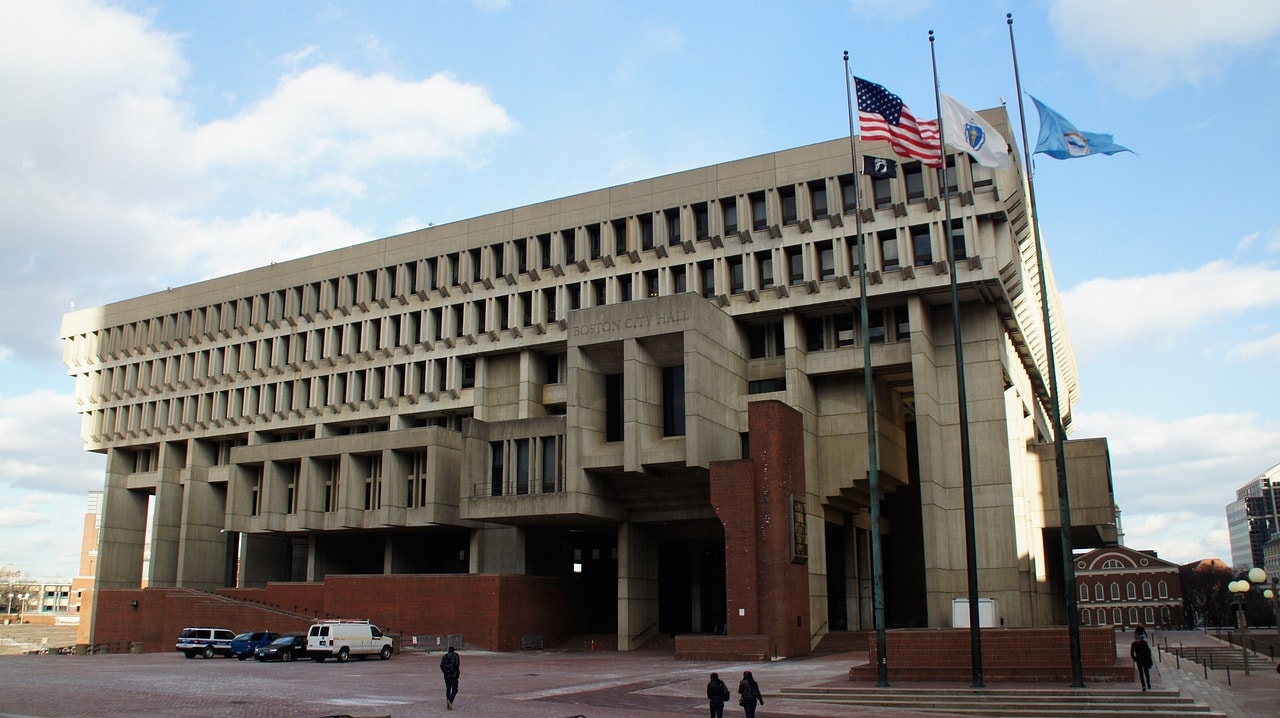
The governmental and administrative center of Boston is located opposite Faneuil Hall on the west side of Dock Square. The center was built in the 1960s as part of the downtown facelift.
Click here to purchase online tickets for the View Boston observation deck…
It was built on the ruins of Scollay Square, the square that was historically the center of Boston. The square was built a century earlier and was known as the city's former decadent entertainment spot. Some claim the square still somehow lives at the heart of the compound, surrounded by all the municipal government buildings. In the center, Boston City Hall and buildings related to the city's administrative management. To the west of the center is the large expanse – City Hall Plaza.
The New England Holocaust Memorial and the Boston Public Market
On the northern part of Dock Square, along Congress Street, stretches the wide avenue of James Michael Curley Park. At the northern part of the avenue, six transparent glass columns commemorate Holocaust victims. The monument was built in 1995, and the six glass columns symbolize both the six million Jewish victims and the chimneys of the six extermination camps – Auschwitz, Majdanek, Treblinka, Sobibor, Belzec, and Chelmno.
North of the monument lies the charming farmers' market of Downtown Boston. The market is a refined and relaxed version of Quincy Market. Its main avenue is lined with delicatessens selling a variety of meats, cheeses, and different foods. Around the central avenue, there are shops and restaurants. The market opened in 2015 and offers unique farmers’ produce from all across New England.
Old State House
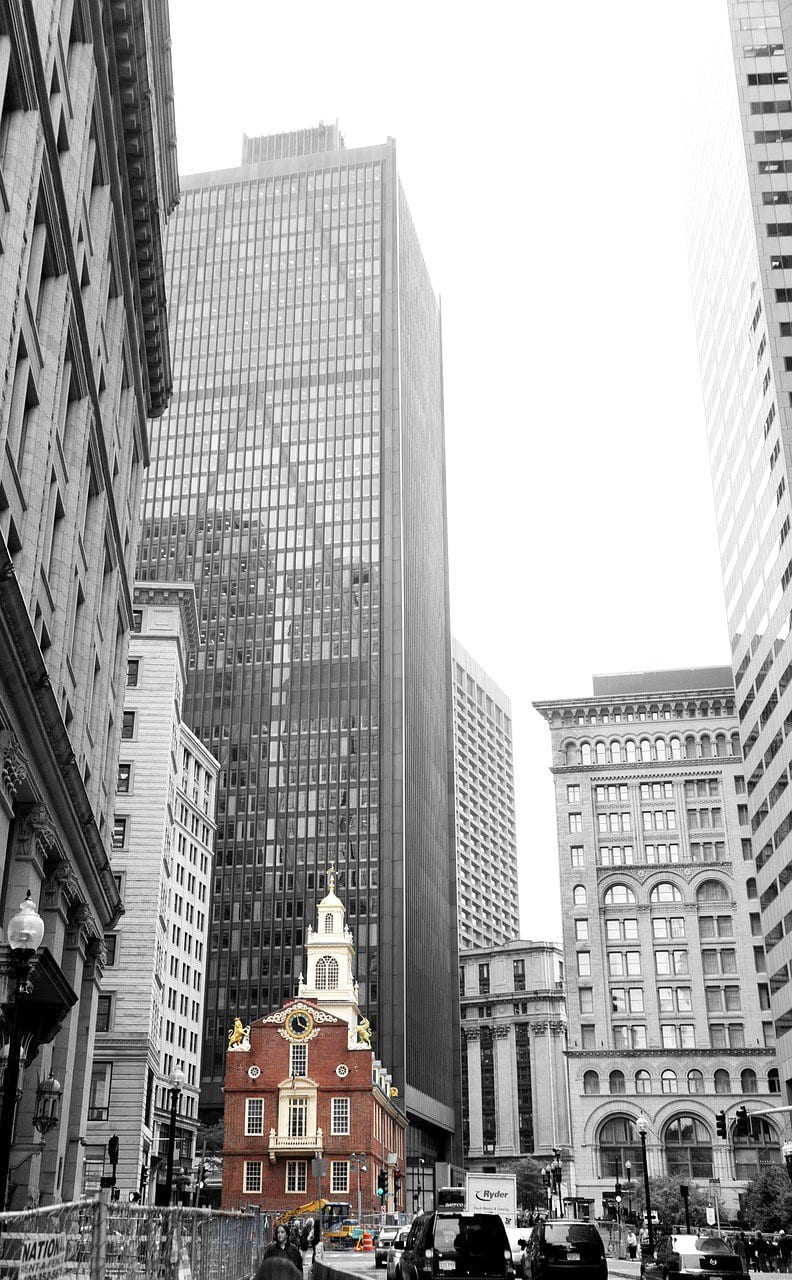
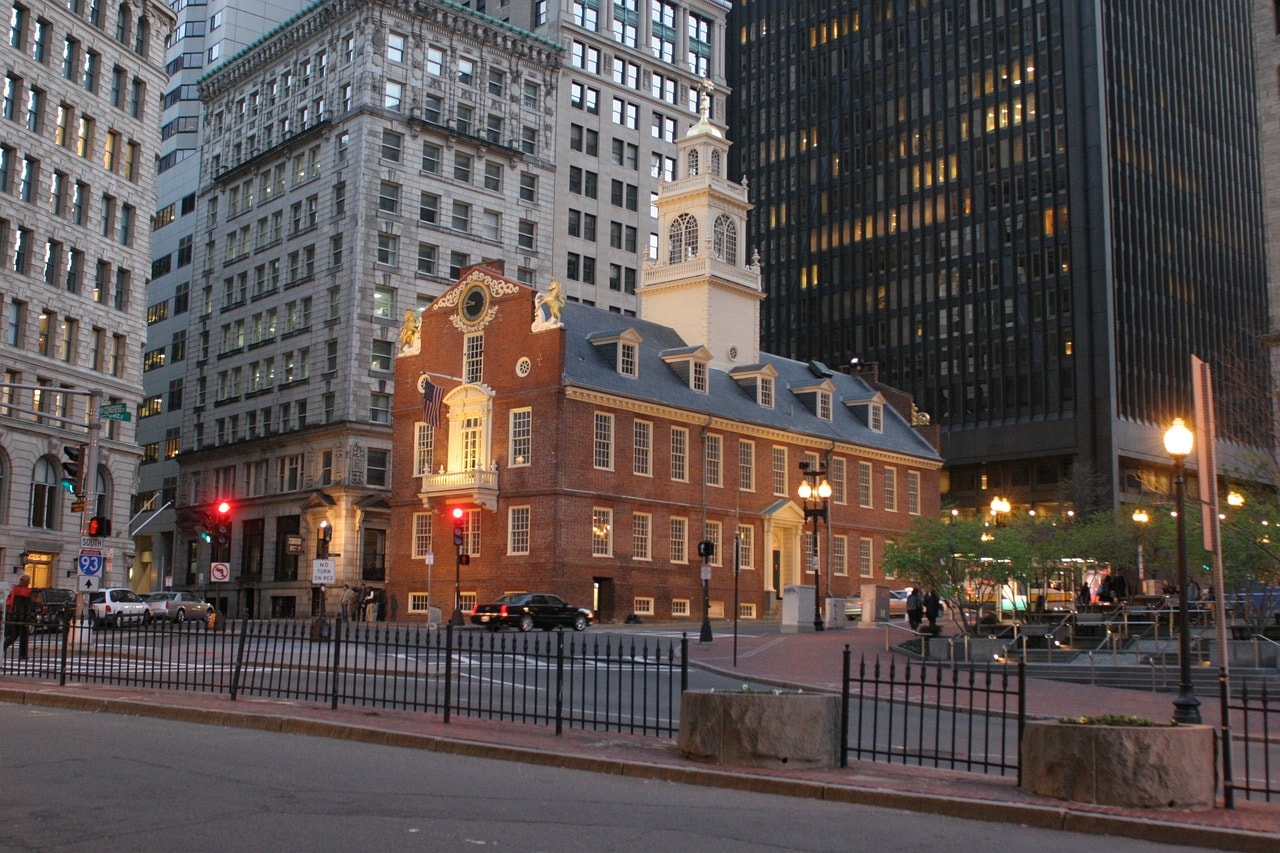
In the heart of downtown Boston, surrounded by massive modern skyscrapers, lies the historic Old State House. This building served as the residence of the British Governor until it passed to local control with the independence of the US in 1776. That year, the building was the meeting place for the Massachusetts State House of Representatives. Afterwards, the building became a public civic function including Boston's City Hall for a time, the local exchange, and even a short-lived market for fresh produce. The charming Georgian building is known for its elegant tower atop it.
At the entrance to the building on Congress Street, there's a circle of stones marking the site of the Boston Massacre — the murder of five town residents that became one of the historic triggers for the local patriots' desire to break free from British rule. The massacre took place in 1770, about six years before the American Revolutionary War.
Post Office Square
Just south of the Old State House on Congress Street, nestled among the towering buildings of Downtown, lies the triangular square that functions as a park. Its official name is Norman B. Leventhal Park, symbolizing the heart of what's known as Boston's Financial District, the southern part of Downtown. The square is named after the city’s central post office building that once stood there.
Custom House Tower
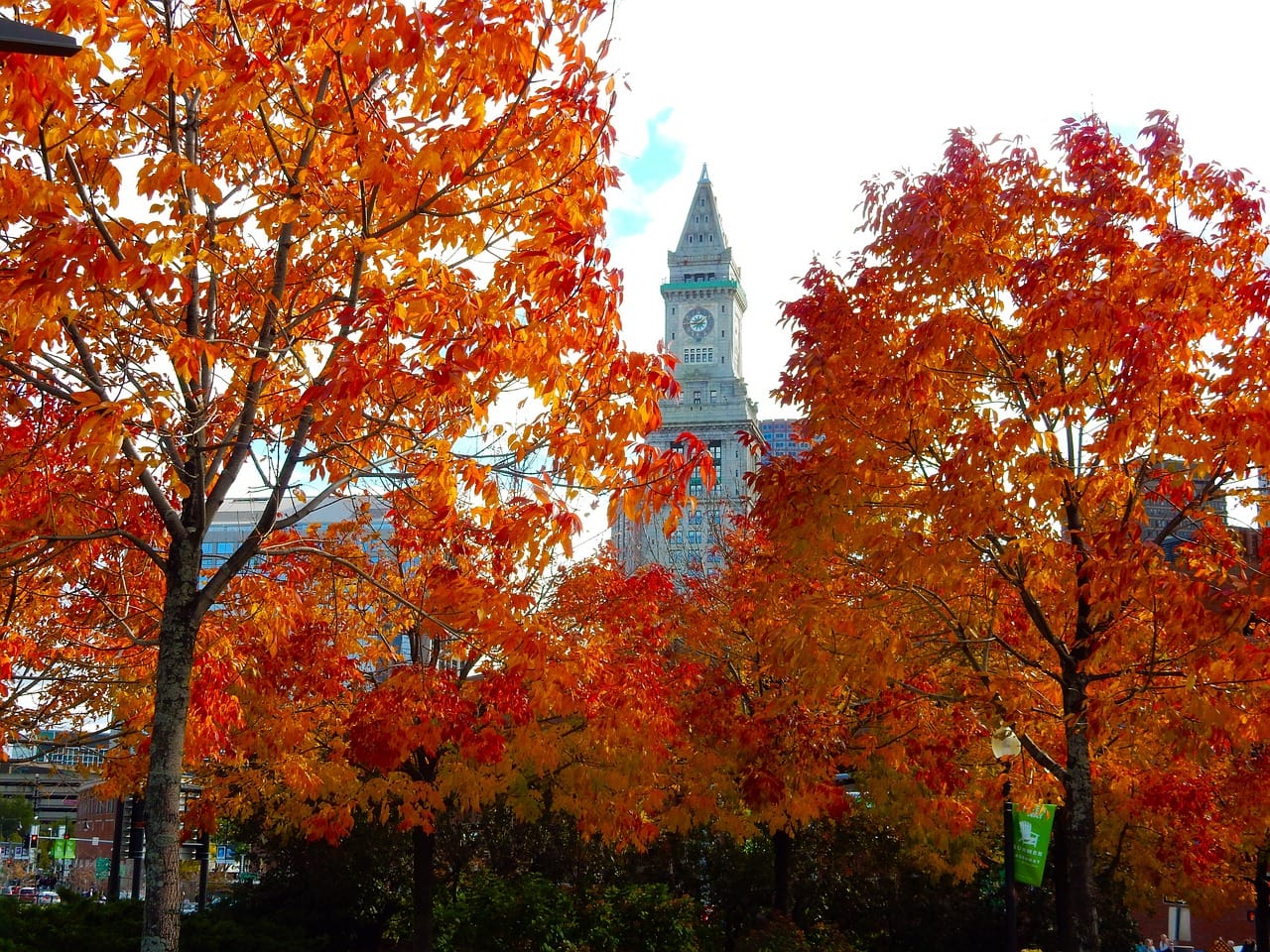
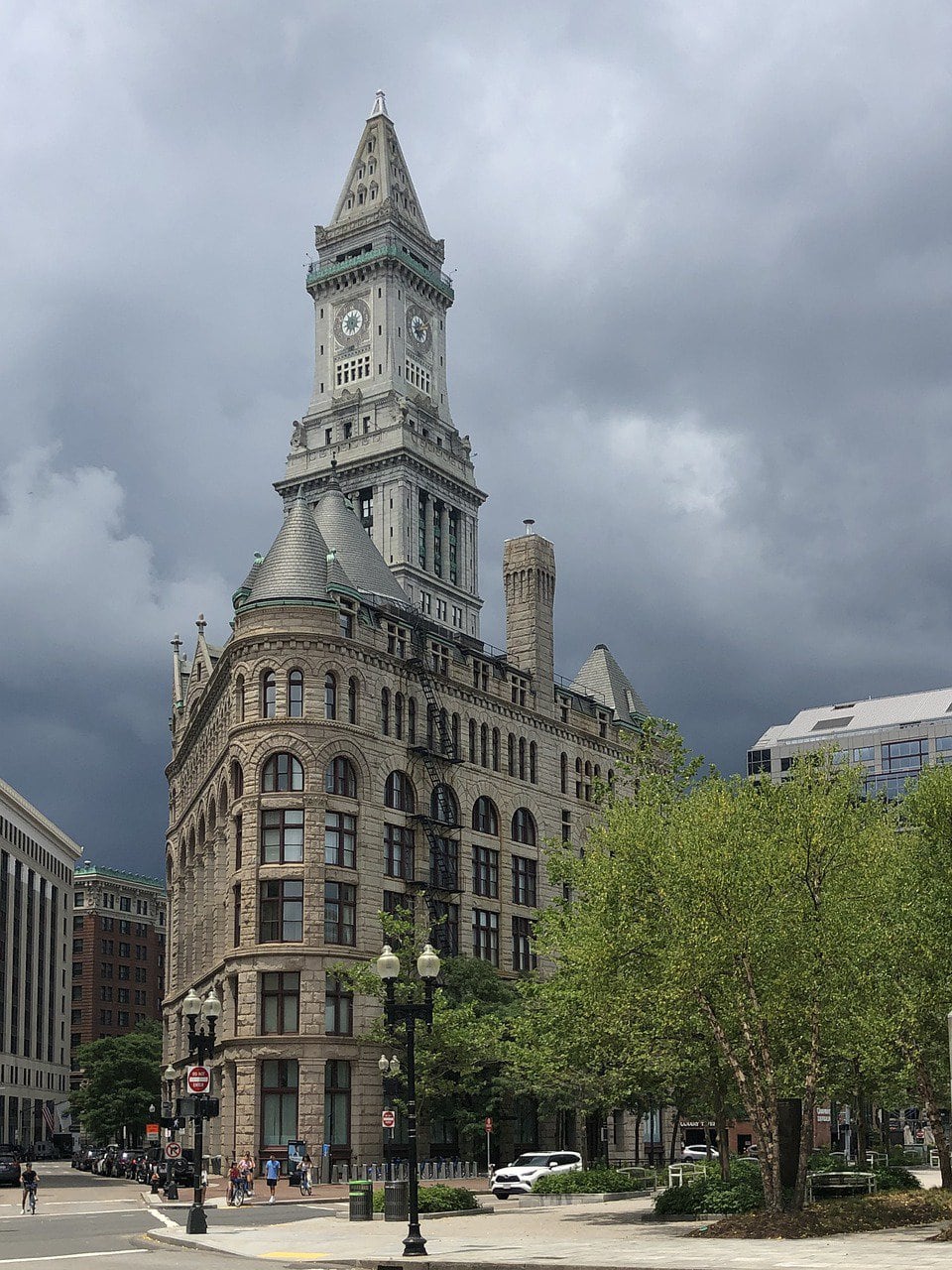
One of the most beautiful towers in downtown Boston is the historic Custom House. Today, the building houses the central Marriott Custom House Tower by Marriott Vacation Club Hotel, one of the most luxurious hotels in the city and without a doubt one of the most centrally located hotels combining history and sites with hospitality and leisure.
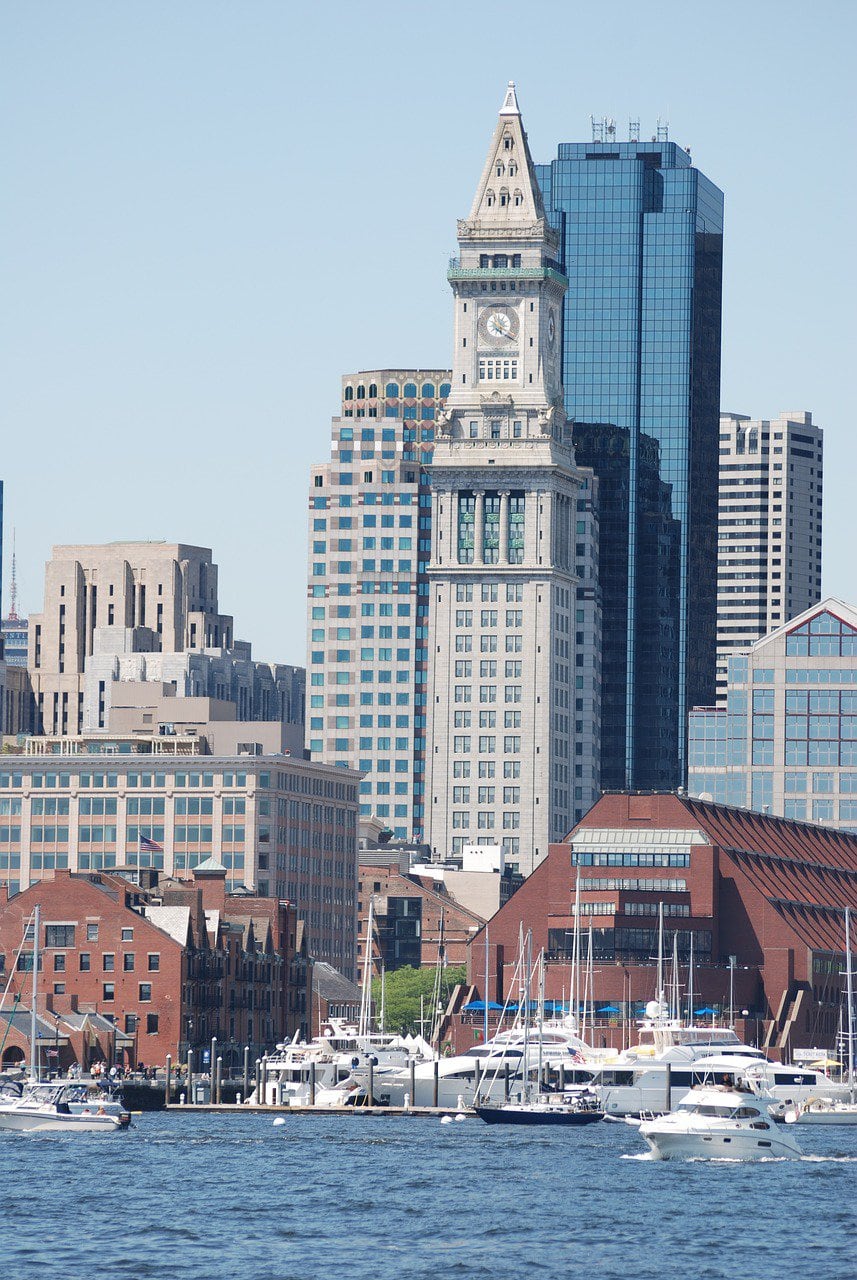
The tower was built in 1847 in a prominent neo-classical style. Its facade resembles an ancient Greek temple, with a tall tower added in 1915. At the top of the tower are four clocks facing all directions and above them a sharp spire. The building used to be right on the bay's edge, but since then areas to the east have been filled in. Today, it is located three blocks from the waterfront and the Boston Aquarium.
The Grain Exchange
South of the Customs House is the small Jenney Plaza, and south of it is the Grain Exchange Building. Boston’s Grain and Flour Exchange is a charming structure that also once faced the waterfront. The building was constructed in the early 1890s in a Neo-Romanesque style. The curved facade of the building faces the Jenney Plaza, topped with a kind of charming architectural crown.
Old South Meeting House
The ancient church building on Washington Street, just south of the old city hall, is one of the significant buildings in the history of Boston and the USA. The Puritan church held assemblies of American patriots. On a freezing night on December 16, 1773, a furious mob led by Samuel Adams headed towards Griffin's Wharf. Disguised as Indians, they raided ships of the British Crown's East India Company, marking a key event leading up to the American War of Independence. In response, the British closed the church and turned it into horse stables.
Today, the former church is an important museum site telling the story of American patriots. The church was built in 1730 and is one of the oldest remaining buildings in Boston. It features a tall tower topped with an octagonal building and a pointed Gothic roof. Opposite the church, there is a monument marking the Irish Potato Famine Boston Irish Famine Memorial from 1998, another British crime.
Address: Washington St. 310, Boston
Click here for the latest museum opening hours…
Boston's Old City Hall
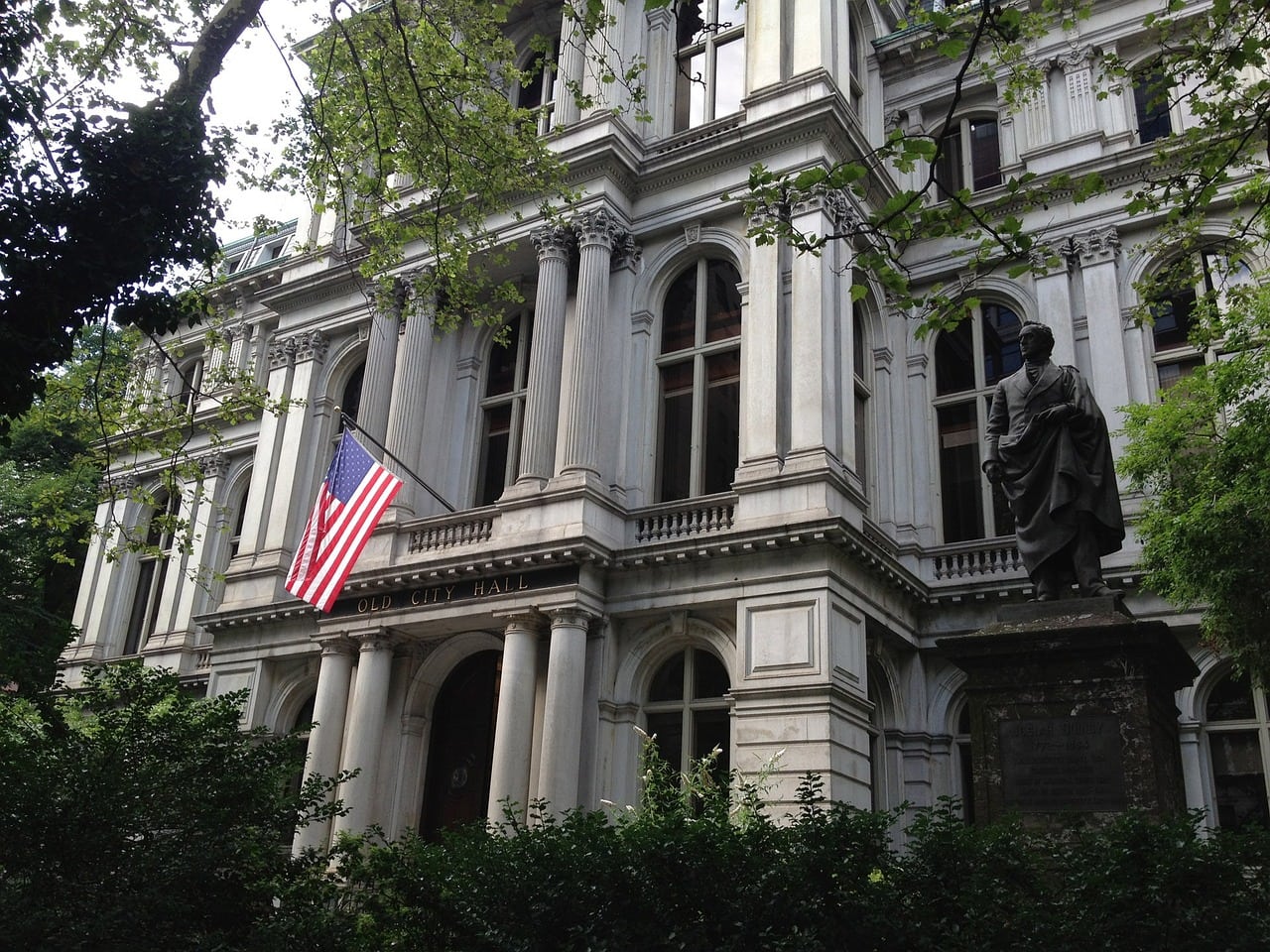
One block west of the Old South Church is the Old Boston City Hall. The building served as the city hall until the institution moved to the Government Center in the 1960s. Constructed in the 1860s, it features a very elegant French Baroque façade. Today, the building is privately owned and houses businesses such as a successful steakhouse and a pub. In front of City Hall are the statues of Benjamin Franklin, the man on the hundred-dollar bill who was born nearby, and Josiah Quincy III, after whom Boston's great market is named.
Address: 45 School St., Boston
King's Chapel
On the western side of City Hall lies the small and beautiful King's Chapel. This dark chapel, made of granite stones, was built in 1749 on the foundation of an ancient wooden chapel constructed by the British in the mid-17th century. The lovely building is one of the oldest remaining in the center of Boston. The chapel's interior is also highly impressive and elegantly decorated, with a preacher's stand from 1715 at the front, shaped like Jesus' sacred wine cup. Adjacent to the chapel on the north side is the King's Chapel Burying Ground, one of the city's oldest cemeteries. Across the street to the south of the chapel is the famous and luxurious Omni Parker House Hotel.
Address: 58 Tremont St., Boston
Downtown Crossing
Downtown Crossing is the busiest area in downtown Boston. The streets forming the triangle bordered by downtown to the east, Boston Common to the west, and Chinatown to the south were redesigned during the 1970s to create a pedestrian-friendly zone with fewer open roads for cars. This design was intended to free the area from the burden of traffic congestion and the noise pollution of daily commuting to downtown. With the easing of traffic came development, and today the area is great for shopping and strolling around. On Summer Street, there’s the flagship Macy’s department store in Boston. On the other side of the street, there's a large store of the Irish chain Primark.
Click here for Boston Old Town Trolley + Tea Party Ship tickets…