Miami – Tour in Downtown and Coral Gables
Downtown Miami is full of places and sites worth visiting. Besides Miami Beach, Downtown Miami and its surrounding neighborhoods offer a plethora of fascinating spots. Little Havana, west of Downtown, is the heart of the Cuban community in the USA. To the south is Coconut Grove Village, the trendiest area of the city. West of the center is the intriguing city of Coral Gables, where you'll find the Miracle Mile, the legendary shopping street.

How much time do you need for a tour in Downtown Miami and Coral Gables?
To tour Miami's center and Coral Gables, you should dedicate two days if you want to visit all the interesting districts besides Downtown.
Click here to check availability and prices for hotels in Miami…
Click here for the list of 10 great hotels and resorts in Miami…
10 Must-See and Do Things in Downtown Miami and Coral Gables
- Shopping in the shadow of Downtown Miami's towers at Bayside Marketplace
- Luxury shopping at Miracle Mile in Coral Gables
- Shop with celebrities in the heart of Coconut Grove Village
- Splendor at Vizcaya Museum and Gardens
- Marine life at the Miami Seaquarium
- Tropical birds at Zoo Miami's Jungle Island
- The unique park and house of The Barnacle Historic State Park
- Swim (or just admire) the Venetian Pool in Coral Gables
- Visit the magnificent palace of The Biltmore Hotel
- History at Dinner Key
Click here for all the information on traveling to Miami Beach and South Beach…
Tour Route in Downtown Miami and Coral Gables
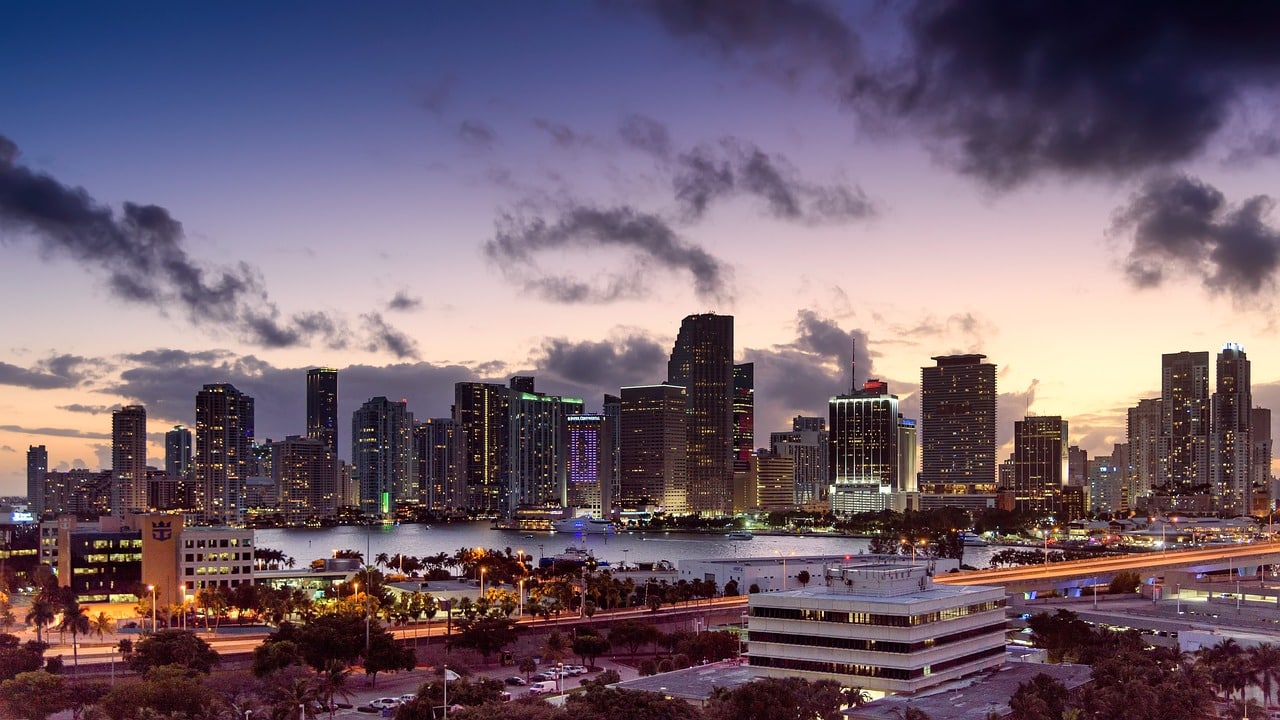
It's best to start the Miami tour route in the city's financial center, among the towering buildings of downtown. The Miami port area has undergone development, particularly around the Bayside Marketplace, which has become the main entertainment spot in downtown.
- Not far from the open mall above the yachts, there are museums such as the Frost Science Museum and the Pérez Art Museum
- Near the mall is also the home stadium of the Miami Heat and Bayfront Park
- South of downtown is the Brickell neighborhood, and to the west is Little Havana, the Cuban experience in America
For a tasting tour in the best Cuban restaurants of Little Havana, click here…
Apart from the downtown and the adjacent satellite neighborhoods, on the south along the Atlantic coast, lies the Coconut Grove area, the trendy part of Miami (aside from South Beach). Here you'll find the stunning Vizcaya Villa and south of it, Dinner Key, home to Miami City Hall. Nearby, Coconut Grove Village is undoubtedly the most fun and glamorous spot to wander in Miami.
For a half-day tour to the Everglades (departing from Miami), click here…
To the west of Miami lies the city of Coral Gables with numerous sites worth visiting.
- The heart of the city (actually a Miami neighborhood) is Miracle Mile, a particularly trendy long avenue of luxury shopping, dining, and entertainment.
- West of Miracle Mile are the city's historic sites, such as Merrick House, the Venetian Pool, and the opulent Biltmore Hotel and its gardens (and its massive pool).
Map of Downtown Miami and Coral Gables
Everything to See and Do in Downtown Miami
You can see it from afar with its dozens of skyscrapers. It is the commercial center of the city, home to the major offices of financial, commercial, and insurance companies. From a tourist perspective, there's not much to explore in Downtown; it's far more impressive to view from a distance and admire the skyline rather than wander its relatively empty streets, except during Rush hour in the mornings and evenings when workers come and go from their jobs.
PortMiami
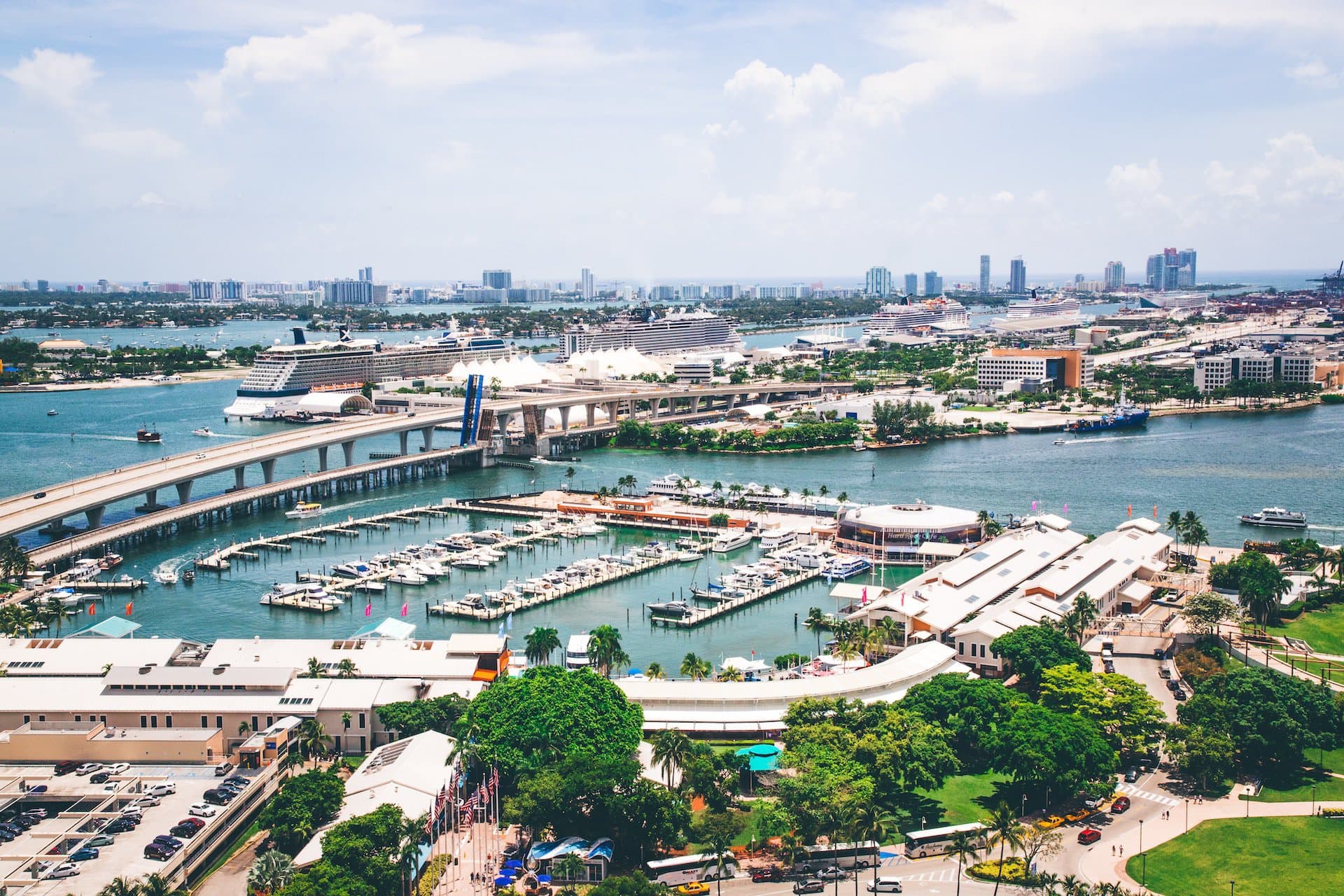
The Port of Miami is the largest port in the southeastern United States. Its tourist uniqueness lies in the fact that it is the largest passenger port in the world. This is due to the famous cruises departing from it to all corners of the globe, especially to the Caribbean islands and The Bahamas. The world's two largest cruise companies, Carnival Cruise and Royal Caribbean, are based in Miami.
Click here for a day trip by boat from Miami Port to The Bahamas…
Each year, approximately 5.5 million passengers pass through the port, most of whom board one of the cruises departing from it. Especially on Friday afternoons, anyone at South Beach, the southernmost beach in Miami Beach, can often see several cruise ships departing one after another from Miami Port for one of the pleasure cruises.
Click here for a sunset cruise on Biscayne Bay…
The port is mostly located on Dodge Island, with different piers also on the neighboring (mostly artificial) islands. It is situated at the southern exit of Biscayne Bay on the way to Miami Beach.
Jungle Island Zoological Park
The historic park is located on the road between Downtown Miami and South Beach in Miami Beach, on the small Watson Island. It began operating in 1936 but has since undergone numerous developments and renovations and today features rather modern facilities. The park showcases the rich zoological diversity of Florida, with an emphasis on birds. It is known for its massive parrot exhibit as well as its iconic flamingo pool. It originally operated as a parrot exhibition park called Parrot Jungle but over the years added more tropical birds and other animals to its displays.
Address: Parrot Jungle Trail, 111, Miami
Click here for the park's operating hours and more information…
Pérez Art Museum Miami
The museum, dedicated to contemporary art and named after Jorge M. Pérez, is located just north of Downtown Miami right at the exit of the bridge connecting Downtown with South Beach in Miami Beach, on the MacArthur Causeway route. The museum dominates the northern part of the Bicentennial Park, near the museum of science and planetarium. Although founded in 1984, it moved to the new location in 2013.
The museum has an interesting collection of contemporary art including major postmodern artists like Frank Stella, landscape artists like the duo Christo and Jeanne-Claude with their large-scale works, and a big collection of Mexican artists, most notably featuring works by Diego Rivera (Frida Kahlo's husband).
Address: 1103 Biscayne Blvd., Miami
Click here for the museum's current visiting hours…
Phillip & Patricia Frost Museum of Science
The magnificent Frost Science Museum completes the modern and lavish cultural space of the Bicentennial Park. The museum offers a wide range of interactive and educational exhibits where you can learn a lot about engineering, medicine, the human body, and more. There's also an exciting planetarium showcasing space and a large aquarium with a variety of marine and amphibian life.
Address: Biscayne Blvd. 1101, Miami
Click here to buy online tickets for the Frost Museum in Miami…
Click here for the current opening hours of the museum…
Bayside Marketplace
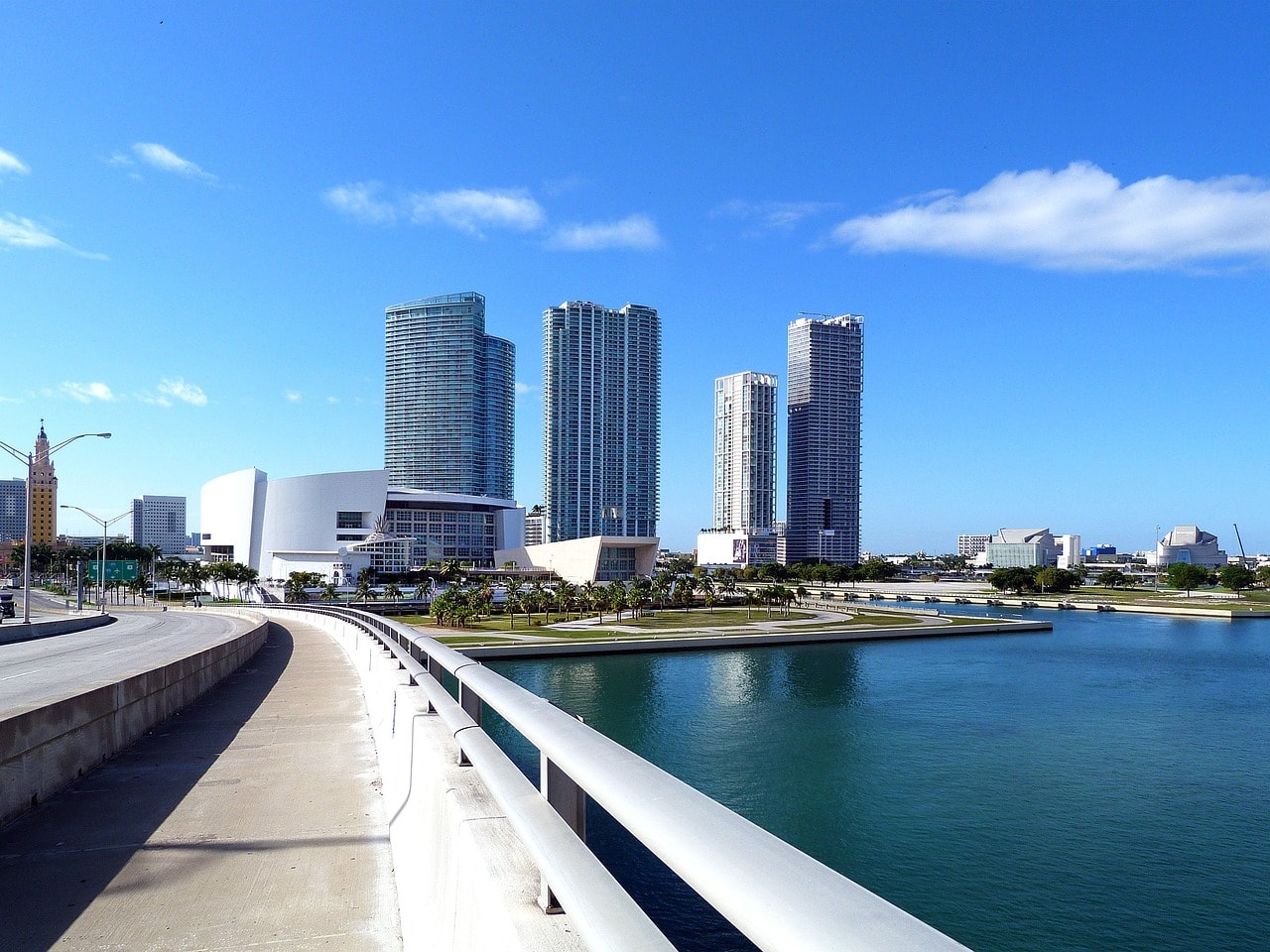
The Bayside Market is the most attractive spot in downtown Miami. It's a large open-air mall with two floors filled with shops, restaurants, bars, and more. The mall opened in 1987 as part of an effort to revitalize downtown Miami, which was quite dull at the time, and it has since been very successful. The mall boasts a stunning view of the marina, teeming with boats, yachts, tourist ships, and more. Due to its tourist success, the marketplace has added a variety of tourist attractions over the years, including the giant ferris wheel – Skyviews Miami Observation Wheel, which was built in 2020.
Click here to purchase a combined ticket for the Skyviews Ferris Wheel and the HistoryMiami Museum…
The Bayside is the perfect spot in Miami to wander during the day, escape the scorching sun, and sit at a bar or restaurant with the stunning view of the ships and Biscayne Bay. It is located north of Bayfront Park, a broad, green, and pleasant park right on the ocean's edge, behind which loom the tallest towers of downtown. North of the Marketplace is the Kaseya Arena (formerly the American Airlines Arena), the home stadium of the local basketball team, the Miami Heat.
Click here for a guided night tour in Miami + entry tickets to the Skyview…
Address: Biscayne Blvd. 401, Miami
HistoryMiami Museum
Opposite the Miami-Dade County Courthouse is the city's charming historical museum. This is the largest historical museum in all of South Florida, showcasing items and an overview of the rapid development of the state since the late 19th century. The museum opened in 1962 and has been expanded several times since then.
Address: W Flagler St. 101, Miami
Click here to purchase tickets for the Historical Museum of Southern Florida…
Click here for the museum's up-to-date hours of operation…
Brickell
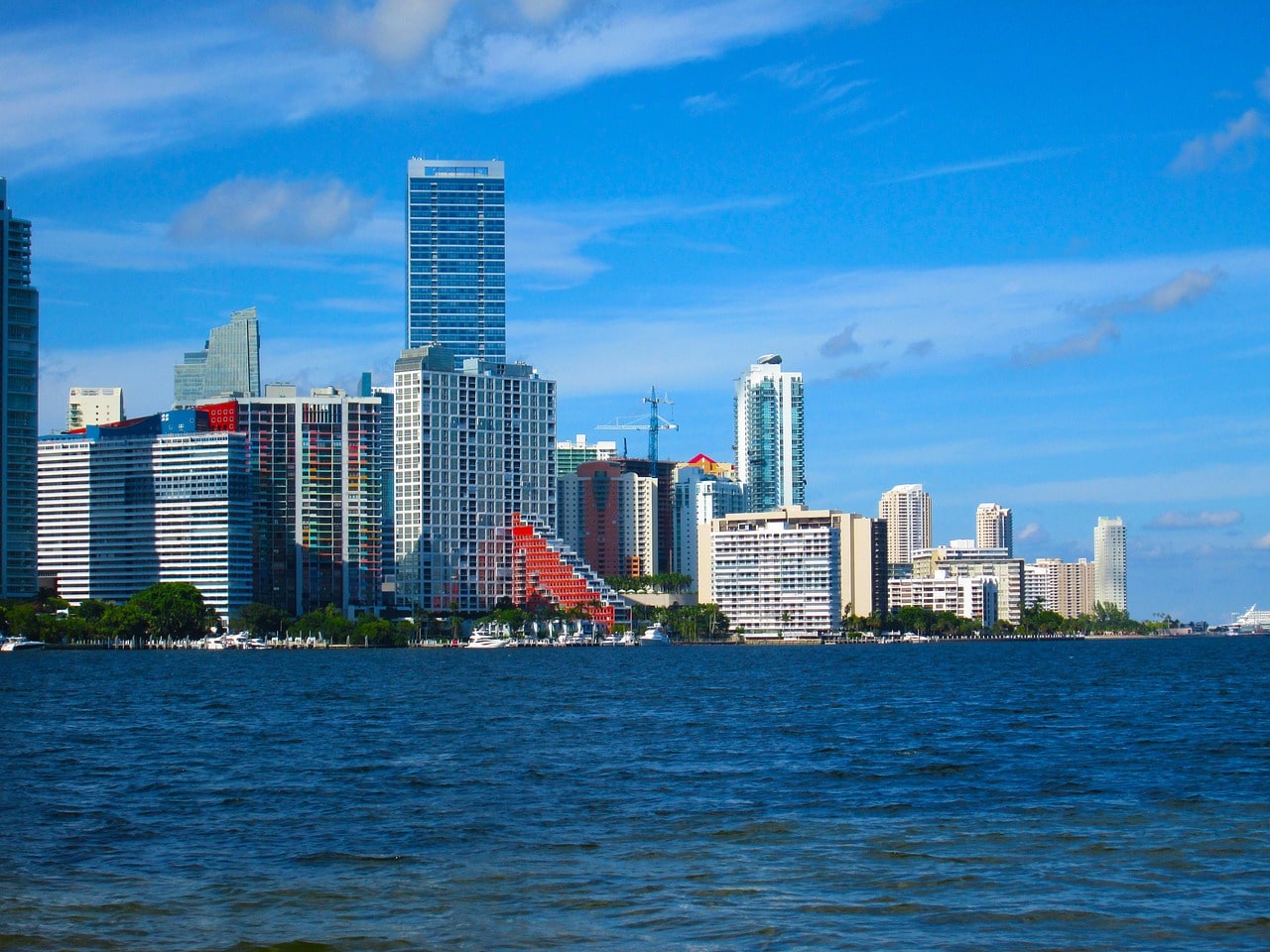
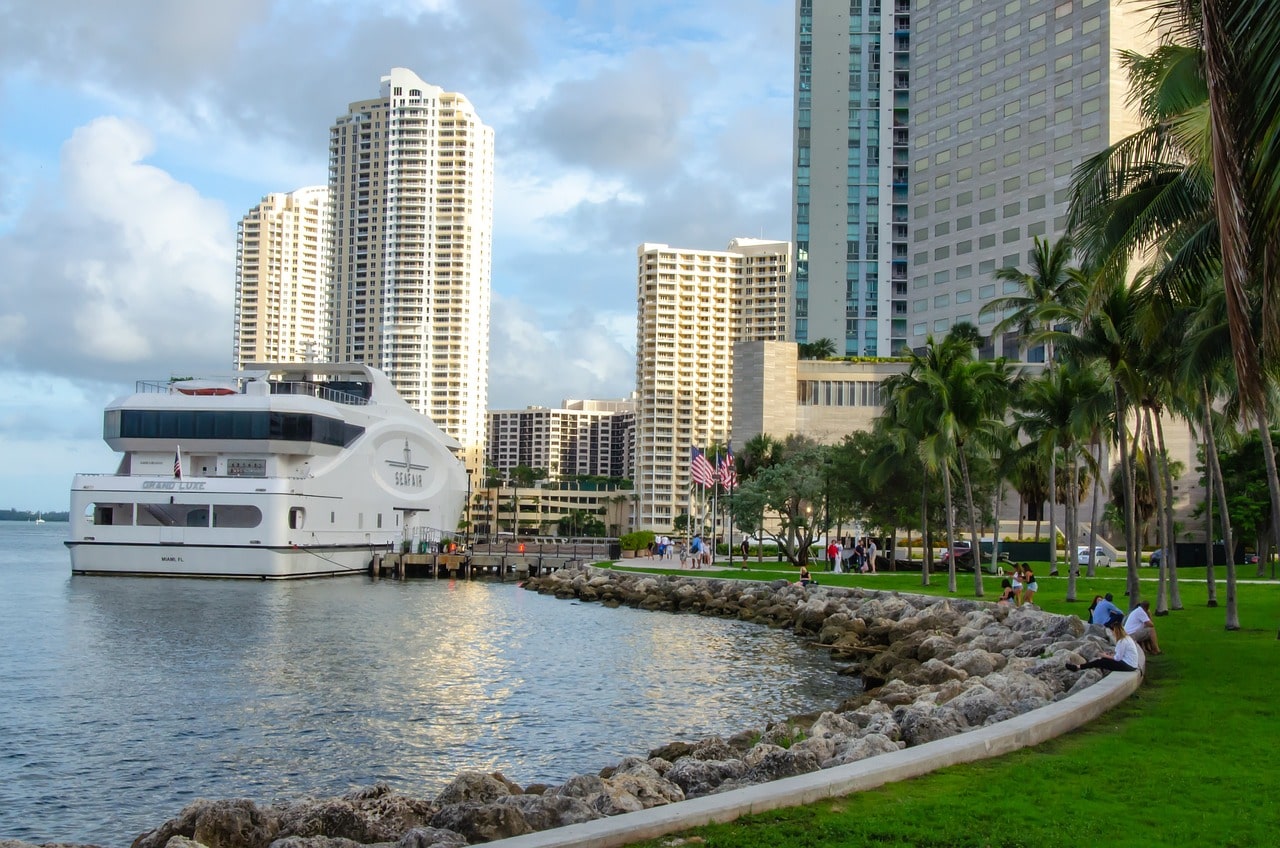
Just south of Downtown, yet directly connected to it, is Brickell, named after one of the city's founders. This neighborhood has significantly grown in recent years with dozens of skyscrapers rising above the waters of Miami's bay area. Brickell Avenue is considered Miami's Wall Street, hosting offices of most major banks. Between the offices, you'll find mainly residential condos in tall buildings, and the neighborhood has become a trendy spot for young people and families to live in the city.
Little Havana
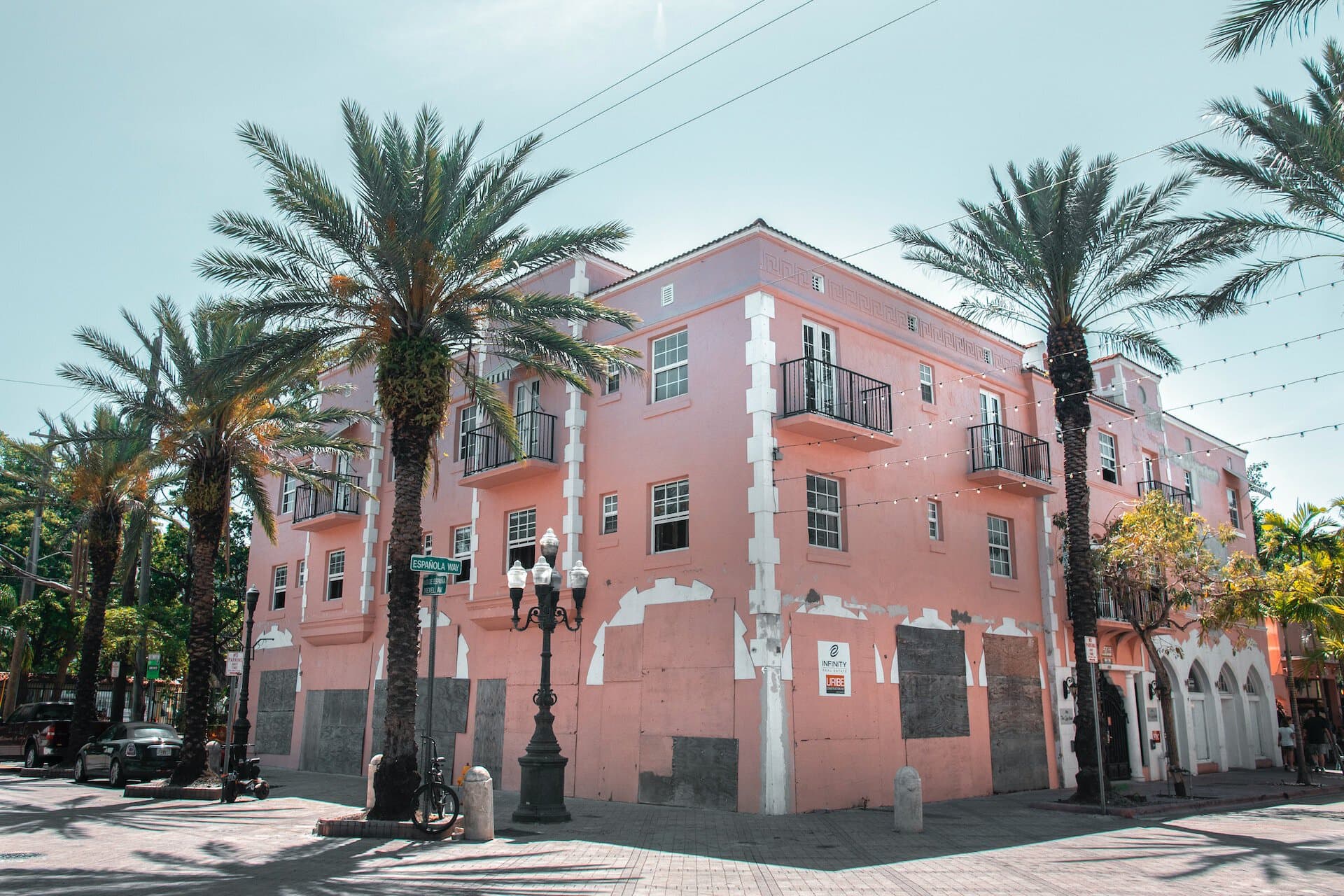
Just west of Downtown Miami, on 8th Street (Calle Ocho – in Spanish), lies the traditional residential area of Cuban expatriates who arrived in Miami starting in the fifties with the unrest that led to the communist revolution on the island. In March, the Calle Ocho Festival takes place on the street, attracting many visitors to the area.
Click here for a particularly delicious guided food tour through all the gems of Little Havana…
Eighth Street is the heart of the district, offering a wide variety of unique shops but, most importantly, excellent Cuban restaurants that have become must-visit institutions for tourists.
Throughout the year, you can visit and enjoy traditional Cuban food, Cuban coffee, and a pure Cuban atmosphere. The Caribbean neighborhood is home to about 50,000 residents, most of whom are from the unique island. The neighborhood offers a taste (with a strong American flavor) of Cuba, including all the central cultural elements of the neighboring country to the south.
Miami Seaquarium
The Miami Seaquarium is located on Virginia Key, south of Miami Beach. It's a fun spot for the whole family with all of Florida's large marine creatures on display. The complex features several aquariums where you can catch dolphin and whale shows, as well as exhibitions and performances by seals and sea lions.
Address: 4400 Rickenbacker Cswy, Miami
Click here to buy tickets online for the Seaquarium…
Click here for the latest opening hours and all the information about the Seaquarium…
Vizcaya Museum & Gardens
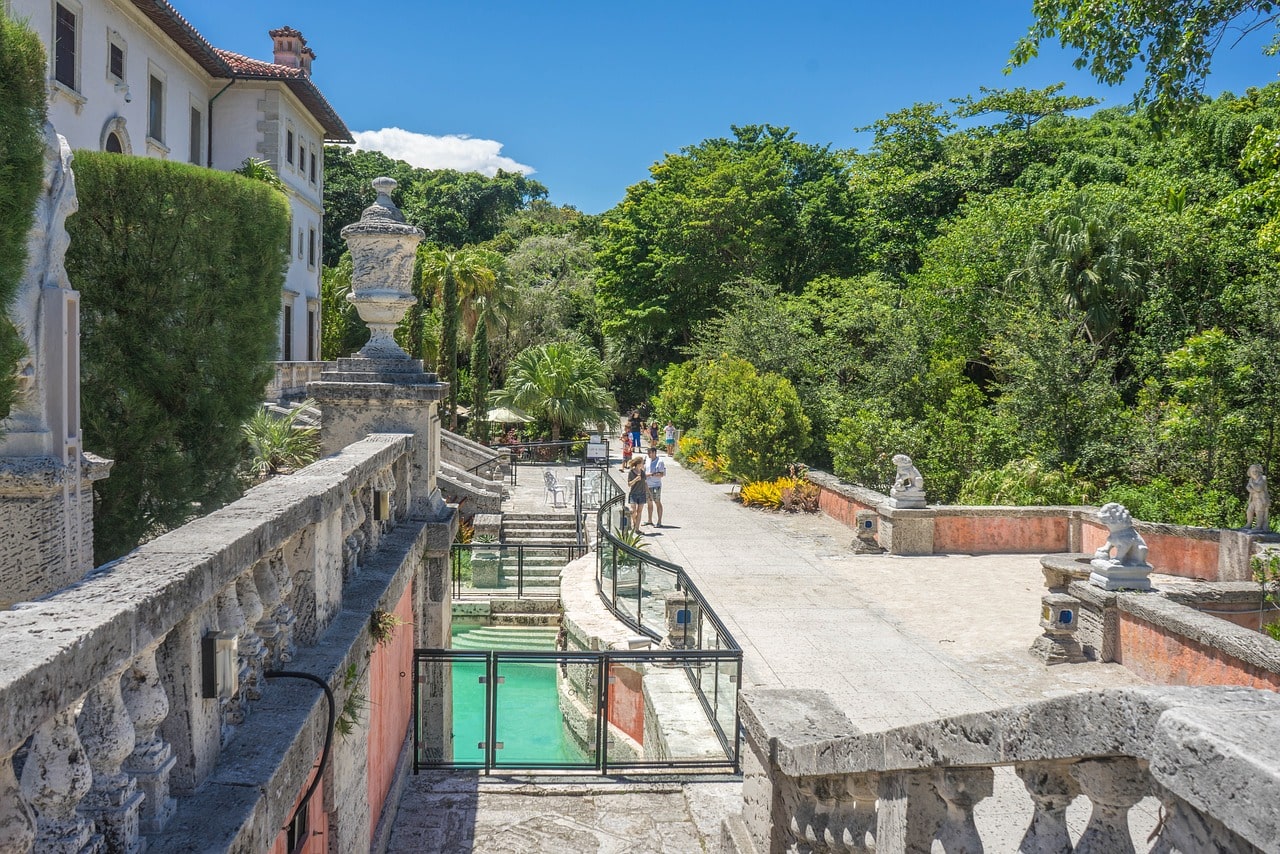
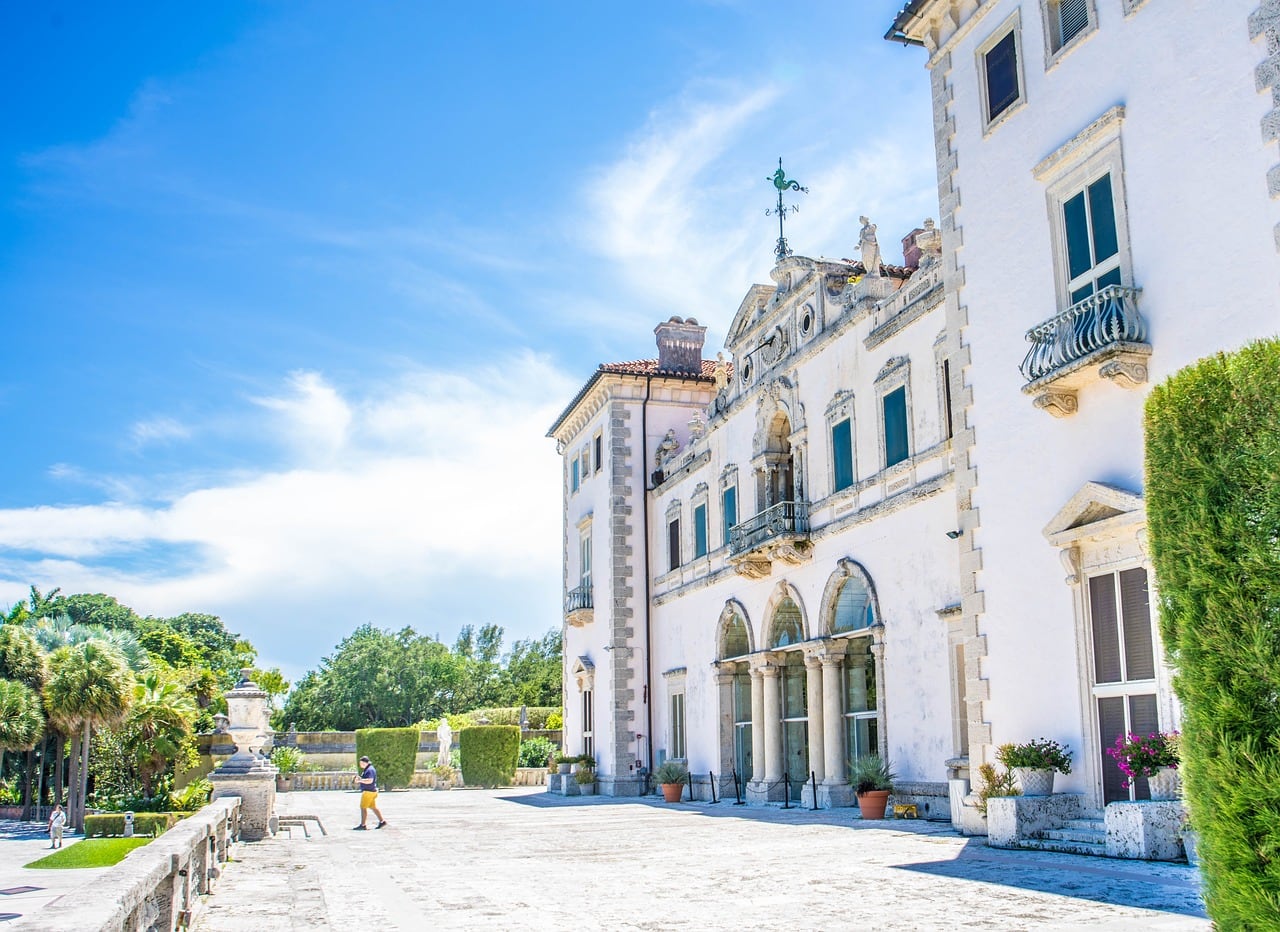
This magnificent villa is just a five-minute drive south from downtown Miami, on the Atlantic Ocean shore. It's the villa of the reaper and combine harvester magnate James Deering, who built it as his winter home in 1916.
The villa itself is a stunning blend of various architectural styles such as neo-classicism with elements of Spanish colonial construction. The villa's gardens are also impressive, with paths leading to fountains and sculptures and plenty of greenery, in the style of Italian gardens. The magnificent villa is open to the public today, where visitors can admire the grandeur of the furniture and decorative items collected by Deering.
Address: 3251 S Miami Ave., Miami
Click here for the museum's updated operating hours…
Ermita de la Caridad
The quirky Cuban Catholic Church is located south of Villa Vizcaya, on the oceanfront. The cone church was built in 1966 and is considered the local cathedral for the city’s Cuban-origin residents. Besides functioning as a church, the complex features rotating exhibits that tell the story of Miami's Cuban community.
Address: S Miami Ave. 3609, Miami
Dinner Key
Dinner Key is an important historical complex that now also houses Miami's City Hall. The name probably came from it being a large picnic area used by the first settlers of Florida during the Spanish era. In the 1930s, Pan-Am constructed a seaplane base on the key, serving Miami and the Caribbean. From this port, Amelia Earhart's plane departed on her around-the-world journey. The plane took off towards South Africa, and later, in July 1937, disappeared in the central Pacific Ocean.
Click here to rent SUP in Miami…
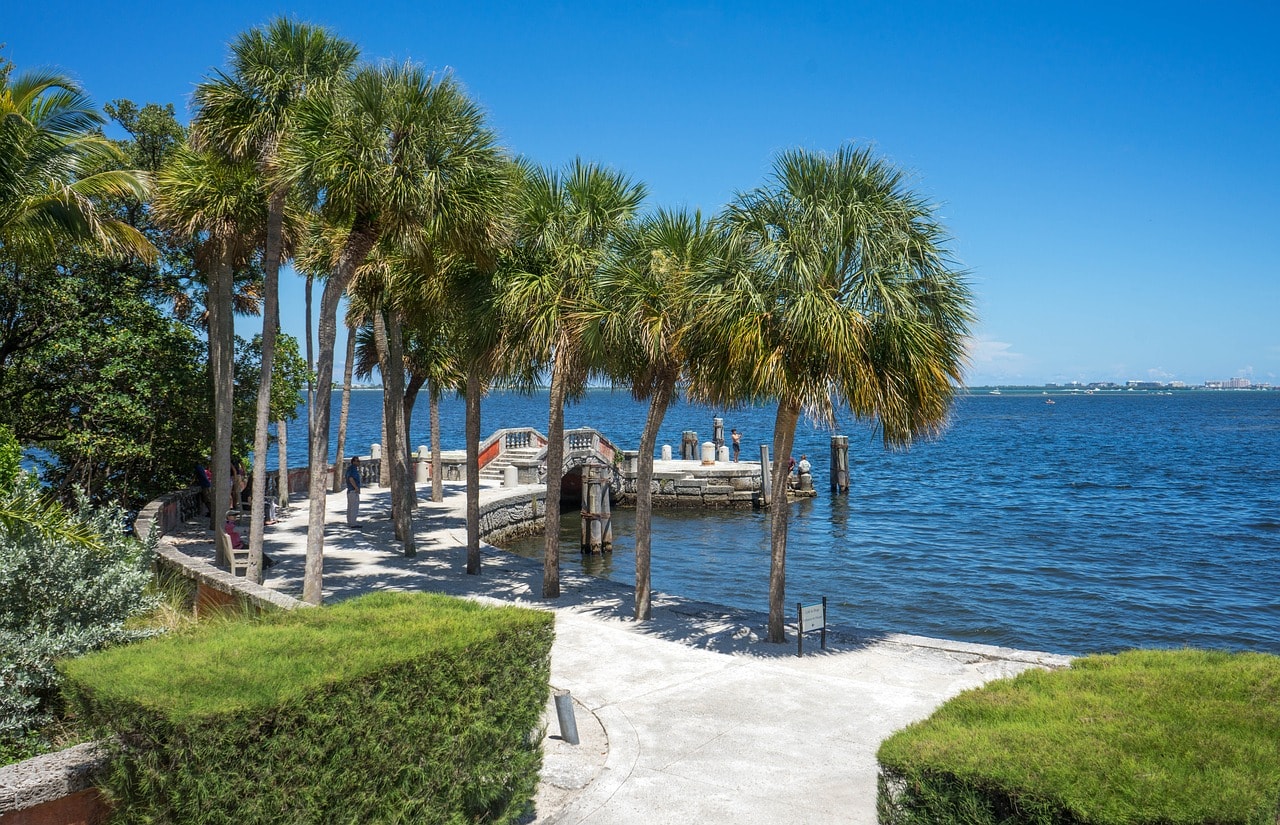
Today, Dinner Key serves not only as the municipal seat but also as a massive docking place for yachts and boats. There's also a large park named Regatta Park and three small adjacent islands, with the southernmost one called Dinner Key Picnic Islands Park.
Coconut Grove
Adjacent to Dinner Key is Miami's trendiest neighborhood, Coconut Grove. The neighborhood gained an almost mythical status in the 1960s as the hippie hub of Florida (the sunshine plus Florida's commercial drug quantities created a particularly surreal chill-out spot). Today, it's a fairly established place with huge apartment buildings along the ocean, featuring well-maintained parks such as Kenneth M. Myers Bayside Park and Peacock Park. Nearby is also the historic Barnacle.
Nearby Grand Avenue is the heart of what's known as Coconut Grove Village. This trendy avenue is lined with boutique shops, luxury hotels (and some less luxurious), restaurants, bars, and the CocoWalk mall, which is one of the most popular and certainly one of the trendiest shopping areas in Miami.
The Barnacle
This charming historic house is nestled in the heart of a lush green park named after it, The Barnacle Historic State Park, part of the Coconut Grove waterfront parks. The house was built in 1891 for the famous yacht and boat designer Ralph Munroe. It's named after sea snails due to the curved shape of the roof, reminiscent of the sea creature's shell.
Address: 3485 Main Hwy, Miami
Everything to See and Do in Coral Gables
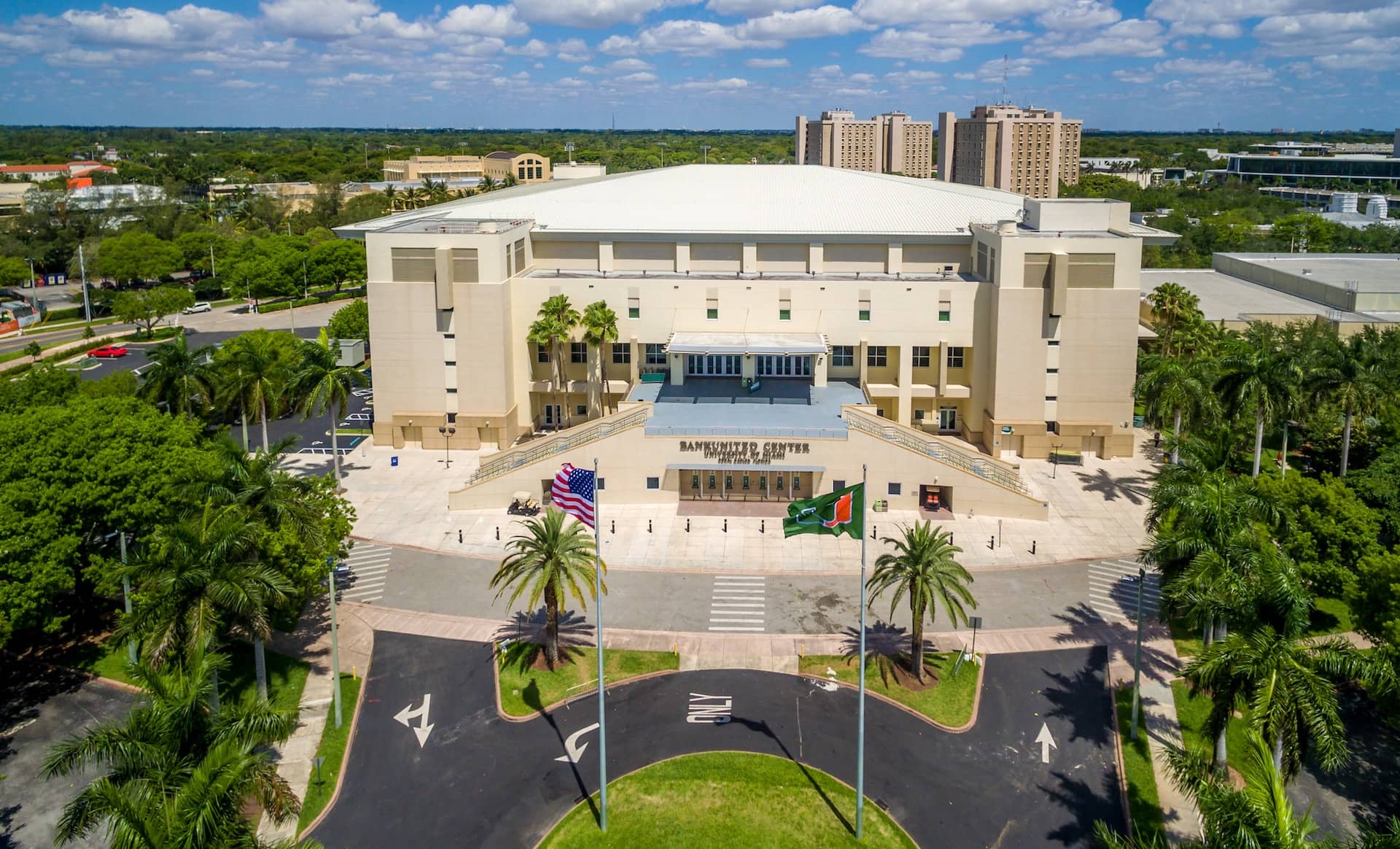
Coral Gables is a small city that spans the entire southwestern area of Miami. The city is home to around 50,000 residents, primarily in the northern part near Miracle Mile. South of the northern neighborhood is the University of Miami campus, which is part of the city. The luxurious modern buildings along the Atlantic Ocean in the southern part are less relevant to tourists.
The city is one of Florida's most stunning examples of the immense development of the 1920s. Back then, before the bubble burst and the big stock market crash in 1929, the city's streets were built at a rapid pace as the embodiment of the American dream. The city was developed by the real estate giant George E. Merrick, who built Miracle Mile around his massive office building, the Colonnade, at the intersection of Coral Way and Ponce de Leon Boulevard.
Click here to check availability and prices for hotels in Coral Gables…
The Miracle Mile
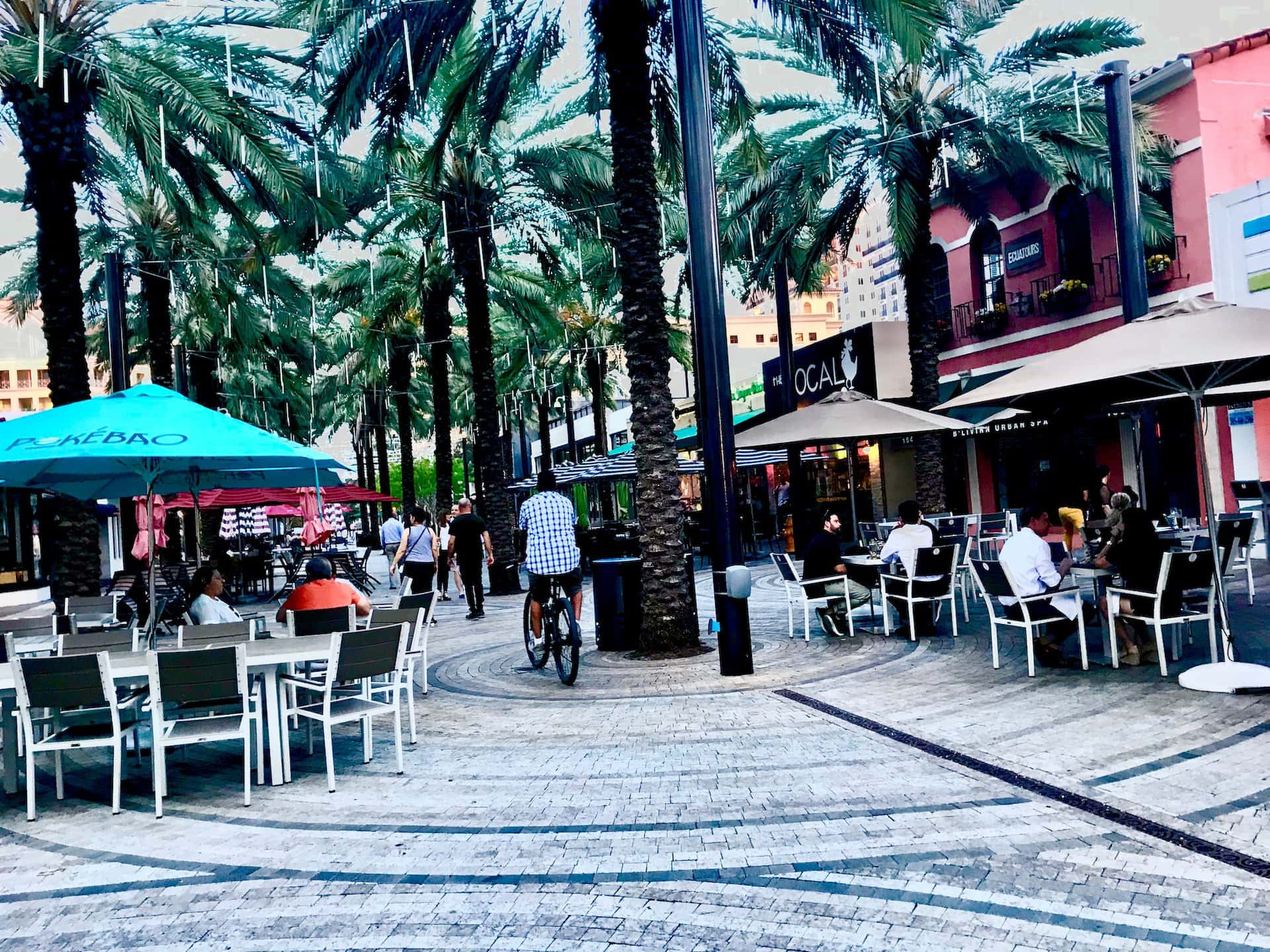
The heart of Coral Gables is Miracle Mile. This broad avenue in the western part of Coral Way, east of the Coral Gables City Hall, was rebranded in the 1940s and became a famous shopping and dining district. The avenue is one of the most prestigious and interesting urban routes in South Florida, perfect for shopping and entertainment. It's full of luxury restaurants, more affordable dining spots, trendy pubs, boutique hotels, stylish boutique shops, and lots of celebrities.
The Coral Gables City Hall is located at the western end of the Miracle Mile. This city hall building was constructed in 1928 in a somewhat flamboyant and very grand neo-Renaissance style, befitting Merrick's vision and the city's architecture.
Coral Gables Museum
The city's historical museum is housed in the historic building of the police and fire department, built in 1939. The museum is located a block and a half north of the Miracle Mile and serves as an informative and fascinating place that tells the unique development story of the city, now long absorbed into the vast metropolis of Miami. The museum features exhibits, displays, photos, and items related to the city's development, the story of George Merrick, and more.
Address: 285 Aragon Ave., Coral Gables
Click here for the museum's current hours…
Coral Gables Merrick House
The Merrick family's home was built by George Solomon's father in 1899. The house has been the family's residence ever since. It is located west of Miracle Mile, in an upscale residential area. Today, the house serves as a museum that tells the story of the family, and especially the tale of George Merrick, who developed the entire city. It's worth visiting the museum mainly because of the fascinating period furniture display and the opportunity to get a feel for Florida's architectural style before the great economic boom.
Address: Coral Wy. 907, Coral Gables
Click here for the museum's current operating hours…
The Venetian Pool
The Venetian Pool is located west of the center of Coral Gables, near DeSoto Plaza. The pool itself was constructed in 1923 in the style of Italian gardens, but without the gardens themselves, just with water elements. It's an extraordinarily stylish swimming pool that has become one of the most intriguing sites in the city.
The pool is designed as part of nature with waterfalls, grottoes (artificial caves) and other elements borrowed from the construction of Italian parks from the Renaissance and Baroque periods.
Address: 2701 De Soto Blvd., Coral Gables
Biltmore Hotel
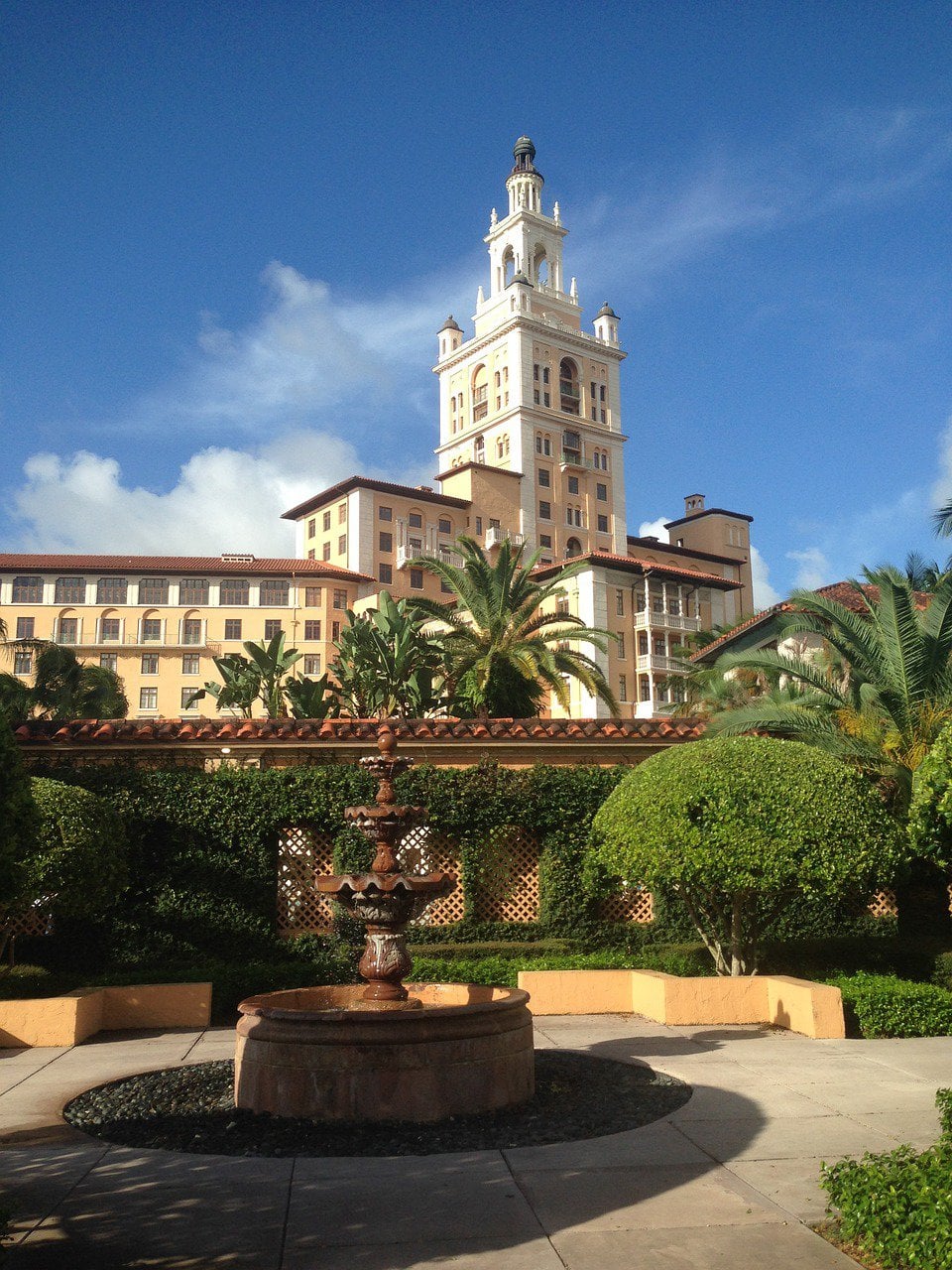
The giant Biltmore Hotel is one of the most magnificent historical institutions in Coral Gables. This grand resort was built in 1926 as the most luxurious spot in the city, which was already the heart of Miami's glamour. It is located at the western edge of the city, on a huge estate at the end of De Soto Boulevard, connecting it with the Venetian Pool. The place still operates as a luxury hotel, with leisure and sports facilities, and offers the option to stroll through the vast estate park and gardens at its back.
The hotel is renowned for its architectural aspects, including a replica of the Giralda Tower, the bell tower of Seville Cathedral, located at its front, rising to a height of 96 meters. In the hotel's huge pool, none other than the actor Johnny Weissmuller, the legendary Tarzan, who also won 5 gold medals as a swimmer in the Paris and Amsterdam Olympics in 1924 and 1928, taught swimming and swam himself.
Address: Anastasia Ave. 1200, Coral Gables