The National Mall in Washington D.C.
The National Mall in Washington is one of the most intense spaces in the world in terms of visiting and sites. It houses some of the most iconic symbols of the USA, such as the Capitol Building, the Washington Monument Obelisk, and an almost endless list of Smithsonian museums. The Mall is the governmental heart of the United States with the White House bordering it to the north. At the Mall, and in the Penn Quarter (the old downtown), one can see the governmental aspect of Washington and understand the capital's significance in American statehood.

How much time should you dedicate to a tour of Washington's National Mall?
A tour of the Royal Mall, including the Smithsonian museums, Congress, the White House, and the monuments, requires at least two full days.
10 Must-See and Do Things at the National Mall in Washington D.C.
- The Capitol Building
- Climb to the top of the Washington Monument Obelisk
- Wander through tens of national museums on the Mall, most of which are the Smithsonian
- Come face to face with the stunning statue of President Lincoln at the Lincoln Memorial
- See where President Lincoln lost his life at Ford's Theatre
- The 20th-century war memorials in the western part of the Lincoln Memorial Reflecting Pool
- The rare neo-classical façade of the Supreme Court
- The impressive neo-classical temple of the Jefferson Memorial
- A Washington Wizards basketball game at the Capital One Arena
- The portraits of US Presidents in the National Portrait Gallery
Click here for all the information on traveling in Washington DC…
Click here for a list of 10 excellent hotels in the heart of Washington…
Click here to check availability and rates for hotels in Washington D.C…
What is the National Mall in Washington?
- The Mall, or the National Mall, is the main axis of the federal government in Washington D.C.
- The avenue was designed by the French architect and city planner Pierre Charles L'Enfant at the end of the 18th century.
- In principle, the avenue is a green public space stretching from the Potomac River bank to the west, at the site of the massive Lincoln Memorial, to the Library of Congress and the Supreme Court to the east.
- The axis width is about 300 meters, stretching more or less between two main avenues – Independence Avenue to the south and Constitution Avenue to the north.
Along the axis are two of the three branches of American democracy – the Capitol Building and the Supreme Court. Completing the branches to the north is the White House, which governs over the Ellipse Park.
In front of a massive amount of institutions that can be defined as national:
- Federal government buildings
- Iconic monuments such as the Lincoln, Washington, and Jefferson Memorials
- Some of the most important museums in the U.S. under the Smithsonian
- National administrative institutions
The National Mall is considered the nerve center of the American federal government and attracts a massive number of tourists every single day.
Map of the National Mall in Washington
The National Mall – Capitol Building Area
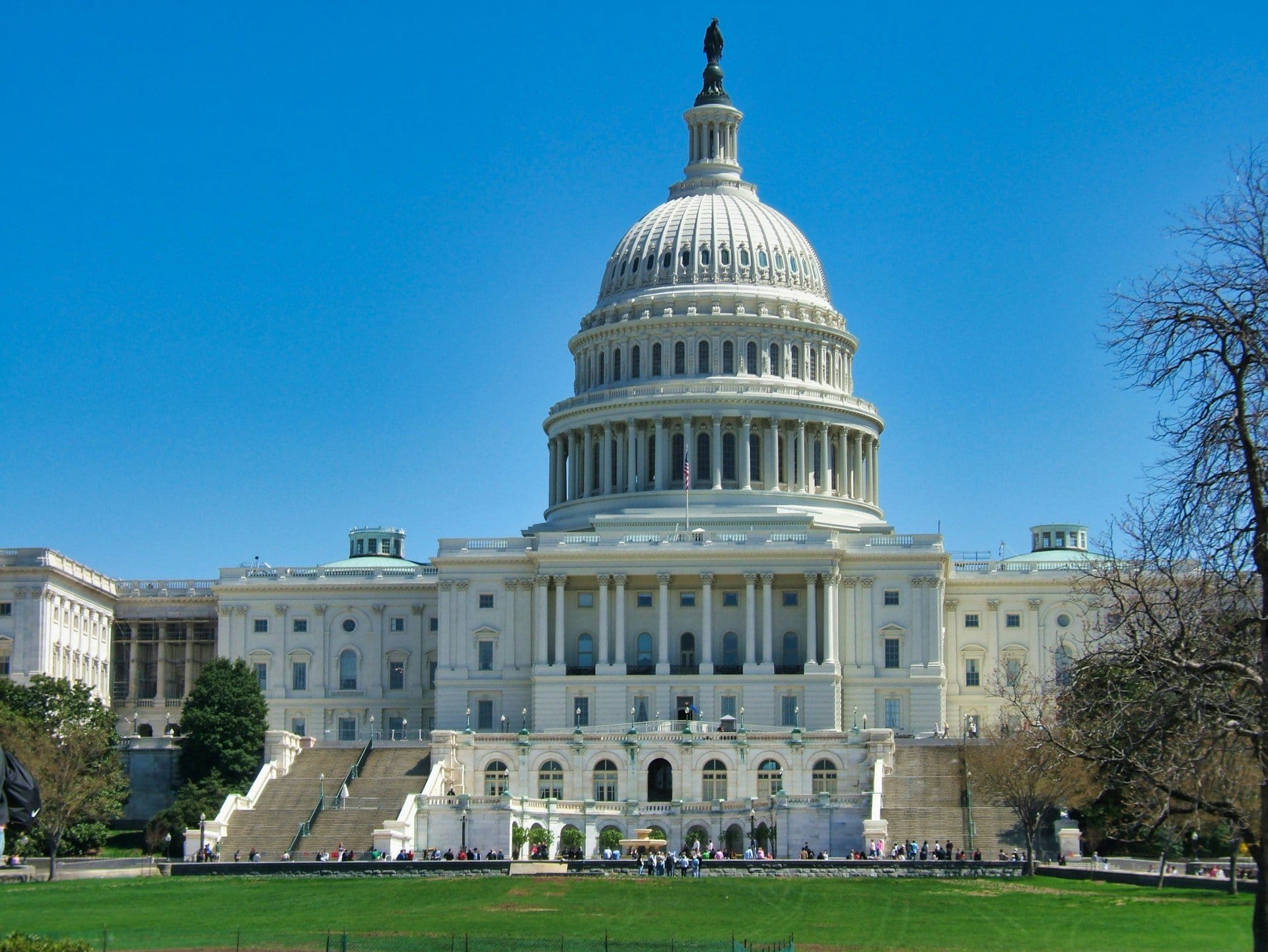
United States Capitol Building
The Capitol Building is the seat of the legislative branch – the Congress, divided into two chambers – the House of Representatives and the Senate.
The Capitol Building dominates a hill overlooking the majestic Mall. Its enormous neoclassical dome stands out in the skyline of the federal capital. It is named after Capitol Hill, the hill where the ancient Roman government sat, where the Colosseum in Rome is now located.
- The building was inaugurated in 1800 during the first session of the Senate. Eleven years later, the southern wing where the House of Representatives sits was also completed.
- Historically, this is the fourth building to host Congress. The first was the Maryland State House in Annapolis, followed by the Federal Hall in New York City. The capital then moved to Philadelphia to the Pennsylvania State House.
- Then, with the decision to build the federal capital as a separate entity from the founding states, it was established in the District of Columbia, in southern Maryland, where it is located today.
Click here for a day trip from New York City to all the major sites in Washington DC…
The United States Senate:
- The upper house of the legislative branch
- It has two representatives from each state in the federal union, called senators, named after the body originating from ancient Rome.
- The Senate sits in the northern wing of the Capitol Building.
The United States House of Representatives:
- Convenes in the southern wing of the Capitol building
- The lower legislative body has about 435 elected officials called congressmen, representing different districts across the USA
- The composition of the House of Representatives is based on state representatives according to population, unlike the fixed division of the Senate
At the foot of the lawn ascending to the Capitol lies the Capitol Reflecting Pool. On its bank are the monuments of Presidents Garfield and Ulysses S. Grant. At the northern part of the pool is the Peace Monument, and to the south is the Botanical Garden.
Above the pool and monuments is a green plaza with the famous eastern steps of the Capitol at its edge. In the northern part of the plaza is the Summerhouse.
A visit to the Capitol is a must-see in the American capital. Access to the building is through the underground United States Capitol Visitor Center, which began operating in 2008.
Click here for the current visiting hours at the Capitol building in Washington D.C…
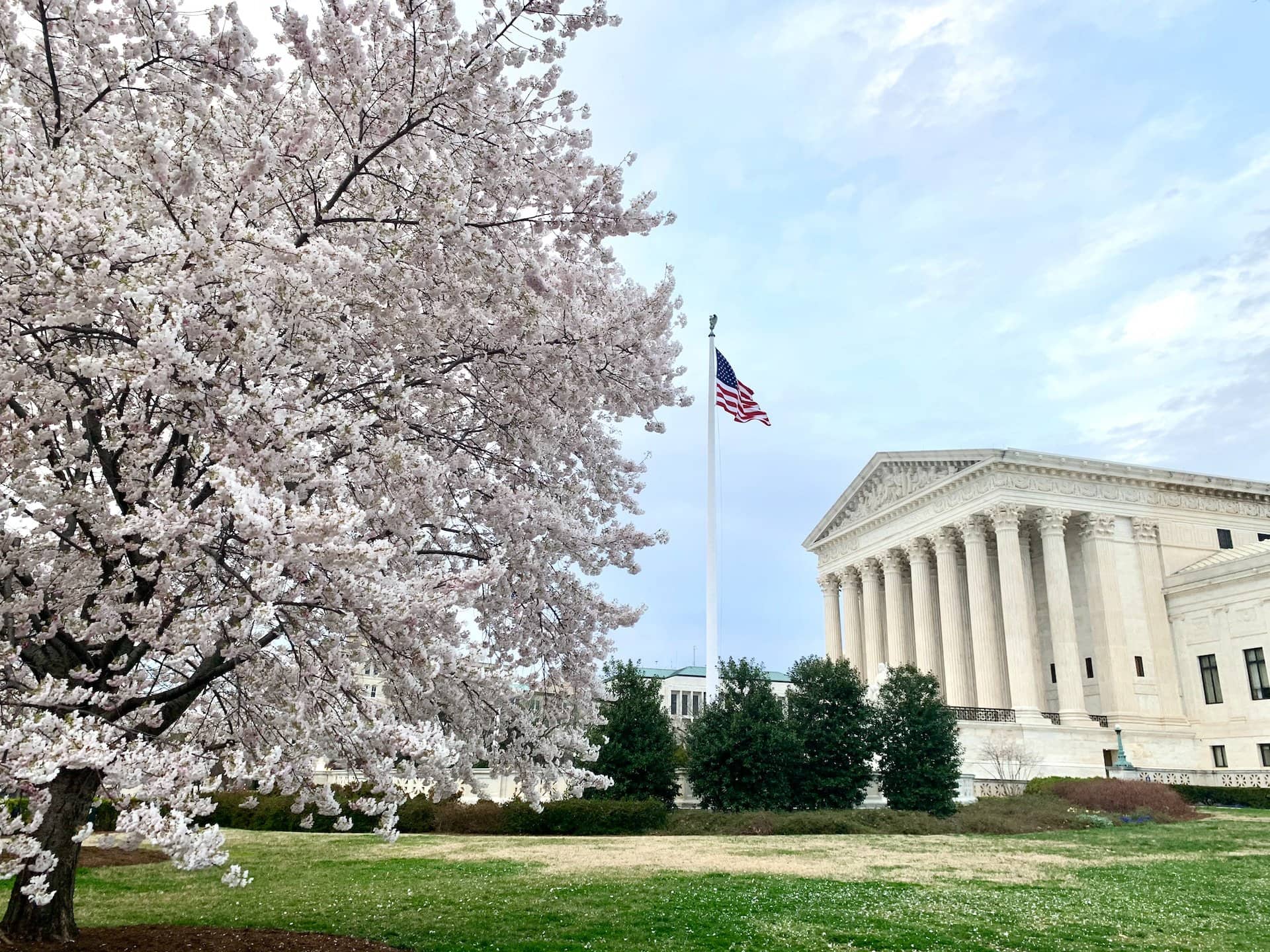
Supreme Court of the United States
The Supreme Court building sits behind the Capitol. It is the foundation of the judiciary, where the laws passed and approved by the neighboring Congress are interpreted. The building boasts a very impressive neoclassical façade with eight Corinthian columns topped by a pediment with striking marble reliefs of seated judges. Constructed in the 1930s, it has since become an emblem.
Click here for a guided Segway tour of all the central sites in the federal capital…
Library of Congress
The state building that completes the triad of the Capitol Building and the Supreme Court Building is located just south of the Legislative branch building. The Library of Congress serves as the national library of the United States. It is the second-largest library in the world after the British Library in London in terms of book collection and the largest in the world in terms of space. The building suffered from significant fires twice, once in 1814 when the British burned Washington and again in 1851.
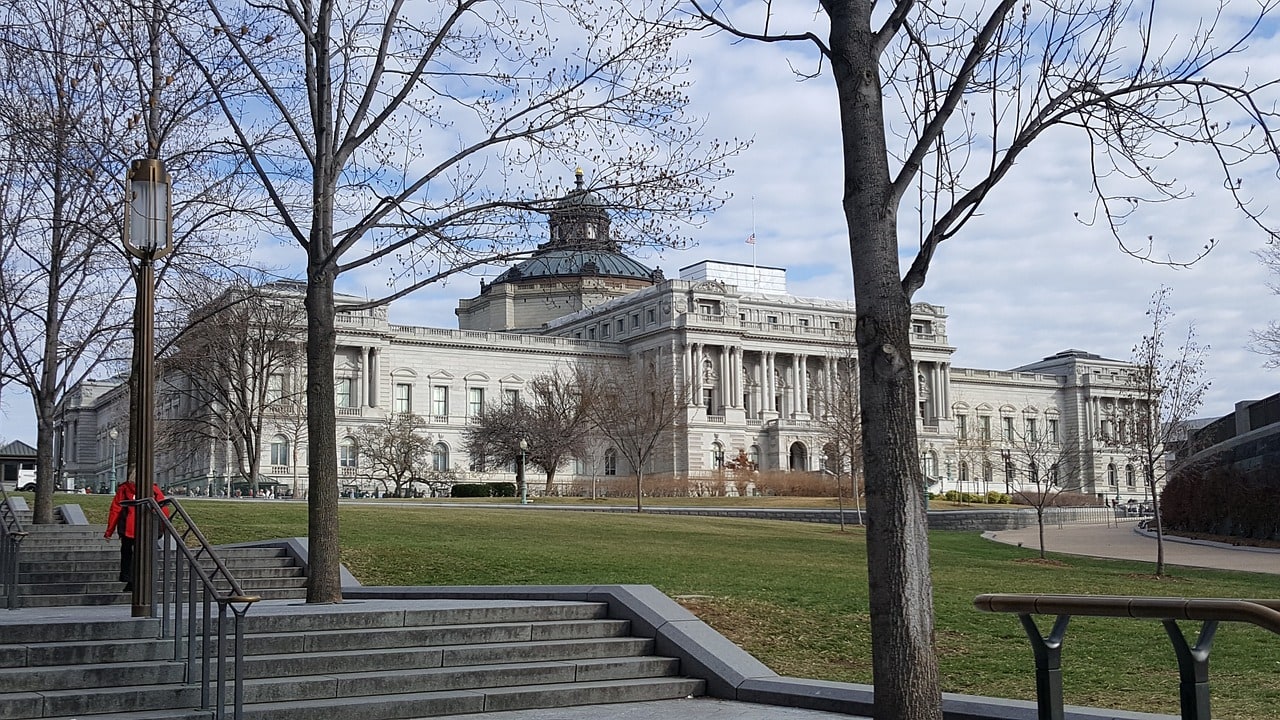
The National Mall – Western Mall Monuments
Lincoln Memorial
The monument honoring President Abraham Lincoln is one of the most famous landmarks of Washington D.C., mainly due to the statue of the president that has become iconic in popular culture.
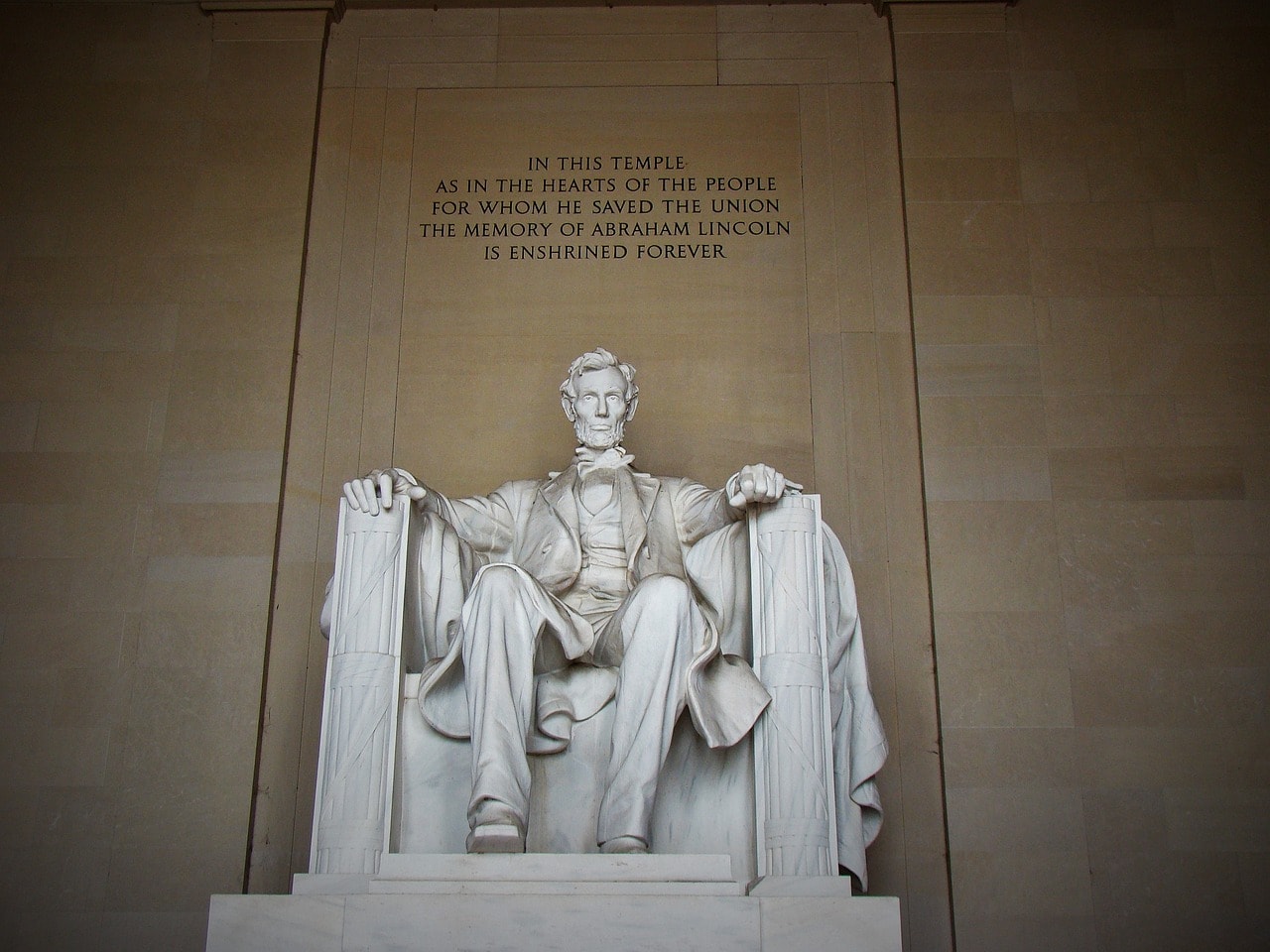
- The monument was dedicated in 1922, about 57 years after his assassination while watching a play at Ford's Theatre a bit to the north
- The monument was designed by architect Henry Bacon and the statue of the president was created by sculptor Daniel Chester French.
- The monument is a classical Greek temple in the shape of a rectangle with 12 Ionic columns on the long sides and 8 on the shorter sides.
- The statue of Lincoln sits inside the monument, gazing towards the Reflecting Pool and the Washington Monument obelisk, with the Capitol building in the background.
- The seated statue of the president is based on the statue of Zeus at Olympia, one of the Seven Wonders of the Ancient World.
- Lincoln is seated in his chair, with his hands resting on columns and his right leg slightly extended.
Lincoln Memorial Reflecting Pool
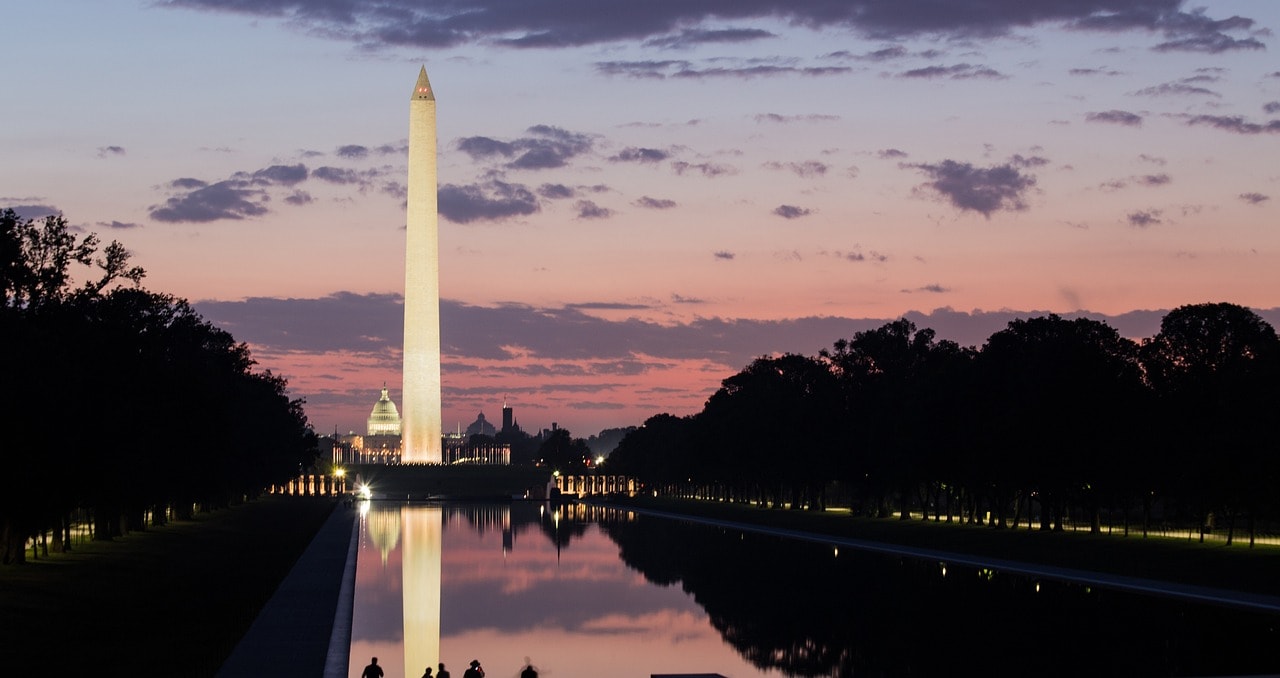
The Reflecting Pool stands opposite Lincoln's seated statue and extends eastward. It was also designed by Henry Bacon and inaugurated together with the Lincoln Memorial. The long and narrow pool runs along the National Mall and ends at the World War II Memorial.
The view from the Lincoln Memorial facing east, where you can see the obelisk of the Washington Monument and the Capitol Building, is probably the most famous icon of the National Mall, along with the White House. The pool is more than six hundred meters long and only 51 meters wide.
The pool was a site of historical demonstrations in the sixties in the context of the Vietnam War and the civil rights movements. During a demonstration by the pool (the platform was on the steps of the Lincoln Memorial), Martin Luther King delivered his historic “I Have a Dream” speech.
The pool has appeared countless times in popular culture, including in the movie Forrest Gump, where Tom Hanks runs through the water calling out to his friend Jenny (Robin Wright) after spotting her in the crowd as he speaks out against the war.
Washington Monument
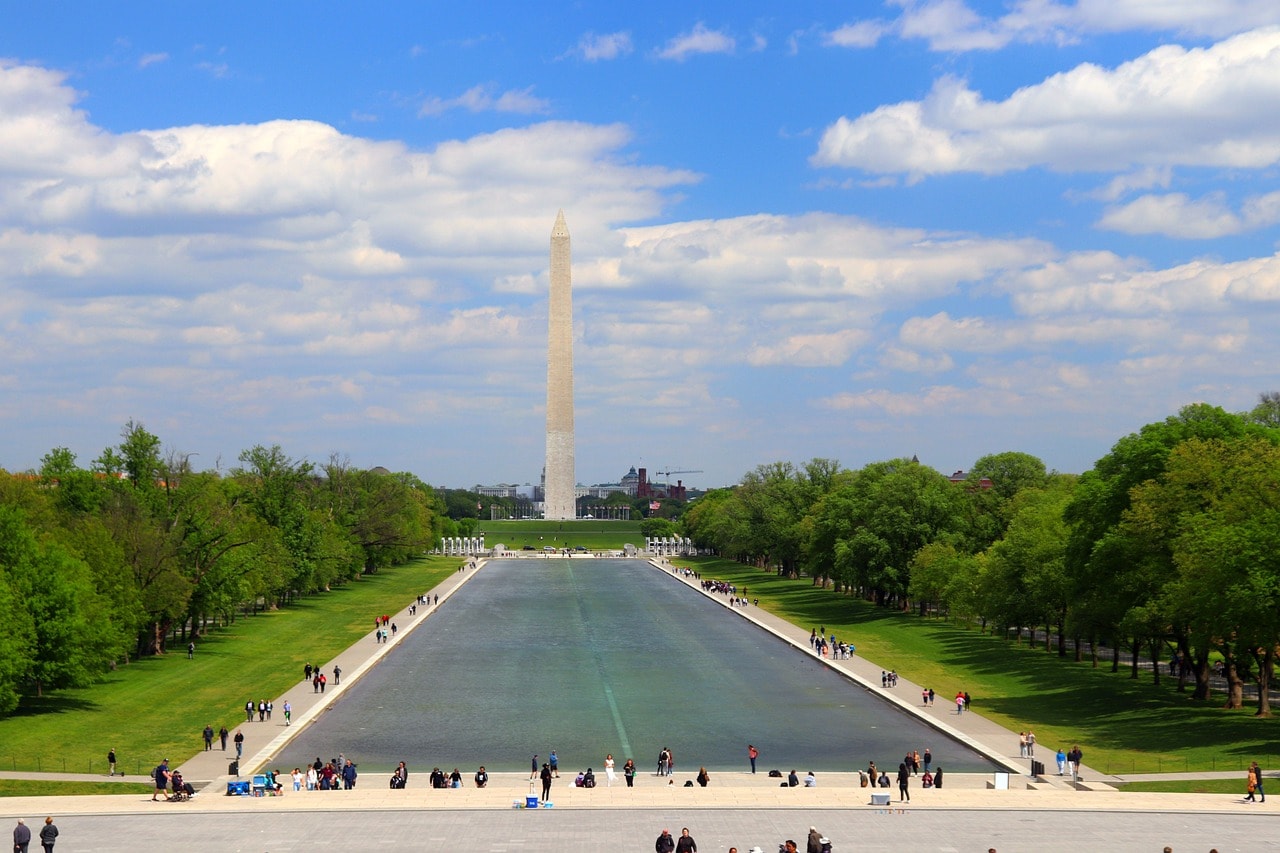
The massive obelisk of the Washington Monument is one of the most famous structures in the entire USA. Unlike many monuments on the Mall, the obelisk was an important part of the American capital's appearance during its early period. Construction of the monument began in 1848 and was completed only in 1885. It was designed by the architect Robert Mills and was inspired by Egyptian obelisks.
Click here for a guided tour of the Mall and the Washington Monument…
- Building obelisks was then in fashion mainly in European capitals (based on the ancient Luxor obelisk placed at the Place de la Concorde in Paris)
- The obelisk rises to a height of 170 meters, and the observation deck is at a height of 152 meters
- The observation deck is where the sharp triangle at the tip of the obelisk begins
- The monument is clad in white marble, giving it a clean appearance
Click here for all the updated information on the observation deck's opening hours…
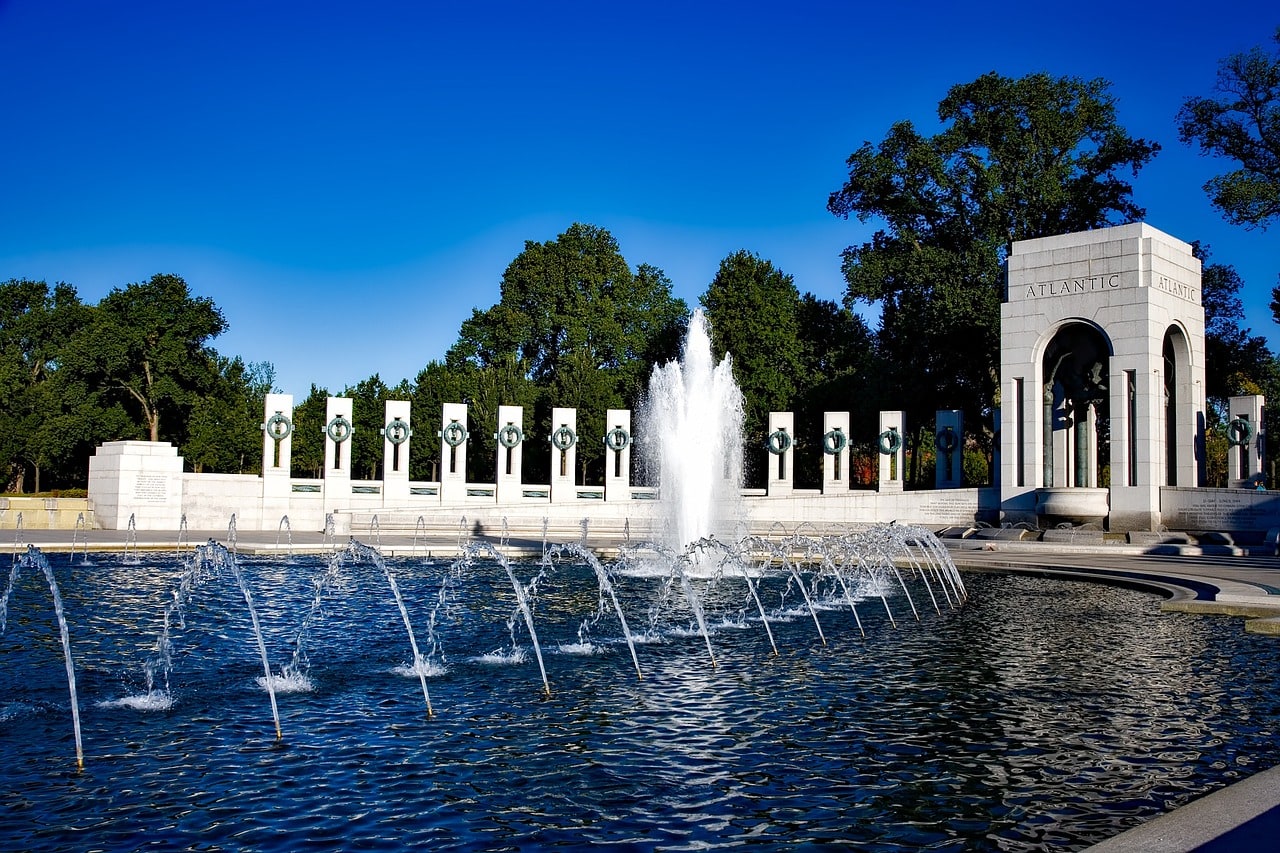
World War II Memorial
Located at the eastern end of the Reflecting Pool, this is the first in a series of memorials dedicated to America's 20th-century wars. The memorial was dedicated in 2004 and consists of 56 pillars, each five meters high, arranged in two semi-circular rows.
The pillars represent the U.S. states and the territories that were under American control during the war. The two rows symbolize the theaters of war, one in Europe and another in the Pacific Ocean. Between the rows is an oval fountain array, facing a wall with 4,048 gold stars, each representing about one hundred American soldiers who lost their lives in the war.
Korean War Veterans Memorial
The Korean War Veterans Memorial is located at the southwestern end of the Reflecting Pool, mirroring the Vietnam Veterans Memorial opposite it, at the pool's northwestern corner. Both memorials are adjacent to the steps of the Lincoln Memorial. The memorial resembles a protractor from the air, with a circular shallow pool at the tip of an acute triangle on which the statues stand.
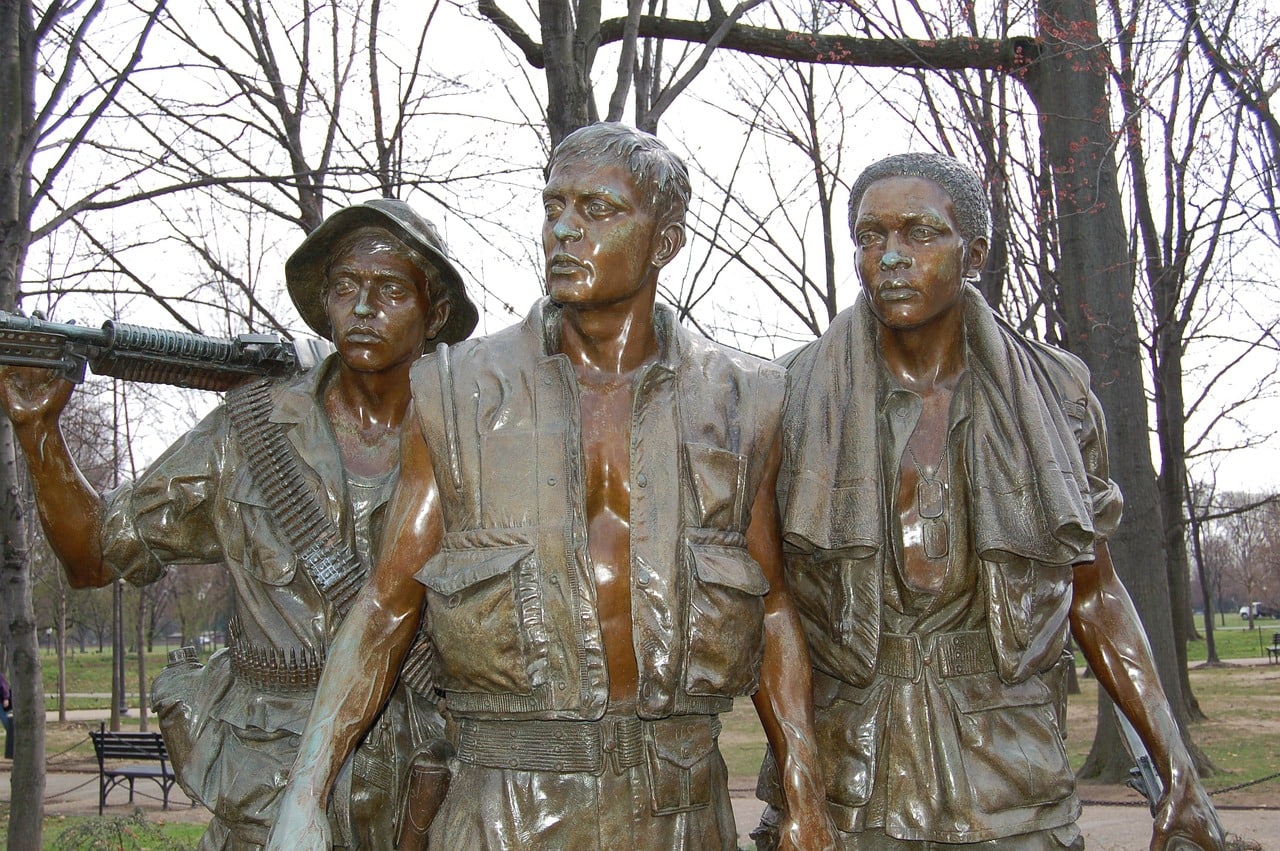
The memorial was dedicated in 1995 and consists of a garden where about 19 statues of American soldiers from all branches are displayed. They appear to be running towards a granite wall displaying scenes from the war and a wall signifying the coalition of 22 nations that fought alongside South Korea.
Vietnam Veterans Memorial
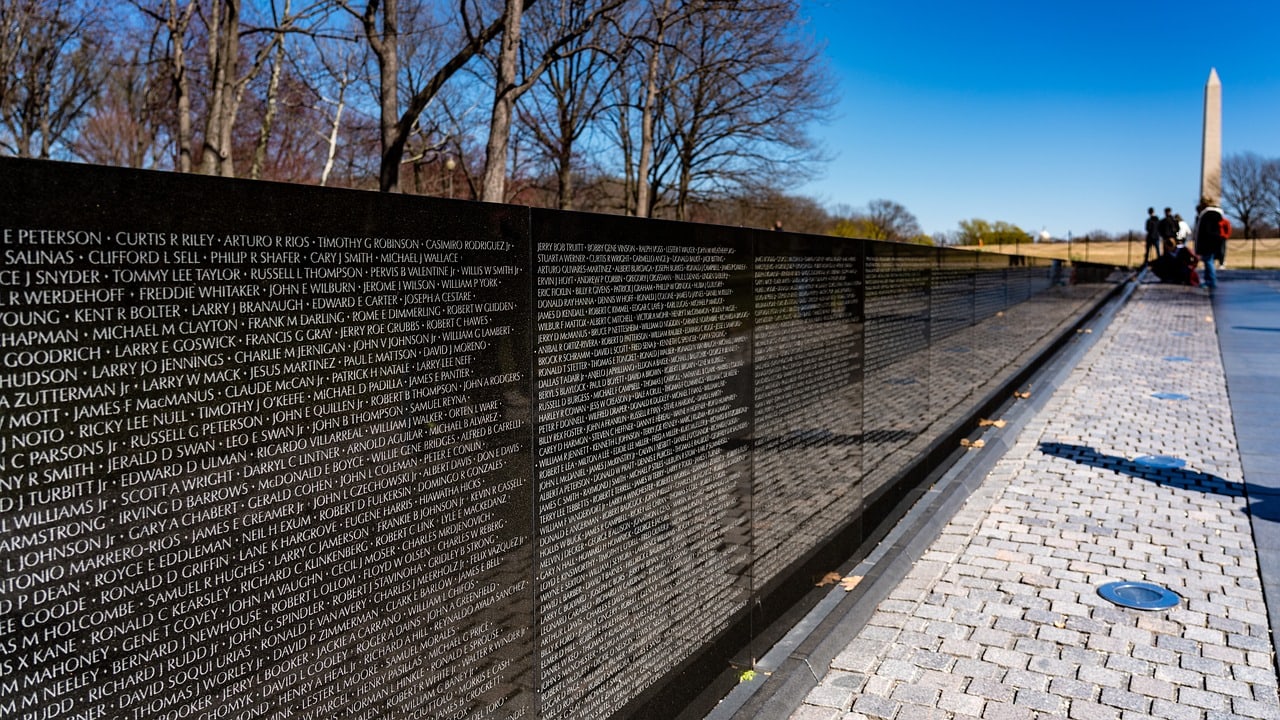
The Vietnam Veterans Memorial was dedicated in 1982 at the northwestern end of the Lincoln Memorial Reflecting Pool. The memorial is the creation of Maya Ying Lin, a young architecture student at Yale University whose parents immigrated from China. Ying Lin designed the wall known as The Wall, on which the names of the American casualties of the war are inscribed.
The memorial is embedded in the ground in the direction of the pool from the south and north and cannot be seen from the grass. The memorial is still considered controversial, much like the war itself. After a lot of discussions, three statues depicting servicemen, The Three Servicemen Statue, were added to the western part of The Wall (against the wishes of Ying Lin).
Martin Luther King, Jr. Memorial
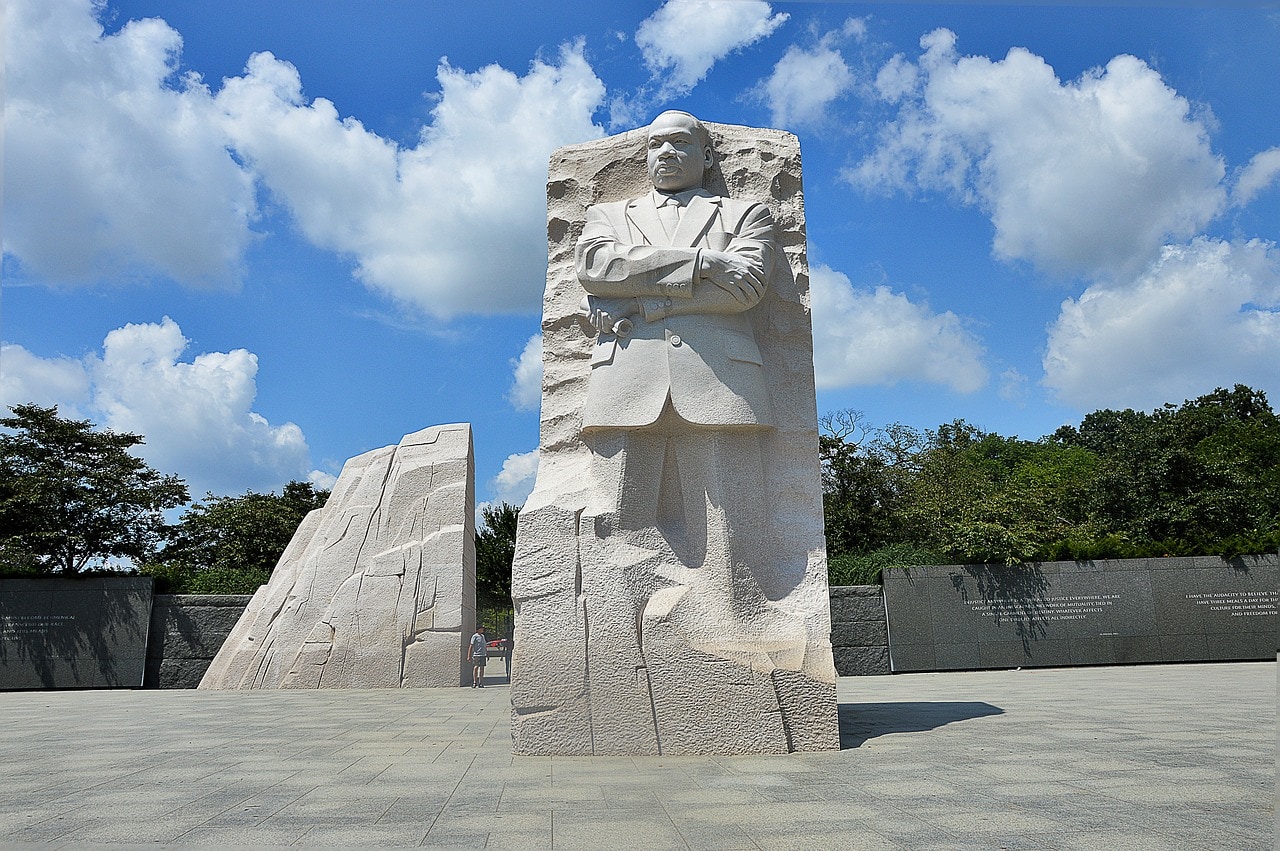
The Martin Luther King Memorial is one of the newest and most up-to-date monuments on Washington's National Mall. It is located south of the Lincoln Memorial reflecting pool, on the banks of the Tidal Basin Lake surrounded by additional monuments. The memorial was inaugurated in 2011, embodying one of King's images in the iconic “I Have a Dream” speech given a hundred meters away.
The phrase “With this faith, we will be able to hew out of the mountain of despair a stone of hope” is realized in three massive rock blocks. The two blocks at the back are a single rock split into two winding paths. At the front, there is a very impressive bas-relief sculpture of King with folded arms.
Franklin Delano Roosevelt Memorial
The special monument in honor of President Franklin Delano Roosevelt is situated south of the Tidal Basin, not far from the Martin Luther King Memorial and opposite the Thomas Jefferson Memorial. It was inaugurated in 1997 and is the work of landscape architect Lawrence Halprin. The monument stands in an invested square area, with steps on one side and a rushing waterfall on the other. On the side walls, there is a statue of Roosevelt sitting with his dog Fala and on the other side, there are sculptures marking the Great Depression. Along the walkway at the edge of the Tidal Basin, there's also a statue of Roosevelt's wife, Eleanor.
Thomas Jefferson Memorial
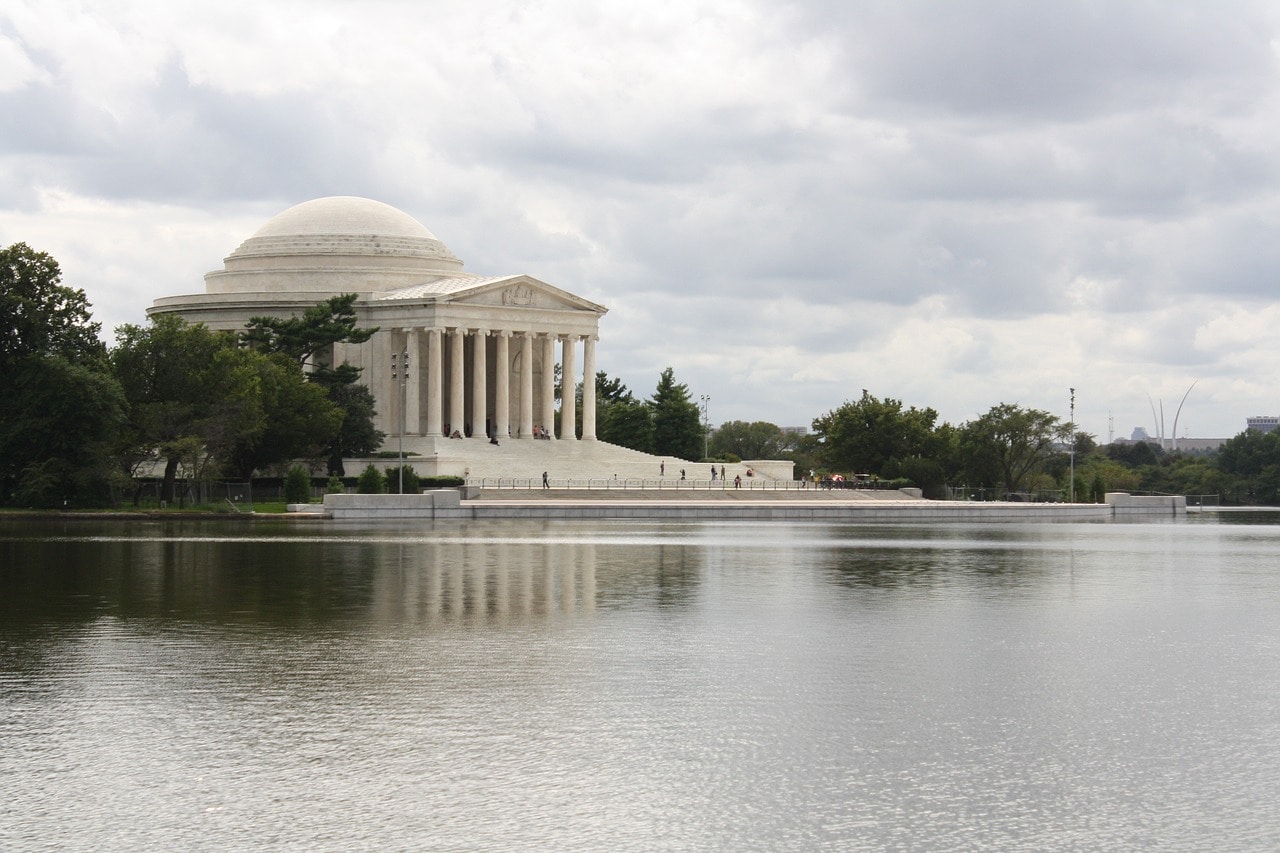
The neo-classical dome of the Jefferson Memorial is one of the most elegant memorials in Washington D.C.'s National Mall. It is located at the western end of East Potomac Park, by the tidal lake. The memorial was inaugurated in 1943 at the initiative and presence of then-President Franklin Delano Roosevelt. The dome is about 39 meters high, and inside it stands a giant bronze statue of the third president, nearly six meters tall.
The Smithsonian and the Museums of the Mall
The Washington National Mall is known for its massive amount of iconic sites and national institutions. So in addition to the well-known monuments and the government authorities in the Capitol building and the Supreme Court, the national values also include a huge number of museums clustered together on the avenue.
The museum section is mostly organized under the umbrella of the Smithsonian, the national research institute that holds all the prime treasures of the American empire.
What are the Smithsonian and the Museums of the Mall?
The Smithsonian or the Smithsonian Institution is a national entity with about 19 museums and galleries (along with research institutes and cultural centers). About 11 of the Smithsonian's museums and research institutes operate on the National Mall in Washington DC (if you get lost, just hop off at the Smithsonian metro station).
The institute was founded in the early 19th century by James Smithson, a British chemist. In his will, Smithson bequeathed his entire fortune to the US government to establish a comprehensive national museum institution. President James Polk initiated the Smithsonian Act in 1846, founding the governmental fund that finances the institute.
6 Must-Visit Museums on Washington D.C.'s National Mall
- Smithsonian National Air and Space Museum
- Smithsonian National Museum of Natural History
- Smithsonian National Museum of American History
- The National Gallery of Washington
- The National Archives Museum
- The Ethnic Museums of the Smithsonian Institution near the Smithsonian Castle
Click here for all the information on the magnificent national museums on the Mall…

The Old Downtown of Washington – Penn Quarter
Ford's Theatre
The historic theatre of America's capital is an important part of the city's history and the vast country's history. The theatre opened to the public in 1863 in the urban area north of the Mall, halfway between the White House and the Capitol Building. This urban area is recognized as the old downtown of Washington, the city's historic residential area. Today, it's called Penn Quarter.
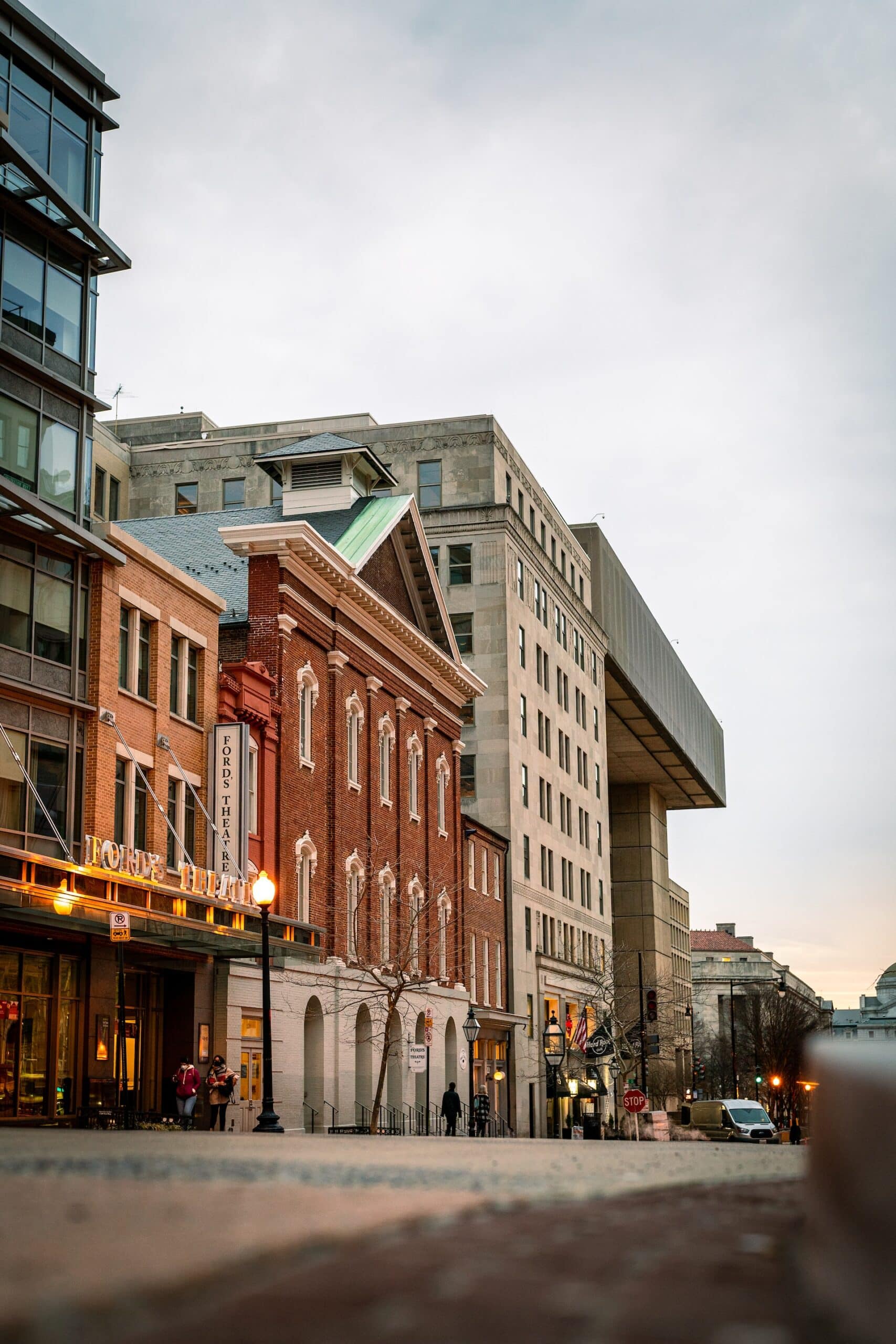
On April 15, 1865, just as the Civil War was nearing its end and after the surrender of the Southern Army, President Abraham Lincoln went to see the show “Our American Cousin.” The actor John Wilkes Booth entered the president's box and shot him in the head. Booth escaped through the stage and was shot and killed 11 days later.
Lincoln was assassinated in his wife's arms (which naturally evokes the traumatic assassination of President John F. Kennedy about 98 years later). Today, the theater is a historical site that offers visits and tours following the event.
Click here for all the information on touring and visiting Ford's Theatre…
National Portrait Gallery
Another one of the Smithsonian Institution's 11 museum complexes in Washington D.C. is the National Portrait Gallery. The museum is located in the old Downtown, or Penn Quarter, close to Ford's Theatre to the west and the Capital One Arena where basketball and hockey games are held to the east.
Click here for a rich and structured tasting meal at Washington's Hard Rock Cafe…
The museum collection is housed in the old Patent Office building, a neo-classical structure built in the 1830s. The entrance to the building is through a gateway copied from the Parthenon in the Acropolis of Athens. The façade with columns and the empty pediment above them is reminiscent of the famous Portrait Gallery façade at Trafalgar Square in London.
- The museum itself opened in 1962, after the building was scheduled for demolition but was preserved due to a successful campaign. It was given to the Smithsonian Institution to be turned into a museum institution.
- The museum houses some of the most famous portraits of U.S. presidents, including the original photograph of Abraham Lincoln, known as the Broken Plate (you'll understand why when you see it), by photographer Alexander Gardner.
- The collection also includes a portrait of Benjamin Franklin by Joseph Duplessis from 1788. This is one of the well-known portraits of the American president, immortalized on the 100-dollar bills.
- Another painting in the collection is the so-called Lansdowne Portrait, a portrait of George Washington by the artist Gilbert Stuart from 1796.